Artwork
Oceania: Fishing near Islands with Palms in the Uea or Wallis Group, 1845
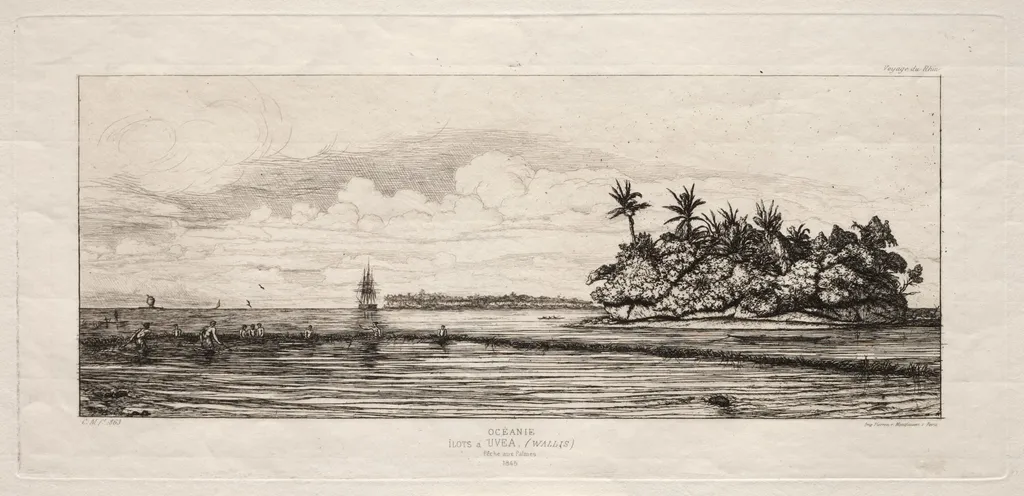
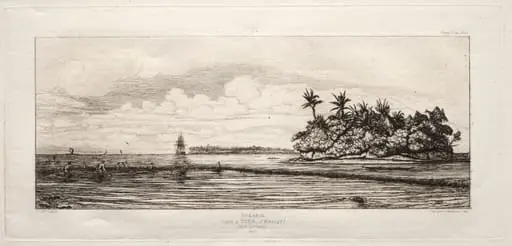
Oceania: Fishing near Islands with Palms in the Uea or Wallis Group, 1845 is a print by the Impressionist artist Charles Meryon. It dates from 1863 and is held in the collection of the Cleveland Museum of Art.
About this work
Overview
Created in 1863, this etching by Charles Meryon belongs to a lesser-known series of Pacific island scenes, distinct from his more famous depictions of Paris.
Created in 1863, this etching by Charles Meryon belongs to a lesser-known series of Pacific island scenes, distinct from his more famous depictions of Paris. Though Meryon is primarily associated with urban Gothic imagery, this work reflects his broader engagement with distant landscapes. Executed in fine linear detail, the print captures a tranquil maritime moment, blending observed elements with possible imaginative reconstruction. It resides today in the collection of The Cleveland Museum of Art.
Subject & Meaning
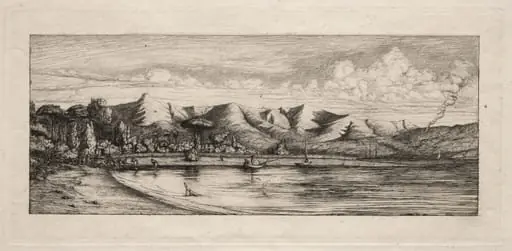
The scene portrays a small, palm-fringed island in calm waters, with figures in canoes engaged in fishing near the shore and a distant ship on the horizon. There is no overt drama or narrative climax; instead, the focus lies in the quiet rhythm of daily life. The title references the Uea or Wallis Group, yet the location may be loosely inspired or entirely invented, suggesting a contemplative, rather than documentary, intent.
Technique & Style
Meryon employed precise etching techniques to render subtle textures: the waves are defined by delicate, parallel lines, while the palms and sky are suggested with light, controlled strokes. His color blindness did not hinder his mastery of tone, as he relied on contrast and line to convey depth and atmosphere. The composition balances stillness and movement, with the ship’s silhouette offering a faint sense of scale against the intimate island scene.
History & Provenance
Meryon produced this print during a period of increasing personal instability, shortly before his institutionalization and death in 1868. Though he gained recognition for his Parisian etchings, this work emerged from his broader interest in global subjects, possibly influenced by contemporary travel accounts. The print entered the Cleveland Museum of Art’s collection through documented acquisition, preserving its place within his oeuvre.
Context
In the mid-19th century, European artists and audiences showed growing fascination with the Pacific, fueled by exploration and colonial expansion. Meryon’s etching aligns with this trend but avoids exoticism, favoring restraint and observation. Unlike many contemporaries who emphasized spectacle, he rendered the scene with quiet intimacy, reflecting a personal, introspective approach to foreign landscapes.
Legacy
Though overshadowed by his Parisian works, this etching contributes to understanding Meryon’s artistic range and his sensitivity to solitude and place. It stands as a quiet testament to his ability to find significance in marginal, everyday moments—even in distant, imagined locales. The print remains a subtle, enduring example of 19th-century printmaking that prioritizes mood over monumentality.
Artist & collection
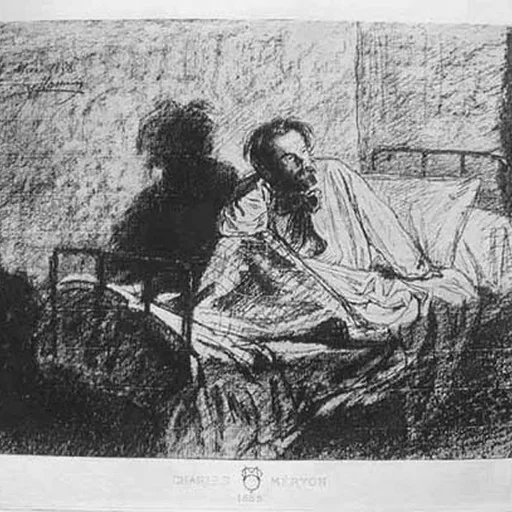
Artist
Charles Meryon (sometimes Méryon, 23 November 1821 – 14 February 1868) was a French artist who worked almost entirely in etching, as he had colour blindness.

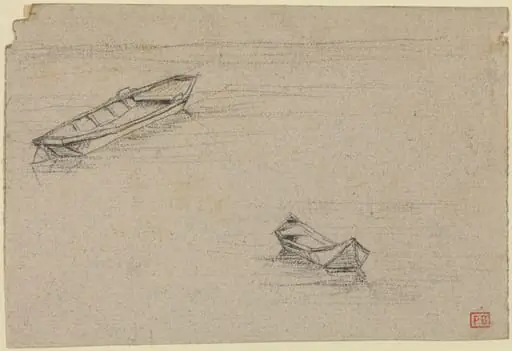
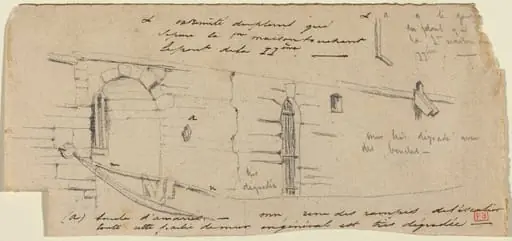
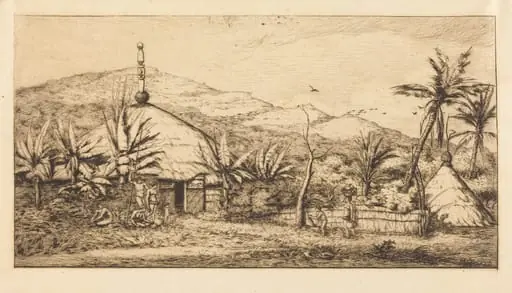 Nouvelle-Calédonie: Grande case indigène sur le chemin de Ballade à Poepo, 1845 (New Caledonia: Large Native Hut on the Road from Balade to Puebo, 1845)
 Oceanie
 Bow Gong
 Magdalena River, New Granada, Equador
 Seine Fishing off Charcoal Burner's Point, Akaroa
 Le Simoun
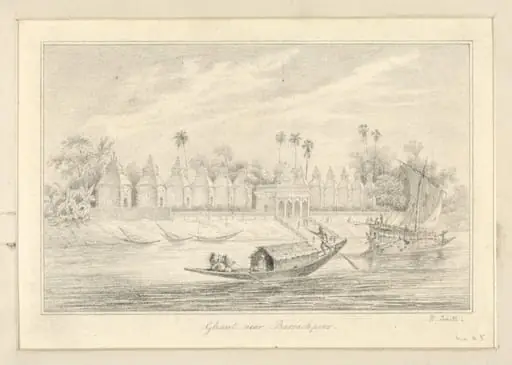 Ghaut near Barrackpoor
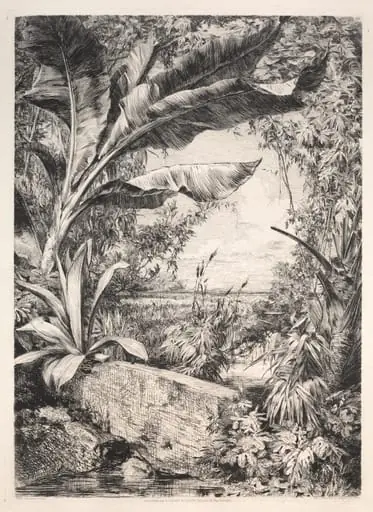 Plants of the Greenhouse
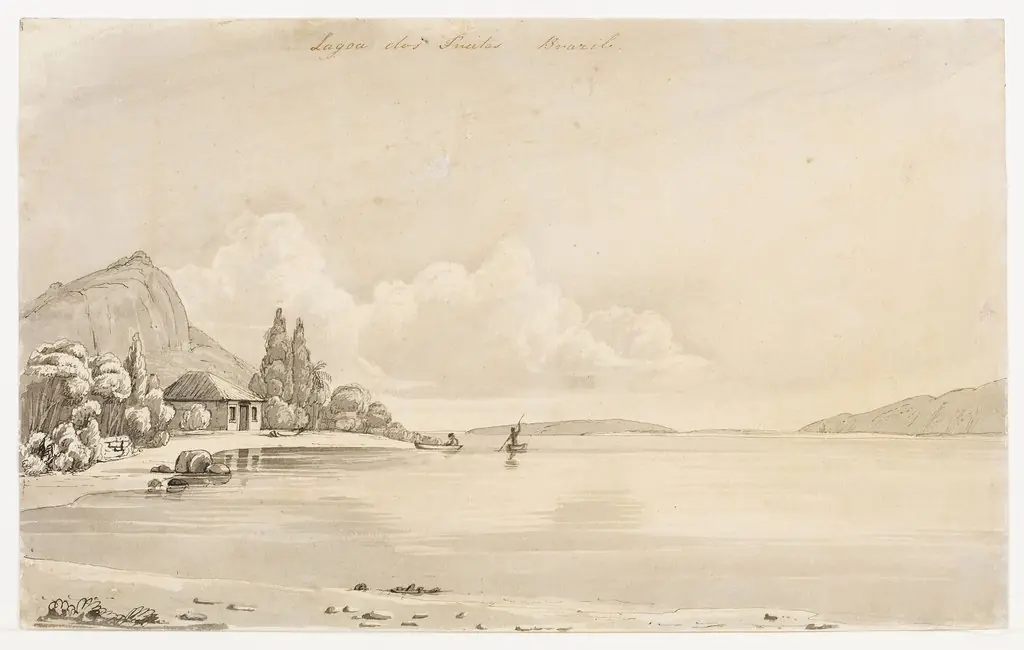 Lagoa dos Freitas. Brazil
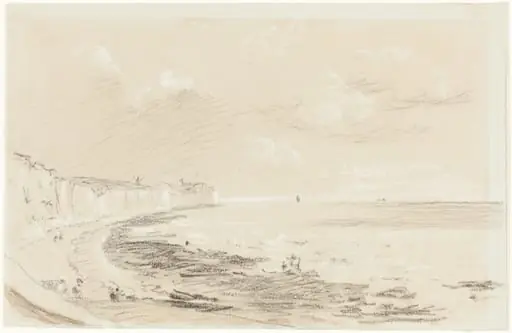 Scene on the South Coast of England
 Mouth of the Rio Purus
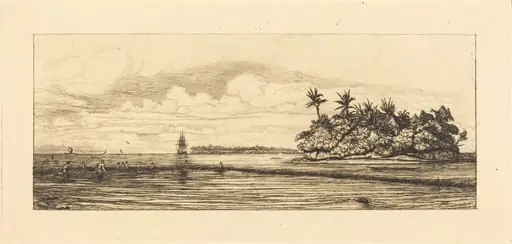 Océanie, ilots à Uvea (Wallis); Peche aux palmes, 1845 (Oceania: Fishing, Near Islands with Palms in the Uea or Wallis Group)