Artwork
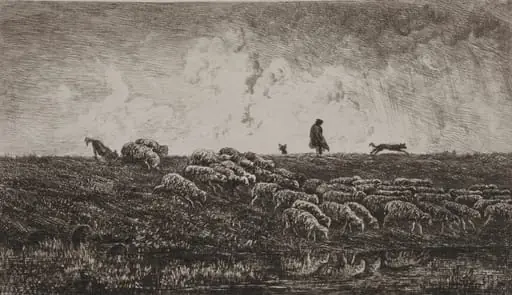
A Shepherd with His Flock
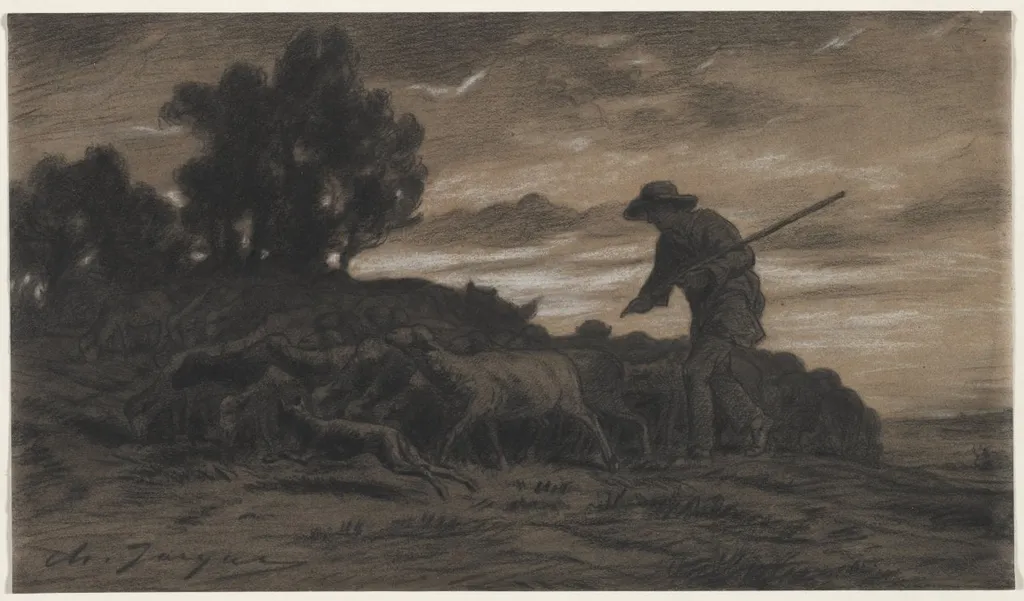
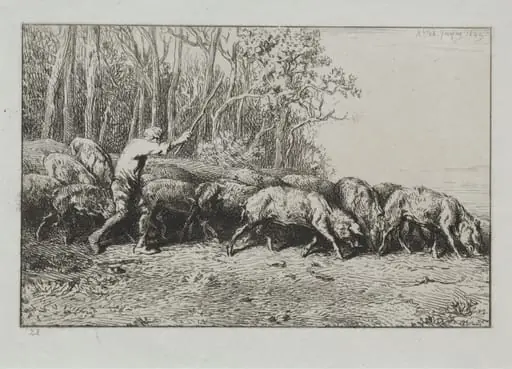
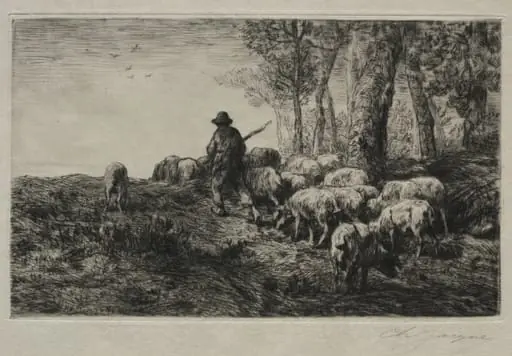
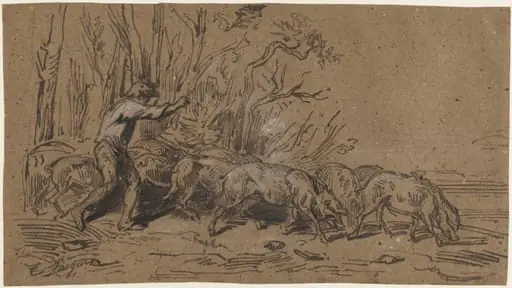
A Shepherd with His Flock is a drawing by the Romanticist artist Charles Jacque. It dates from 1804 and is held in the collection of the Cleveland Museum of Art. Charles-Émile Jacque created this pencil drawing as part of his sustained engagement with rural life in mid-19th century France.
About this work
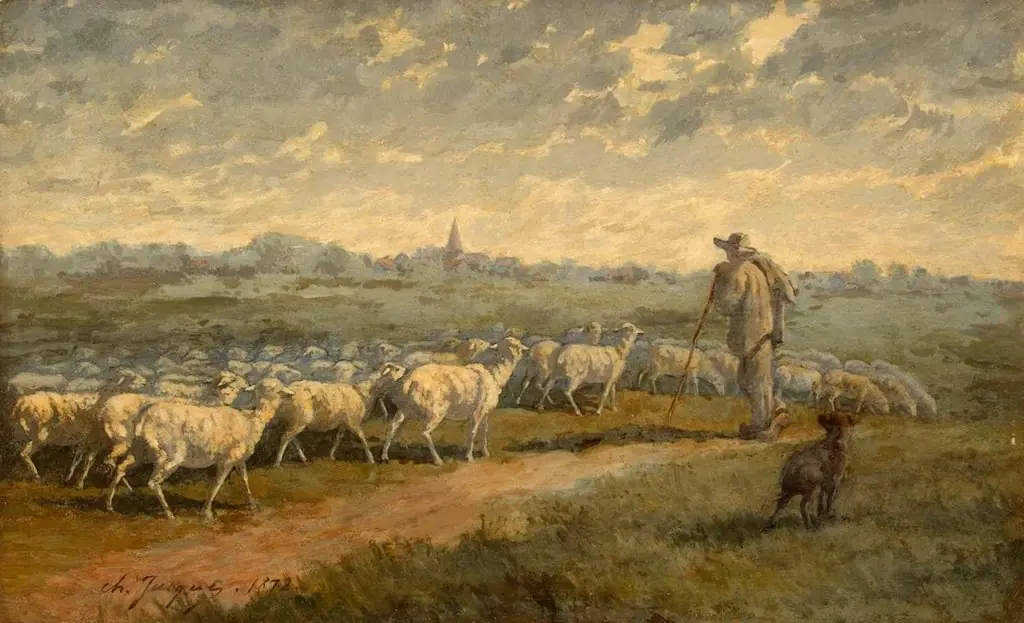
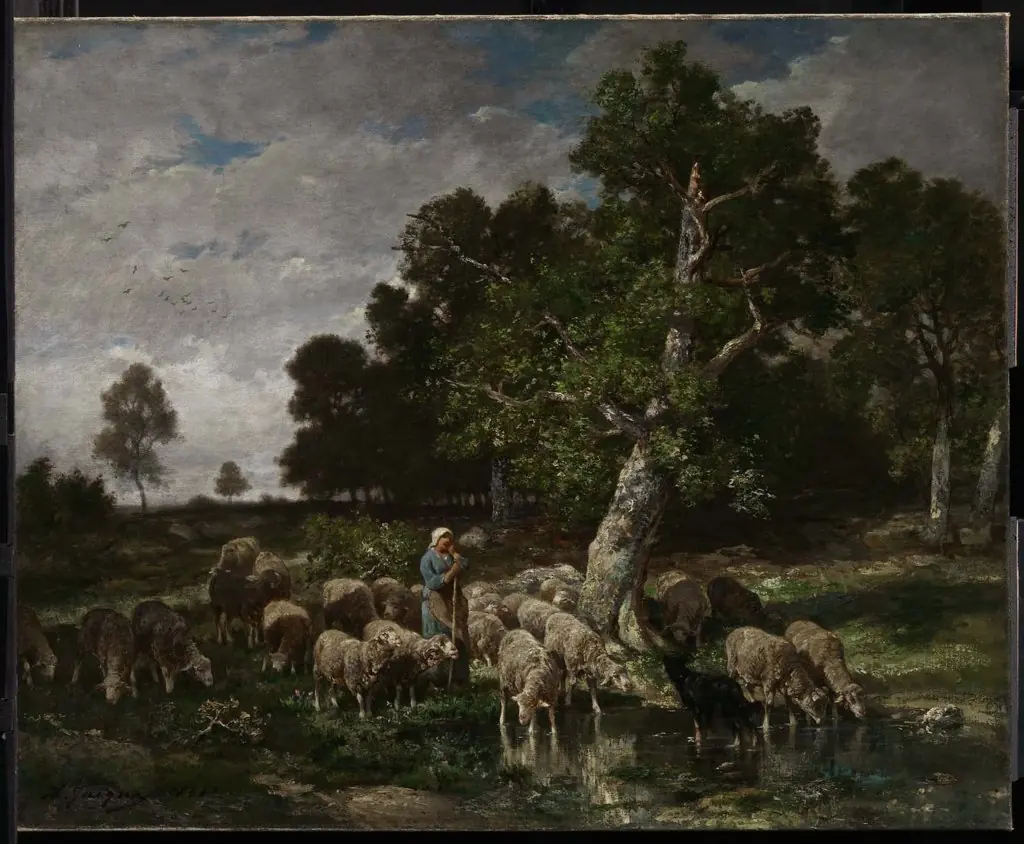
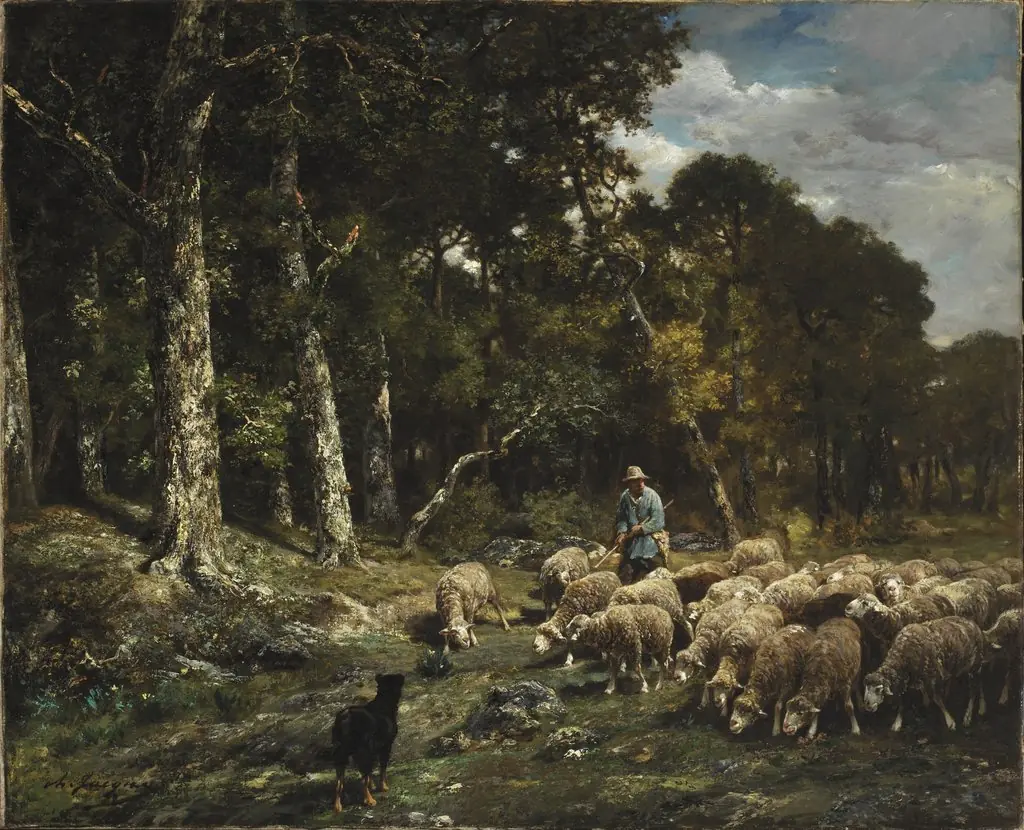
Soft morning light falls on a shepherd in a blue cap. He walks beside a crowd of sheep. A dog follows close behind. The field is green and dotted with wildflowers.
Jacque loved rural life. He moved to Barbizon with Millet. There, artists painted nature and people working together.
See how the light plays on the wool? Feels like you could step right into the field. Look up Charles-Émile Jacque (French, 1813–1894) next.
Overview
The work belongs to a broader movement of artists who sought authenticity in depicting agricultural labor and natural landscapes.
Charles-Émile Jacque created this pencil drawing as part of his sustained engagement with rural life in mid-19th century France. Executed during his time in Barbizon, it reflects a quiet, observational approach to the countryside, emphasizing the daily rhythms of shepherding rather than dramatic narrative. The work belongs to a broader movement of artists who sought authenticity in depicting agricultural labor and natural landscapes.
Subject & Meaning
The drawing portrays a shepherd in a blue cap guiding a flock of sheep across a grassy field, accompanied by a loyal dog. There is no indication of hardship or urgency; instead, the scene conveys a sense of calm coexistence between human, animal, and land. Jacque’s focus on routine pastoral activity suggests an appreciation for the quiet dignity of rural existence, free from idealized romance or sentimentality.
Technique & Style
Jacque employed delicate pencil lines to capture the texture of wool, the soft contours of the landscape, and the subtle play of morning light. The shading is gentle, avoiding harsh contrasts, which enhances the tranquility of the scene. The composition is open and uncluttered, with the shepherd positioned slightly off-center to allow the flock and field to breathe, reinforcing the harmony between figures and environment.
History & Provenance
Jacque relocated to Barbizon in 1849 alongside Jean-François Millet, joining a community of artists committed to painting directly from nature. This drawing likely originated during his early years there, when he shifted from urban illustration to rural subjects. Though not widely exhibited in his lifetime, it was part of a private collection of works documenting the Barbizon School’s dedication to truthful rural representation.
Context
In the decades before industrialization transformed French agriculture, artists like Jacque turned to the countryside as a site of cultural and aesthetic renewal. Barbizon became a refuge from urban modernity, where painters sought to record the lives of peasants and shepherds with sincerity. Jacque’s drawings contributed to a growing interest in the dignity of manual labor and the quiet beauty of the natural world.
Legacy
Jacque’s drawings helped shape the visual language of the Barbizon School, influencing later realist and impressionist approaches to landscape and rural life. His emphasis on observation over embellishment set a precedent for artists who valued authenticity. Though less celebrated than his contemporaries, his work remains a quiet testament to the enduring relationship between humans and the land they tend.
Artist & collection
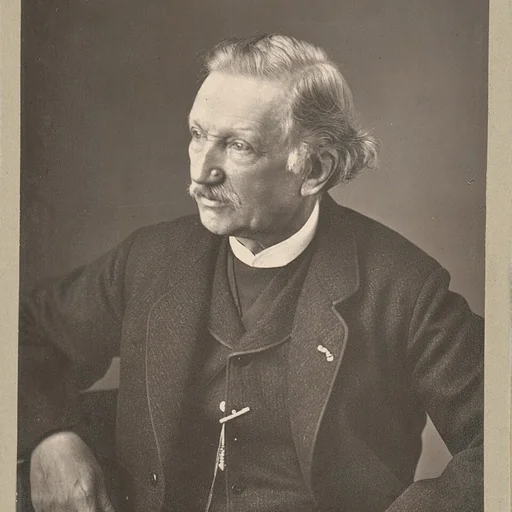
Artist
Charles-Émile Jacque (23 May 1813 – 7 May 1894) was a French painter of Pastoralism and engraver who was, with Jean-François Millet, part of the Barbizon School. He first learned to engrave maps when he spent seven years in the French Army.