Artwork
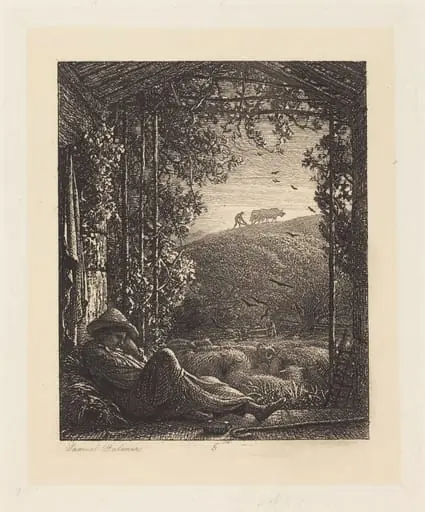
The Early Ploughman
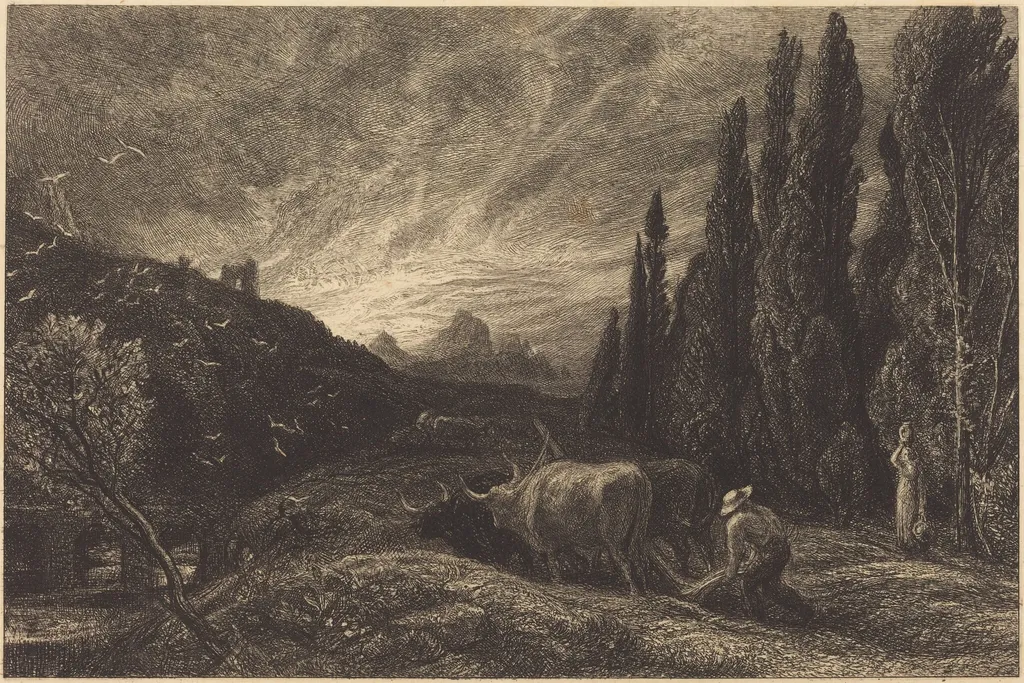
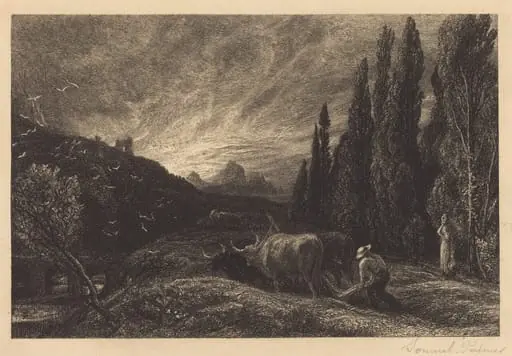
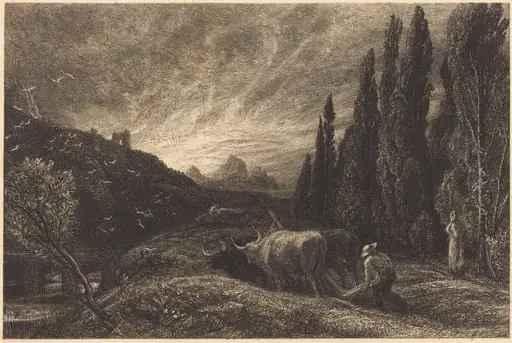
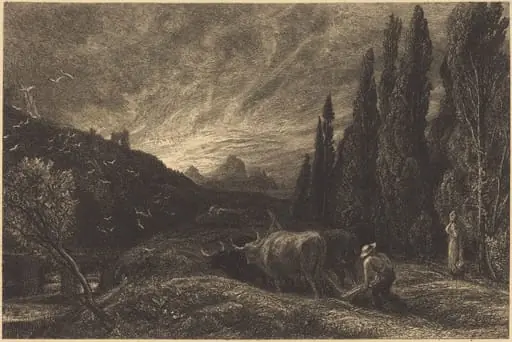
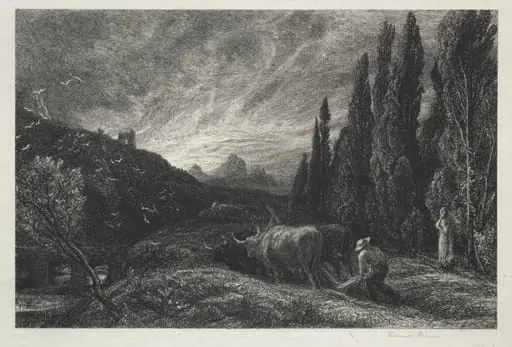
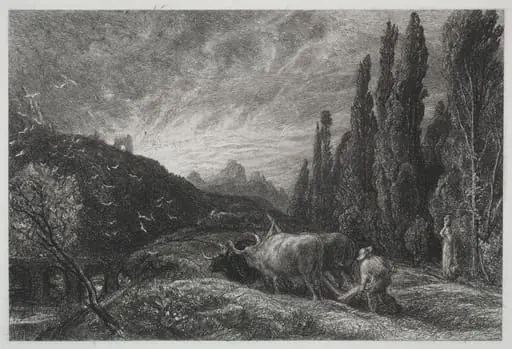
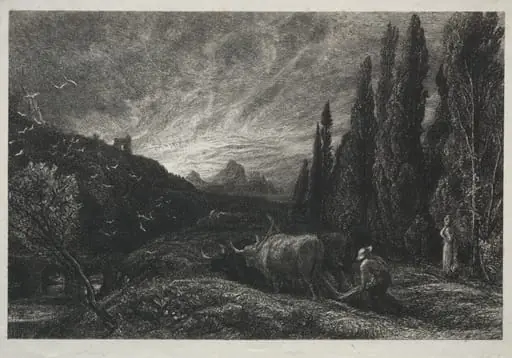
The Early Ploughman is an ink print by the Impressionist artist Samuel Palmer. It dates from 1861 and is held in the collection of the National Gallery of Art.
About this work
Overview
The Early Ploughman is an etching created by Samuel Palmer in 1861, showcasing a serene rural scene.
Subject & Meaning
The etching depicts a lone ploughman guiding an animal-drawn plough through a field, set against a backdrop of trees and a hill with a building. The tranquil atmosphere evokes a sense of harmony between the labourer and the natural world.
Technique & Style
Characterized by muted tones and visible etching lines, the work exemplifies Palmer's skill in capturing atmospheric effects. The detailed rendering of the landscape reflects his later style, marked by a focus on the English countryside.
Context
As a key figure in the British Romantic movement, Palmer's work was influenced by his vision of the pastoral. His etchings, including The Early Ploughman, demonstrate his ability to convey a sense of rural life and the beauty of the natural world.
Artist & collection
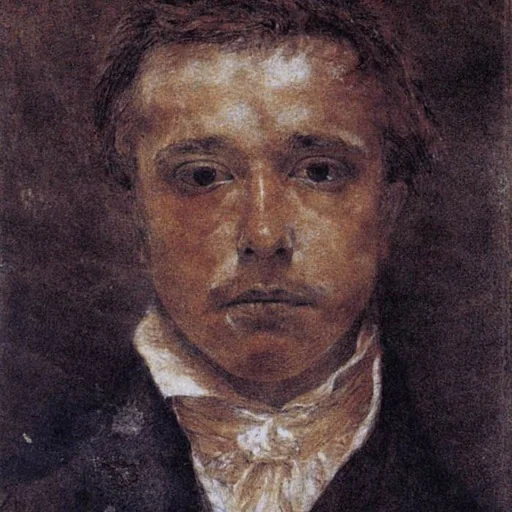
Artist
Samuel Palmer Hon.RE (Hon. Fellow of the Society of Painter-Etchers) (27 January 1805 – 24 May 1881) was a British landscape painter, etcher and printmaker. He was also a prolific writer. Palmer was a key figure in…