Artwork
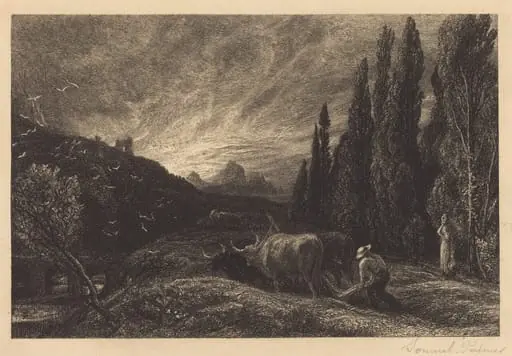
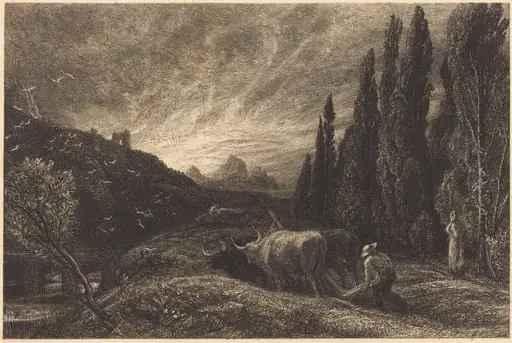
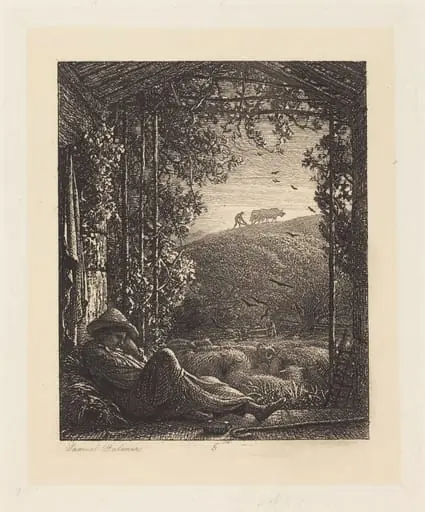
The Early Ploughman
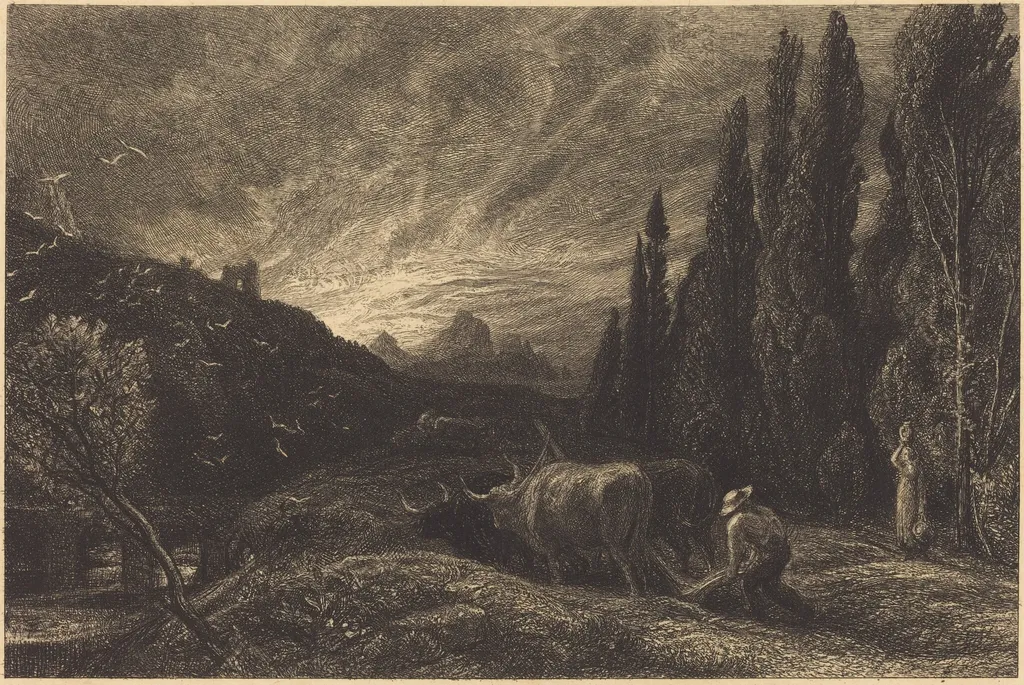
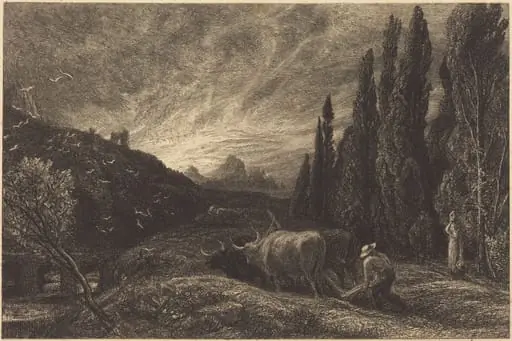
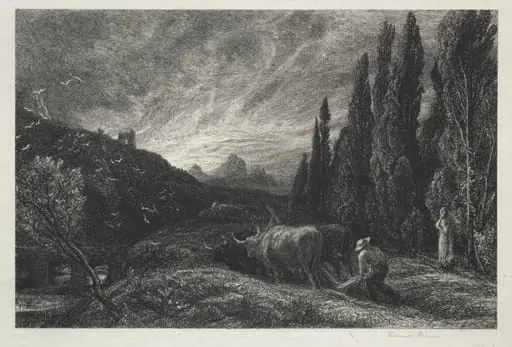
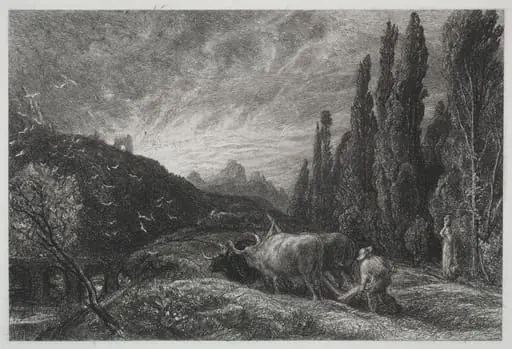
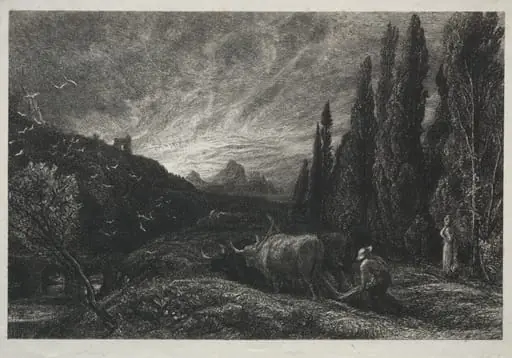
The Early Ploughman is an ink print by the Impressionist artist Samuel Palmer. It dates from 1861 and is held in the collection of the National Gallery of Art.
About this work
Overview
Samuel Palmer’s 1861 etching *The Early Ploughman* captures a solitary agricultural laborer guiding a horse through a field at dawn.
Samuel Palmer’s 1861 etching *The Early Ploughman* captures a solitary agricultural laborer guiding a horse through a field at dawn. Executed in fine, controlled lines on laid paper, the work reflects Palmer’s lifelong engagement with rural life and the quiet rhythms of the English countryside. Though technically an etching, the image evokes the mood of a dreamlike landscape rather than a literal record of labor.
Subject & Meaning
The ploughman, bent over his task, appears absorbed in thought, his posture suggesting introspection rather than exertion. The surrounding landscape—rolling hills, distant trees, and a brooding sky—frames him as part of a larger, almost sacred natural order. Palmer imbues the scene with a contemplative stillness, transforming ordinary labor into a meditative act aligned with spiritual and poetic ideals of rural existence.
Technique & Style
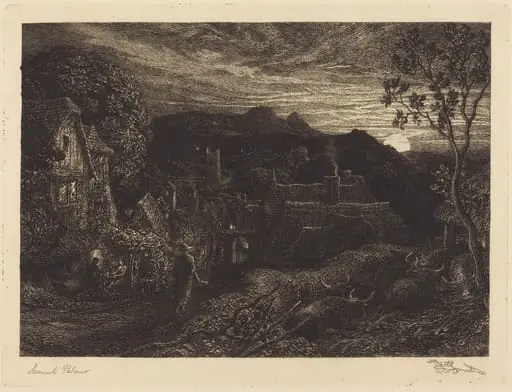
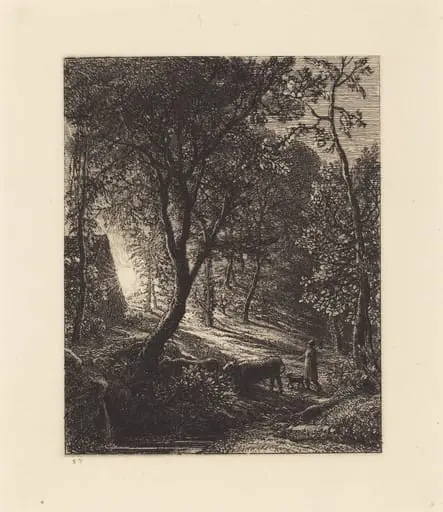
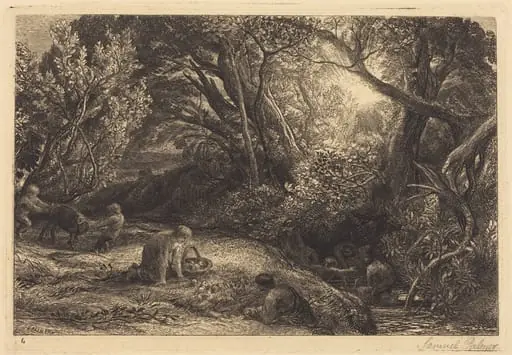
Palmer employed fine, layered etching lines to build texture and depth, using dense hatching in the shadows and delicate strokes in the sky to suggest movement and atmosphere. The contrast between the dark, heavy earth and the diffused, cloud-laden heavens creates a tonal rhythm that guides the viewer’s eye. His technique avoids sharp detail, favoring atmospheric suggestion over realism, characteristic of his Romantic sensibility.
History & Provenance
Created late in Palmer’s career, *The Early Ploughman* belongs to a series of etchings he produced after returning to rural themes following years of urban work. It was made during a period when he was re-engaging with the visionary style of his earlier Shoreham years. The print was likely issued in small editions, circulated among collectors and fellow artists associated with the Society of Painter-Etchers, of which he was a member.
Context
In mid-19th century Britain, industrialization reshaped the countryside, prompting artists like Palmer to revisit agrarian life as a counterpoint to modern change. His work stood apart from documentary realism, instead channeling a mystical reverence for the land. *The Early Ploughman* reflects this tension—rooted in observation, yet elevated by imagination, aligning with broader Romantic currents that idealized nature as a moral and spiritual refuge.
Legacy
Palmer’s etchings, including this one, influenced later generations of British printmakers who sought emotional depth over technical precision. Though less widely known than his oil paintings, his graphic works are recognized for their poetic intensity and quiet originality. *The Early Ploughman* endures as a quiet testament to his belief in the dignity of rural labor and the enduring power of landscape as a vessel for inner reflection.
Own this work as a print
Artist & collection
Artist
Samuel Palmer Hon.RE (Hon. Fellow of the Society of Painter-Etchers) (27 January 1805 – 24 May 1881) was a British landscape painter, etcher and printmaker. He was also a prolific writer. Palmer was a key figure in…