Artwork
Burning Glass
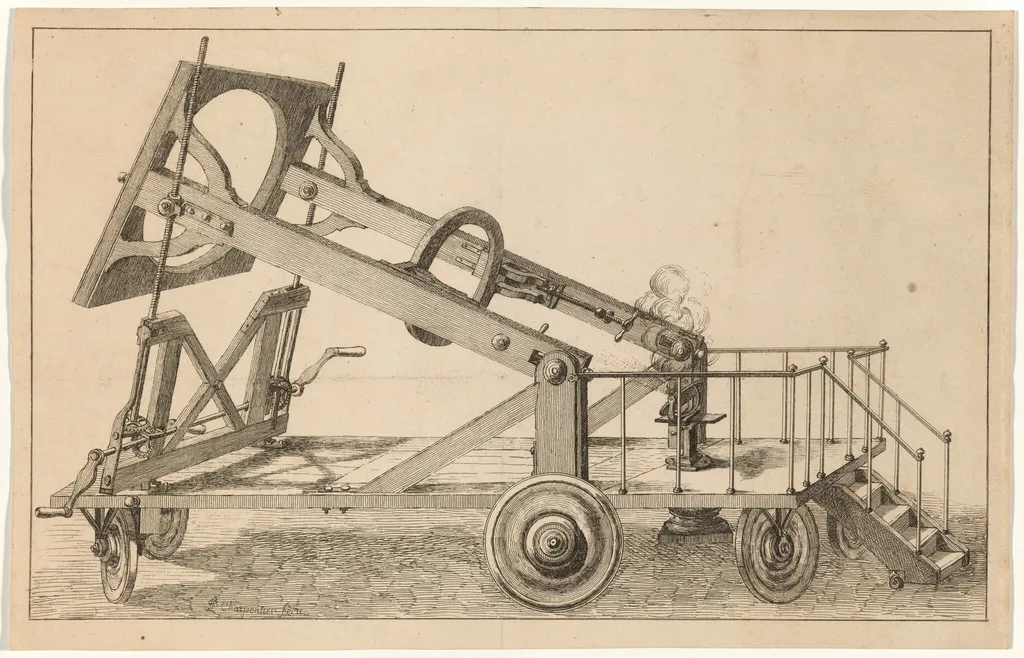
Burning Glass is an ink print by the Romanticist artist François-Philippe Charpentier. It dates from 1774 and is held in the collection of the National Gallery of Art.
About this work
Overview
François-Philippe Charpentier, a French engraver and mechanical innovator born in 1734, produced the etching *Burning Glass* circa 1774.
François-Philippe Charpentier, a French engraver and mechanical innovator born in 1734, produced the etching *Burning Glass* circa 1774. Executed on laid paper, the print captures a complex mechanical device with precision. Charpentier, trained in Paris, was known for advancing printmaking techniques, particularly in aquatint and color engraving. This work exemplifies his dual interest in scientific instrumentation and graphic reproduction.
Subject & Meaning
The image depicts a large, multi-component apparatus composed of wood and metal, featuring pulleys, levers, gears, and a prominent wheel with a curved arm. Though its function is not explicitly stated, the machine suggests an experimental device for concentrating sunlight—possibly a solar burner or optical instrument. The ambiguity invites contemplation of 18th-century scientific inquiry, where mechanical forms often blurred utility and theoretical exploration.
Technique & Style
Charpentier employed etching to render fine linear detail and tonal variation across the machine’s surfaces. The use of hatching and cross-hatching creates depth, emphasizing metallic sheen and wooden grain. The composition is tightly controlled, with no background distractions, focusing attention on the intricate mechanics. His technique reflects a commitment to accuracy, aligning with Enlightenment ideals of documenting technical innovation through precise visual representation.
History & Provenance
Created around 1774, the print emerged during Charpentier’s active period in Paris, where he developed early methods for aquatint and color printing. The work remained within the sphere of scientific and artistic circles before entering the National Gallery of Art’s collection in Washington, D.C. Its preservation there underscores its value as a document of technical culture in 18th-century France, rather than as a purely aesthetic object.
Context
In the decades before the French Revolution, there was growing public fascination with mechanical devices and optical experiments. Charpentier’s print aligns with a broader trend of illustrating scientific instruments—such as lenses, clocks, and solar engines—in printed form. These images served both educational and speculative purposes, bridging artisanal craftsmanship and emerging scientific discourse in Enlightenment Europe.
Legacy
Though Charpentier is less known today than his contemporaries, *Burning Glass* endures as a testament to the intersection of art and engineering in the 18th century. It preserves a moment when printmakers actively contributed to the visualization of science, using their craft to record inventions that might otherwise have been lost to time. The work remains a quiet but significant artifact of technical illustration.
Artist & collection

Artist
François-Philippe Charpentier (b. Blois, 1734; d. there 22 July 1817) was a French engraver and inventor. His father was a bookbinder, a poor man who reportedly made many sacrifices so that his son might attend the…

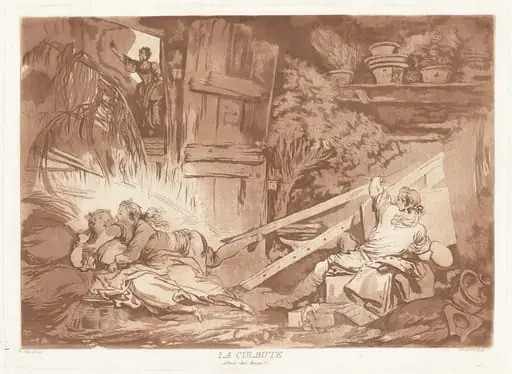 La Culbute (The Tumble)
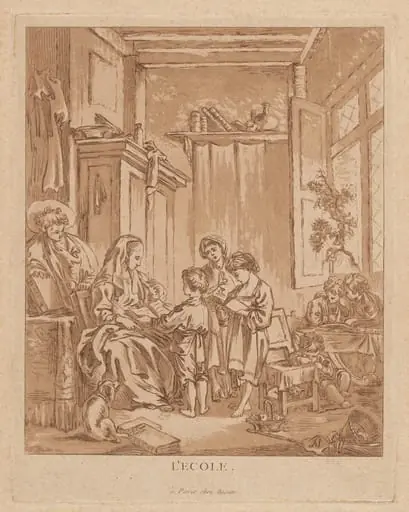 L’École (The School)
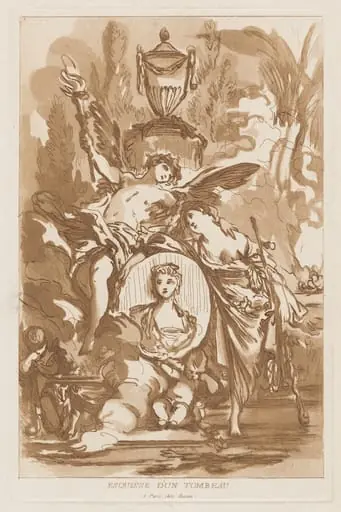 Esquisse d’un tombeau (Sketch for a Tomb)
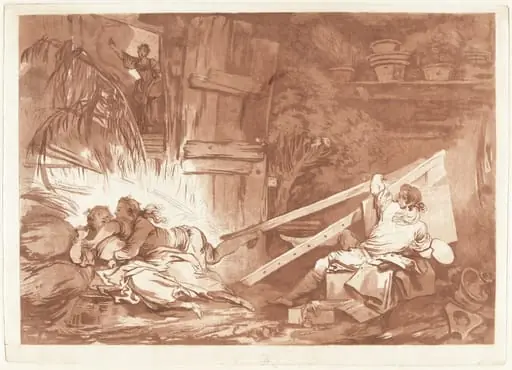 The Tumble
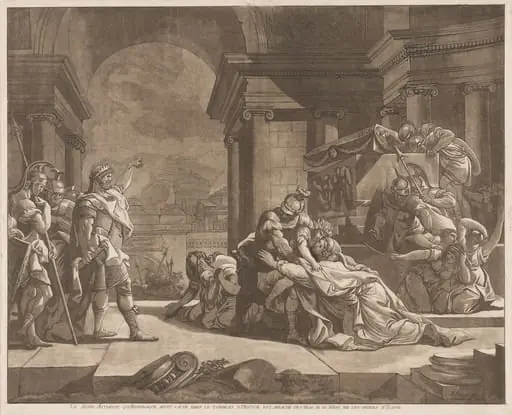 Le Jeune Astianax qu’Andromaque avoit caché dans le tombeau d’Hector est arraché des bras de sa Mere par les ordres d'Ulisse (Young Astianax, who Andromache Hid in Hector's Tomb, is Seized from his Mother's Arms by Ulysses' Orders)
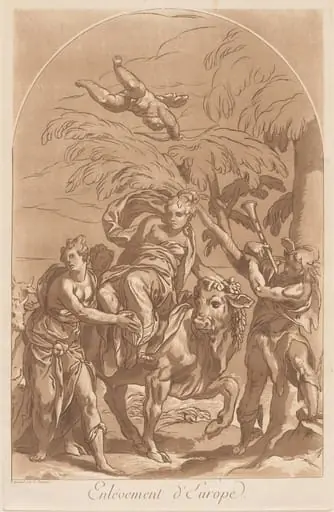 Rape of Europa
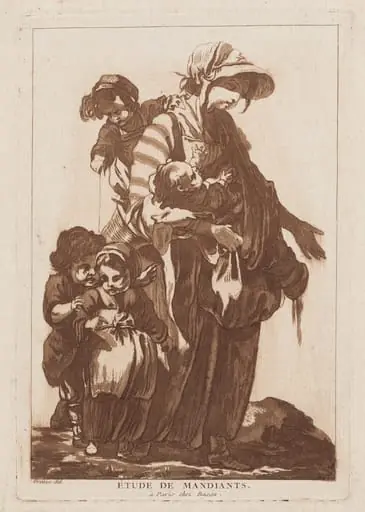 Étude de Mandiants (Study of Beggars)
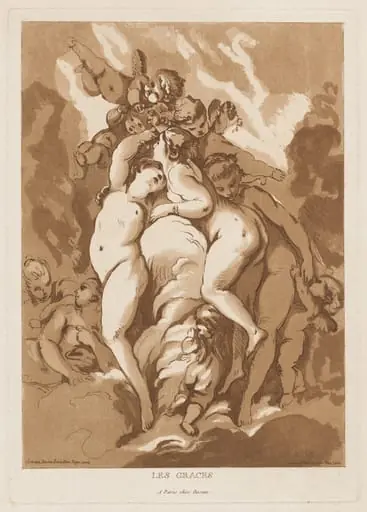 Les Graces (The Graces)
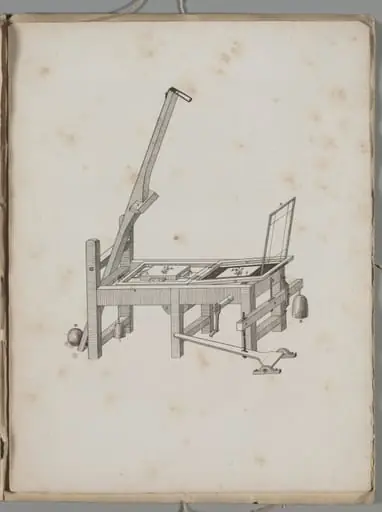 Art of the Lithograph: Printing Press
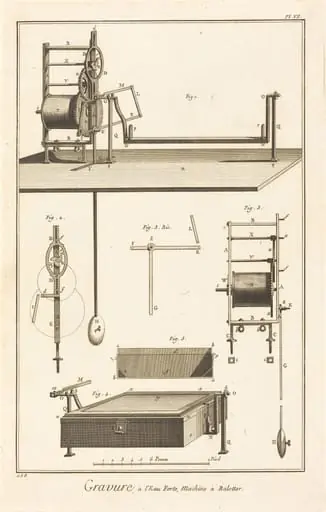 Gravure à l'Eau Forte, Machine à Balotter: pl. VI
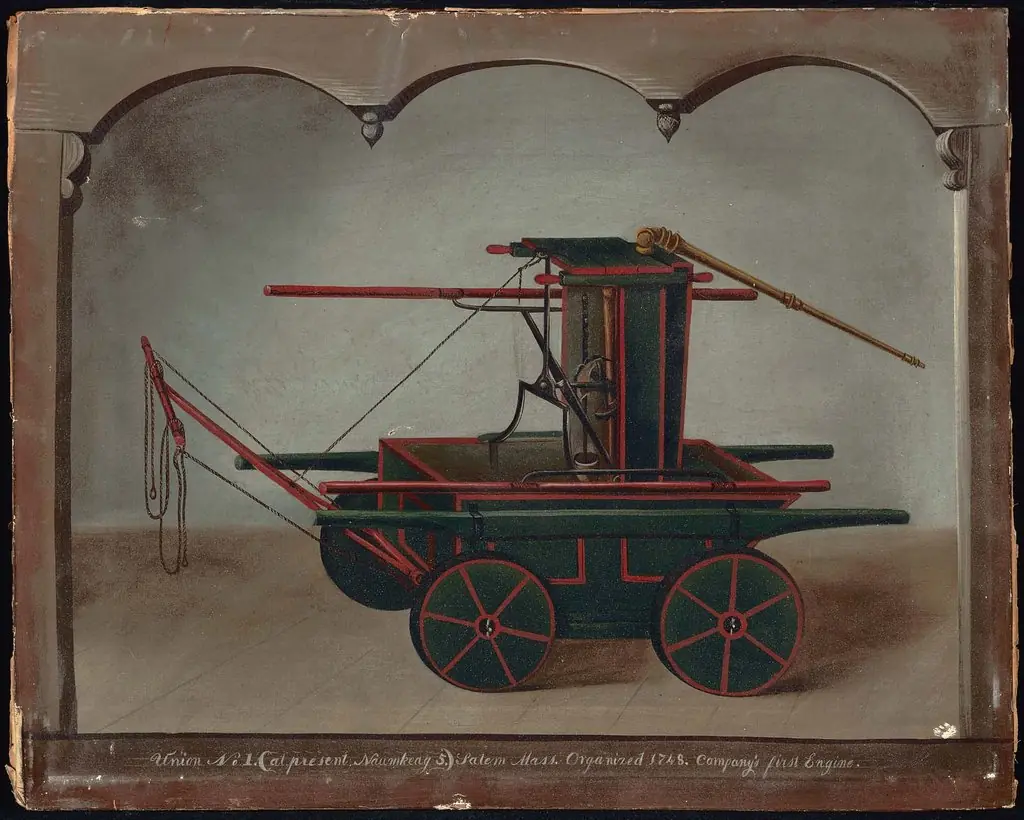 Fire Engine
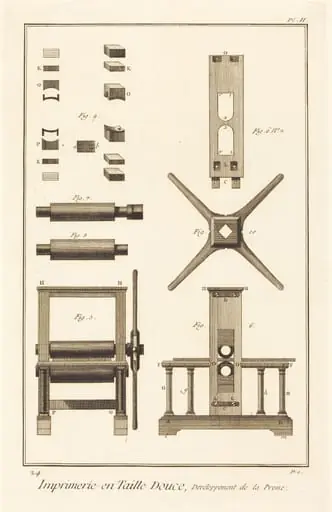 Imprimerie en Taille Douce, Devéloppement de la Presse: pl. II
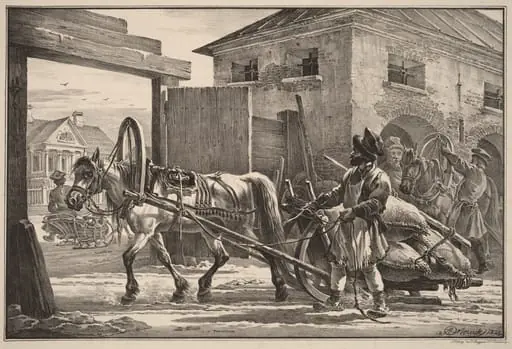 Sled Loaded with Flour Led by an Isvoschik
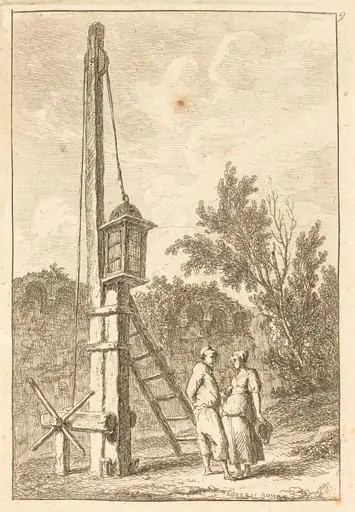 The Post
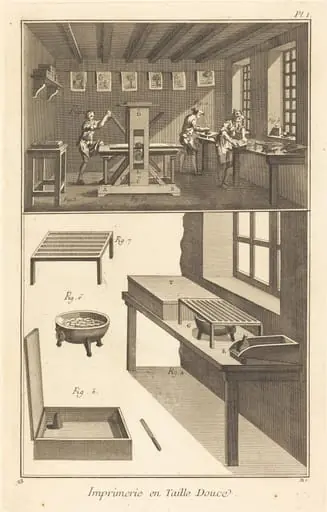 Imprimerie en Taille Douce: pl. I
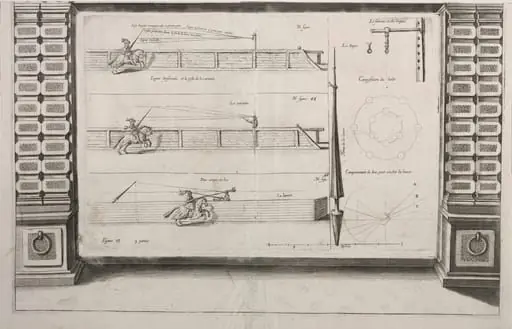 Diagram for Lance Practice
 Le Poteau
 Russian Porter Carrying Wood on a Cart
 H Beard Print Collection
 The Four Windmills