Artwork
The Four Festivals: Festival of Diana
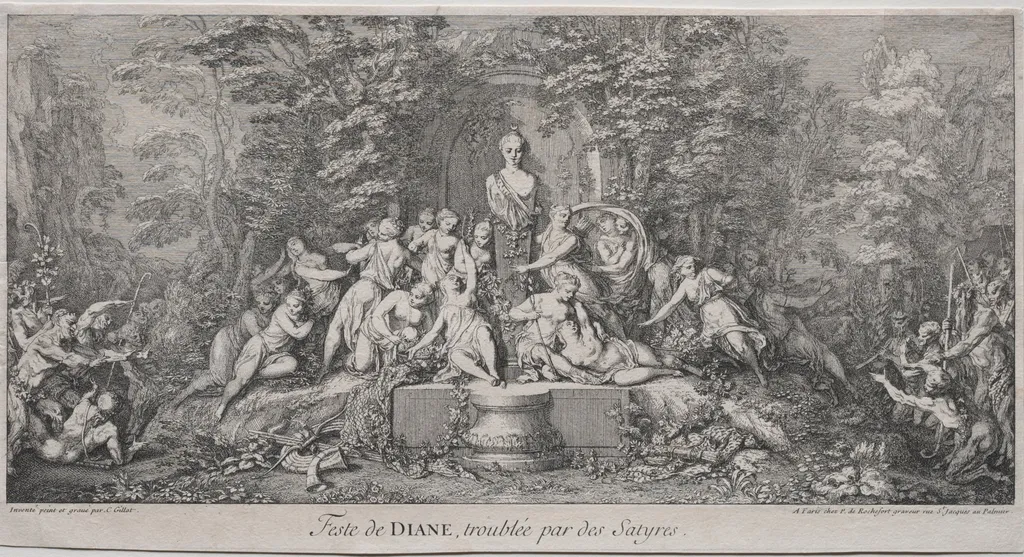
The Four Festivals: Festival of Diana is a print by the Baroque artist Claude Gillot. It dates from 1704 and is held in the collection of the Cleveland Museum of Art. The print portrays a celebration dedicated to Diana, the Roman deity of forests and wildlife.
About this work
The caption says the satyrs are “troubling” the festival—you can tell by their grins and the way they lean into the trees.
You see a wild party in the woods: naked and half-dressed people dance around a stone altar topped with a goddess’s bust, while goat-legged satyrs crash the scene.
This is one of four prints celebrating nature gods. The caption says the satyrs are “troubling” the festival—you can tell by their grins and the way they lean into the trees. The artist packed the edges with leaves and branches, making the forest feel like a living frame.
To see how other artists drew myth in the woods, look up subject: france, 18th century.
Overview
The print portrays a celebration dedicated to Diana, the Roman deity of forests and wildlife. Set within a densely vegetated grove, the scene shows nude and partially clothed figures moving around a stone altar crowned with a sculpted bust of the goddess. The composition is framed by abundant foliage, giving the impression of a living, enclosing forest.
Subject & Meaning
The gathering is meant to honor Diana, yet the composition notes that satyrs—mythical creatures with goat-like legs and mischievous expressions—are intruding upon the rite. Their presence, indicated by leering faces and aggressive postures at the periphery, suggests a disruption of the sacred festivities, highlighting the tension between civilized worship and untamed nature.
Technique & Style
The artist employs a decorative border of leaves and branches that encircles the central action, creating a natural frame that reinforces the woodland setting. Figures are rendered with a blend of nudity and partial drapery, emphasizing both vulnerability and the mythic atmosphere. The satyrs are depicted with muscular, goat‑legged bodies, their exaggerated features accentuating the scene’s playful yet chaotic tone.
History & Provenance
This image is one of a quartet of prints, each dedicated to a different nature god—Faunus, Bacchus, Pan, and Diana. The series was produced in the eighteenth century, reflecting contemporary interest in classical mythology and the pastoral genre. The prints were likely circulated as a set, illustrating various aspects of rural divine worship.
Context
During the eighteenth century, French artists frequently revisited mythological subjects within idyllic woodland settings, merging classical narratives with the era’s fascination for the picturesque. The inclusion of satyrs as disruptive forces aligns with a broader artistic convention that juxtaposed the purity of divine rites against the ribald humor of rustic deities.
Artist & collection
Artist
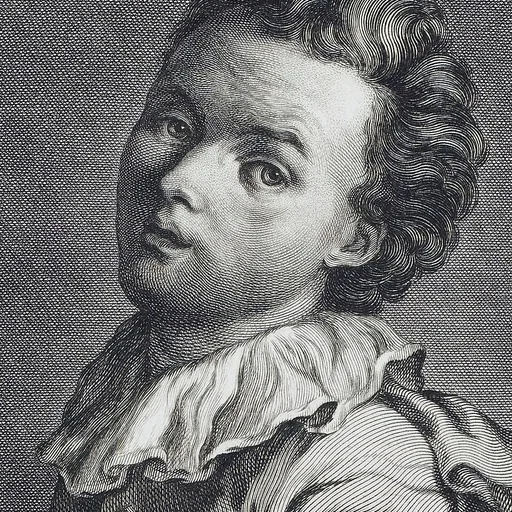
Claude Gillot (April 27, 1673 – May 4, 1722) was a French painter, printmaker, and illustrator, best known as the master of Watteau and Lancret.

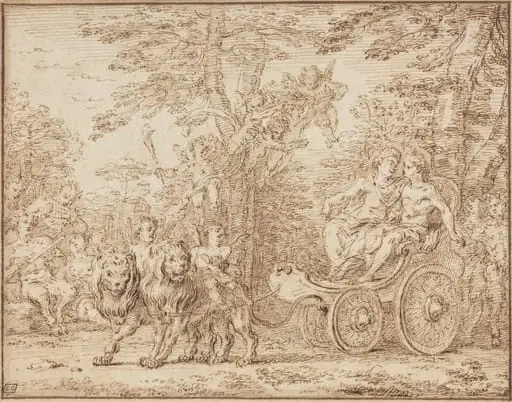 The Triumph of Marriage
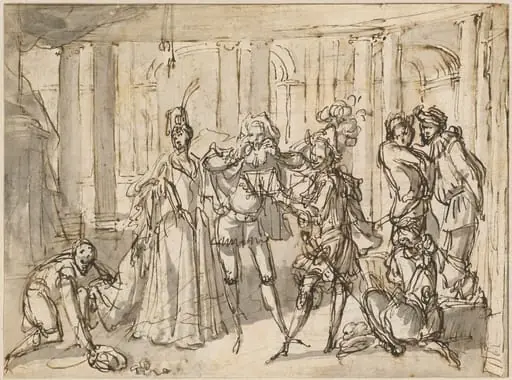 A Performance by the Commedia dell'Arte
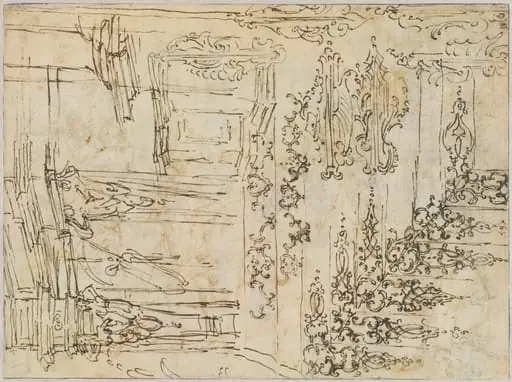 Studies of Ornament and Architecture
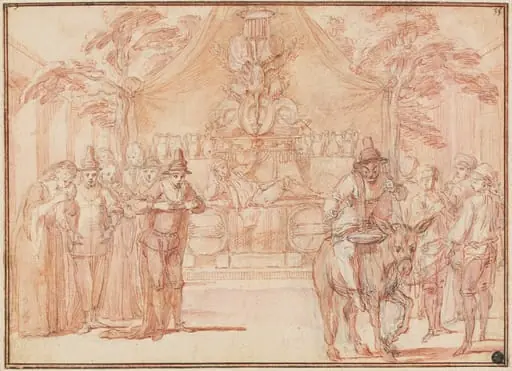 Scene from "The Tomb of Master André"
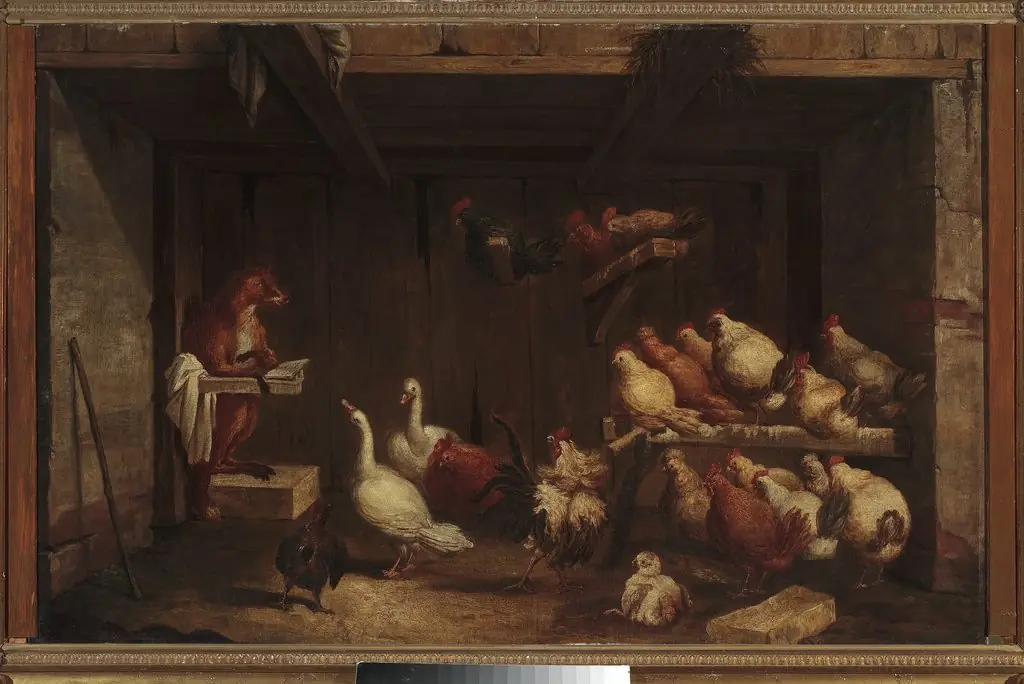 Fox preaching to birds
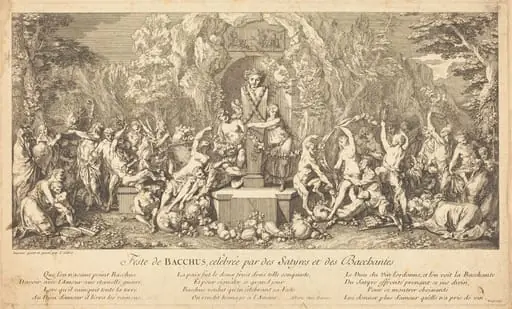 Feste de Bacchus, celebree par des Satyres et des Bacchantes (Feast of Bacchus Celeb rated by Satyrs and Bacchanales)
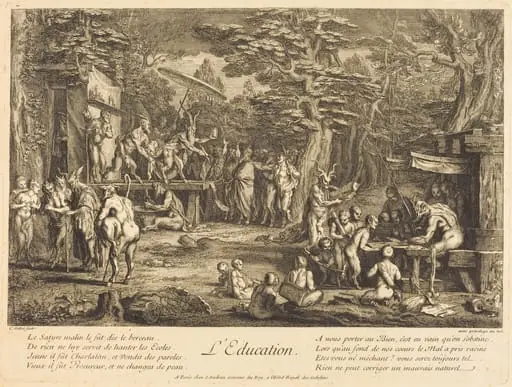 L'Education (Education)
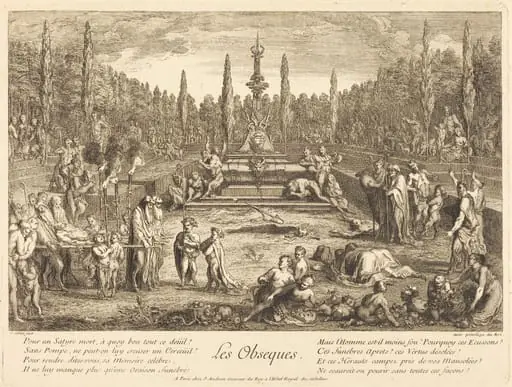 Les Obseques (The Funeral Rites)
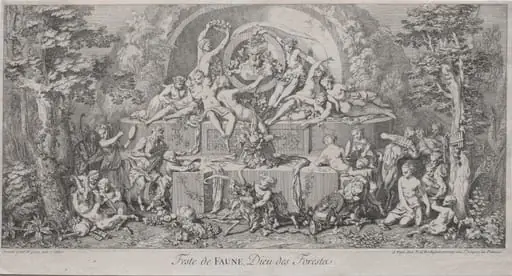 The Four Festivals: Festival of Faune
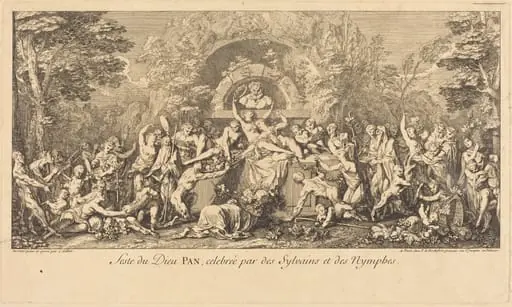 Feste du Dieu Pan, celebree par des Sylvains et des Nymphes (Feast of the God Pan Celebrated by Sylvans and Nymphs)
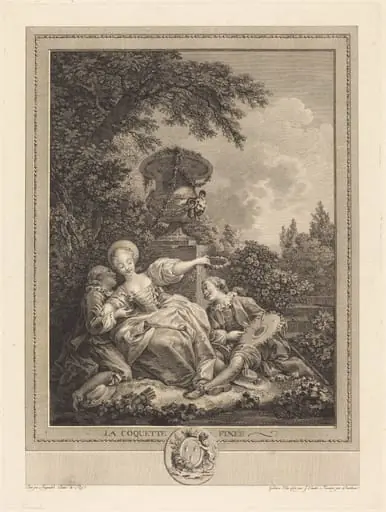 La coquette fixee
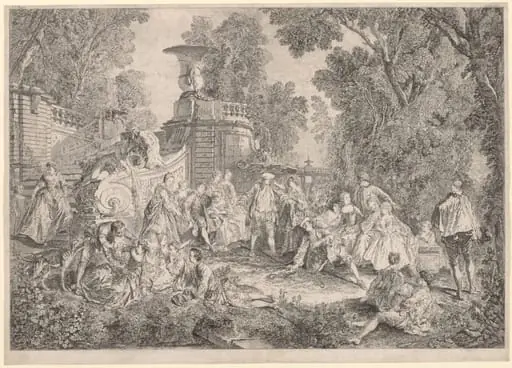 The Game of Blind Man's Bluff
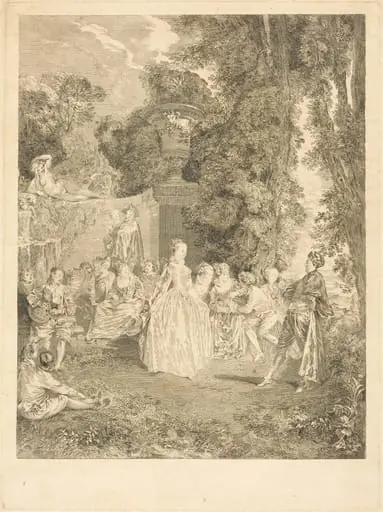 Fetes venitiennes
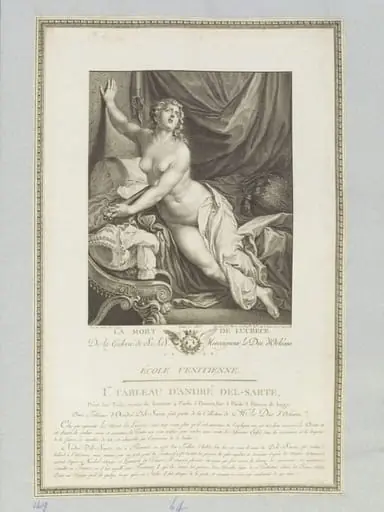 The Death of Lucretia
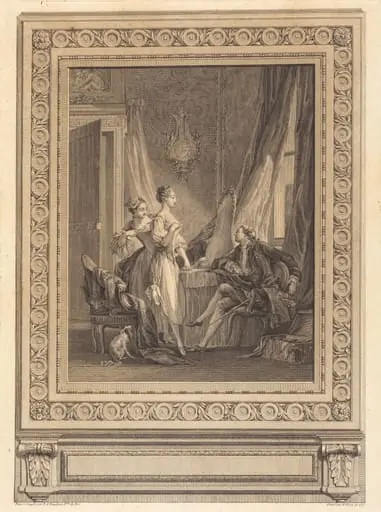 La toilette
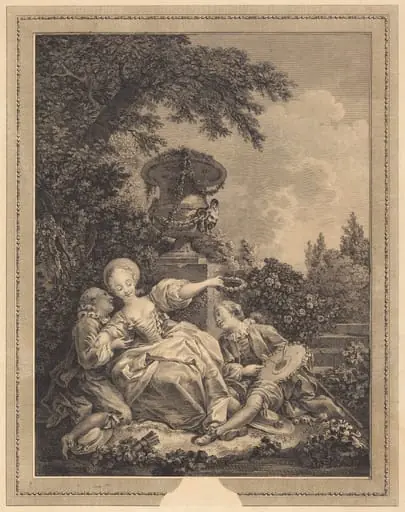 La coquette fixée
![La Hollande accepte la paix et se détache de l'Allemagne et de l'Espagne 1678 Cintre de la Galerie du côté du Salon de la Paix (Holland Accepts Peace and Detaches Itself from Germany and Spain 1678, Center of the Gallery next to the Salon of Peace) [pl. 33], by Jean-Baptiste Massé](https://artifactworldgallery.com/img/jean-baptiste-masse--la-hollande-accepte-la-paix-et-se-detache-de-l-allemagne-et--21582d3cc94c3d89-w320.webp) La Hollande accepte la paix et se détache de l'Allemagne et de l'Espagne 1678 Cintre de la Galerie du côté du Salon de la Paix (Holland Accepts Peace and Detaches Itself from Germany and Spain 1678, Center of the Gallery next to the Salon of Peace) [pl. 33]
La Hollande accepte la paix et se détache de l'Allemagne et de l'Espagne 1678 Cintre de la Galerie du côté du Salon de la Paix (Holland Accepts Peace and Detaches Itself from Germany and Spain 1678, Center of the Gallery next to the Salon of Peace) [pl. 33]