Artwork
Louis Cesar de La Baume-le-Blanc
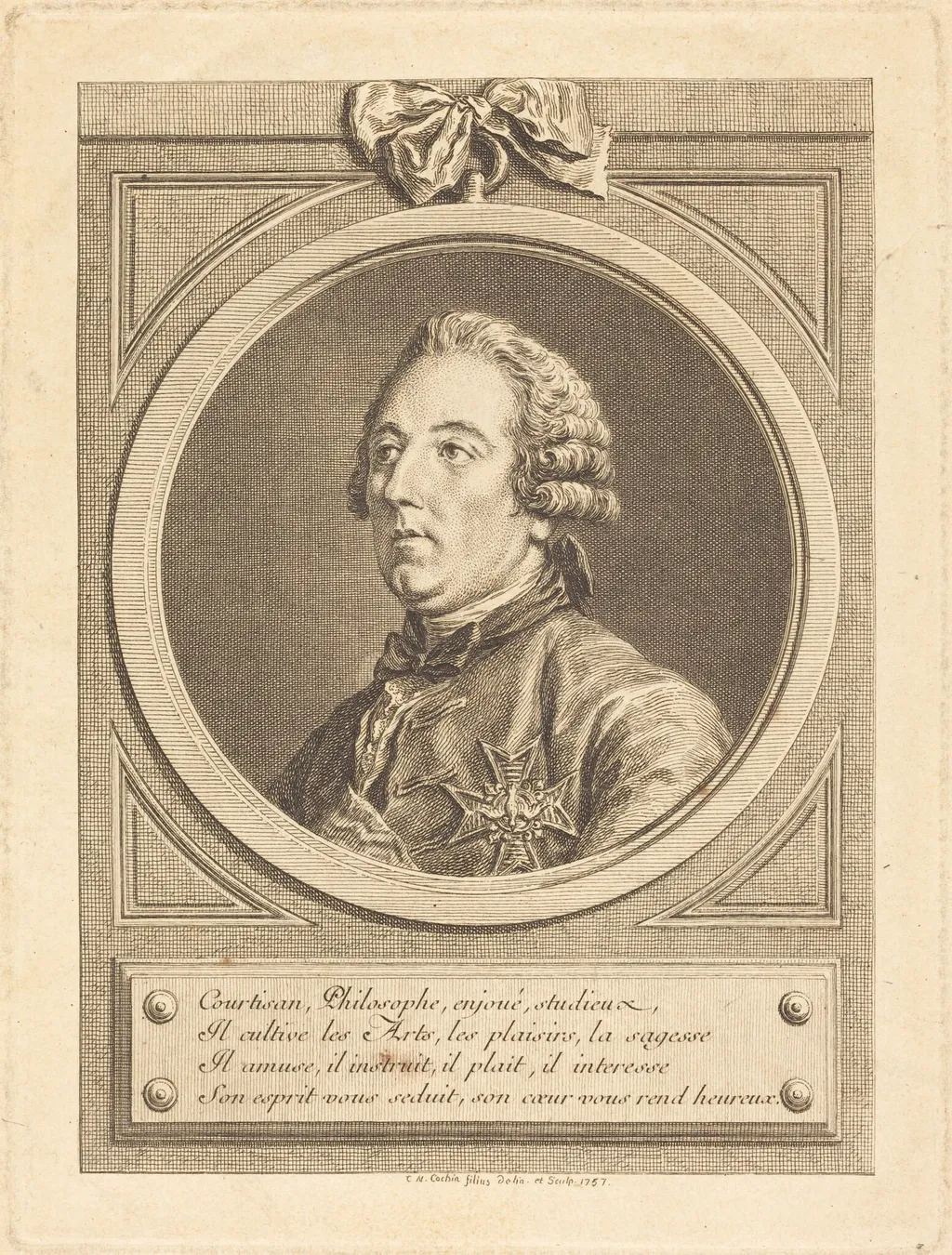
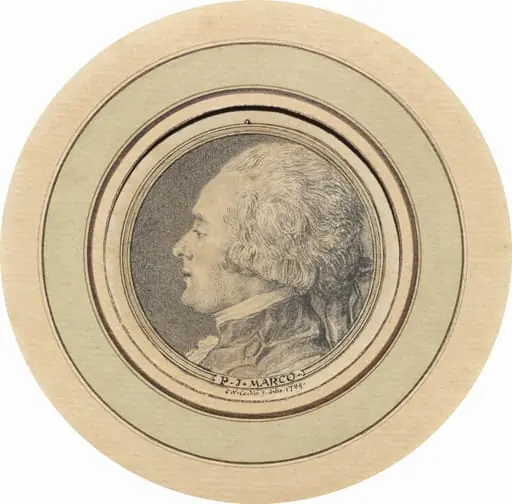
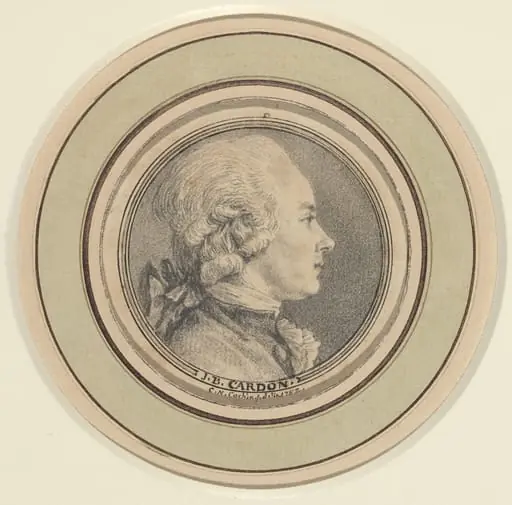
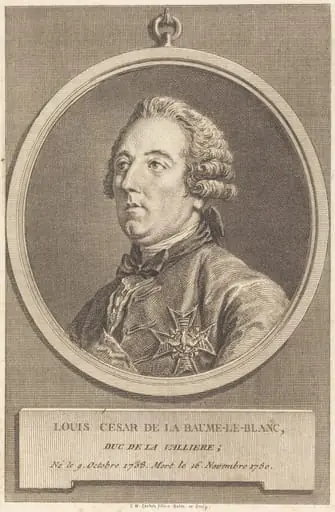
Louis Cesar de La Baume-le-Blanc is an ink print by the Romanticist artist Charles-Nicolas Cochin II. It dates from 1757 and is held in the collection of the National Gallery of Art.
About this work
Overview
This 1757 etching by Charles-Nicolas Cochin II depicts Louis César de La Baume-le-Blanc, a French nobleman and military officer.
This 1757 etching by Charles-Nicolas Cochin II depicts Louis César de La Baume-le-Blanc, a French nobleman and military officer. Rendered in monochrome on laid paper, the portrait captures the subject with restrained elegance. The textured surface of the paper, typical of 18th-century printmaking, enhances the tactile quality of the image. The composition is framed by an inscription in French, honoring the sitter’s intellect and personal grace.
Subject & Meaning
Louis César de La Baume-le-Blanc is portrayed with a composed demeanor, his gaze turned slightly away from the viewer, suggesting introspection rather than confrontation. The star-shaped insignia on his chest indicates his membership in a chivalric order, while the floral wreath above his head alludes to honor and distinction. The accompanying French text elevates his character, framing the image as a tribute to both his social standing and personal virtues.
Technique & Style
Cochin employed etching to achieve fine, controlled lines that define the sitter’s features and attire with precision. The use of laid paper, with its distinctive chain-line texture, adds subtle depth and authenticity to the print. Delicate hatching models the folds of the high collar and the contours of the face, while the border text is rendered in crisp, legible script. The absence of color focuses attention on form and expression, characteristic of portraiture in the French Enlightenment tradition.
History & Provenance
Created in 1757, the print was likely produced as part of a series documenting notable French figures of the era. It circulated among aristocratic and intellectual circles, serving both as a personal commemoration and a cultural artifact. While its early ownership is undocumented, its survival reflects the enduring interest in portraiture as a medium for recording social identity during the mid-18th century.
Context
In mid-18th-century France, etched portraits were common tools for disseminating the likenesses of nobility and public figures. Cochin, a prominent engraver and art theorist, often collaborated with the court and academies. This print aligns with a broader trend of using printmaking to reinforce social hierarchies and celebrate individual merit, particularly among military and courtly elites.
Legacy
Though not widely reproduced in modern collections, the print remains a representative example of French Enlightenment portraiture. It illustrates how printmakers like Cochin bridged art and documentation, preserving the image of individuals whose influence extended beyond the battlefield or court. Its preservation offers insight into the visual culture of status and refinement in pre-revolutionary France.
Artist & collection