Artwork
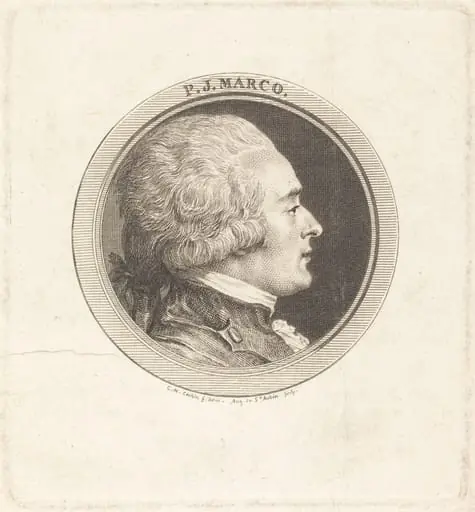
P.J. Marco
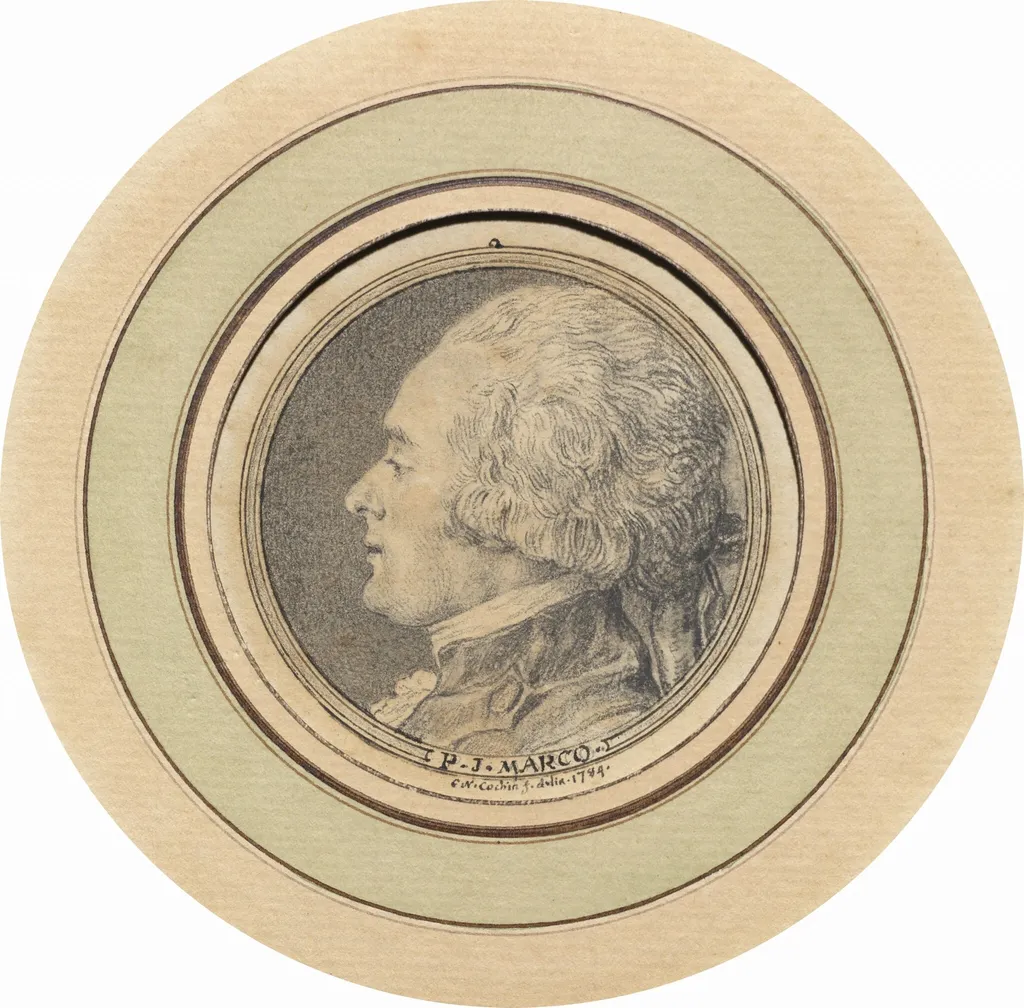
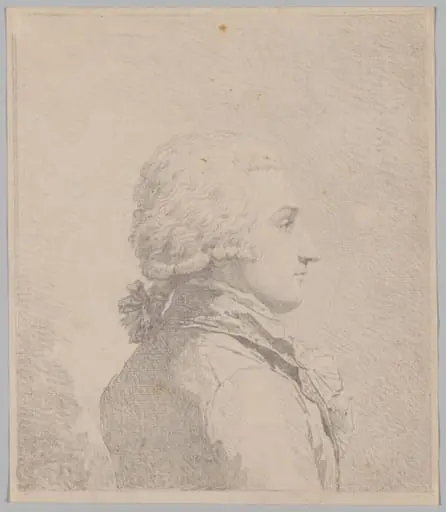
P.J. Marco is a chalk drawing by the Romanticist artist Charles-Nicolas Cochin II. It dates from 1784 and is held in the collection of the National Gallery of Art. Charles‑Nicolas Cochin II’s drawing titled P.
About this work
Overview
The sitter’s head is turned slightly, offering a three‑quarter profile, while a high‑collared garment frames the composition.
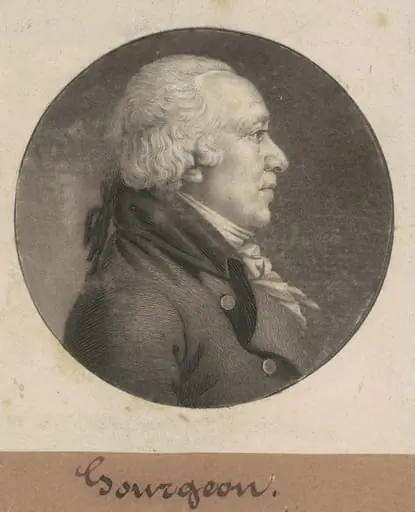
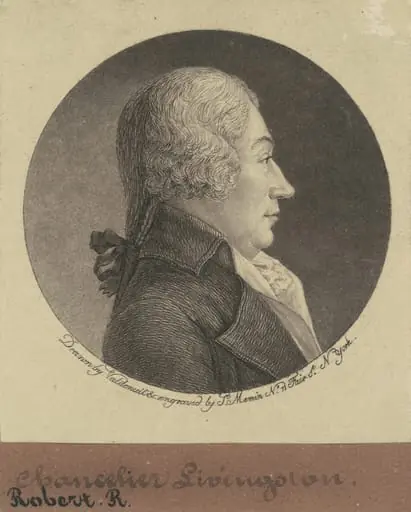
Charles‑Nicolas Cochin II’s drawing titled P.J. Marco, executed in black chalk in 1784, presents a monochrome portrait of a seated figure. The sitter’s head is turned slightly, offering a three‑quarter profile, while a high‑collared garment frames the composition. A circular border edged with twin lines encloses the image, and the inscription “P.J. Marco” appears in modest lettering at the lower edge.
Subject & Meaning
The work captures an individual, likely a contemporary of the artist, with attention to facial expression and the texture of wavy hair. The subdued pose and restrained attire suggest a focus on personal character rather than status, inviting viewers to consider the sitter’s demeanor through subtle facial cues.
Technique & Style
Rendered in black chalk, Cochin employs delicate gradations of tone to model light and shadow across the face, creating a sense of volume. The soft shading, reminiscent of chiaroscuro principles, defines the contours of the hair and collar without heavy line work, resulting in a restrained yet detailed representation.
History & Provenance
Created in the late eighteenth century, the portrait was produced during Cochin’s mature period, when he was active as a draughtsman and engraver in Paris. The drawing’s provenance traces to private collections before entering the museum’s holdings, where it is displayed as part of the institution’s holdings of French portraiture.
Artist & collection


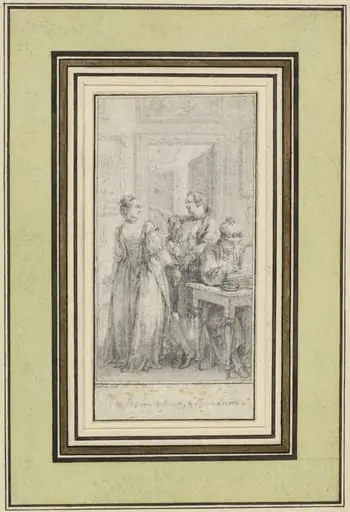 Eighth Day, First Story, Madonna Ambruogia Gives Her Husband the Two Hundred Florins She Was Given by Gulfardo in Payment for Her Favors
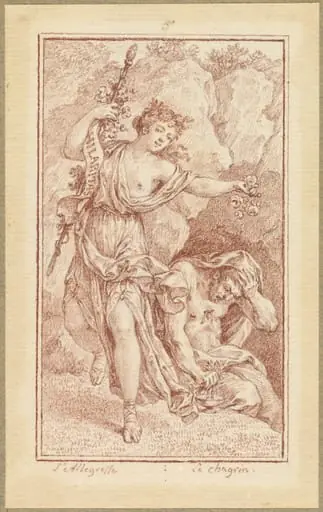 Gaiety and Grief
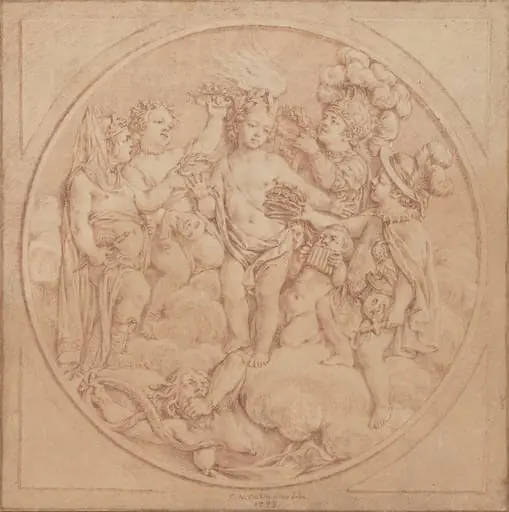 Allegory of Fame
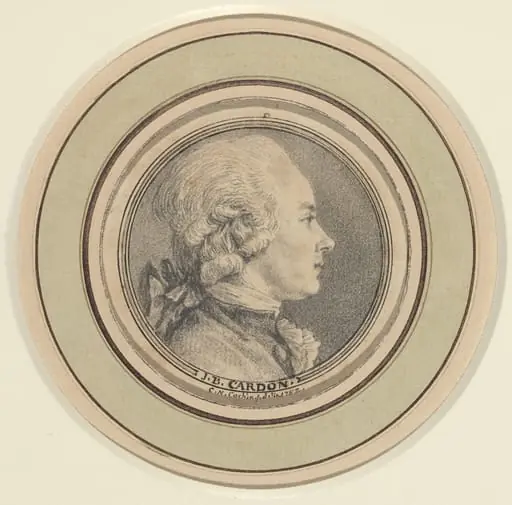 J.B. Cardon
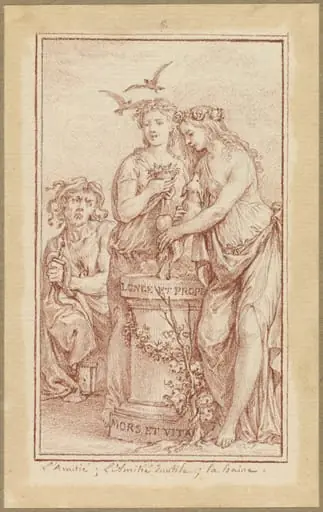 Friendship, Useless Friendship, and Hate
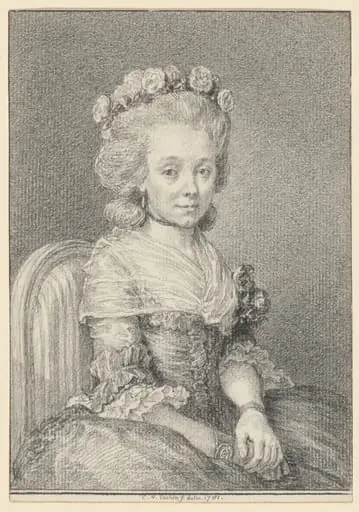 Mademoiselle Grogniard, Dame de Saint-Just
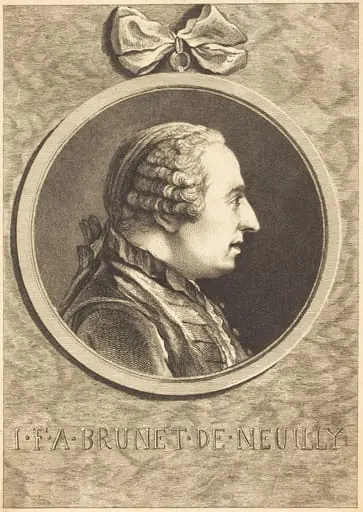 Brunet de Neuilly
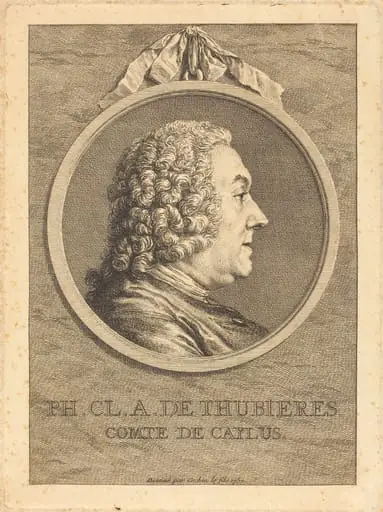 Ph.Cl.A. de Thubieres, Comte de Caylus