Artwork
Title Page for Heribert Rosweyde, 'T Vaders Boeck
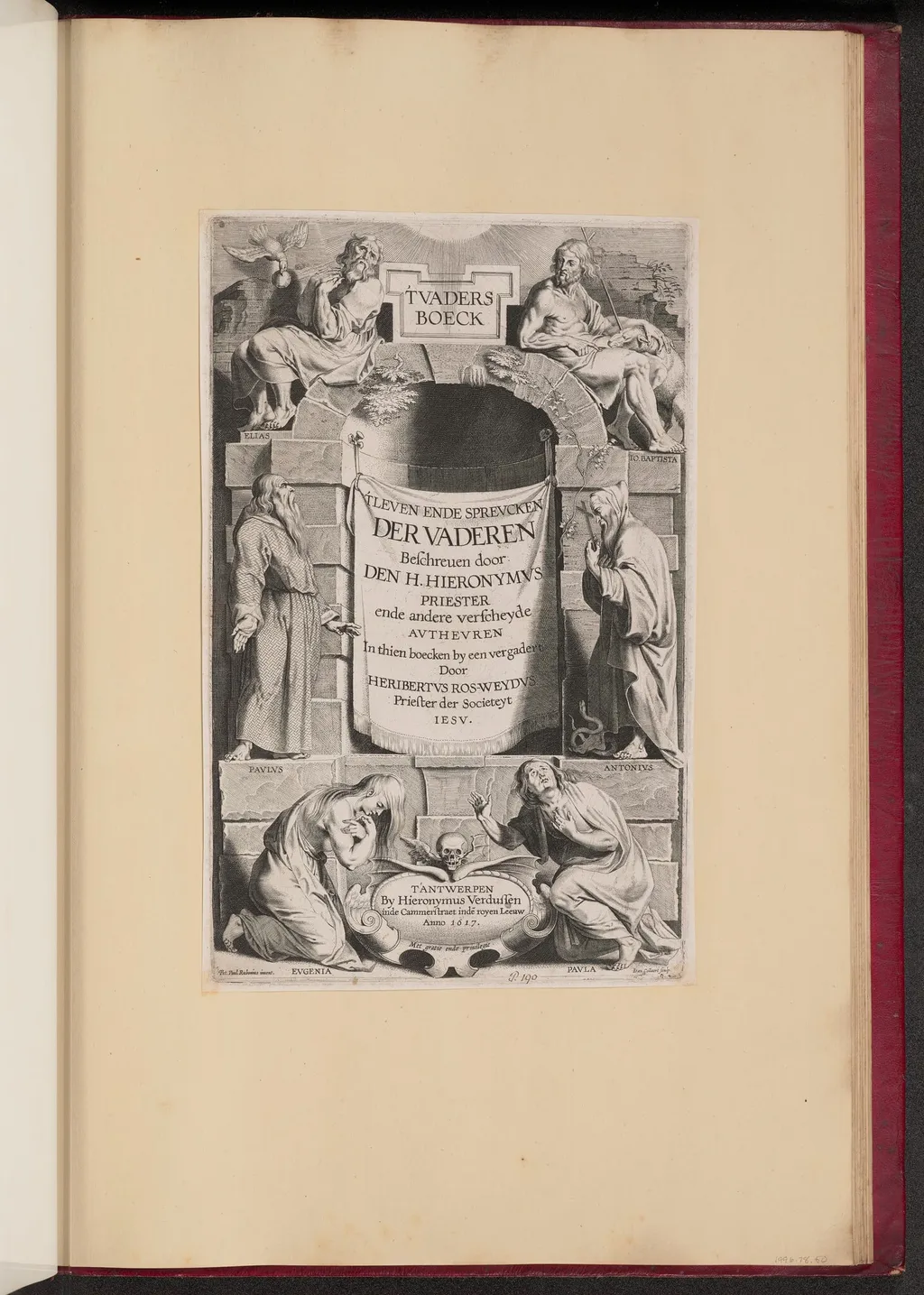
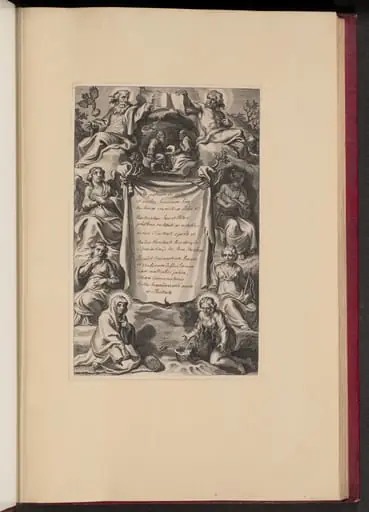
Title Page for Heribert Rosweyde, 'T Vaders Boeck is an ink print by the Baroque artist Jan III Collaert. It dates from 1617 and is held in the collection of the National Gallery of Art.
About this work
Overview
The composition is structured in three horizontal registers, each layering symbolic meaning to underscore the spiritual and intellectual purpose of the volume.
This 1617 engraving by Jan III Collaert served as the title page for Heribert Rosweyde's devotional text, 'T Vaders Boeck.' Executed on laid paper using the engraving technique, the image combines allegorical and devotional imagery to frame the scholarly work. The composition is structured in three horizontal registers, each layering symbolic meaning to underscore the spiritual and intellectual purpose of the volume.
Subject & Meaning
The scene presents a hierarchy of sacred figures: two classical scholars on the upper ledge, possibly representing ancient wisdom, observe a central book inscribed with the volume’s title. Four standing figures labeled Elias, Paulus, and others gaze toward it, suggesting reverence for apostolic tradition. Below, two women kneel—one in prayer, the other gesturing to a skull—evoking mortality and penitence. Together, the imagery links scriptural authority, contemplative devotion, and the inevitability of death.
Technique & Style
The image was produced through metal engraving, a precise method involving incised lines on a copper plate inked and pressed onto paper. Collaert’s fine, controlled lines create texture in drapery, architectural details, and facial expressions. The composition is tightly organized in tiers, reflecting Northern Renaissance traditions of allegorical printing. The clarity of each figure and inscription demonstrates the technical skill required to render complex narratives in small-scale prints.
History & Provenance
Created in 1617 for Rosweyde’s compilation of patristic writings, the print was part of a broader Jesuit effort to systematize early Christian texts. Rosweyde, a Flemish Jesuit, aimed to publish a comprehensive collection of Church Fathers’ works; this title page introduced his first volume. The engraving likely circulated among scholarly and religious circles in the Southern Netherlands, where print culture flourished under Catholic patronage.
Context
In early 17th-century Flanders, religious publishing was deeply tied to Counter-Reformation ideals. Rosweyde’s project aligned with Jesuit scholarship seeking to reinforce Catholic doctrine through historical sources. Collaert’s imagery, blending classical and Christian motifs, mirrored the era’s intellectual synthesis—where ancient philosophy and sacred tradition were presented as complementary. The use of Dutch text, rather than Latin, also signaled a move toward broader accessibility within the vernacular.
Legacy
Though Rosweyde’s original project was completed posthumously by Jean Bolland, this title page remains a key artifact of early modern religious printing. It exemplifies how visual design was used to legitimize scholarly works through symbolic authority. The engraving’s structure influenced later devotional and academic title pages in the Low Countries, embedding theological messaging within formal composition long after its initial publication.
Artist & collection

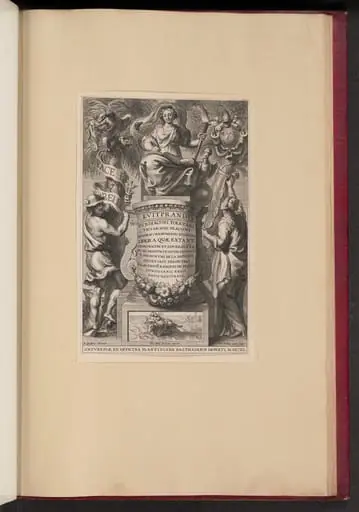 Title Page for Liutprand, Opera
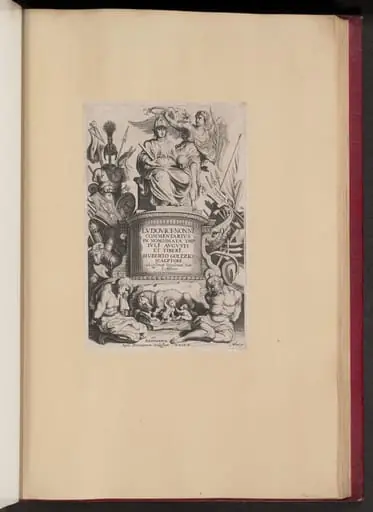 Title Page for Ludovicus Nonnius, Commentarius in Nomismata
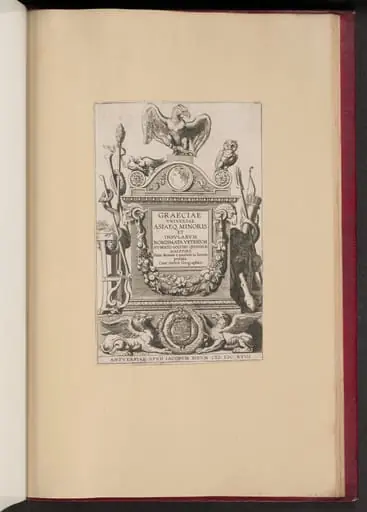 Title Page for Hubert Goltzius, Graeciae Vniversae Asiaeq. Minoris et Insularum Nomismata
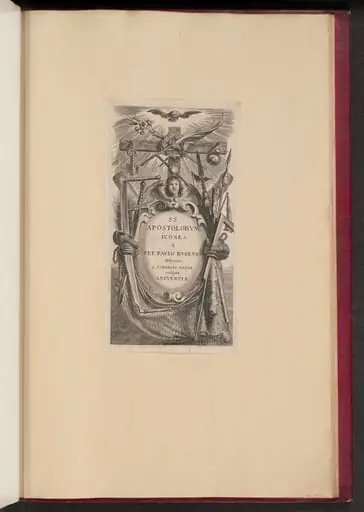 Title Plate for SS. Apostolorvm Icones
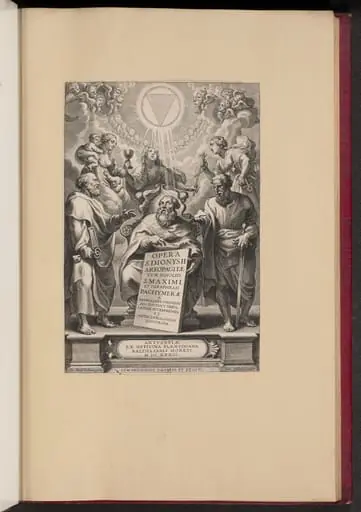 Title Page for Balthasar Cordier's "Opera S. Dionysii Areopagitae, I"
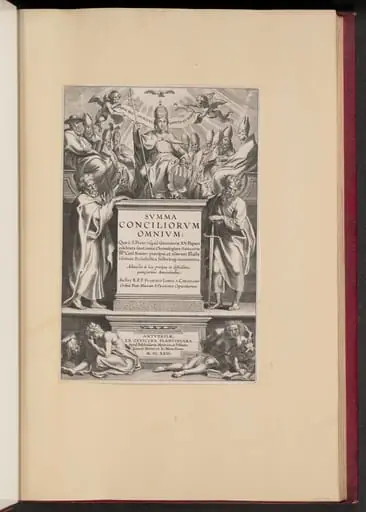 Title Page for F. Longo a Coriolano's "Svmma Conciliorvm Omnivm"
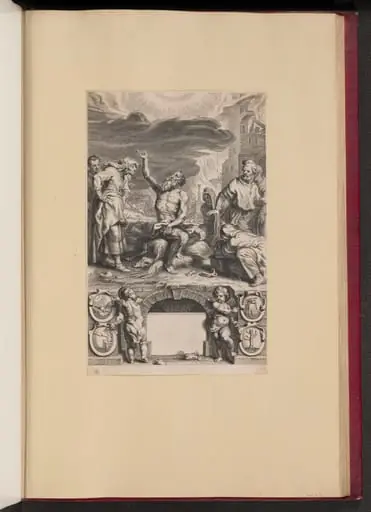 Title Page for Balthasar Cordier, Iob Elvcidatvs
 Title Page for Ludovicus Blosius, Opera
 Title Page for Ludovicus Nonnius, Commentarius in Huberti Goltzi Graeciam, Insulas, et Asiam Minorem
 Title Page for Justus Lipsius, Opera Omnia, I
 Title Page for Heribert Rosweyde's "Vitae Patrum"
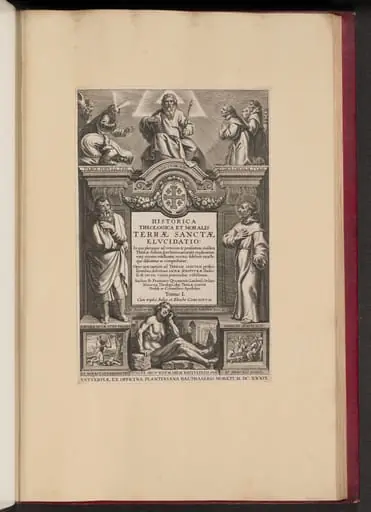 Title Page for Franciscus Aguilonius, Historica Theologica et Moralis Terrae Sanctae Elvcidatio
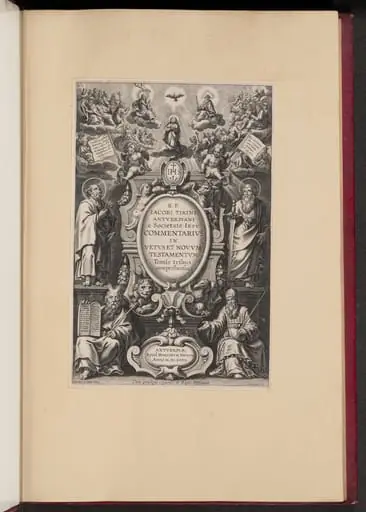 Title Page for R.P. Jacobi Tirini's "Commentarius in Vetvs et Novvm Testamentvm"
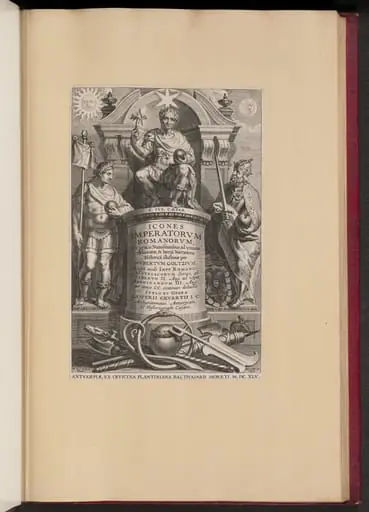 Title Page for Hubert Goltzius's Icones Imperatorvm Romanorvm (Opera Omnia, V)
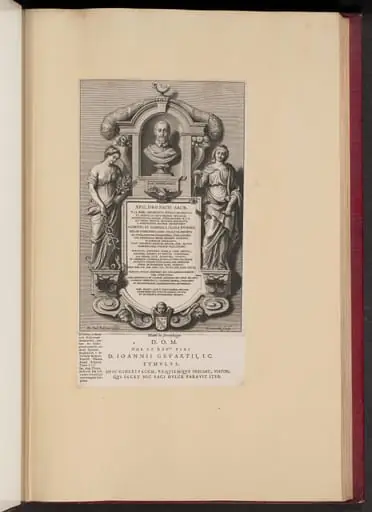 Epitaph of Claude Jean Gevaert