Artwork
Title Page for Heribert Rosweyde's "Vitae Patrum"
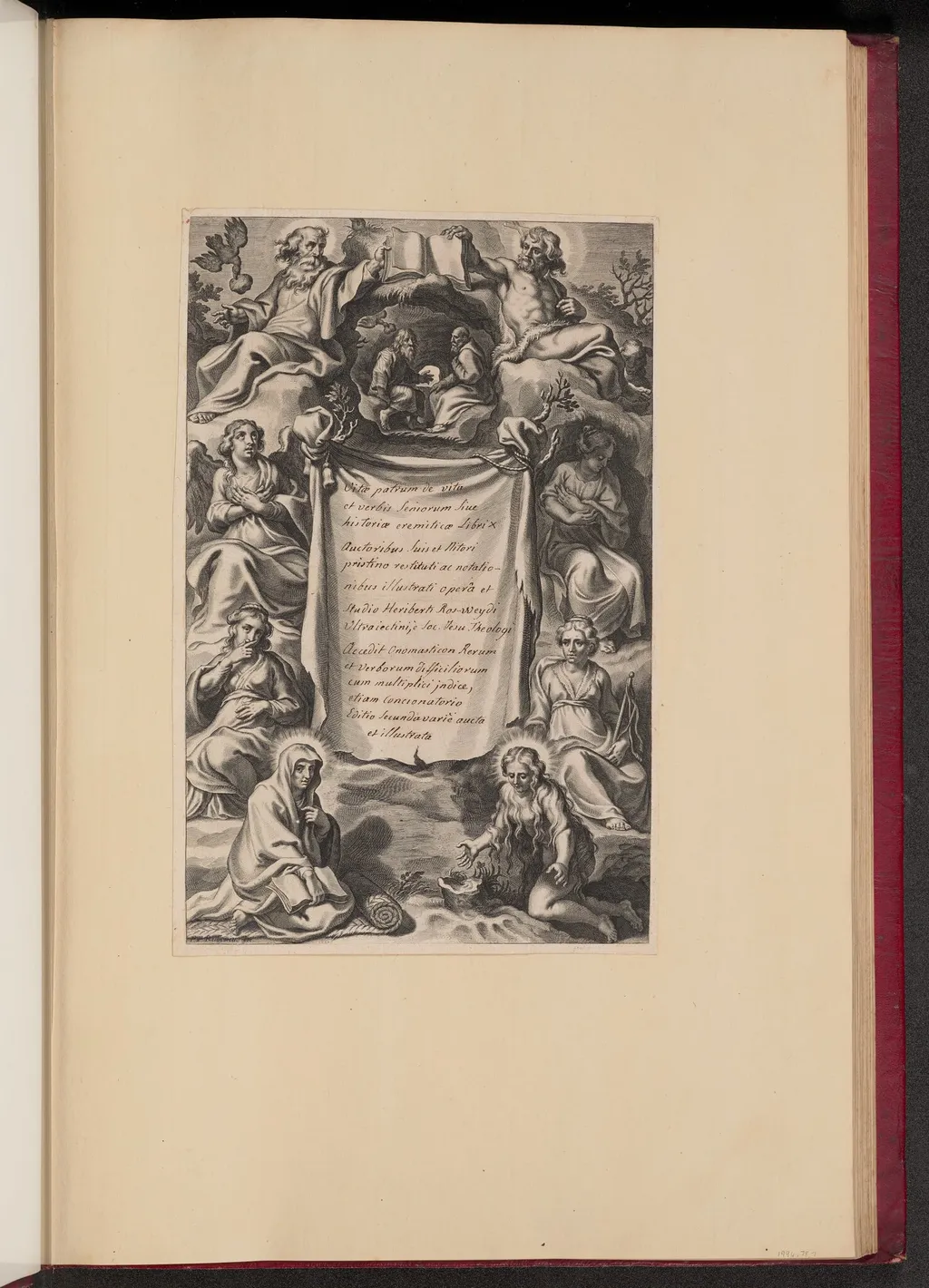
Title Page for Heribert Rosweyde's "Vitae Patrum" is an ink print by the Baroque artist Cornelis Galle I. It dates from 1628 and is held in the collection of the National Gallery of Art.
About this work
Overview
The 1628 title page for Heribert Rosweyde’s *Vitae Patrum* is an engraving on laid paper, accompanied by Latin text rendered in pen and brown ink. Executed by Cornelis Galle the Elder, the composition gathers a group of figures around a central tableau, set within a rocky landscape under a sky populated by two bearded men on clouds.
Subject & Meaning
The central scene depicts a woman reclining on a rock with a sleeping child, while surrounding figures kneel or stand, some holding books, staffs, or scrolls. The two celestial bearded figures above, one with a book and the other with a scroll, suggest divine or scholarly authority, underscoring the work’s function as a frontispiece for a collection of saints’ lives.
Technique & Style
Galle employed a fine burin to incise delicate lines, creating nuanced shading that gives the figures a three‑dimensional presence despite the monochrome medium. The use of laid paper provides a subtle texture, while the handwritten Latin caption in brown ink adds a contrasting, human touch to the otherwise precise engraving.
History & Provenance
Born in Antwerp in 1576, Cornelis Galle the Elder was trained by his father Philip Galle before a formative stay in Rome, where he refined his design sensibility. After returning to Antwerp, he worked as both engraver and printseller, producing works after his own designs and those of contemporaries, situating this title page within the flourishing Northern European print tradition of the early 17th century.
Artist & collection

Artist
Cornelis Galle the Elder (1576 – 29 March 1650), a younger son of Philip Galle, was born at Antwerp in 1576, and was taught engraving by his father.

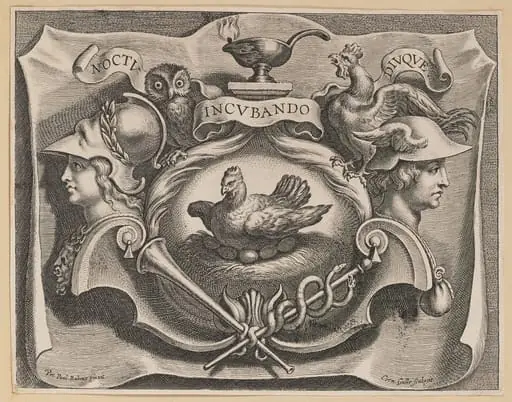 Vignette for the Title Page of Martinus Bonacina, Opera Omnia
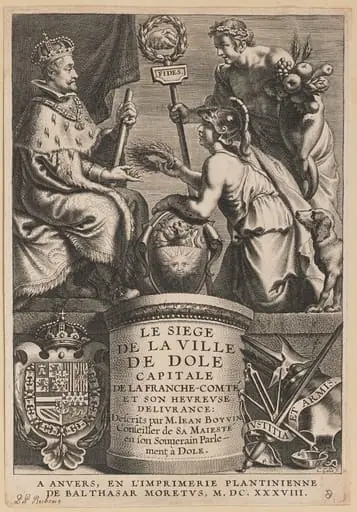 Title Page for Jean Boyvin, Le Siege de la Ville de Dole
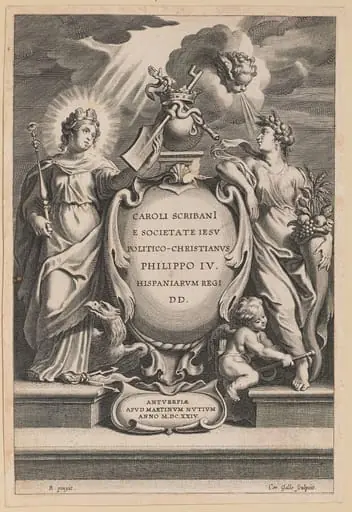 Title Page for Carolus Scribani, Politico-Christianus
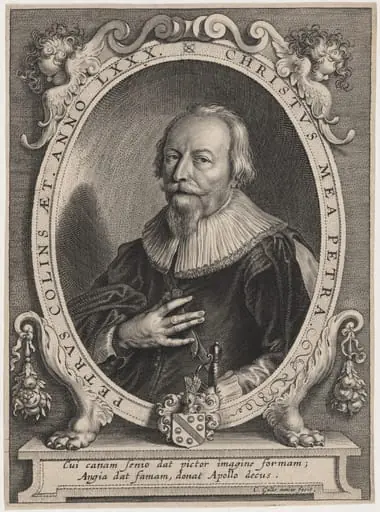 Petrus Collins
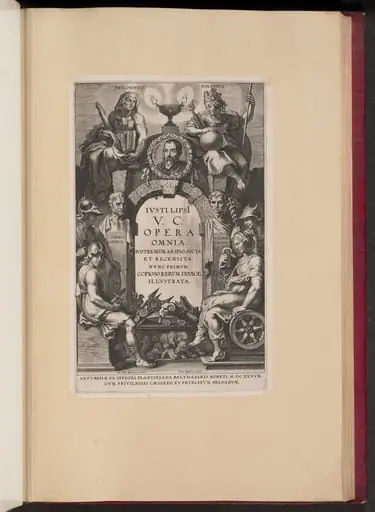 Title Page for Justus Lipsius, Opera Omnia, I
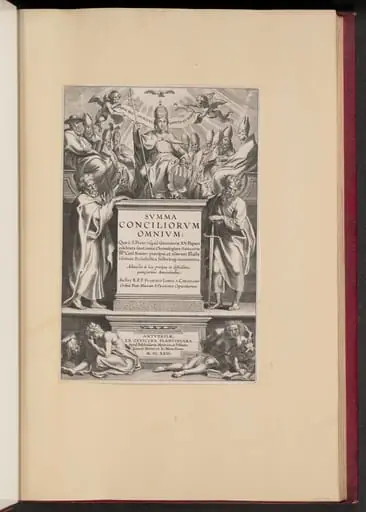 Title Page for F. Longo a Coriolano's "Svmma Conciliorvm Omnivm"
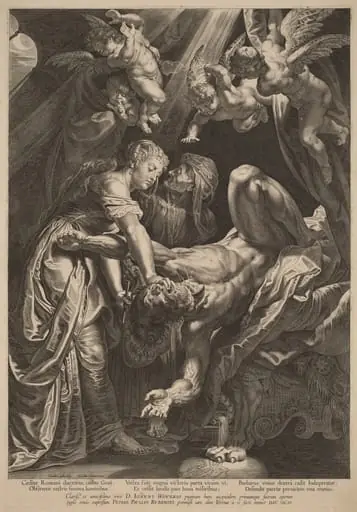 Judith Beheading Holofernes
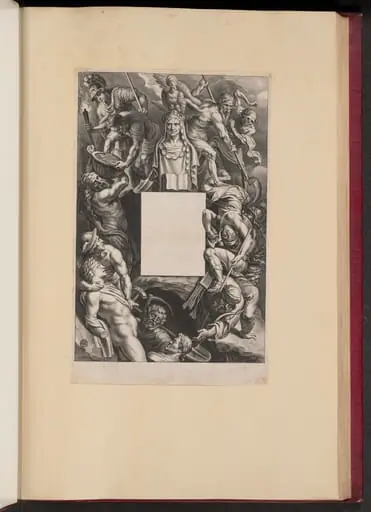 Title Page for Hubert Goltzius, Romanae et Graecae Antiqvitatis Monvmenta (Opera Omnia, I)
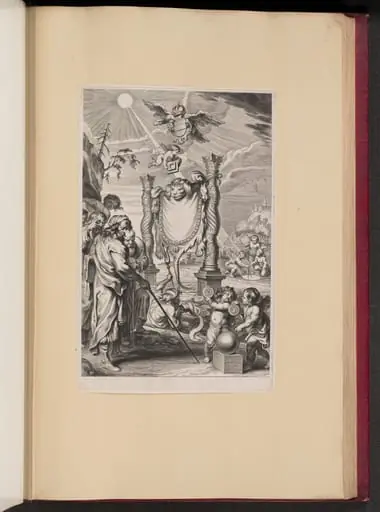 Title Page for G. de St. Vincent, Opus Geometricum Quadraturae Circuli
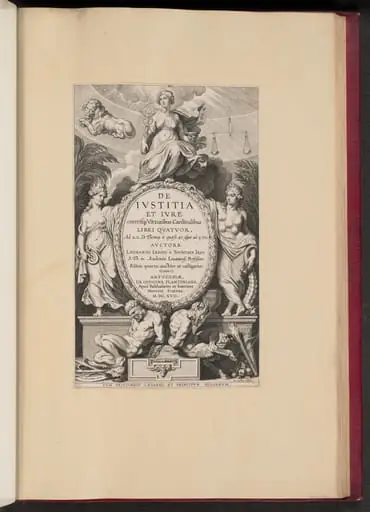 Title Page for Leonard Lessius, De Ivstitia et Ivre...
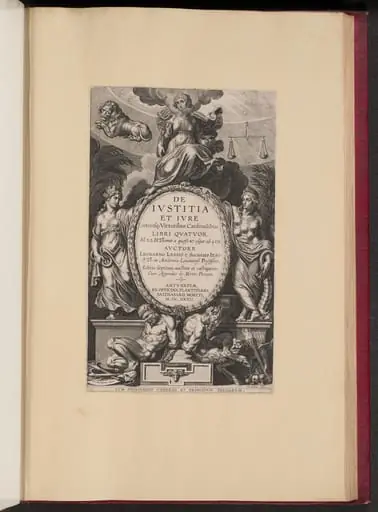 Title Page for Leonard Lessius, De Ivstitia et Ivre
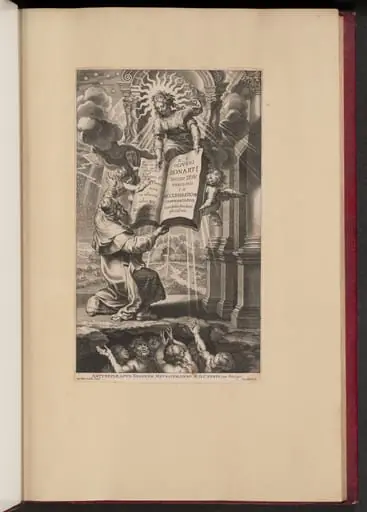 Title Page for Olivier Boonaerts' "In Ecclesiasticvm Commentarivs..."
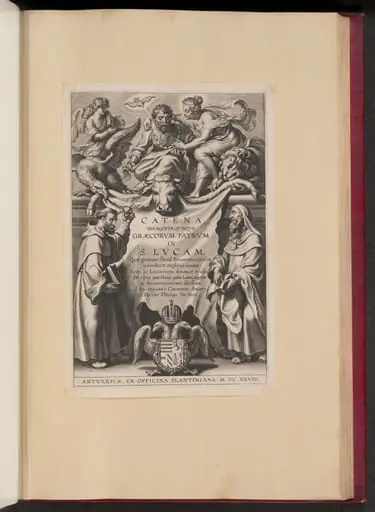 Title Page for Balthasar Cordier, Catena Sexaginta Qvinqve Graecorvm Patrvm in S. Lvcam...
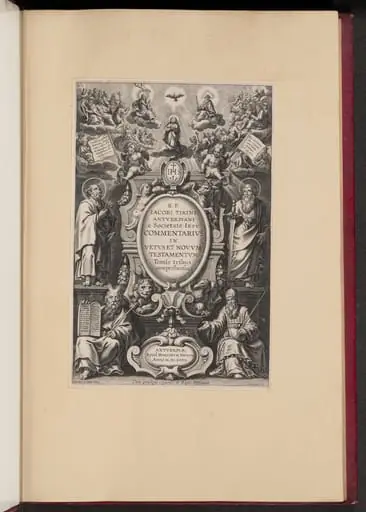 Title Page for R.P. Jacobi Tirini's "Commentarius in Vetvs et Novvm Testamentvm"
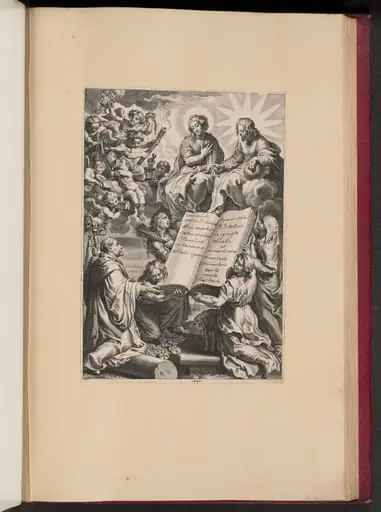 Title Page for Ludovicus Blosius, Opera
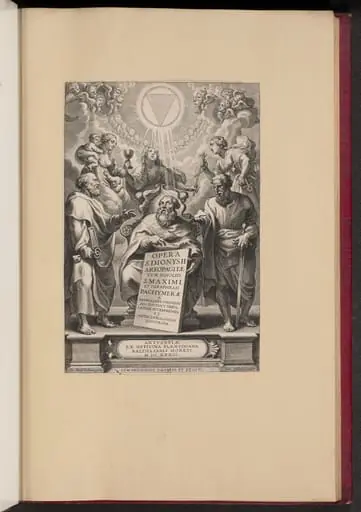 Title Page for Balthasar Cordier's "Opera S. Dionysii Areopagitae, I"
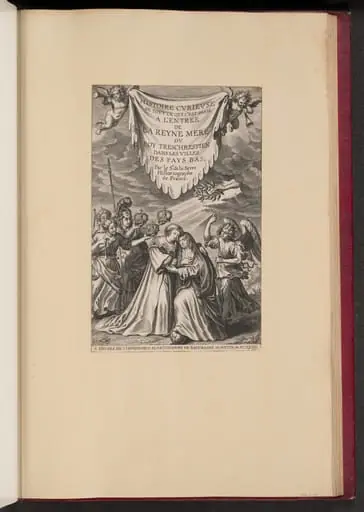 Title Page for Histoire Cvrievse de Tovt Ce Qui C'est Passé a l'Entree de La Reyne Mere dv Roy Treschrestien...