Artwork
St Cecilia and her Fiancé
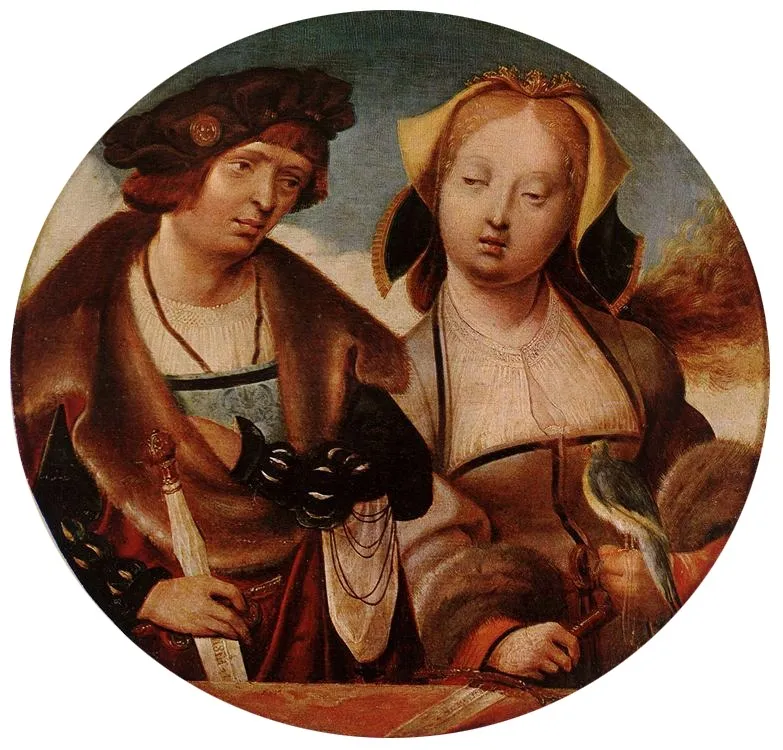
St Cecilia and her Fiancé is an unspecified painting by the Northern Renaissance artist Cornelis Engebrechtsz.. It dates from 1519 and is held in the collection of the Museum of Fine Arts, Budapest.
About this work
Overview
The painting belongs to the Northern Renaissance, reflecting its emphasis on detailed observation and religious narrative.
Painted in 1519 by Cornelis Engebrechtsz., this work originates from Leiden, a center of early Dutch artistic development. As one of the region’s first notable painters, Engebrechtsz. helped shape the local tradition before the rise of more widely recognized figures. The painting belongs to the Northern Renaissance, reflecting its emphasis on detailed observation and religious narrative. It is now held in the Museum of Fine Arts, Budapest.
Subject & Meaning
The scene portrays Saint Cecilia, a Christian martyr, alongside her betrothed, Valerian. Cecilia, often associated with music and divine devotion, holds a bird—possibly a symbol of the soul or spiritual purity. Valerian, armed with a sword, may allude to his later martyrdom. Their contrasting expressions suggest inner tension: her serenity contrasts with his solemn resolve, hinting at the spiritual transformation central to their hagiography.
Technique & Style
Engebrechtsz. employs precise brushwork and muted, earthy tones to render figures and fabric with quiet realism. The figures are set against a calm, open sky, creating a sense of stillness that focuses attention on their interaction. Facial features and clothing are rendered with careful attention to texture and fold, typical of Northern Renaissance attention to detail, though without the ornate decoration seen in later works.
History & Provenance
The painting was created during Engebrechtsz.’s mature period in Leiden, where he maintained a workshop and trained local artists. Its journey to Budapest is not fully documented, but it entered the museum’s collection in the 19th century, likely through European art acquisitions. It remains one of the few surviving panel paintings attributed to him with certainty.
Context
In early 16th-century Leiden, religious imagery remained central despite growing humanist influences. Engebrechtsz.’s work bridges late medieval devotional traditions and emerging Renaissance naturalism. His role as a teacher positioned him as a conduit for artistic ideas, influencing the next generation, including Lucas van Leyden, who would carry forward these stylistic developments.
Legacy
Though overshadowed by later Dutch masters, Engebrechtsz. laid foundational techniques for Leiden’s artistic community. His religious compositions, including this one, demonstrate a shift toward individualized expression within traditional iconography. The painting endures as a testament to regional artistic identity before the full flowering of the Dutch Golden Age.
Artist & collection
Artist
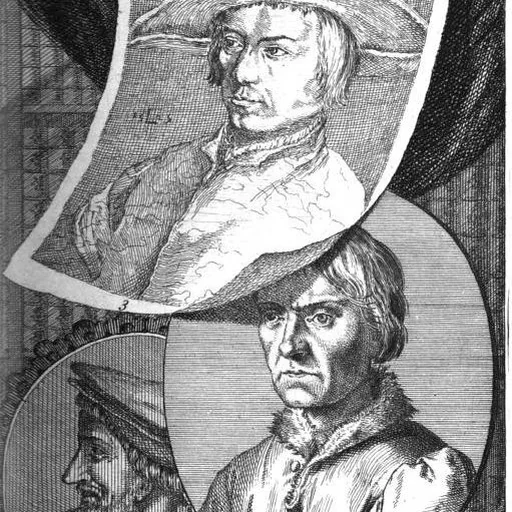
Cornelis Engebrechtsz., also known as Cornelis Engelbrechtsz. (c.1462–1527) was an early Dutch painter. He was born and died in Leiden, and is considered the first important painter from that city. Engebrechtsz. taught…

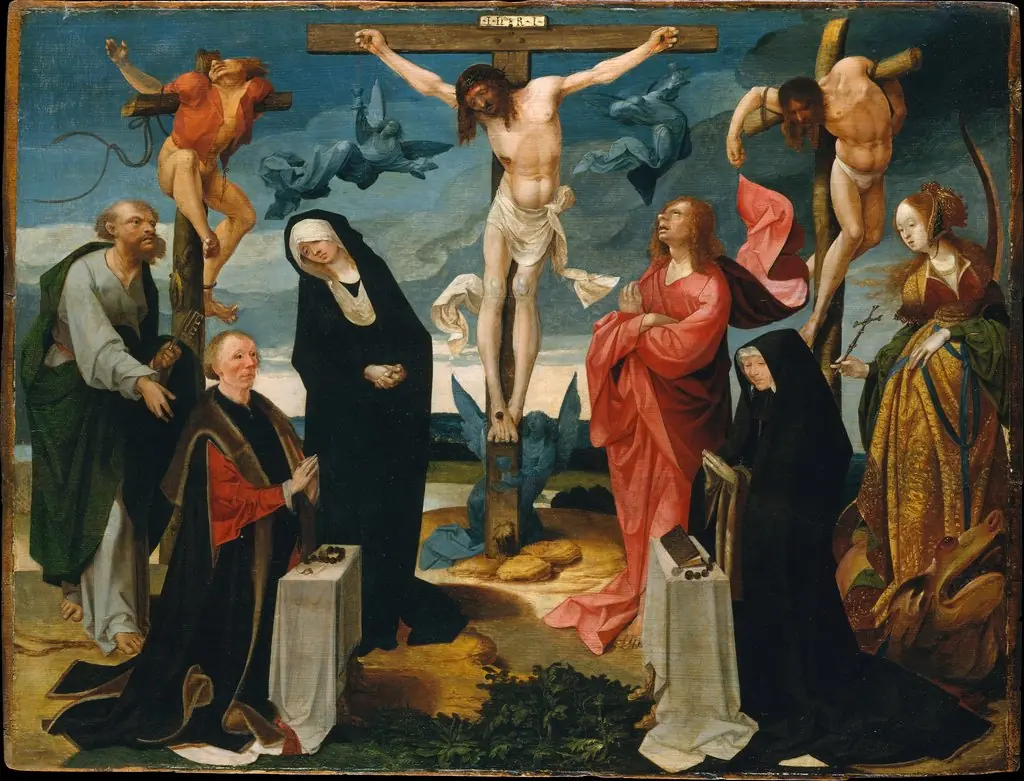 The Crucifixion with Donors and Saints Peter and Margaret
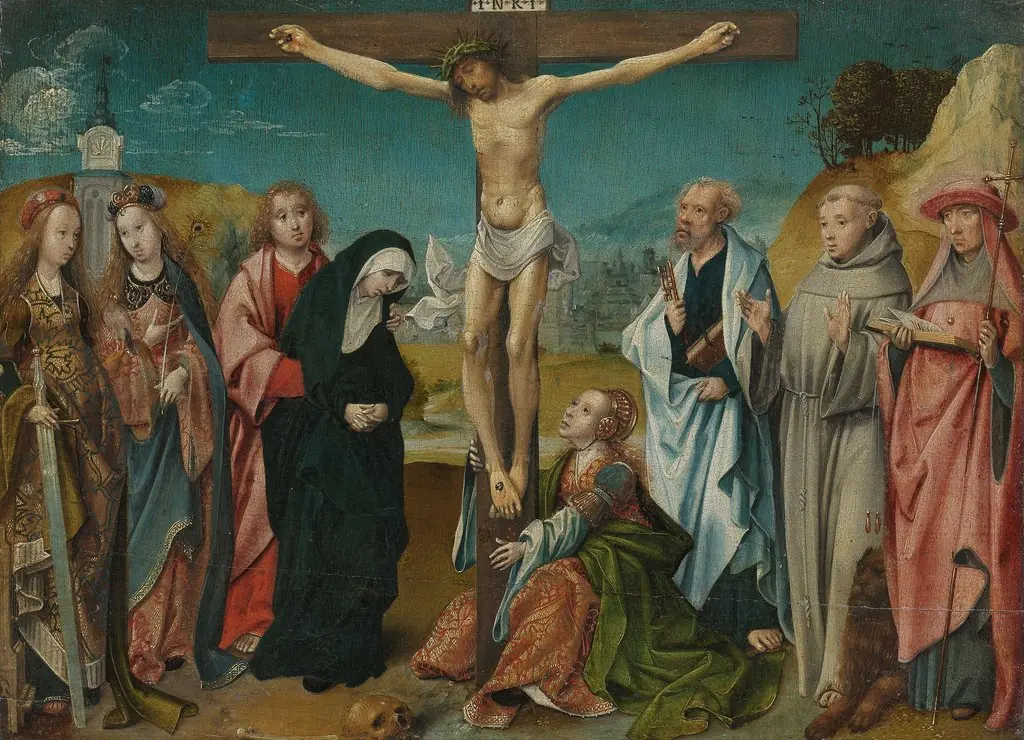 Christ on the cross with the Virgin, St John the Evangelist, Mary Magdalen, and Sts Cecilia and Barbara (left), and Sts Peter, Francis and Jerome (right)
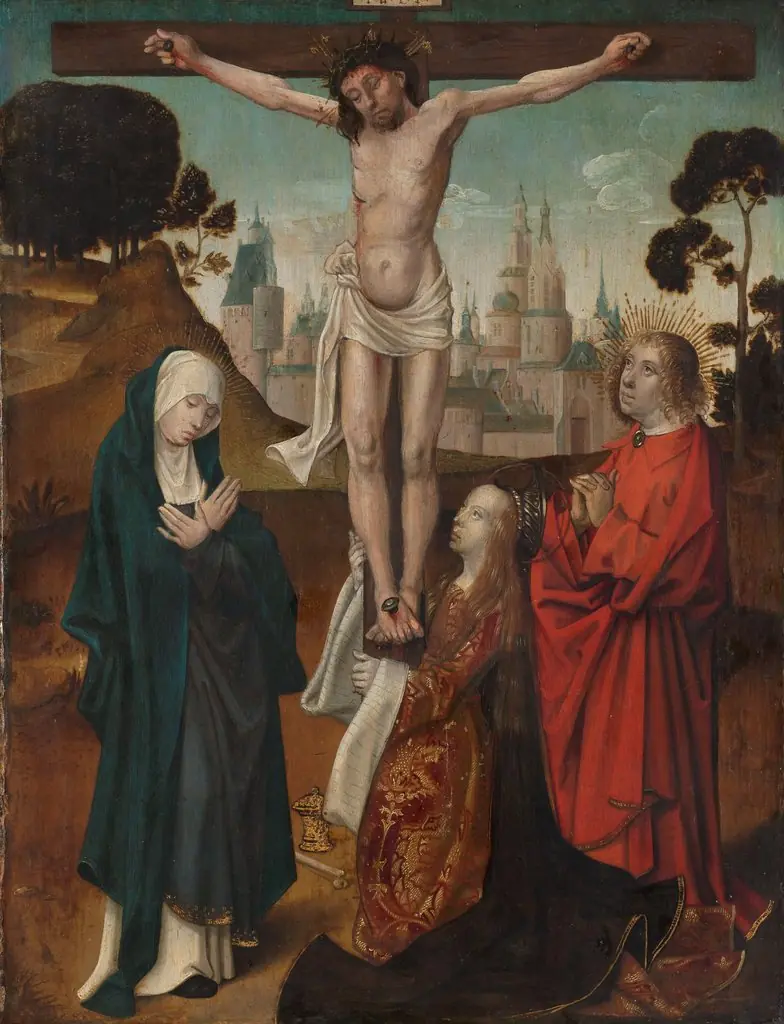 Crucifixion with the Virgin, Mary Magdalen and St John the Evangelist
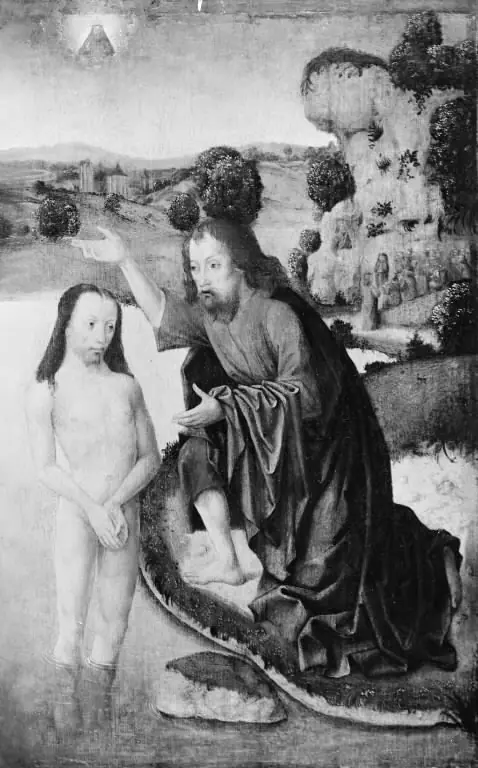 The Baptism of Christ
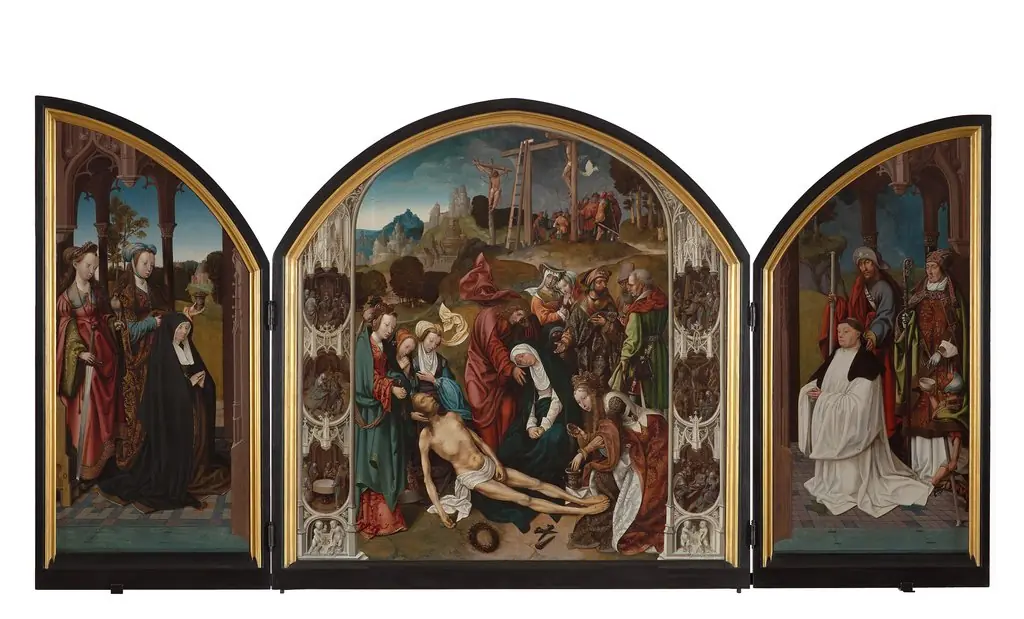 Ss Cecilia,Mary Magdalene with donatrix,lamentation flanked by other six Sorrows of Mary, Ss James Great,Martin of Tours an Augustine monk
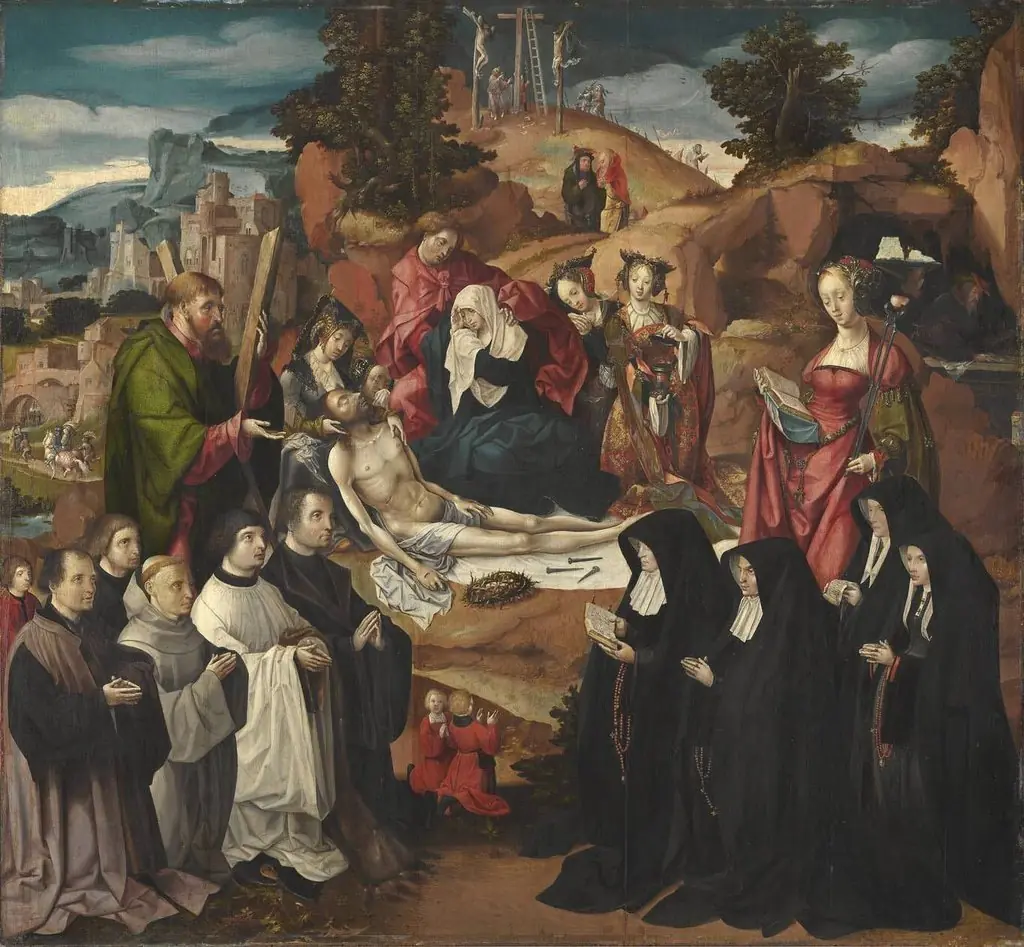 Lamentation of Christ
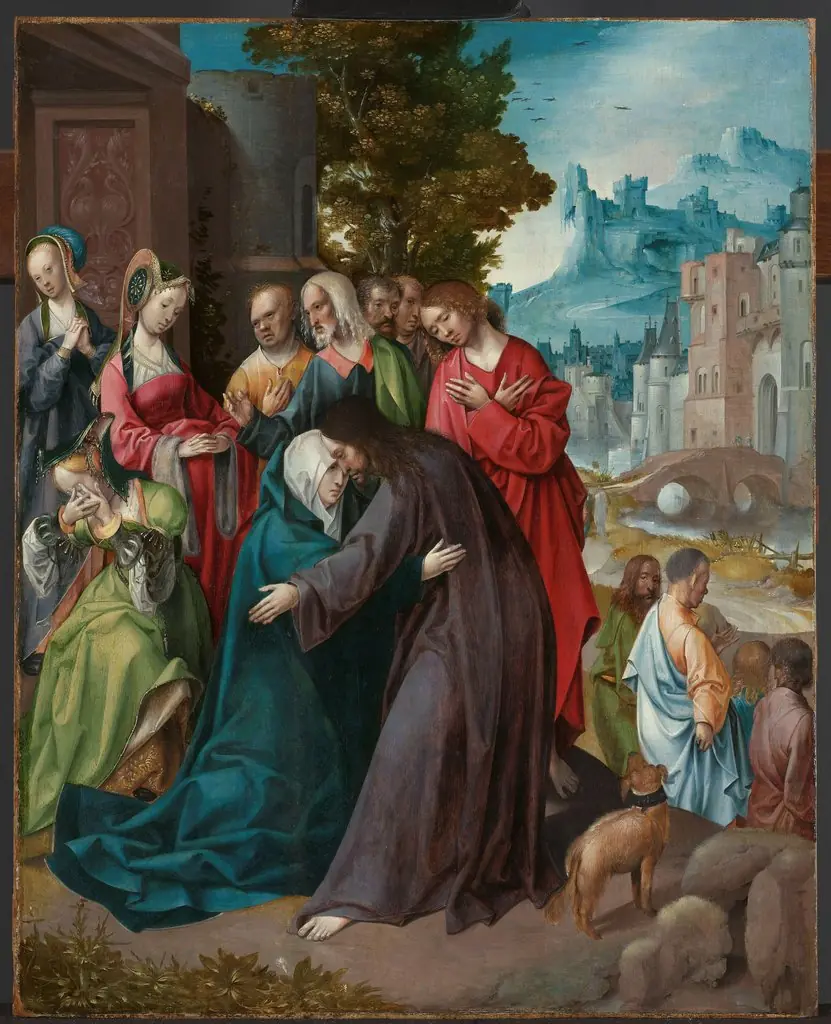 Christ Taking Leave of his Mother
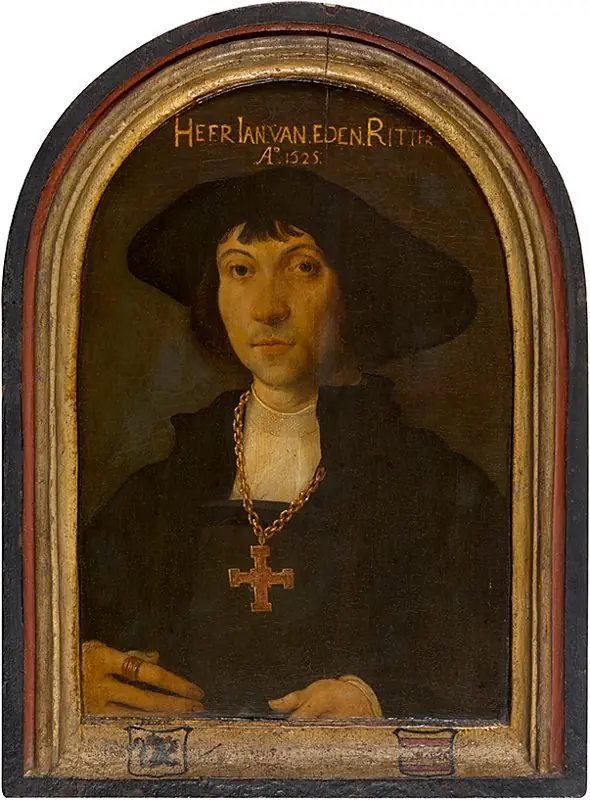 Knight Jan van Eden
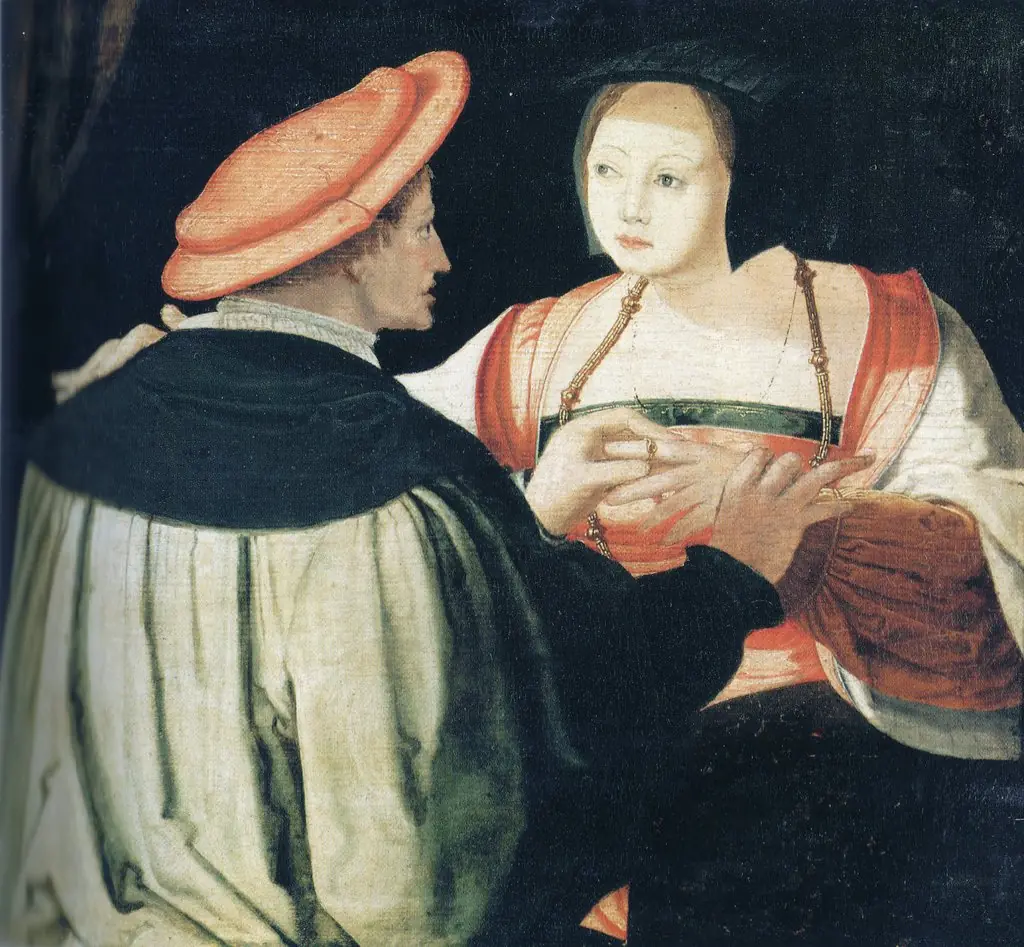 The Engagement
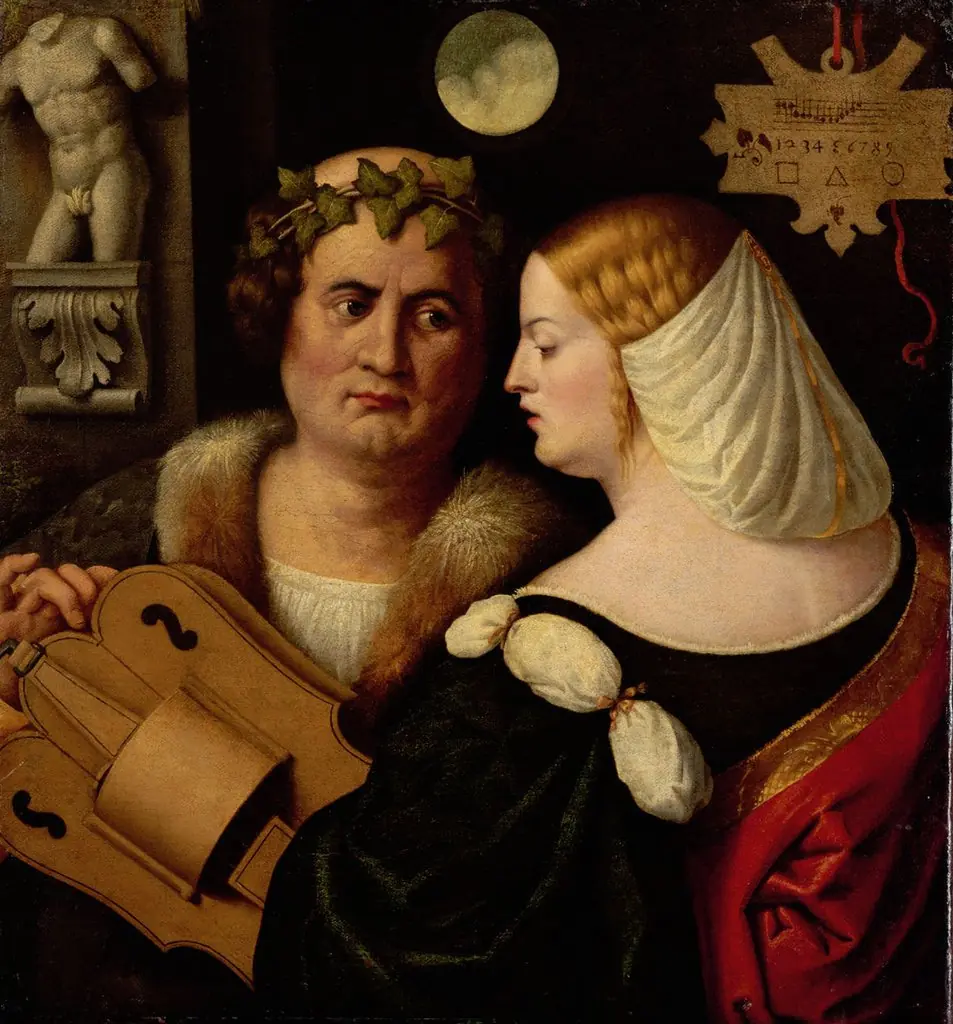 Poet Playing a Hurdy-Gurdy with a Young Woman by Giovanni Busi, called Cariani, c. 1520
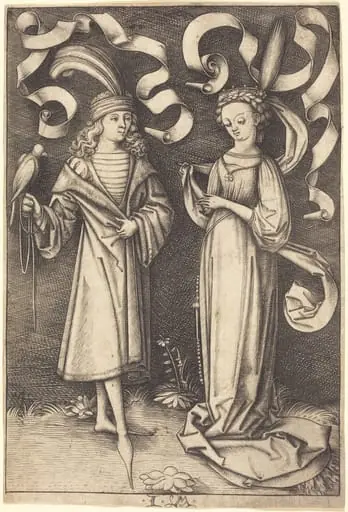 The Falconer and Noble Lady
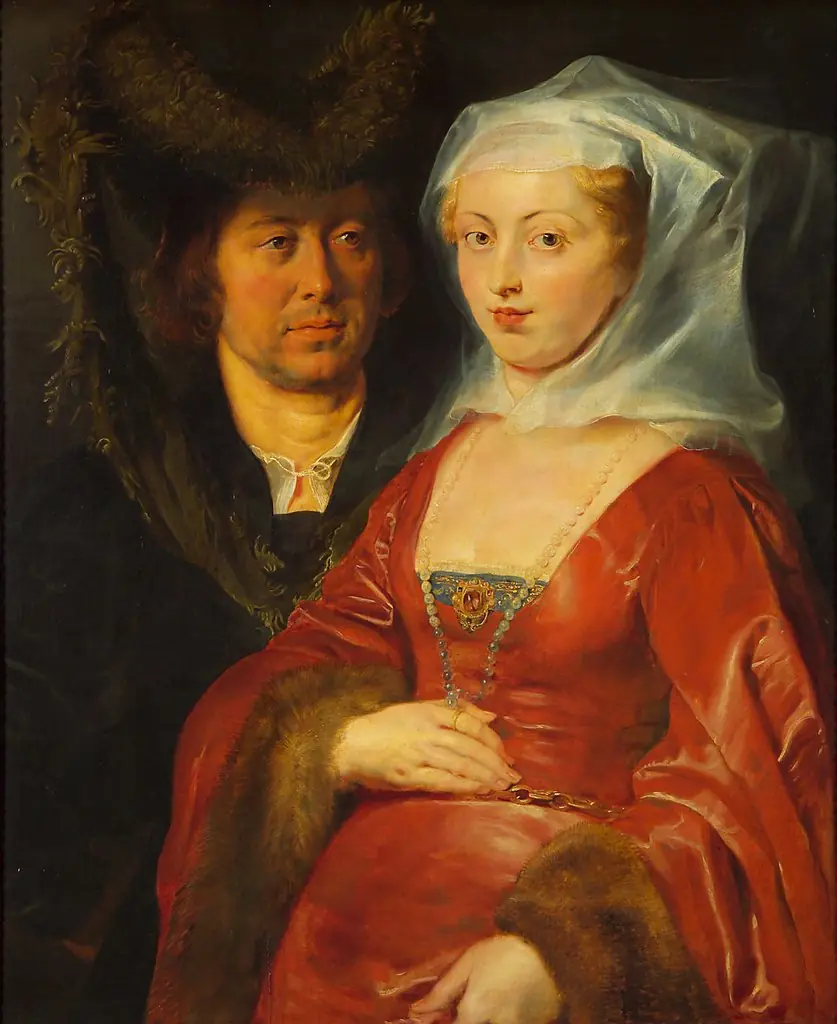 Ansegisus and St. Bega
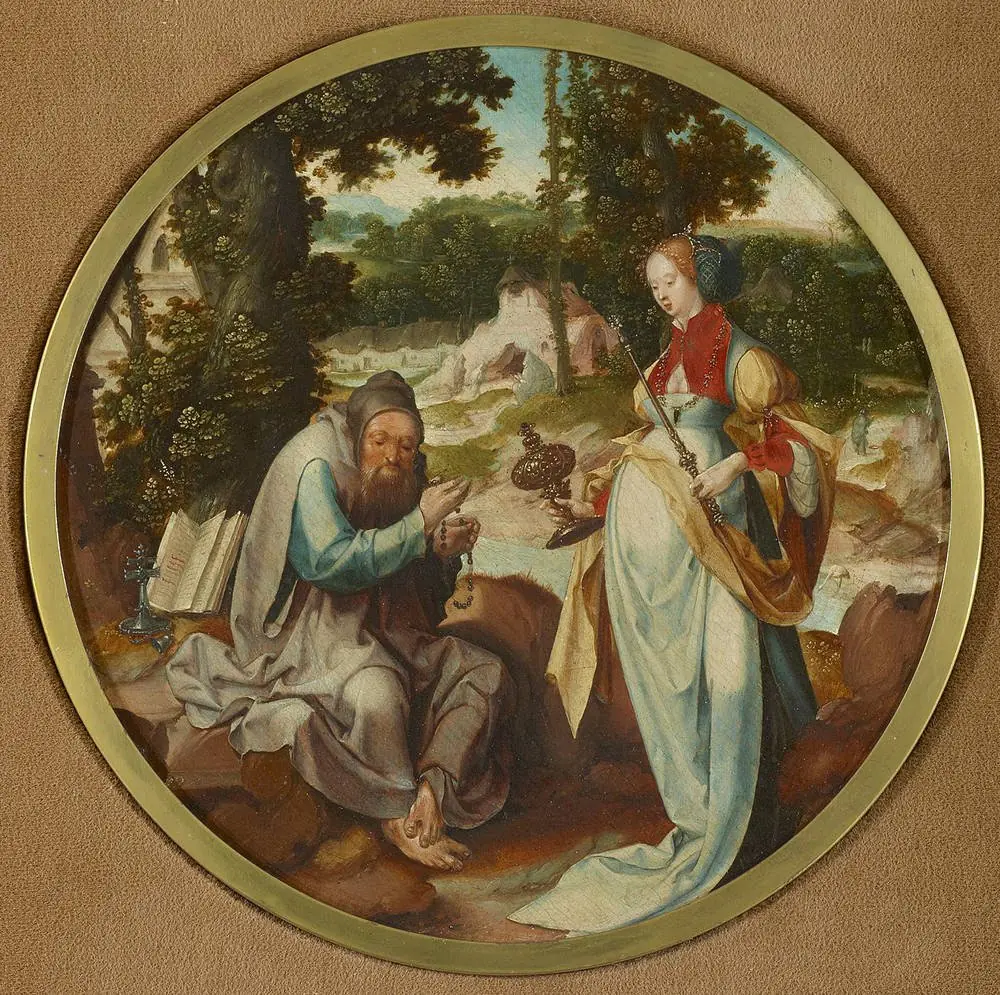 The temptation of Saint Antony
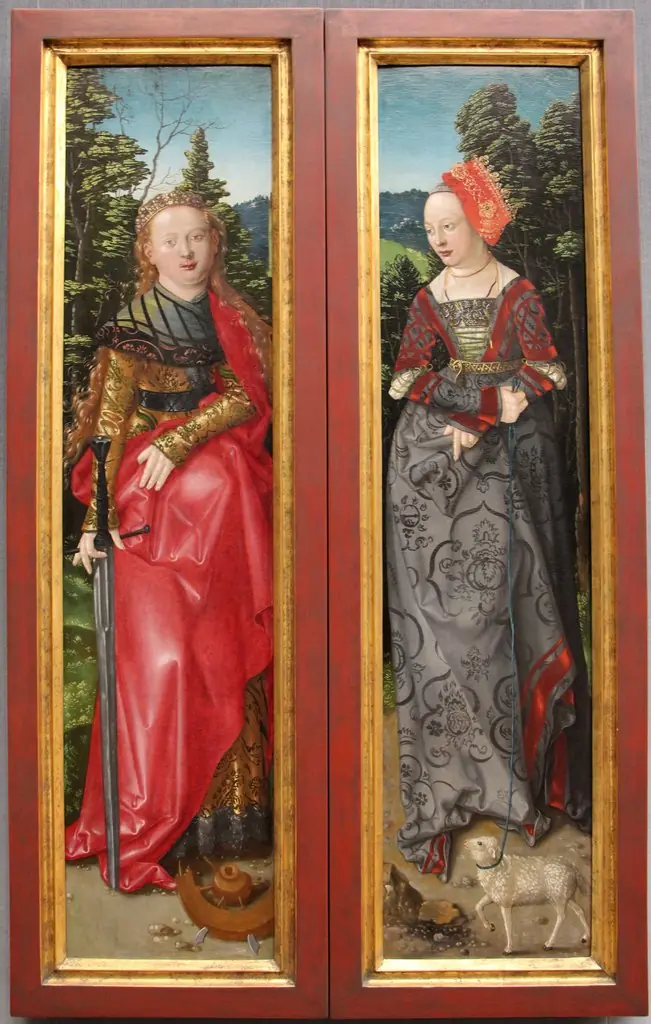 Der Dreikönigsaltar Außentafeln: Die Heiligen Katharina und Agnes
 Adoration of the Child
 Saint Barbara
 Dymphna’s Father Proposes to her
 King Solomon Receiving the Queen of Sheba
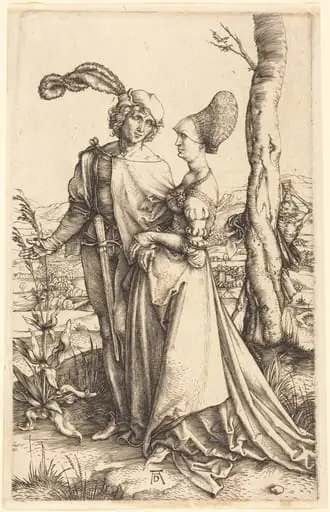 Promenade
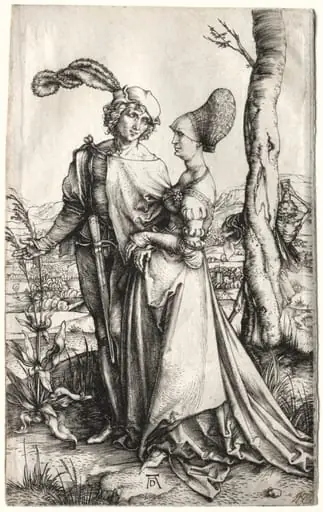 The Promenade