Artwork
The Falconer and Noble Lady
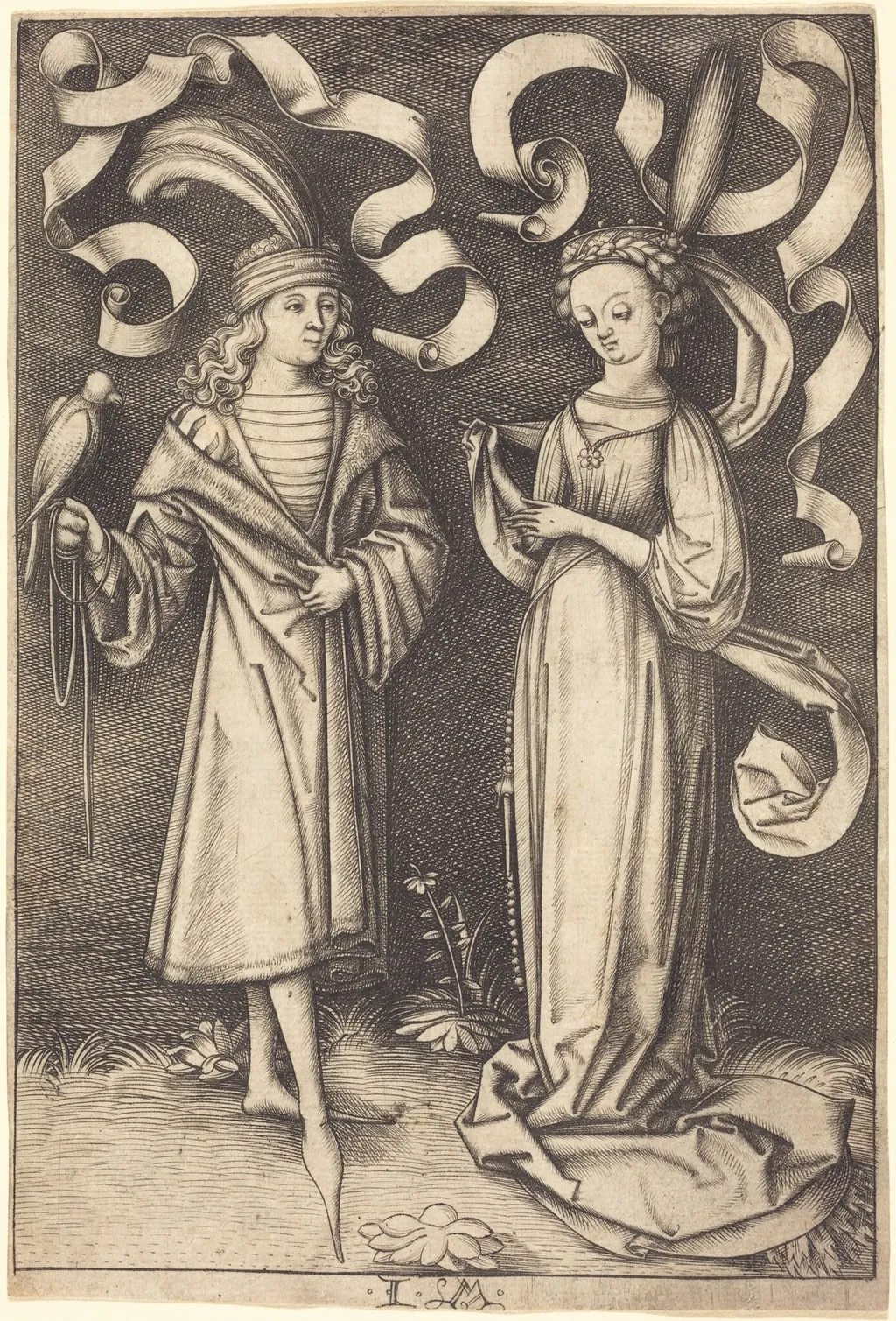
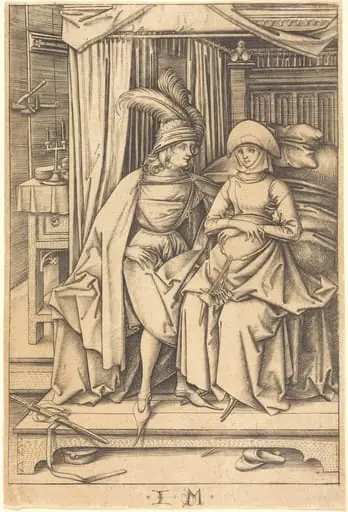
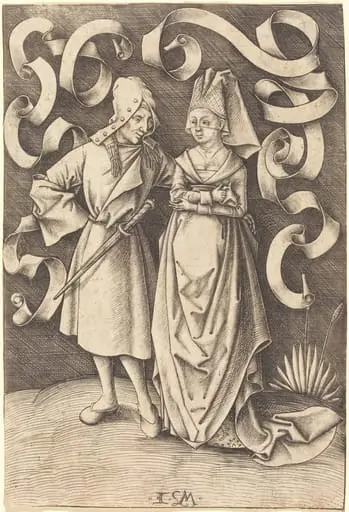
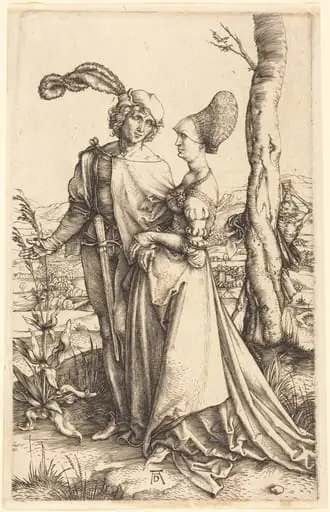
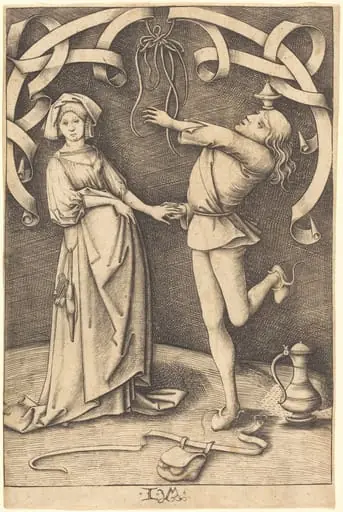
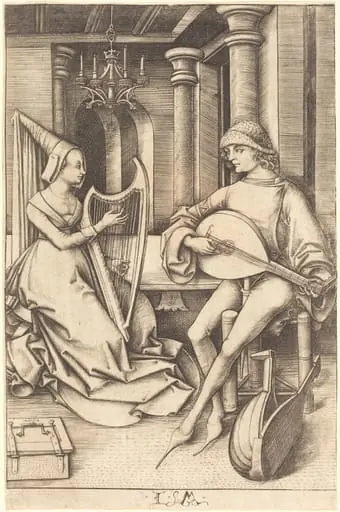
The Falconer and Noble Lady is an ink print by the Renaissance artist Israhel van Meckenem. It dates from 1499 and is held in the collection of the National Gallery of Art.
About this work
Overview
Created around 1499 by Israhel van Meckenem, a German engraver and goldsmith, this print is one of over six hundred works he produced during his career.
Created around 1499 by Israhel van Meckenem, a German engraver and goldsmith, this print is one of over six hundred works he produced during his career. As one of the most active printmakers of the late 15th century, van Meckenem specialized in detailed engravings, often reproducing compositions by contemporaries. This piece exemplifies his skill in translating complex figures into fine linear detail on a small scale.
Subject & Meaning
The scene portrays a noblewoman and a falconer, both figures associated with aristocratic leisure. The falconer, dressed in a striped tunic and fur-lined cloak, holds a raptor on his gauntleted wrist, while the woman, adorned with a crown and flowing garments, similarly bears a bird. Their parallel postures suggest shared status and refinement, reflecting the courtly pastime of falconry as a symbol of elite identity in late medieval Europe.
Technique & Style
Van Meckenem employed fine, precise engraving lines to model form and texture. Cross-hatching—overlapping sets of parallel strokes—creates subtle gradations of light and shadow, giving volume to fabric, feathers, and skin without color. The delicate rendering of the birds’ plumage and the folds of the woman’s dress demonstrates mastery of line as the sole medium for spatial and tactile suggestion.
History & Provenance
The print was made during the height of van Meckenem’s career in the late 1490s, a period when engraved prints were widely circulated among European elites. Though no specific early ownership records are documented, its survival in multiple institutional collections suggests it was reproduced and collected in its time, consistent with the commercial print market of the period.
Context
Falconry was a highly ritualized pursuit among nobility, often depicted in manuscripts and prints as a marker of social standing. Van Meckenem’s work aligns with broader trends in Northern Renaissance art that favored secular themes over religious subjects. His prints, often based on others’ designs, helped disseminate visual motifs across regions, contributing to a shared aesthetic language among educated audiences.
Legacy
Van Meckenem’s prolific output helped establish engraving as a viable medium for mass reproduction. While his originality was sometimes questioned, his technical precision influenced later printmakers. *The Falconer and Noble Lady* remains a representative example of how everyday aristocratic life was rendered with care and clarity in the decades before Dürer’s innovations transformed the field.
Artist & collection
Artist
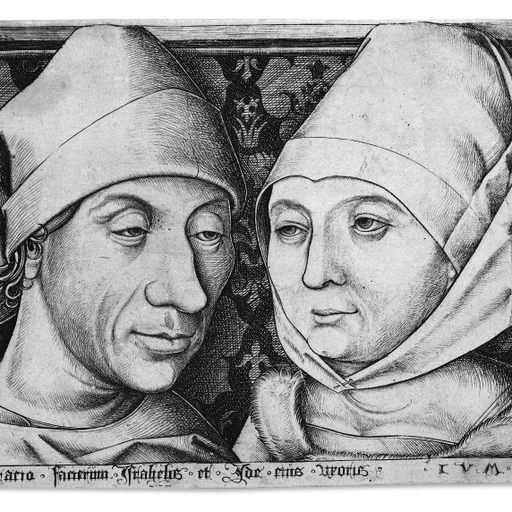
Israhel van Meckenem (c. 1445 – 10 November 1503), also known as Israhel van Meckenem the Younger, was a German printmaker and goldsmith, perhaps of a Dutch family origin. He was the most prolific engraver of the…