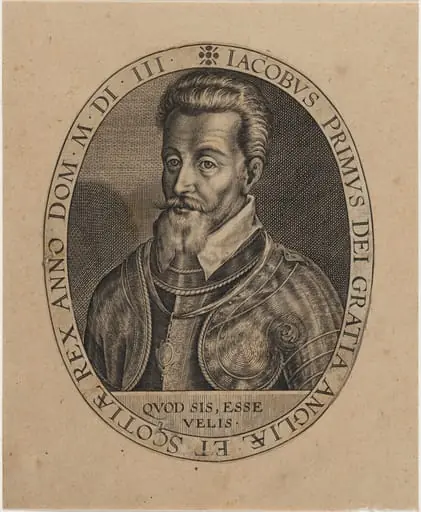
Artwork
James I, as James VI of Scotland
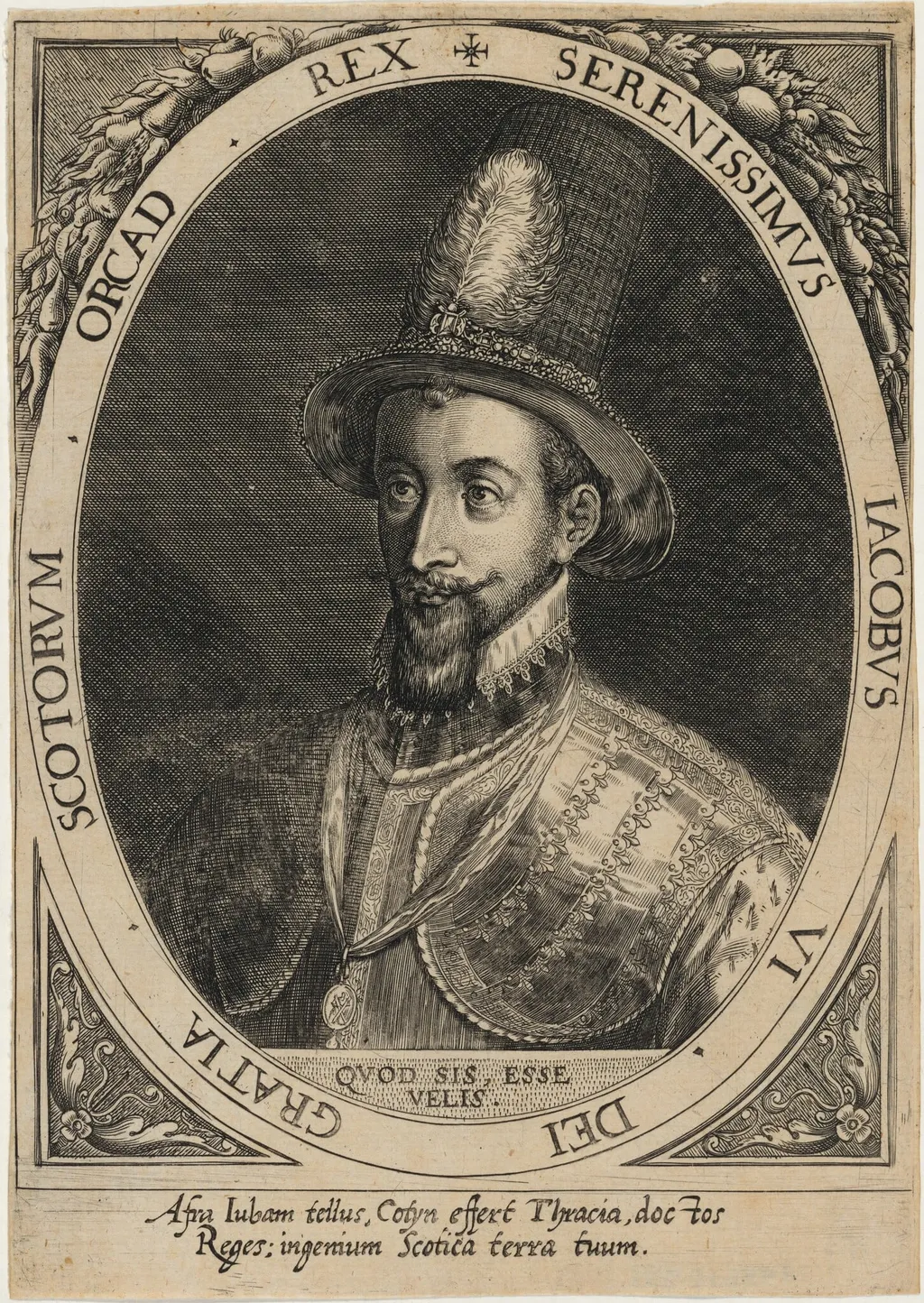
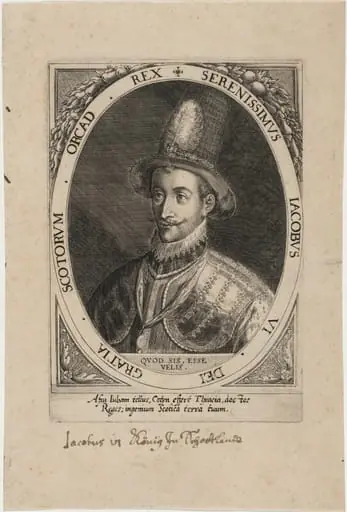
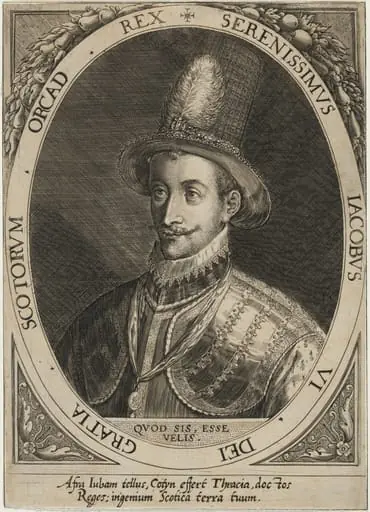
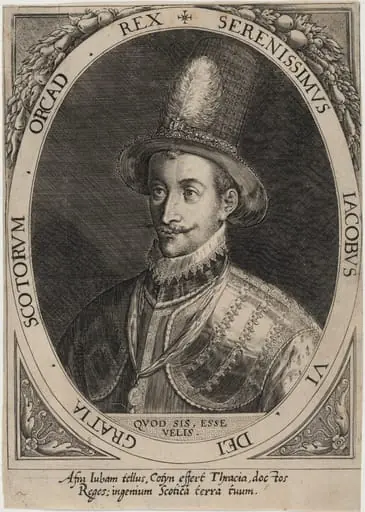
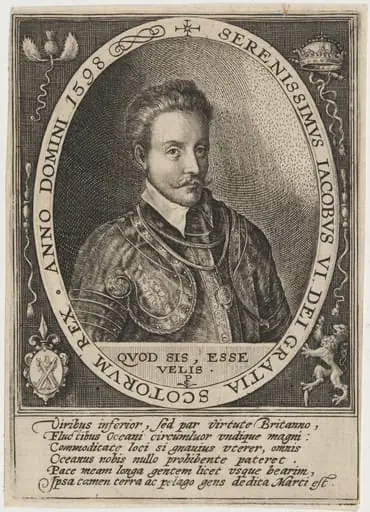
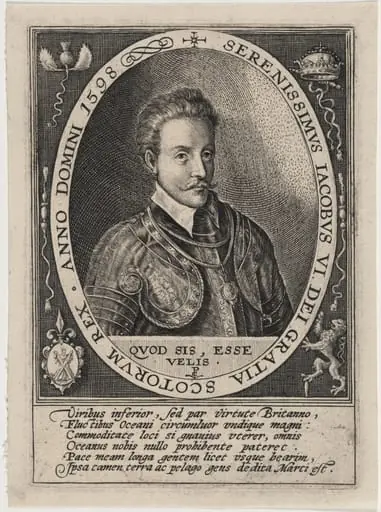
James I, as James VI of Scotland is an ink print by the Baroque artist Dominicus Custos. It dates from 1600 and is held in the collection of the National Gallery of Art.
About this work
Overview
Custos, active in Prague and later Augsburg, produced this image as part of a broader effort to disseminate monarchical imagery through print.
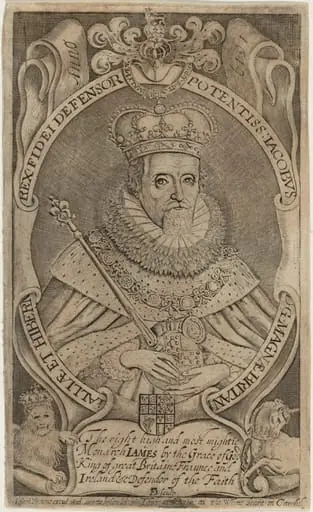
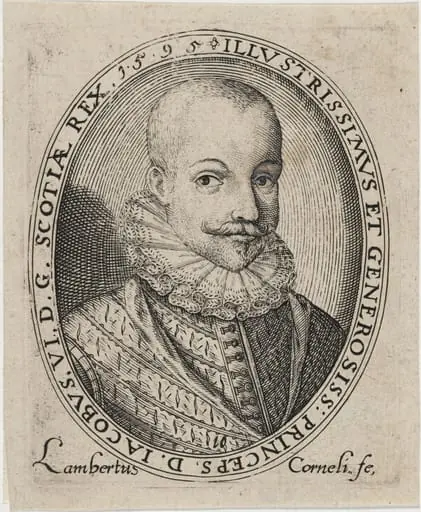
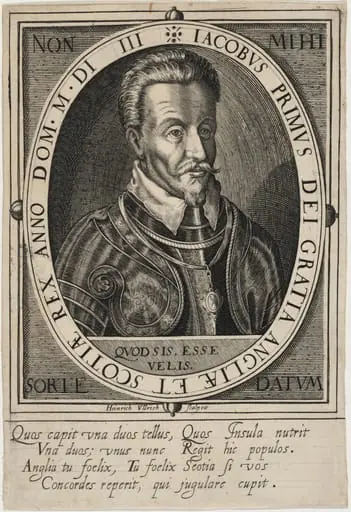
An engraving from 1600 by Dominicus Custos portrays James I of England in his earlier role as James VI of Scotland. Executed in black ink on laid paper using copperplate technique, the print belongs to the tradition of royal portraiture circulating in early 17th-century Europe. Custos, active in Prague and later Augsburg, produced this image as part of a broader effort to disseminate monarchical imagery through print.
Subject & Meaning
The portrait presents James VI/I with solemn authority, emphasizing his dual identity as ruler of both Scotland and England. Inscriptions around the image identify him in both titles, reinforcing political continuity. The elaborate hat and detailed collar signal status, while the plain background focuses attention on the figure’s regal bearing, aligning with contemporary ideals of sovereign dignity.
Technique & Style
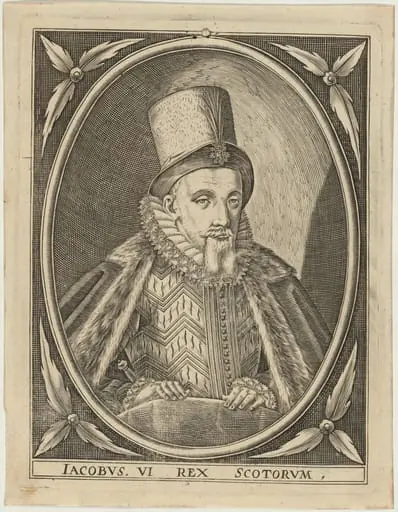
Custos employed fine, controlled lines to model the face and fabric, creating subtle gradations of light and shadow typical of copperplate engraving. The high collar’s intricate patterns and the feathered hat are rendered with precision, demonstrating mastery of tonal detail. The surrounding border features decorative cartouches and Latin inscriptions, common in scholarly and royal prints of the period.
History & Provenance
Custos, a Flemish artist based in Augsburg, operated within a network of printmakers serving imperial and noble patrons. This engraving likely originated as part of a series commissioned to promote James’s image across Protestant Europe. Copies may have been distributed to diplomats, scholars, and collectors, reflecting the role of prints in early modern political communication.
Context
Produced before James’s accession to the English throne, the image anticipates his unification of the crowns. Engravings like this were vital tools for shaping public perception of monarchs, especially in regions without direct access to court portraiture. The use of Latin inscriptions and classical framing reflects humanist influences prevalent among educated elites of the time.
Legacy
Custos’s engraving contributed to the visual canon of James VI/I, influencing later depictions in both print and painting. Its technical precision and symbolic framing exemplify the role of printmakers in constructing royal identity during a period of dynastic transition. The work remains a key artifact in understanding how monarchy was visually negotiated across national borders.
Artist & collection
Artist
Dominicus Custos (1560–1612) was a Flemish artist, printer and copperplate engraver, who worked in the service of Emperor Rudolph II in Prague.