Artwork
James I, as King of Scotland
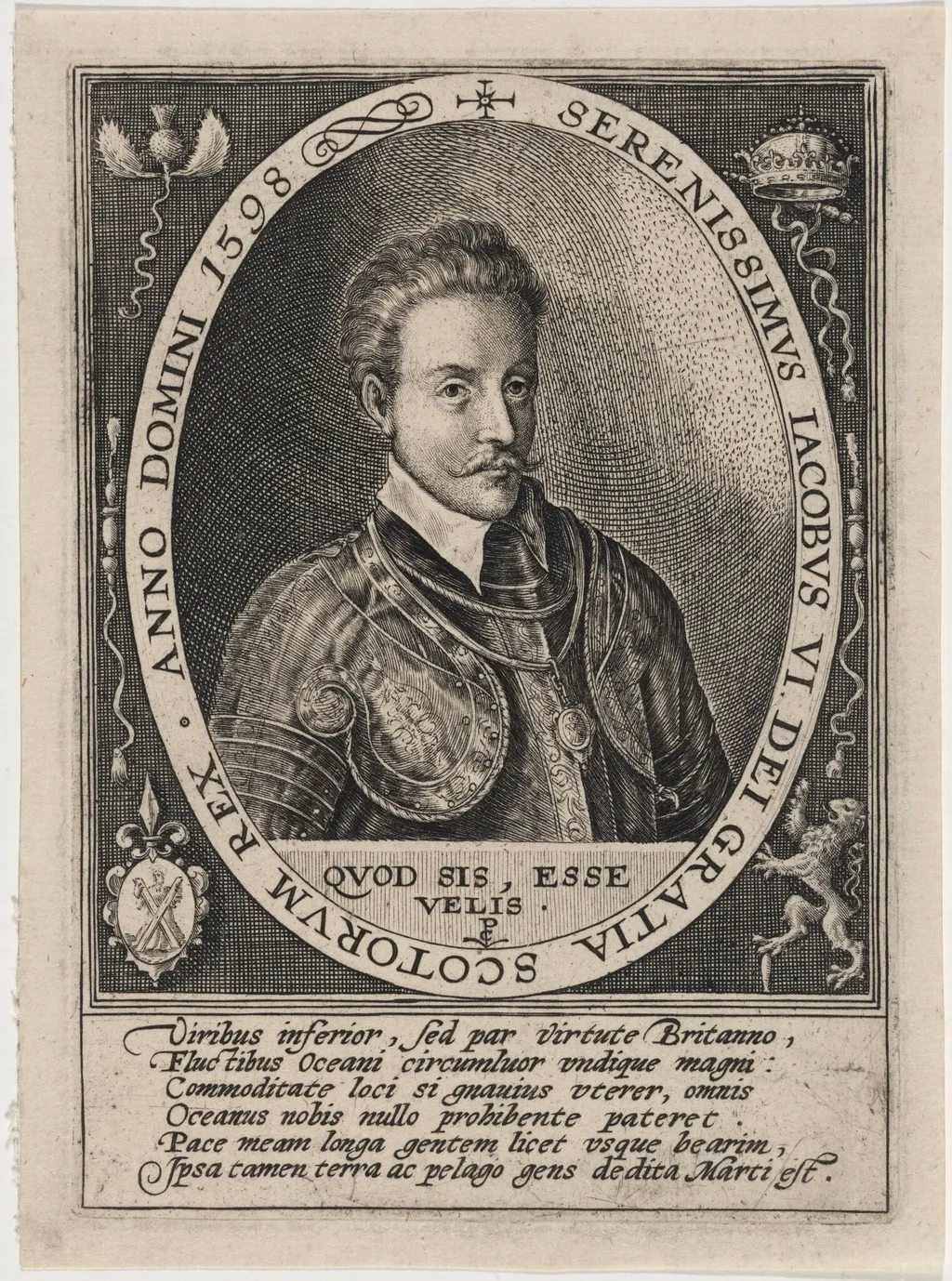
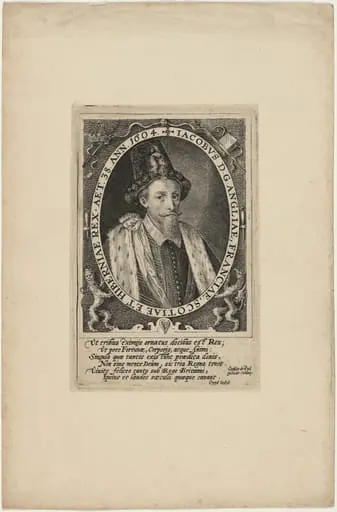
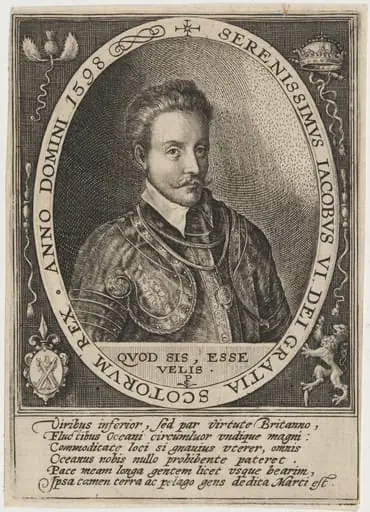
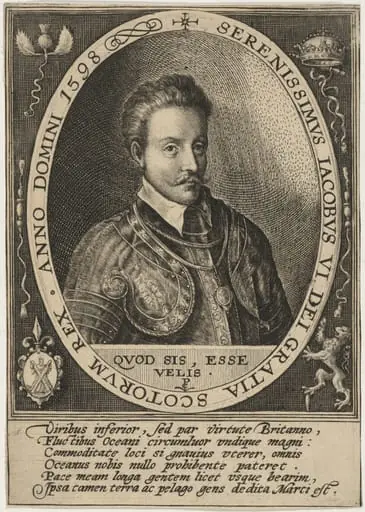
James I, as King of Scotland is an ink print by the Renaissance artist Crispijn van de Passe I. It dates from 1598 and is held in the collection of the National Gallery of Art.
About this work
Overview
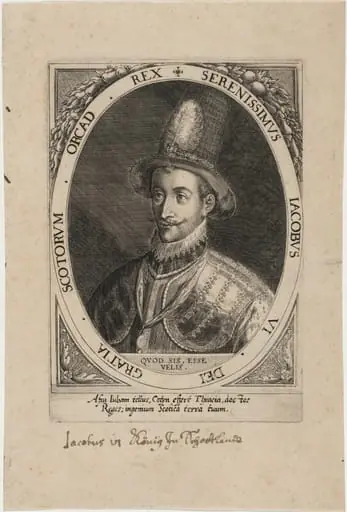
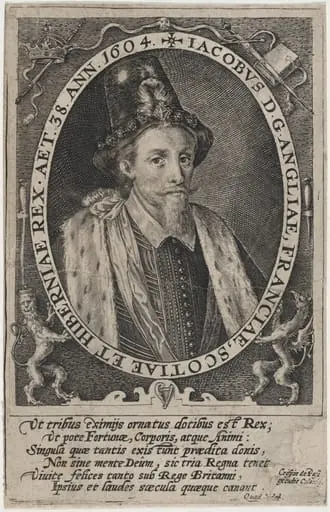
Crispijn van de Passe I produced this copper engraving in 1598, depicting James I in his capacity as King of Scotland. The print presents a solitary figure, rendered in fine line work against a dark, textured background, emphasizing the sitter’s regal bearing and the artist’s meticulous approach to portraiture.
Subject & Meaning
The portrait shows James I with a trimmed moustache, short hair, and a solemn gaze that meets the viewer directly. Dressed in a richly detailed dark jacket with a high collar over a white shirt, the attire signals his royal status and the authority associated with his reign over Scotland.
Technique & Style
Executed in the intaglio engraving method, the work relies on delicate hatching and cross‑hatching to model form and suggest fabric texture. The composition reflects Renaissance portrait conventions, using chiaroscuro through line to create depth while maintaining a flat, linear quality typical of Northern European printmaking of the period.
History & Provenance
Created toward the end of the 16th century, the print was likely intended for circulation among courtly circles or as a means of disseminating the king’s image. Van de Passe’s workshop produced multiple copies, and the work has since entered museum collections that specialize in early modern prints.
Context
The engraving emerges from a time when printed portraits served both political and propagandistic functions, reinforcing monarchical legitimacy across borders. James I’s dual rule over Scotland and later England made such images valuable tools for asserting continuity and dynastic authority during a period of religious and political transition.
Artist & collection

Artist
Crispijn van de Passe I (1564–1637) was an artist, born in Arnemuiden.