Artwork
Georg Tradel
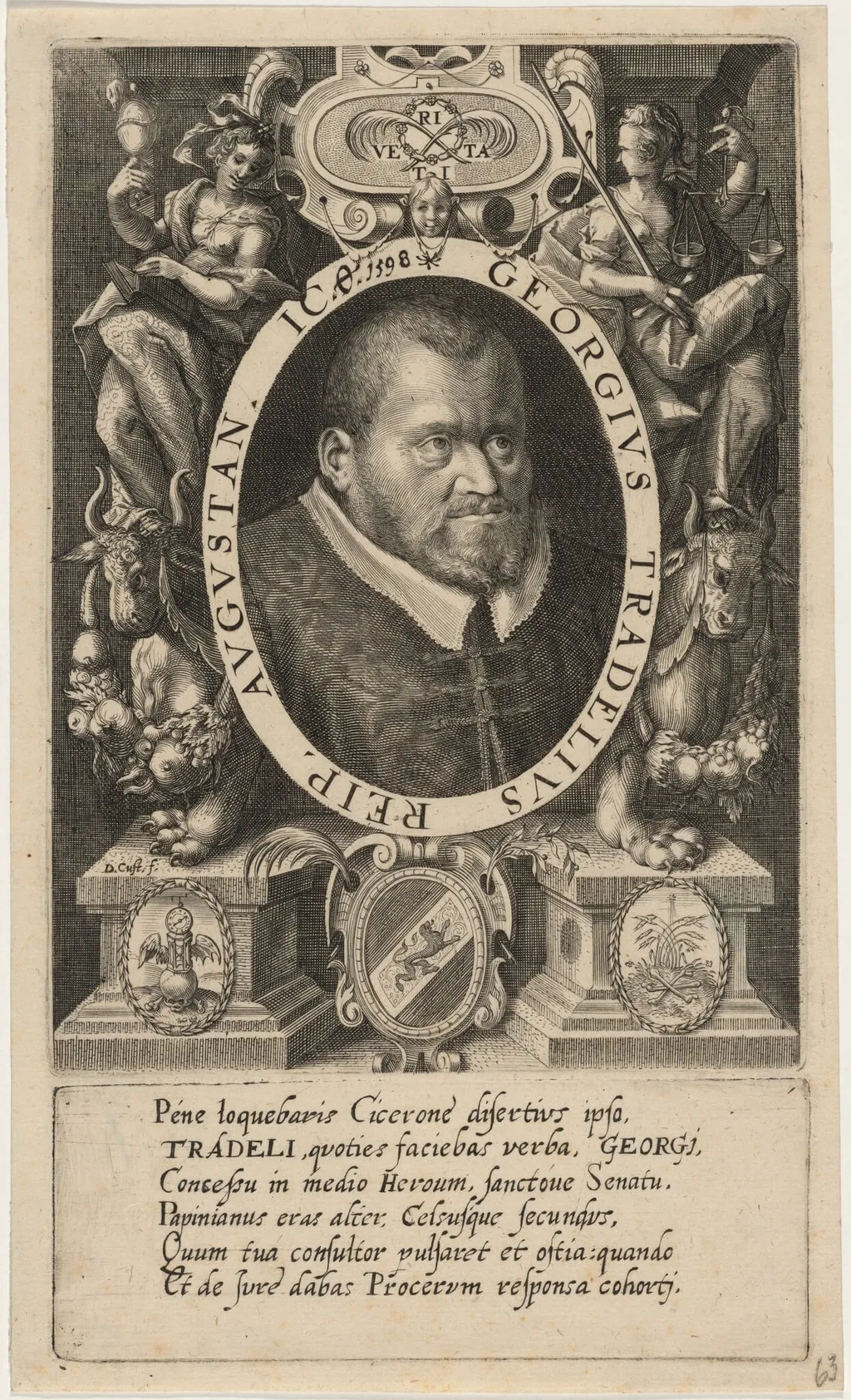
Georg Tradel is an ink print by the Baroque artist Dominicus Custos. It dates from 1605 and is held in the collection of the National Gallery of Art.
About this work
Overview
Custos, based in Augsburg, was known for his precision in reproductive prints and his role in training a generation of engravers, including his stepsons.
Created in 1605, the engraving *Georg Tradel* is a portrait print by Dominicus Custos, a Flemish artist active in the Holy Roman Empire. Executed in copperplate engraving on laid paper, it presents a formal depiction of a man identified by name, surrounded by symbolic elements. Custos, based in Augsburg, was known for his precision in reproductive prints and his role in training a generation of engravers, including his stepsons.
Subject & Meaning
The portrait centers on Georg Tradel, likely a scholar or civic figure, rendered with solemn expression and detailed facial features. Surrounding him are small vignettes of tools, figures, and a heraldic shield, suggesting his profession, lineage, or social standing. Above, winged putti support a banner bearing inscriptions, reinforcing the commemorative intent. The composition functions as a visual testament to identity and status, common in early modern portraiture.
Technique & Style
Custos employed fine-line copperplate engraving to achieve sharp detail and tonal gradation. The image is rendered entirely in black ink on laid paper, with delicate cross-hatching defining texture in the beard, collar, and background elements. The small surrounding scenes are tightly composed, contrasting with the central figure’s clarity. The signature and inscription are integrated into the design, reflecting the print’s function as both portrait and artisanal object.
History & Provenance
Custos produced this work during his time in Augsburg, after earlier years in Prague under Emperor Rudolf II. The print was likely commissioned or circulated among intellectual circles, given its heraldic and symbolic content. While specific early ownership records are sparse, similar prints by Custos appear in European collections, indicating its circulation among patrons interested in scholarly portraiture and print culture of the period.
Context
In early 17th-century Germany, engraved portraits served as tools of social commemoration and professional identity. Custos operated within a network of printers and artists who disseminated images of notable individuals through print. The inclusion of heraldry and allegorical figures aligns with broader trends in Northern European portraiture, where visual codes conveyed status, occupation, and familial pride beyond mere likeness.
Legacy
Custos’s work contributed to the development of printmaking as a medium for portraiture and documentation. His technical precision and integration of symbolic elements influenced later engravers in Augsburg and beyond. Though not widely known today, *Georg Tradel* exemplifies the role of prints in preserving individual identities during a period when visual representation was increasingly accessible through reproduction.
Artist & collection
Artist
Dominicus Custos (1560–1612) was a Flemish artist, printer and copperplate engraver, who worked in the service of Emperor Rudolph II in Prague.

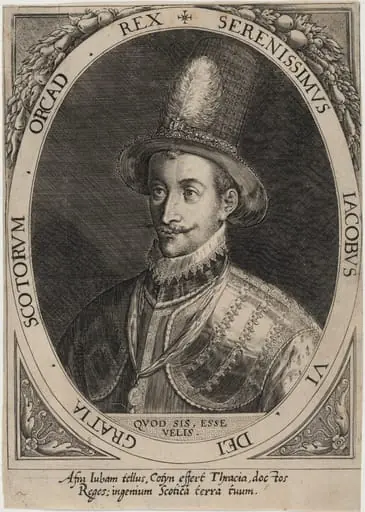
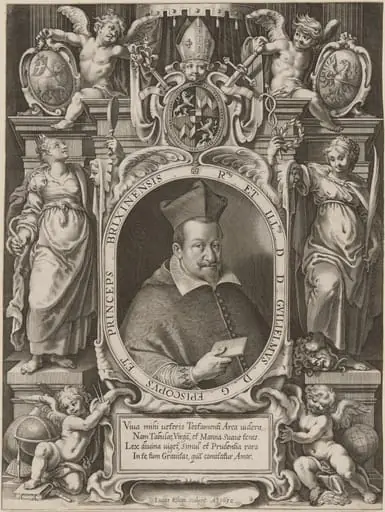 William von Welsberg, Archbishop of Brixen
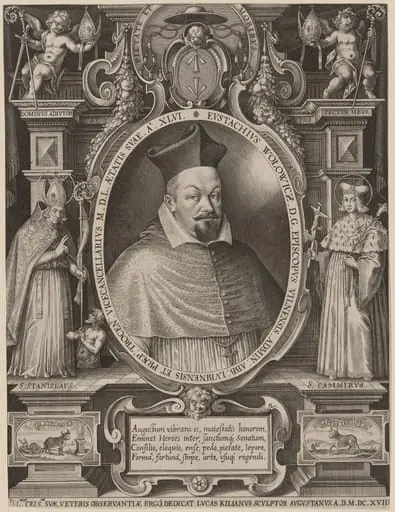 Eustace Wolowicz, Archbishop of Vilna
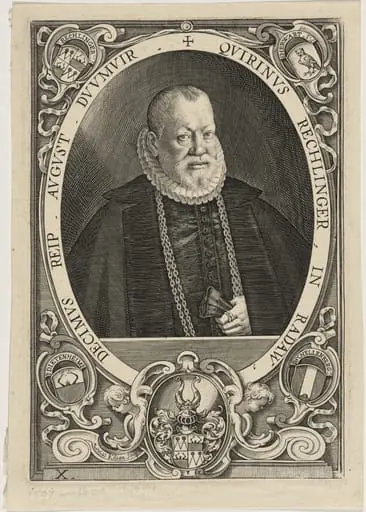 Quirinus Rechlinger
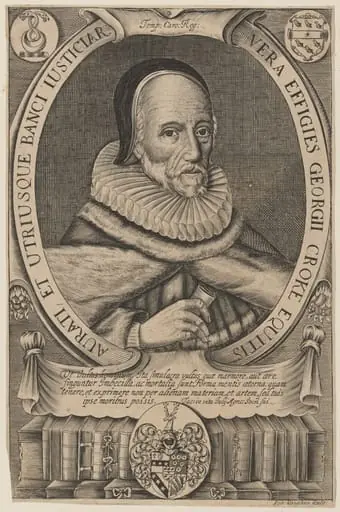 Sir George Croke
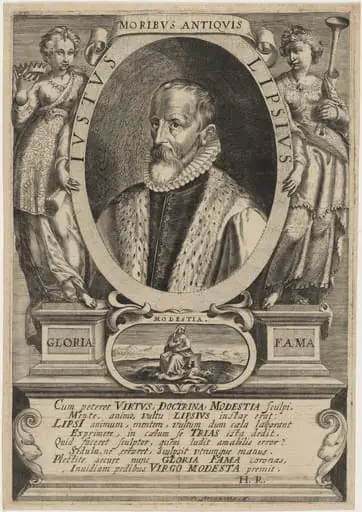 Justus Lipsius
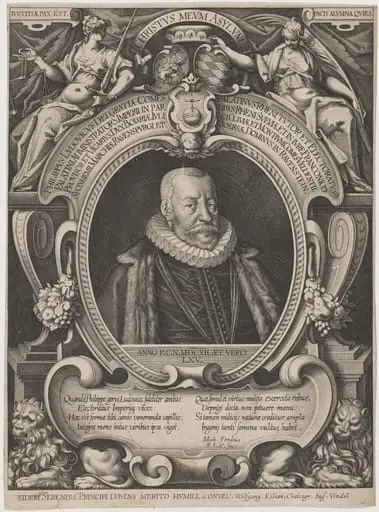 Philip Louis, Count Palatine
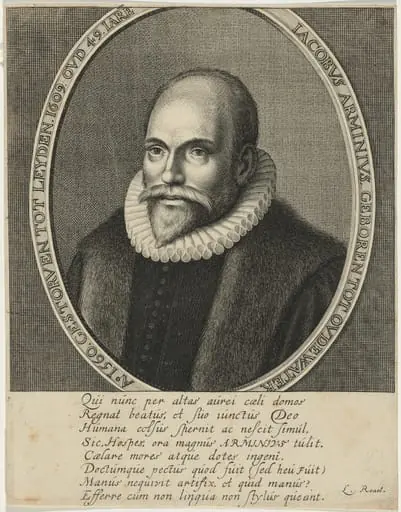 Jacobus Arminius
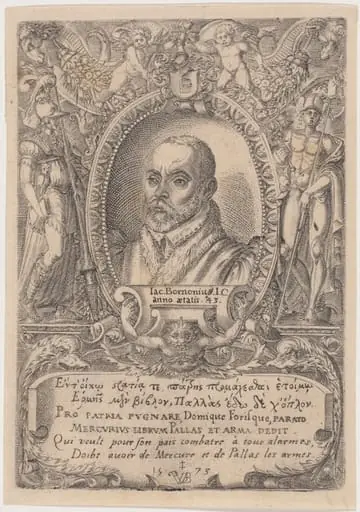 Jacob Bornonius
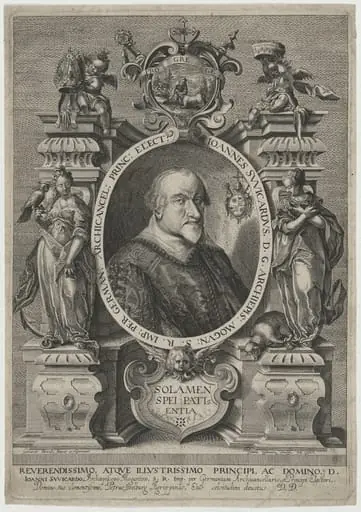 Joannes Swicardus, Archbishop of Maguntino
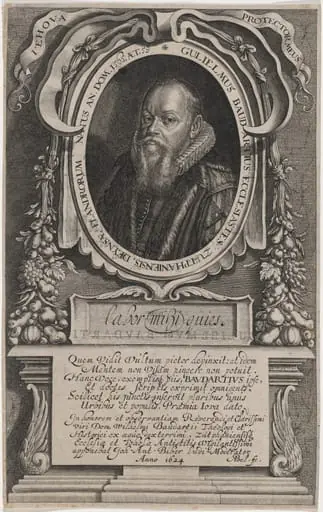 Gulielmus Baudartius, Theologian and Historian
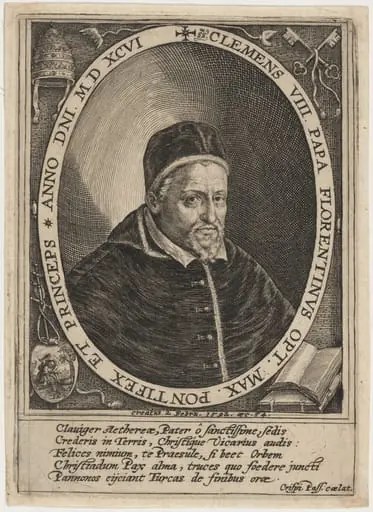 Pope Clement VIII
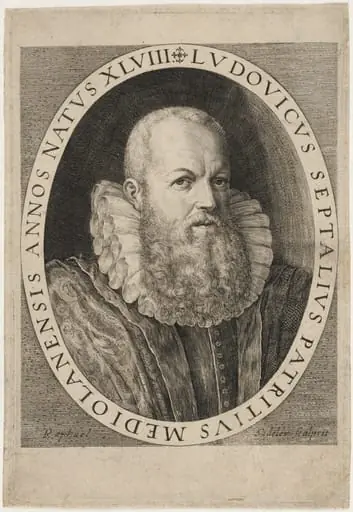 Ludovicus Septalius, Patricius Mediolanensis