Artwork
Italian Joust of Peace
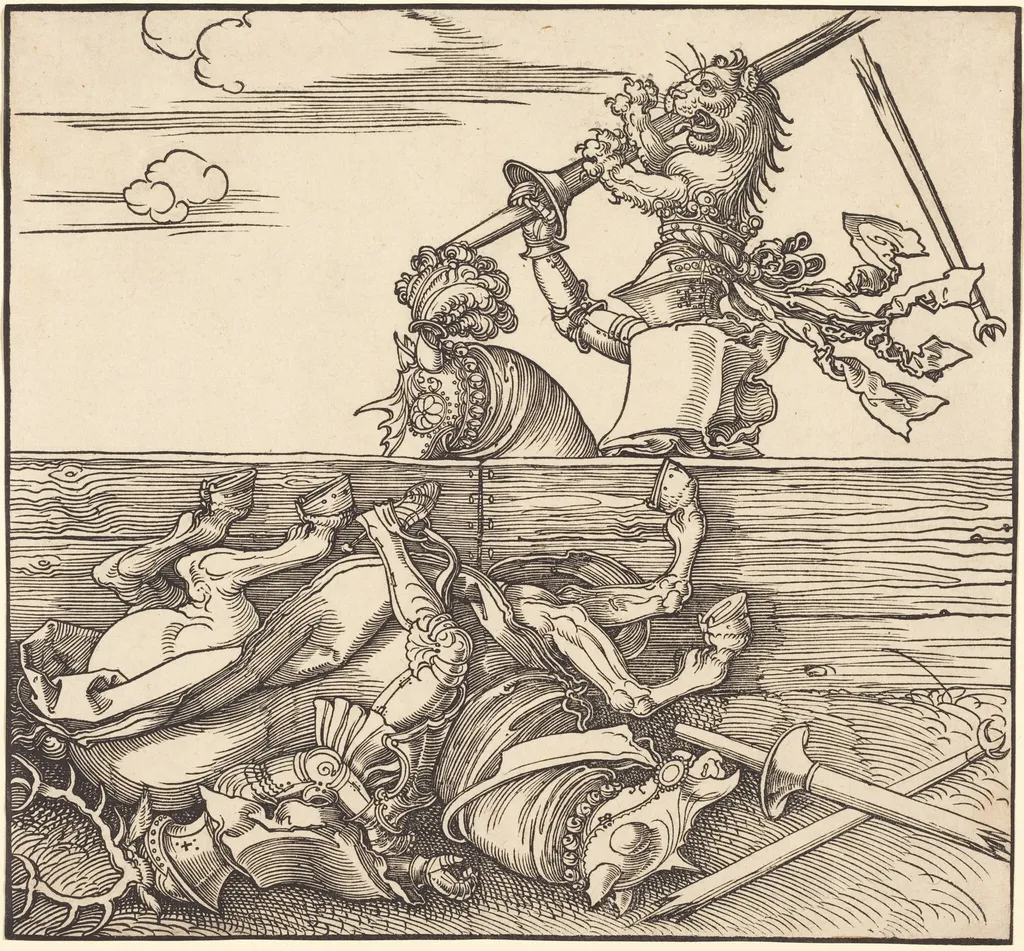
Italian Joust of Peace is an ink print by the Northern Renaissance artist Albrecht Dürer. It dates from 1518 and is held in the collection of the National Gallery of Art.
About this work
Overview
Rendered in black ink on laid paper, the print presents a turbulent confrontation between a towering figure on a ship and numerous smaller combatants below.
Created around 1518, this woodcut by Albrecht Dürer captures a fantastical naval combat scene titled Italian Joust of Peace. Rendered in black ink on laid paper, the print presents a turbulent confrontation between a towering figure on a ship and numerous smaller combatants below. Despite its monochrome palette, the composition conveys intense motion through dense, swirling lines and exaggerated forms, evoking a sense of chaotic energy rather than literal narrative.
Subject & Meaning
The central figure, a colossal warrior wielding a flaming sword, dominates the scene atop a vessel amid crashing waves. Smaller armed figures struggle below, suggesting a mythic or allegorical battle. The title implies a paradox—peace through violent spectacle—possibly reflecting contemporary anxieties about war, divine intervention, or the instability of political order in early 16th-century Europe.
Technique & Style
Dürer employed fine, intricate carving to achieve dramatic contrast and rhythmic movement. The woodcut’s dense network of lines mimics turbulence in water and sky, while the giant’s form is rendered with bold, simplified contours that stand in stark relief against the chaotic background. The absence of color heightens the graphic intensity, emphasizing texture and gesture over realism.
History & Provenance
The print emerged during Dürer’s mature period, following his travels to the Netherlands and exposure to Northern European print culture. It was likely produced for a limited audience of collectors and humanist circles, where symbolic imagery was valued. No early ownership records are well documented, but surviving impressions suggest it circulated among educated patrons interested in allegorical art.
Context
Created amid rising tensions between European powers and the Protestant Reformation, the image may respond to contemporary fears of divine wrath or societal collapse. Dürer’s interest in classical themes and apocalyptic symbolism, influenced by his study of Italian art and humanist texts, informs the work’s layered meaning. The scene does not depict a real event but channels broader cultural anxieties through mythic spectacle.
Legacy
Though less known than Dürer’s religious or portrait prints, Italian Joust of Peace exemplifies his ability to merge technical precision with imaginative intensity. Its influence is seen in later Northern European prints that used dramatic scale and symbolic chaos to convey moral or political themes. The work remains a testament to Dürer’s skill in transforming woodcut into a vehicle for complex, non-literal storytelling.
Artist & collection
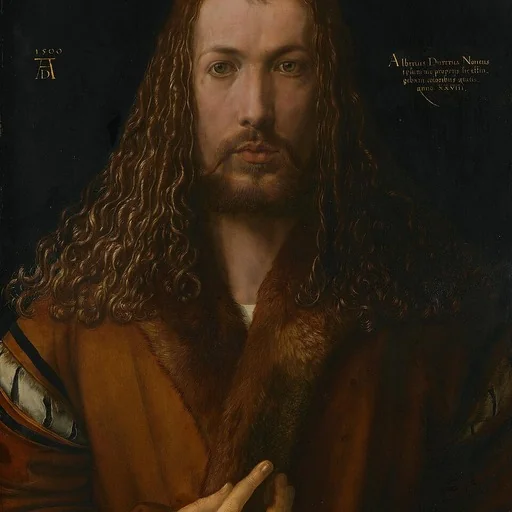
Artist
Albrecht Dürer spent his life in Nuremberg, a busy German city where artists traded prints like currency.

![Madonna and Child [obverse], by Albrecht Dürer](https://artifactworldgallery.com/img/albrecht-durer--madonna-and-child-obverse--d7b8ebf05d22ebe5-w320.webp)
![Lot and His Daughters [reverse], by Albrecht Dürer](https://artifactworldgallery.com/img/albrecht-durer--lot-and-his-daughters-reverse--b4ebf9b282faa17a-w320.webp)
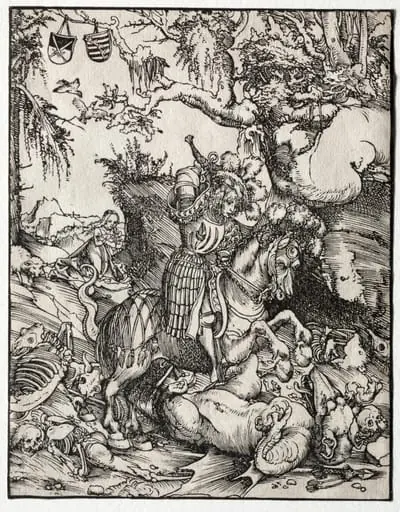 St. George Slaying the Dragon
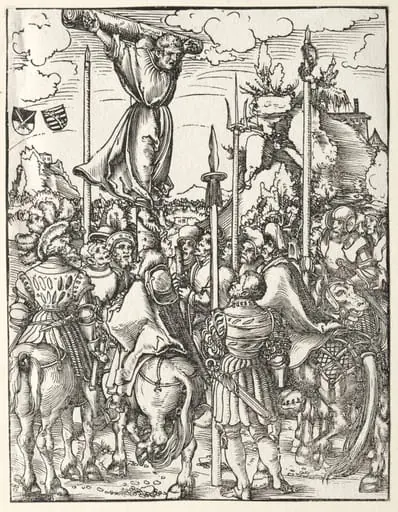 Martyrdom of St. Philip
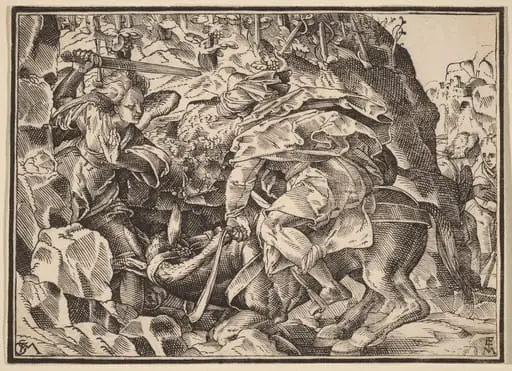 Christ Tells His Disciples of the Last Judgment
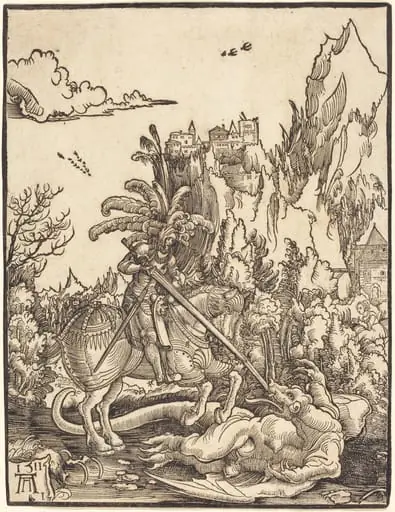 Saint George Slaying the Dragon
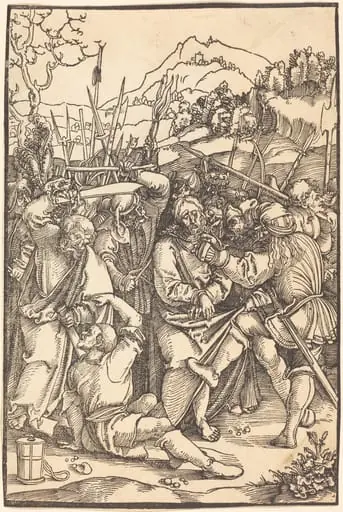 Christ Taken Prisoner
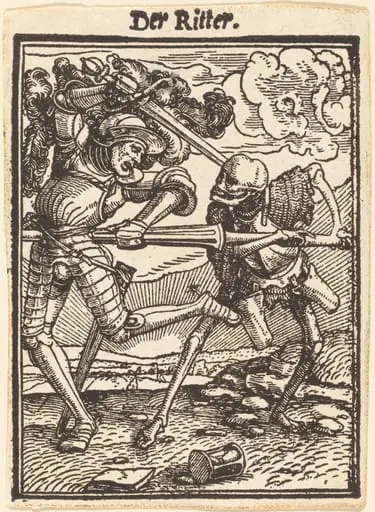 Der Ritter (The Knight)
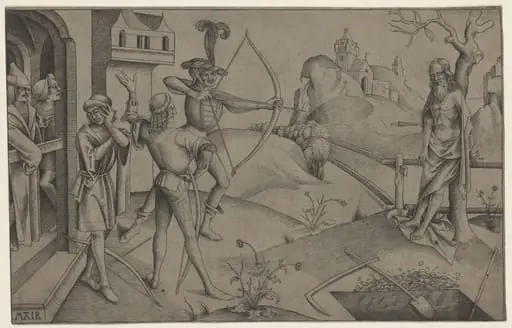 The King's Sons Shooting at their Dead Father's Body
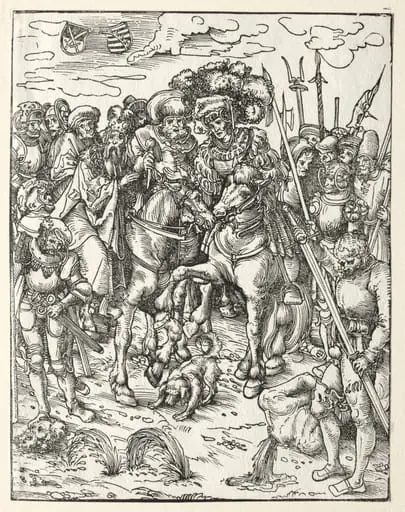 Martyrdom of St. Matthew
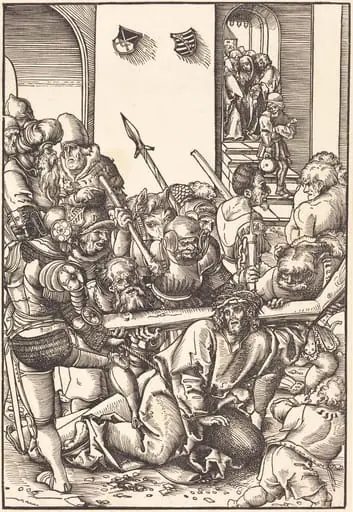 Christ Bearing the Cross
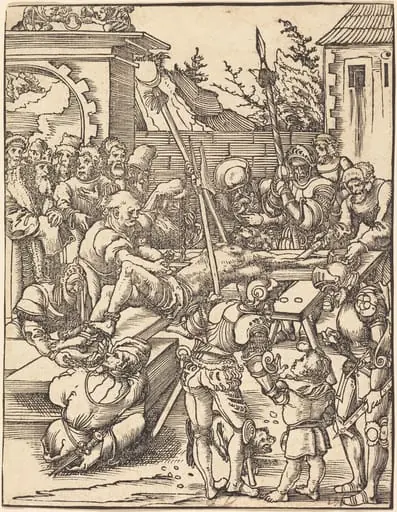 Saint Bartholomew
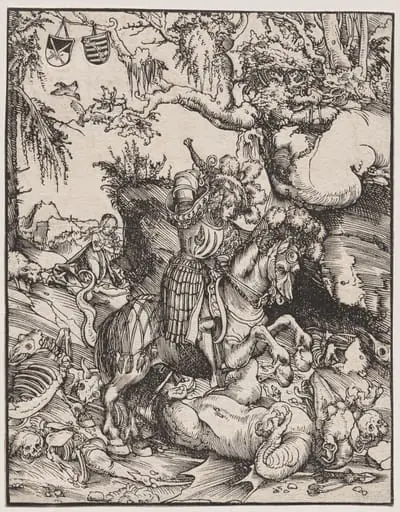 Saint George Slaying the Dragon
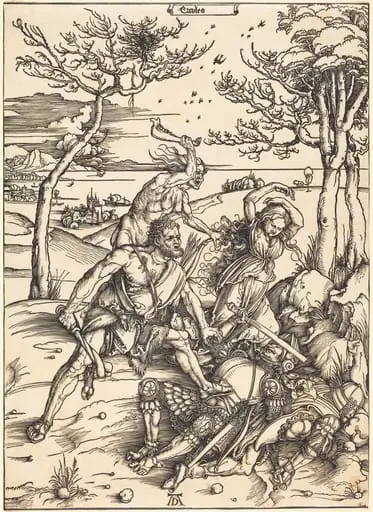 Hercules Conquering Cacus ("Ercules")