Artwork
Tiens, voilà un écriteau que ma femme a passé...
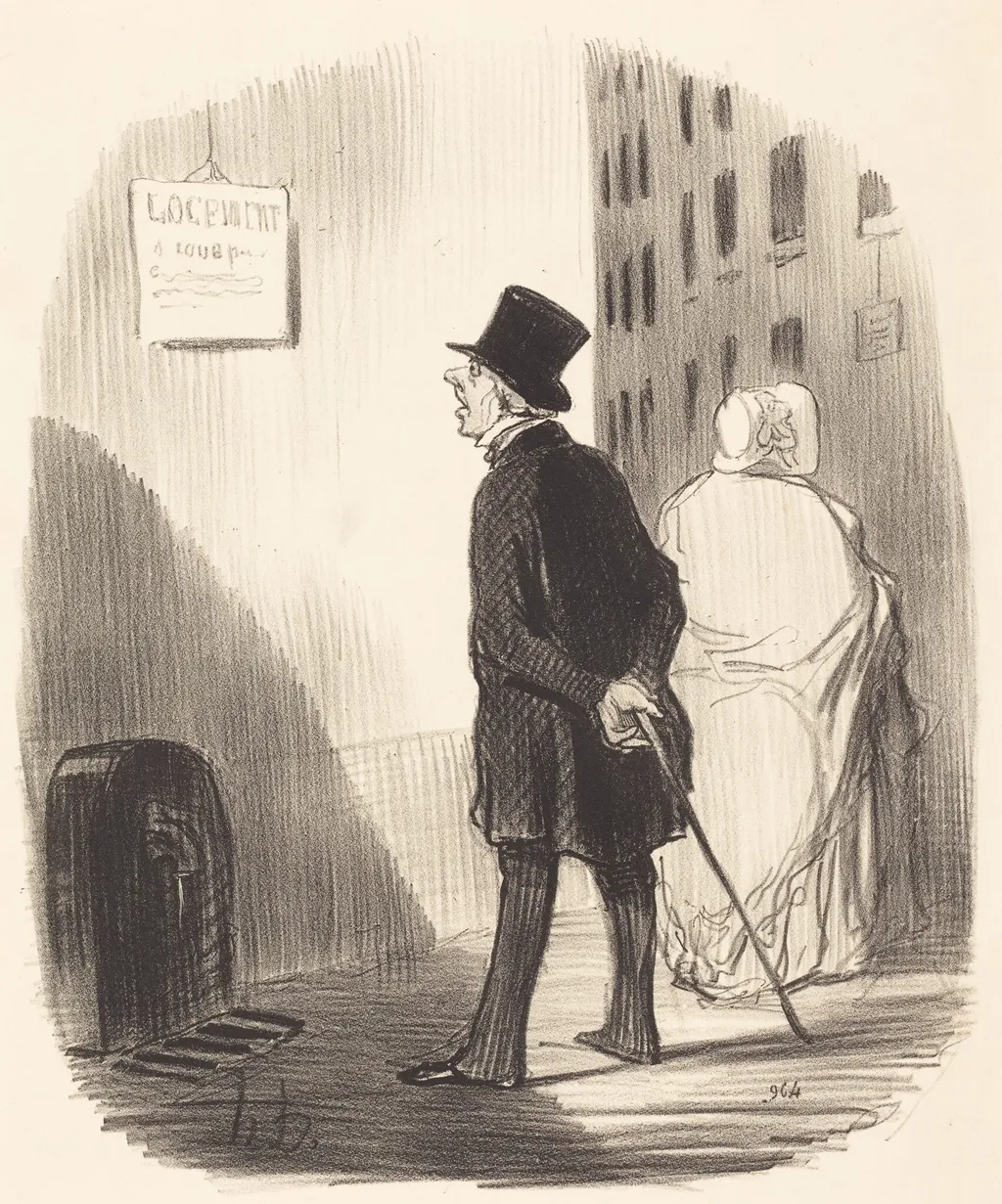
Tiens, voilà un écriteau que ma femme a passé... is an ink print by the Romanticist artist Honoré Daumier. It dates from 1848 and is held in the collection of the National Gallery of Art.
About this work
Overview
Created in 1848, this lithograph by Honoré Daumier captures a fleeting moment on a rainy Parisian street. Two figures move beneath a sign advertising rooms for rent, while a dark object rests on the wet pavement, suggesting a suitcase or bundle. The work exemplifies Daumier’s practice of using print media to comment on everyday urban life.
Subject & Meaning
The image presents a modest street scene: a man in a tall black hat and long coat shields himself with an umbrella, followed by a cloaked figure leaning on a cane. The juxtaposition of ordinary pedestrians with the commercial sign hints at the precariousness of urban existence and the constant search for shelter and livelihood in mid‑century France.
Technique & Style
Executed in lithography, the composition relies on rapid, sketch‑like lines that convey motion and atmosphere. Daumier’s handling of the medium allows for spontaneous shading and texture, giving the rain‑slicked street and the figures a sense of immediacy, as if the viewer has stumbled upon a candid snapshot.
History & Provenance
The print emerged during a prolific period when Daumier contributed satirical images to periodicals such as *La Caricature* and *Le Charivari*. Though primarily known for overt political caricature, this work reflects his broader interest in the quotidian, produced for the burgeoning market of affordable lithographic prints.
Context
Set against the backdrop of the 1848 revolutions, the lithograph reflects the social upheavals and republican sentiments that permeated French society. Daumier’s focus on ordinary citizens navigating a rainy cityscape aligns with his republican perspective, subtly critiquing the instability faced by the lower classes.
Artist & collection

Artist
Honoré-Victorin Daumier was a French painter, sculptor, and printmaker, whose many works offer commentary on the social and political life in France, from the Revolution of 1830 to the fall of the Second French Empire in 1870.









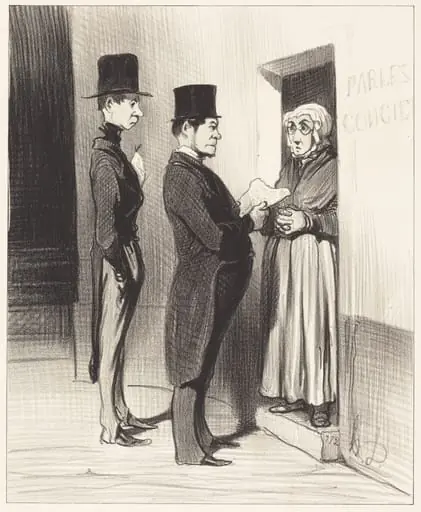 Et parlant a sa portière ainsi déclarée...
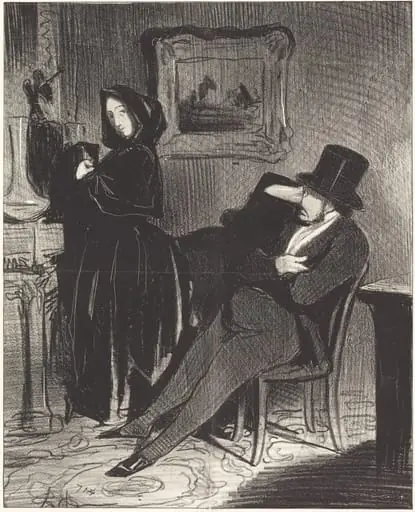 Plus souvent que je te conduirai... au bal...
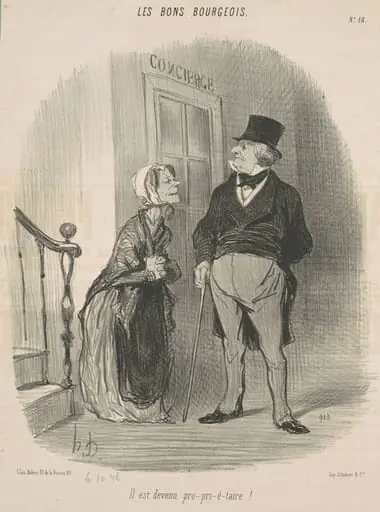 Il est devenu pro-pri-é-taire!
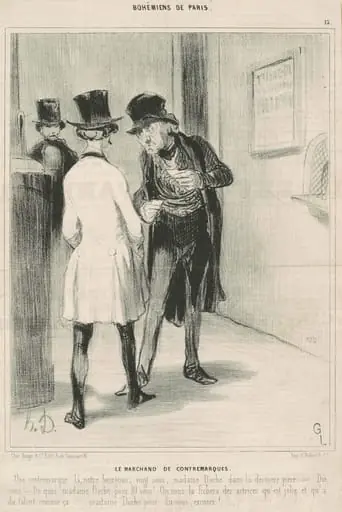 Le marchand de contremarques
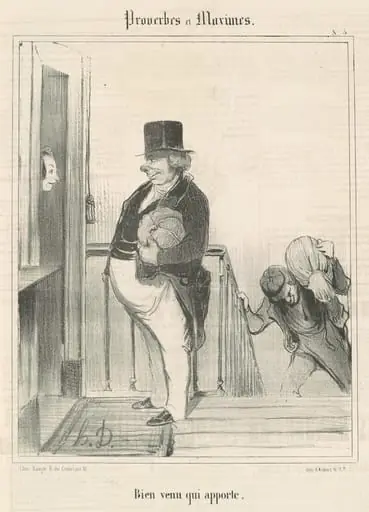 Bien venu qui apporte
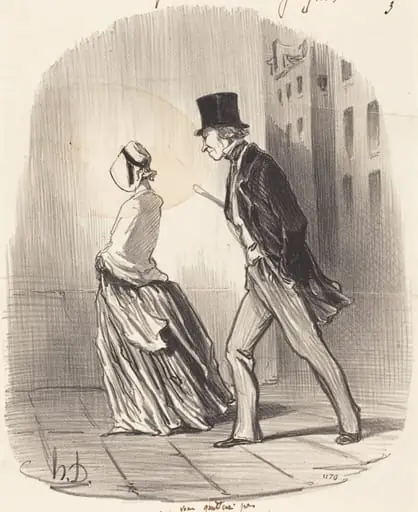 Non, madame, je ne vous quitterai pas...
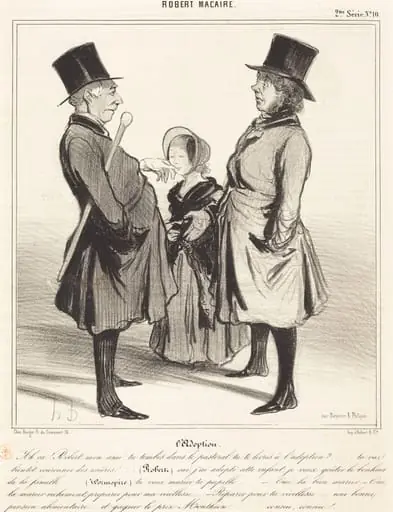 L'Adoption - Ah ça! Robert, mon ami...
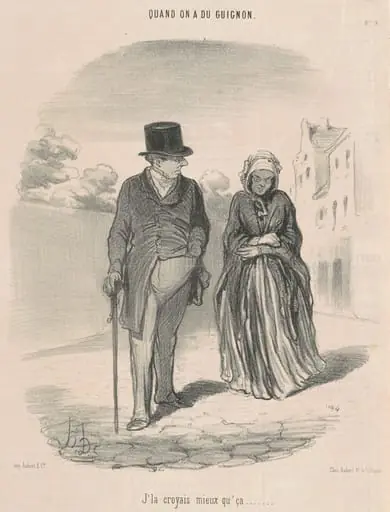 J'la croyais mieux qu'ça ...
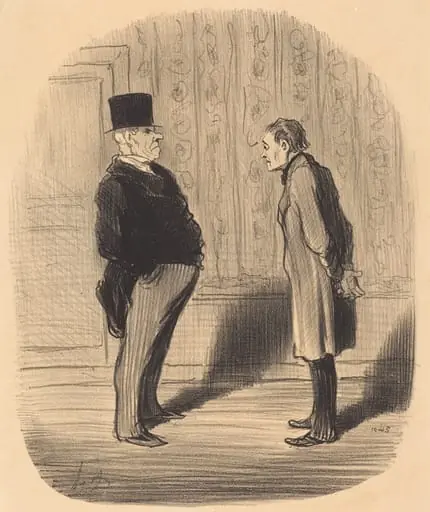 Eh! bien monsieur et mes trois termes...
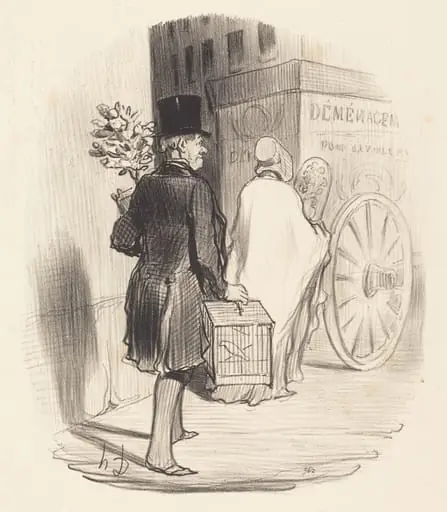 Parisien transportant dans un autre quartier...