Artwork
The Old Clothes Dealer, Cairo
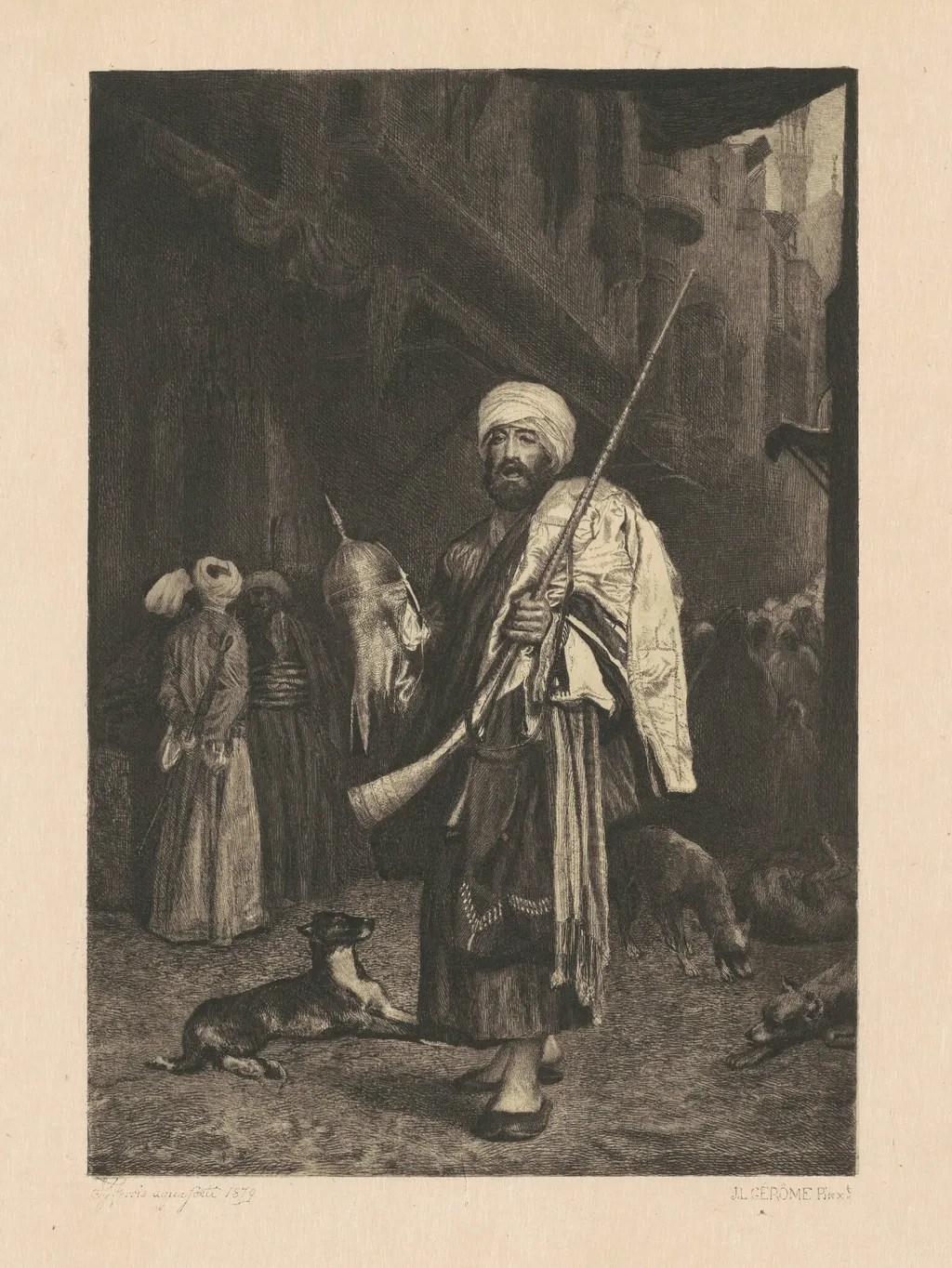
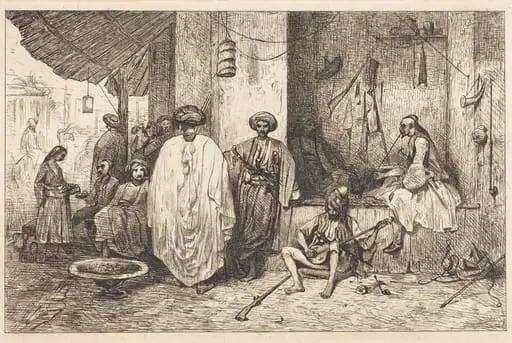
The Old Clothes Dealer, Cairo is an ink print by the Impressionist artist Stephen James Ferris. It dates from 1879 and is held in the collection of the National Gallery of Art.
About this work
Overview
Executed in black ink on laid paper, the work belongs to a series of prints Ferris produced during his travels in North Africa and the Middle East.
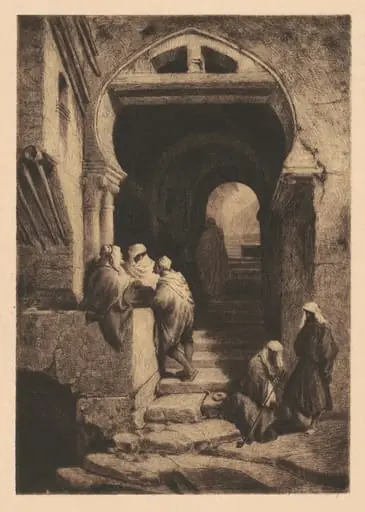
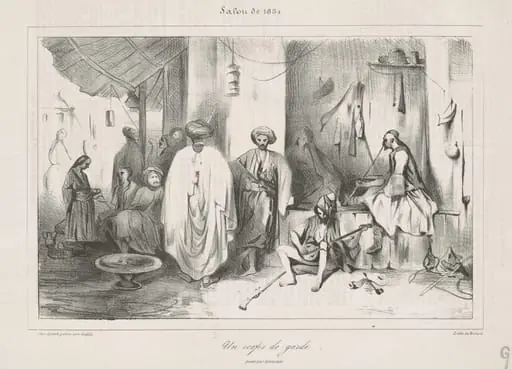
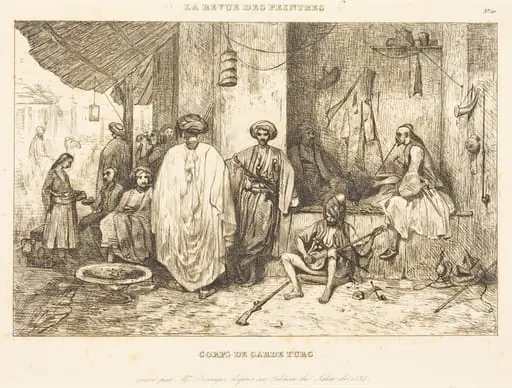
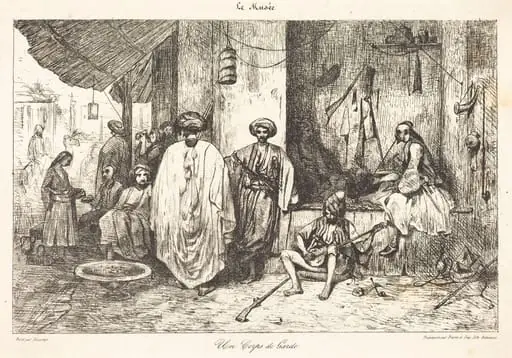
Created in 1879, this etching by Stephen James Ferris captures a moment in Cairo’s urban market life. Executed in black ink on laid paper, the work belongs to a series of prints Ferris produced during his travels in North Africa and the Middle East. The composition centers on a vendor surrounded by figures and architectural elements, conveying the texture of daily commerce in a foreign setting without overt romanticization.
Subject & Meaning
The central figure is a dealer in secondhand goods, dressed in regional attire, holding a rifle and a large, possibly ceremonial object. His presence suggests both trade and personal defense in a crowded environment. Surrounding figures—a woman, a man with a sword, and a resting dog—hint at the diversity of urban life. The scene avoids narrative clarity, instead emphasizing the quiet dignity of ordinary labor amid a dynamic public space.
Technique & Style
Ferris employed fine, controlled etching lines to render texture and depth, from the folds of fabric to the rough surfaces of buildings. The dark sky above contrasts with the detailed foreground, guiding the eye toward the central figure. The use of laid paper enhances the tonal richness of the ink, while the composition’s asymmetry and layered figures reflect a documentary impulse rather than idealized spectacle.
History & Provenance
Ferris made this print during a journey through Egypt in the late 1870s, part of his broader interest in documenting non-Western cultures through direct observation. The work was likely produced in Cairo and later brought back to the United States. It entered institutional collections in the early 20th century, where it remains as part of a small but significant body of American etchings focused on the Middle East.
Context
In the late 19th century, Western artists increasingly traveled to North Africa and the Levant, drawn by Orientalist themes. Ferris’s approach, however, avoided exoticism, favoring quiet observation over theatricality. His etchings reflect a growing interest among American printmakers in capturing authentic scenes, aligning with broader shifts toward realism and ethnographic precision in visual culture.
Legacy
Though not widely exhibited today, The Old Clothes Dealer, Cairo contributes to a lesser-known strand of American printmaking that engaged with the Islamic world through firsthand study. Ferris’s work stands apart from more sensationalized Orientalist imagery, offering instead a restrained, attentive record of everyday life—a quiet counterpoint to dominant artistic narratives of the era.
Artist & collection