Artwork
Diana and Orion
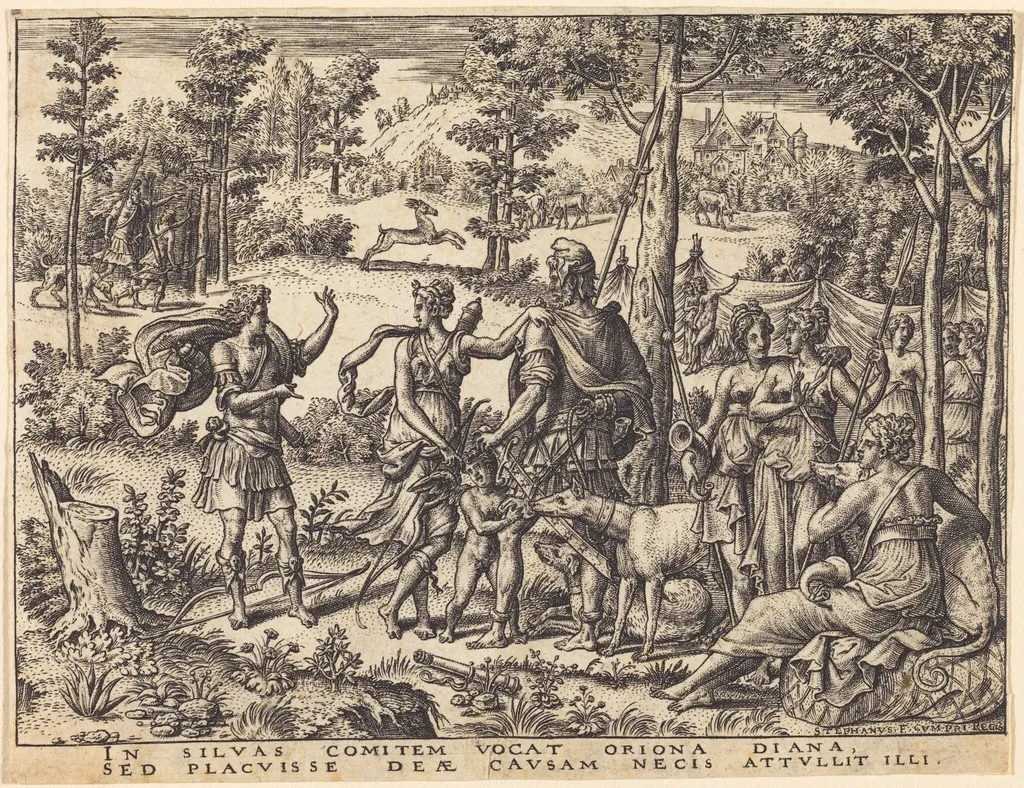
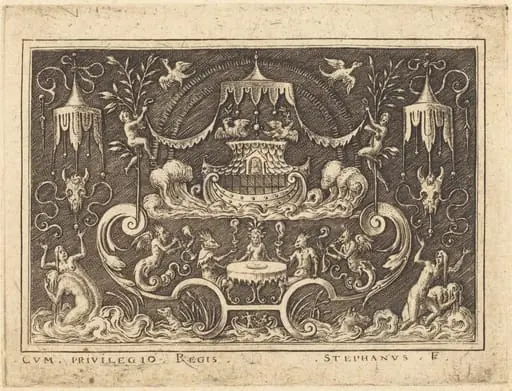
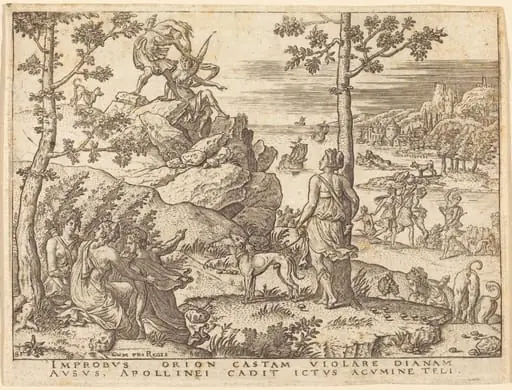
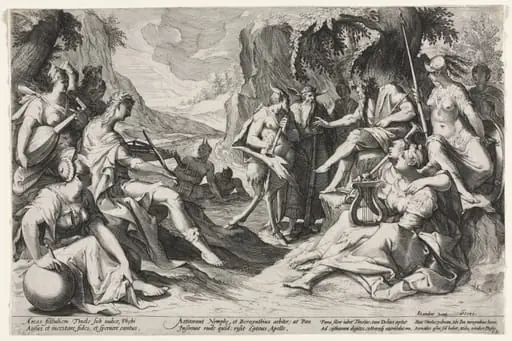
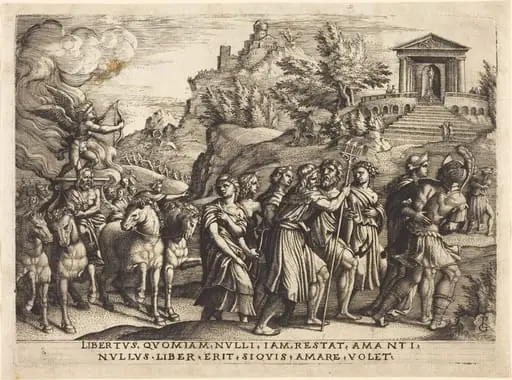
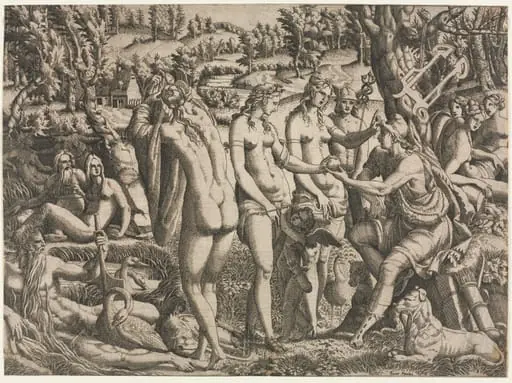
Diana and Orion is an ink print by the Renaissance artist Etienne Delaune. It dates from 1551 and is held in the collection of the National Gallery of Art.
About this work
Overview
Etienne Delaune’s 1551 engraving titled Diana and Orion presents a compact, narrative scene set within a wooded landscape.
Etienne Delaune’s 1551 engraving titled Diana and Orion presents a compact, narrative scene set within a wooded landscape. Central to the composition are six figures: a spear‑bearing male and a bow‑wielding female, likely representing the hunter Orion and the goddess Diana, surrounded by dancing and gesturing companions. The background recedes through a forest populated with deer and a distant castle, all rendered in delicate line work.
Subject & Meaning
The print draws on classical mythology, pairing the huntress Diana with Orion, the mortal hunter. Their juxtaposition, along with the surrounding figures and the Latin inscription at the base, suggests a tale of pursuit, divine intervention, and the interplay between mortal ambition and celestial authority, themes common in Renaissance interpretations of myth.
Technique & Style
Delaune employs fine, cross‑hatching and parallel lines to model forms and suggest depth, a hallmark of mid‑sixteenth‑century engraving. The intricate line density creates subtle tonal variations, while the crisp outlines define the figures, foliage, and architectural elements, achieving a lively yet controlled visual rhythm across the plate.
History & Provenance
Created in 1551, the engraving reflects Delaune’s activity within the French court’s artistic circles, where mythological subjects were popular among patrons. Surviving impressions have appeared in several European collections, indicating the work’s circulation among connoisseurs of printed art during the late Renaissance.
Context
During the mid‑1500s, engravers like Delaune contributed to the diffusion of classical narratives, translating painted compositions into reproducible prints. This piece aligns with contemporary interests in humanist scholarship and the revival of antiquity, serving both decorative and educational purposes for an audience familiar with Latin texts and mythic lore.
Artist & collection