Artwork
The Island of Philae with the Kiosk
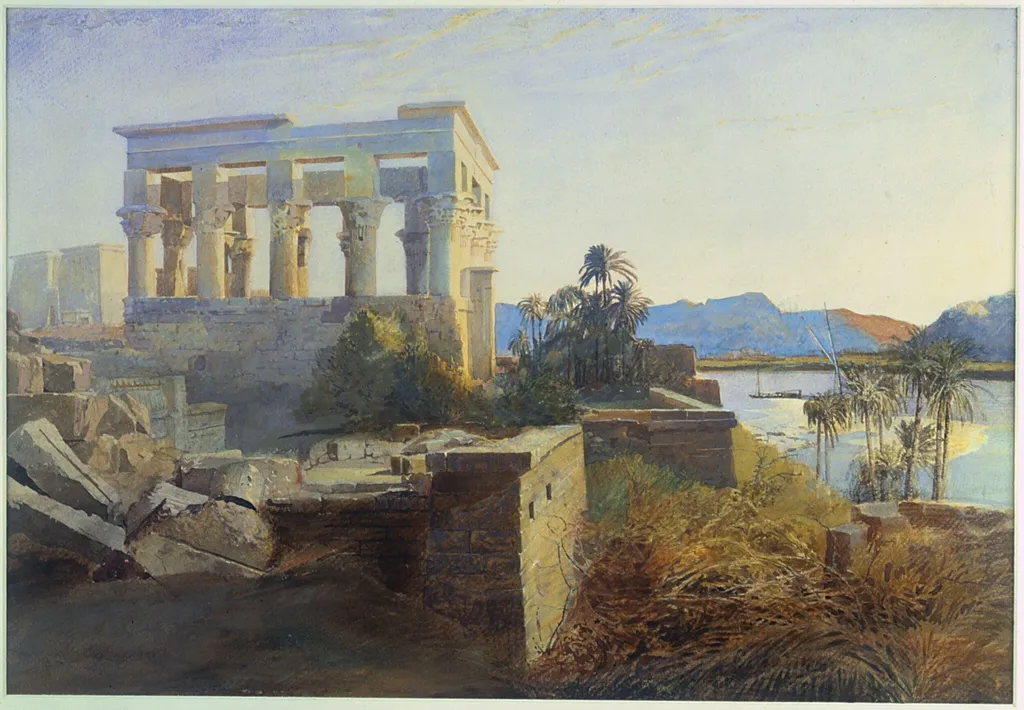
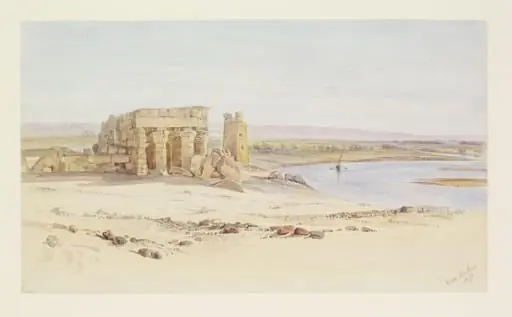
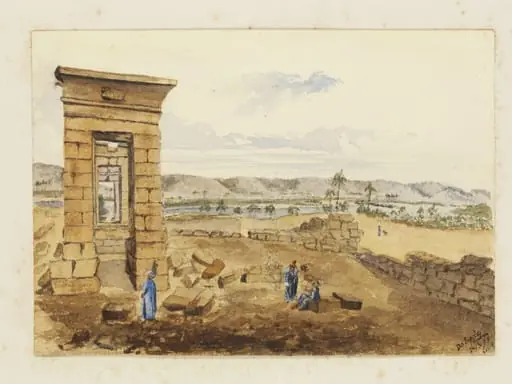
The Island of Philae with the Kiosk is a watercolor work on paper by the Orientalist artist Dighton. It dates from 1848 and is held in the collection of the Victoria and Albert Museum. This watercolor captures the Island of Philae along the Nile, focusing on ancient architectural remnants softened by time and environment.
About this work
Overview
This watercolor captures the Island of Philae along the Nile, focusing on ancient architectural remnants softened by time and environment.
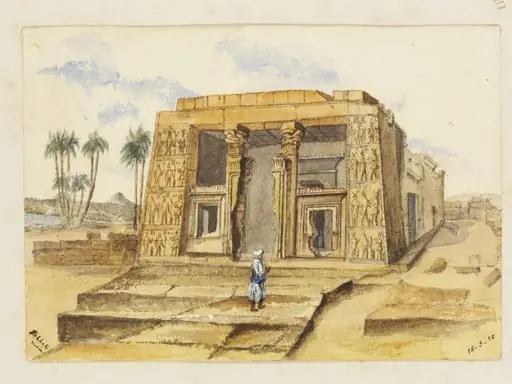
This watercolor captures the Island of Philae along the Nile, focusing on ancient architectural remnants softened by time and environment. The composition centers on a columned kiosk, flanked by the distant southern pylon of the Temple of Isis. Palm trees fringe the riverbank, and a solitary boat drifts near the shore. The palette is muted, with delicate washes suggesting the hazy glow of late afternoon light on weathered stone.
Subject & Meaning
The scene presents ruins not as monuments of power, but as quiet witnesses to the passage of time. The kiosk, often called Pharaoh's Bed, and the temple pylon stand in serene isolation, their grandeur diminished yet preserved by nature. The presence of palms and water suggests renewal, contrasting with the stillness of the stone. The mood is contemplative, emphasizing harmony between decay and the enduring rhythms of the natural world.
Technique & Style
Executed in watercolor, the work employs translucent layers to evoke atmospheric depth and subtle tonal shifts. Soft edges blur the boundary between sky and water, while delicate linework defines architectural details without sharp definition. The artist avoids dramatic contrasts, favoring a gentle luminosity that mimics the diffused light of dawn or dusk, reinforcing the sense of quiet solitude.
History & Provenance
The painting likely dates to the early 19th century, a period when European travelers documented Egypt’s antiquities following Napoleon’s campaign. Philae, then accessible by boat, attracted artists and scholars drawn to its well-preserved structures. This work may have been created during a journey along the Nile, possibly as a personal record rather than a commissioned piece, reflecting individual observation over official documentation.
Context
In the early 1800s, Egypt’s ruins became subjects of scholarly and artistic interest as Western interest in antiquity grew. Unlike grand historical paintings, this watercolor reflects a quieter, more personal engagement with the past. It aligns with emerging Romantic sensibilities that valued emotion, solitude, and nature’s reclamation of human works, offering an intimate counterpoint to monumental archaeological records.
Legacy
The work contributes to a visual archive of Egypt’s monuments before modern conservation efforts. Its restrained aesthetic distinguishes it from later, more dramatic depictions, preserving a moment when ruins were seen not as relics to be restored, but as living landscapes shaped by time. It remains a quiet testament to early travelers’ responses to ancient Egypt’s enduring presence.
Own this work as a print
Artist & collection

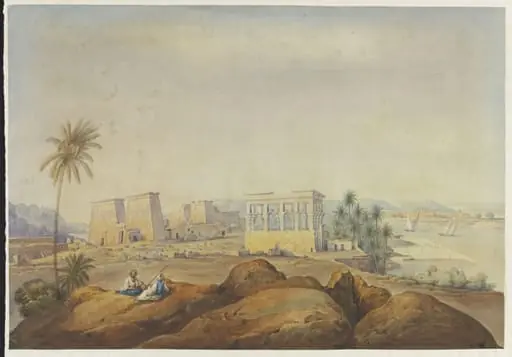 The Temple of Isis and Kiosk of Trajan on the Island of Philae
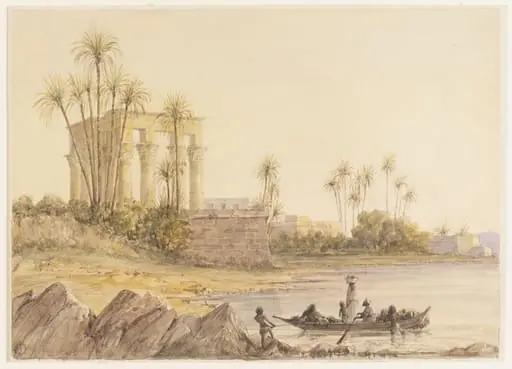 Landing Place. Philoe
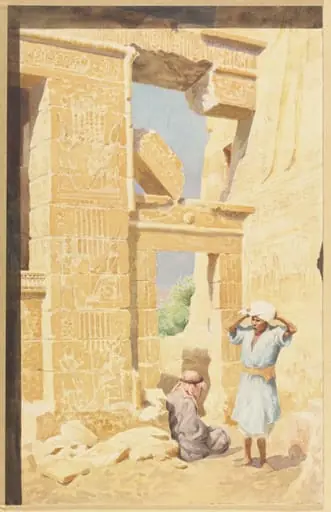 A Doorway at Philae
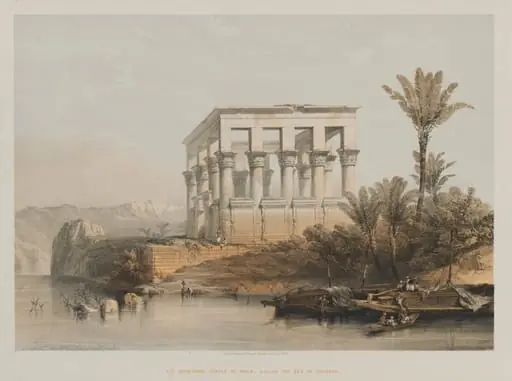 Egypt and Nubia, Volume II: The Hypaethral Temple at Philae, called the Bed of Pharaoh
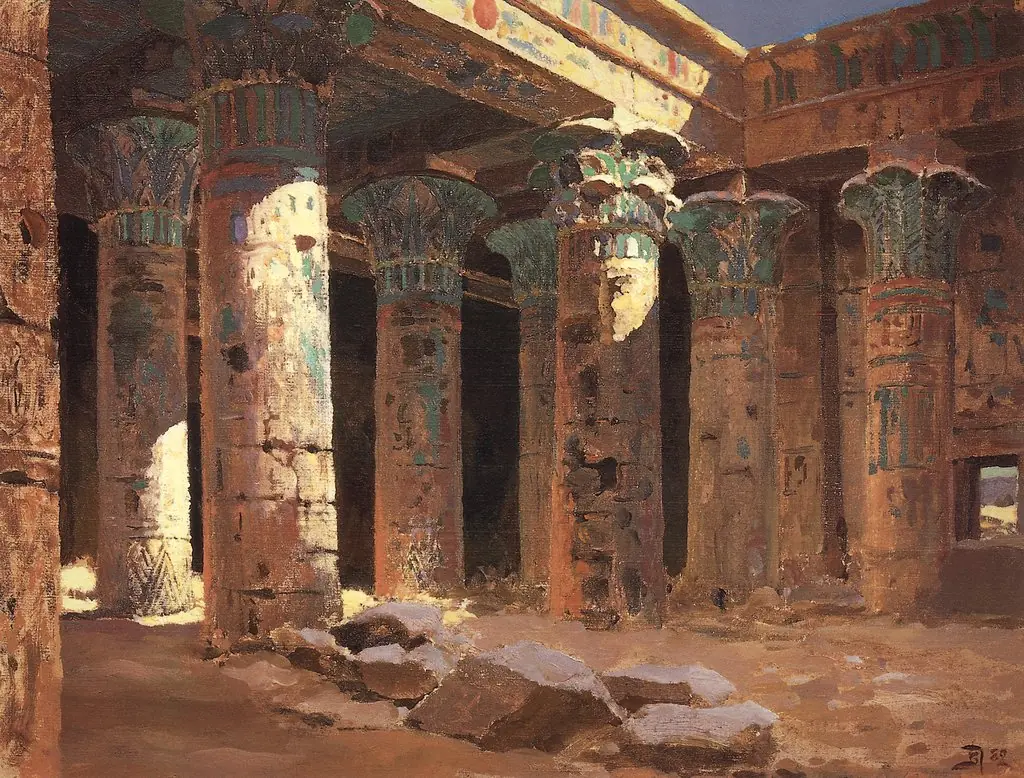 Temple of Isis, Philae
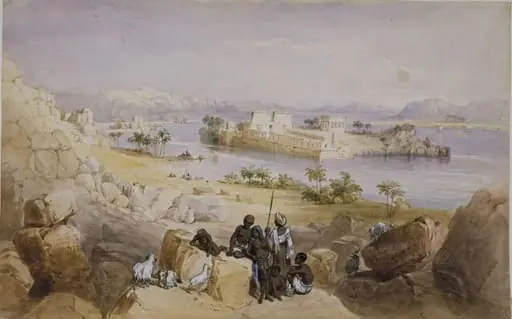 The Island of Philae
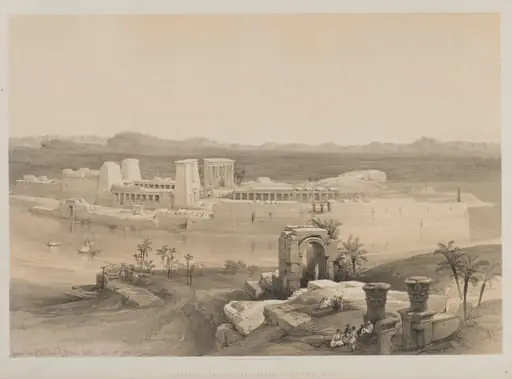 Egypt and Nubia, Volume I: General View of the Island of Philae, Nubia
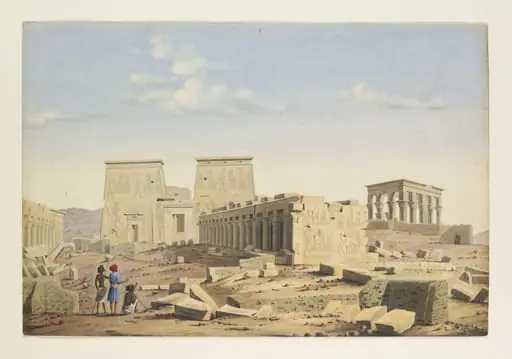 Ile de Philoé
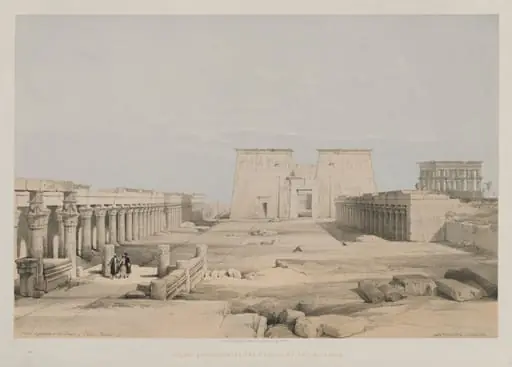 Egypt and Nubia, Volume I: Grand Approach to the Temple of Philae, Nubia
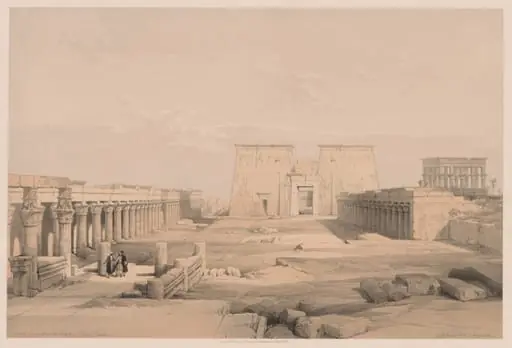 Egypt and Nubia: Volume I - No. 42, Grand Approach to the Temple of Philae, Nubia
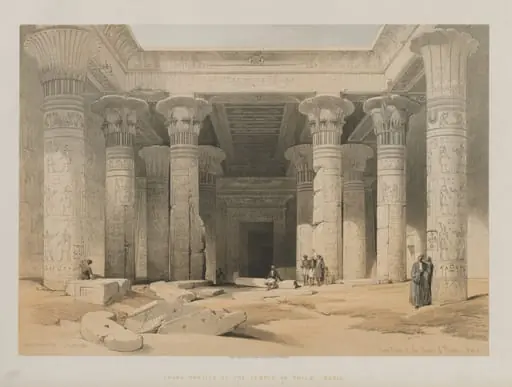 Egypt and Nubia, Volume I: Grand Portico of the Temple of Philae, Nubia