Artwork
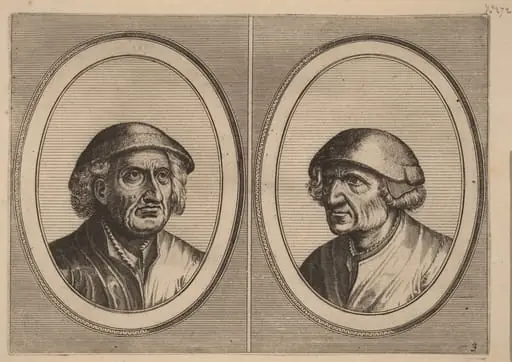
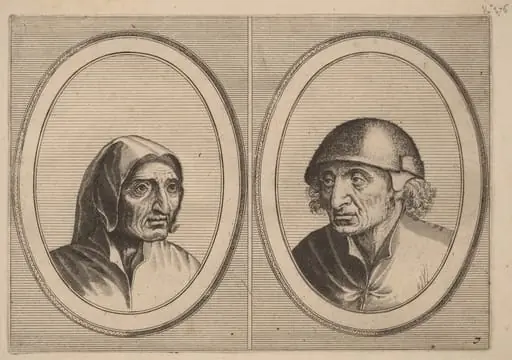
"Goe Geurtjen" and "Kribbighe Babbe"
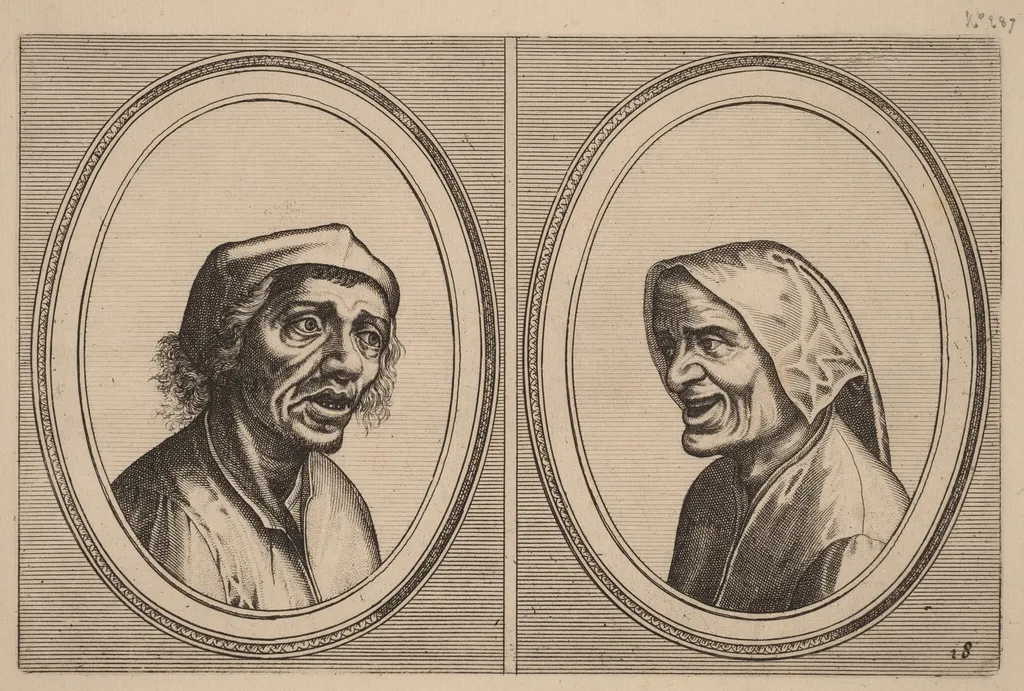
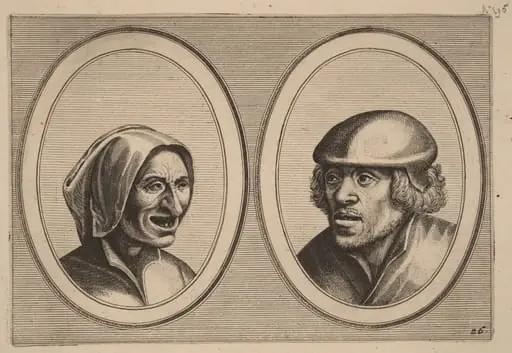
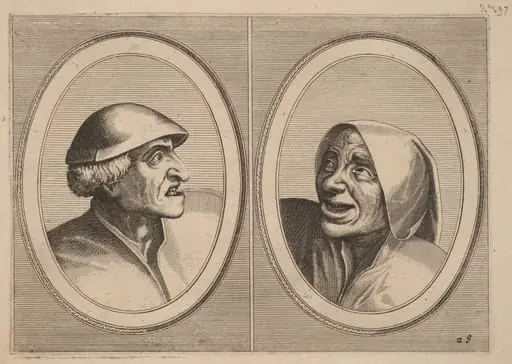
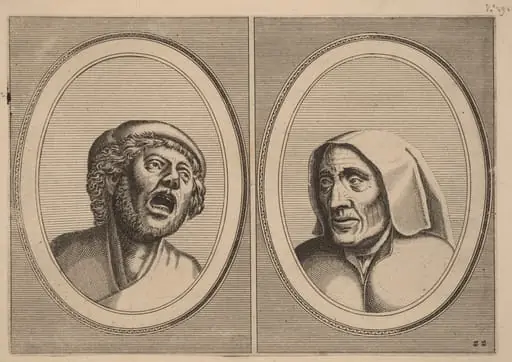
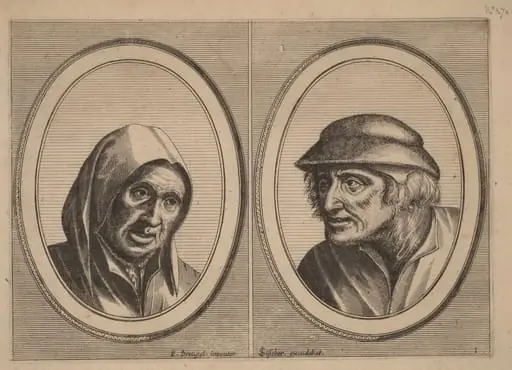
"Goe Geurtjen" and "Kribbighe Babbe" is an ink print by the Renaissance artist Johannes van Doetechum the Elder. It dates from 1564 and is held in the collection of the National Gallery of Art. The etchings 'Goe Geurtjen' and 'Kribbighe Babbe' are two oval portraits created by Johannes van Doetecum the Elder around 1564.
About this work
Overview
The etchings 'Goe Geurtjen' and 'Kribbighe Babbe' are two oval portraits created by Johannes van Doetecum the Elder around 1564. They are examples of his work in printmaking, a field in which he was known for reproducing genre scenes and maps.
Subject & Meaning
The portraits depict two individuals with distinct expressions and attire. 'Goe Geurtjen' has a wild beard and a surprised look, while 'Kribbighe Babbe' wears a cap and displays a wide smile. Their rough yet expressive features suggest everyday people, reflecting the genre traditions of the time.
Technique & Style
The etchings were made using a technique that involves carving into metal plates with sharp tools, resulting in detailed lines and textured images. The black and white portraits showcase Van Doetecum's skill in capturing personality through facial expressions and clothing.
Artist & collection

Artist
Johannes van Doetechum the Elder
Joannes van Doetecum the Elder (1530 – 1605) was a Dutch engraver-cartographer known for his etched works after genre scenes by Pieter Bruegel the Elder and maps of various cities in the Netherlands.