Artwork
Nundinae Rusticorum (Rustic Market)
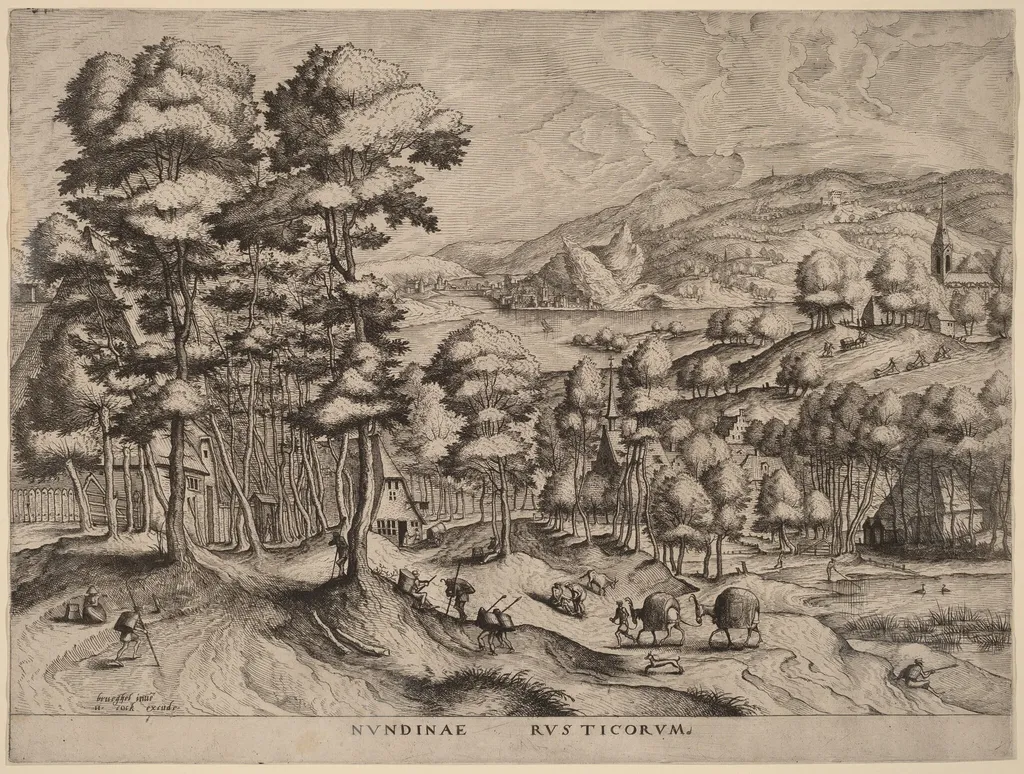
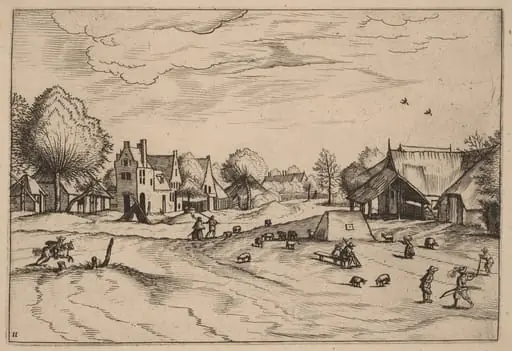
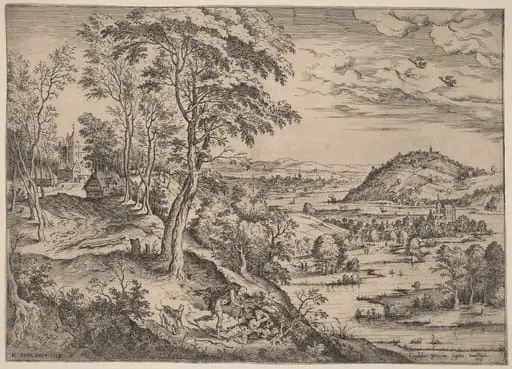
Nundinae Rusticorum (Rustic Market) is an ink print by the Renaissance artist Johannes van Doetechum the Elder. It dates from 1556 and is held in the collection of the National Gallery of Art.
About this work
Overview
Van Doetecum, a Dutch printmaker known for reproducing genre scenes and producing maps, worked primarily in Haarlem after relocating there in 1578.
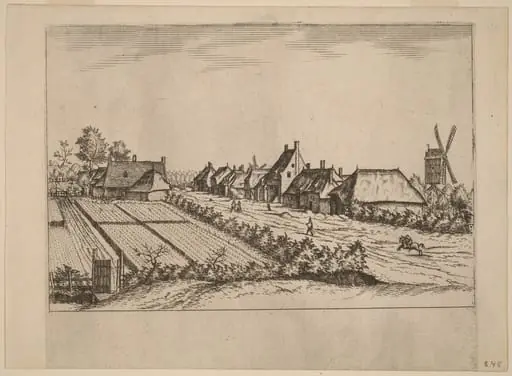
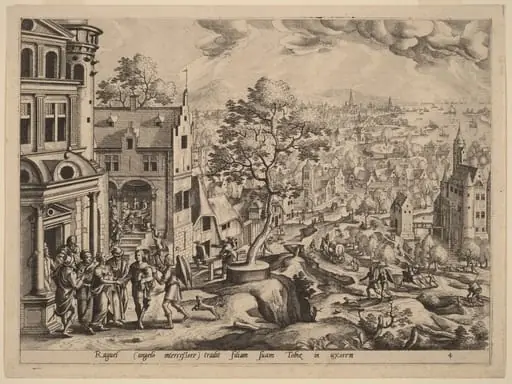
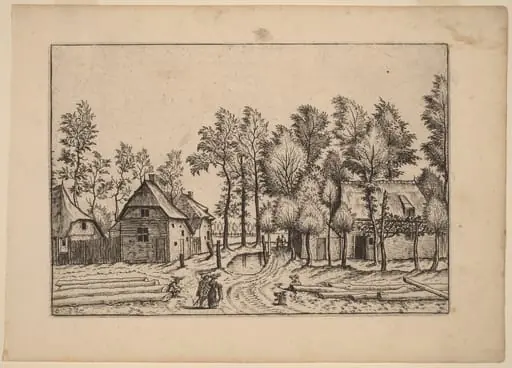
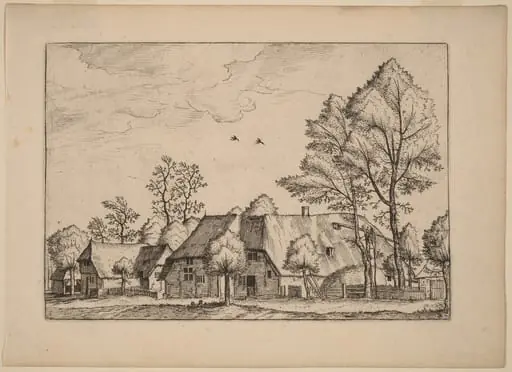
Created around 1556 by Johannes van Doetecum the Elder, *Nundinae Rusticorum (Rustic Market)* is an etching and engraving that captures a rural marketplace in the Low Countries. Van Doetecum, a Dutch printmaker known for reproducing genre scenes and producing maps, worked primarily in Haarlem after relocating there in 1578. This print exemplifies the era’s reproductive print culture, translating painted compositions into widely circulated graphic forms.
Subject & Meaning
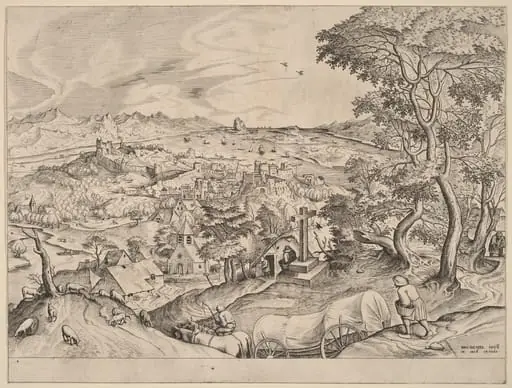
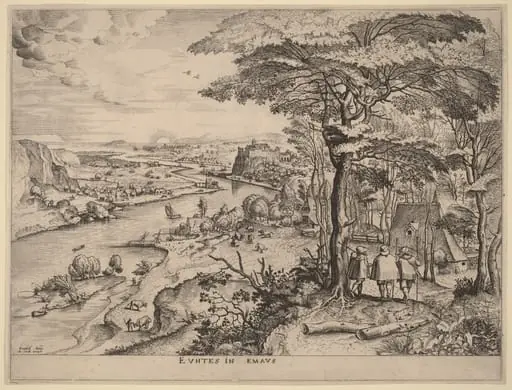
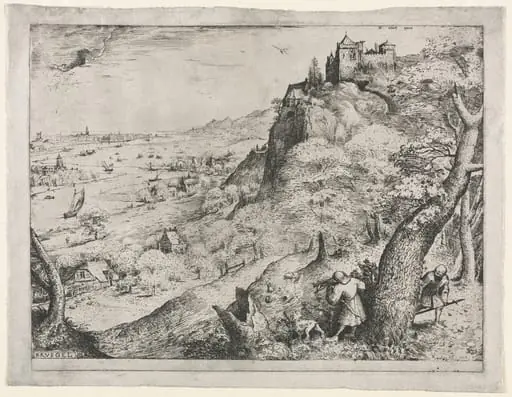
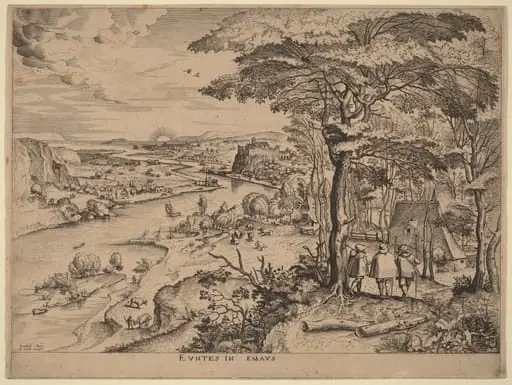
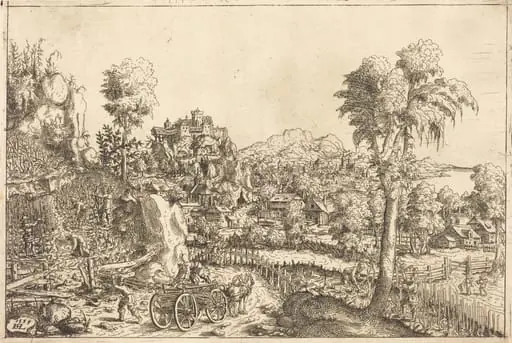
The scene portrays a quiet rural fair, with figures engaged in everyday transactions: bartering goods, walking along a dirt path, and tending to animals. A modest building anchors the composition, while distant hills and a hazy sky suggest a broader agricultural landscape. The absence of grandeur or spectacle emphasizes the dignity of ordinary rural life, aligning with emerging Northern European interest in vernacular subjects.
Technique & Style
Van Doetecum employed fine etched lines and precise engraving to render textures—tree bark, woven baskets, and layered clothing—with delicate clarity. The composition balances open space with intricate detail, guiding the eye along a winding path that leads into the middle distance. Atmospheric perspective is achieved through subtle tonal gradations, enhancing the sense of depth without dramatic contrast.
History & Provenance
The print was produced during a period when reproductive engraving flourished in the Netherlands, allowing artists like Pieter Bruegel the Elder to reach broader audiences. Van Doetecum was known for translating Bruegel’s compositions into prints, though the direct link between this work and a specific painting remains unconfirmed. Its survival in multiple institutional collections suggests early circulation among collectors and scholars.
Context
In mid-16th-century Northern Europe, market scenes reflected both economic reality and moral commentary on rural life. Printmakers like Van Doetecum played a key role in disseminating such imagery beyond elite patrons. The work aligns with broader Renaissance trends that valued observation of nature and daily activity, even as religious and mythological subjects still dominated high art.
Legacy
Van Doetecum’s prints, including *Nundinae Rusticorum*, contributed to the standardization of visual motifs in Northern European printmaking. Though less celebrated than his contemporaries, his technical precision and fidelity to source imagery helped preserve and propagate genre scenes that might otherwise have remained confined to private collections.
Own this work as a print
Artist & collection

Artist
Johannes van Doetechum the Elder
Joannes van Doetecum the Elder (1530 – 1605) was a Dutch engraver-cartographer known for his etched works after genre scenes by Pieter Bruegel the Elder and maps of various cities in the Netherlands.