Artwork
Turkish sultans, sultanas and other historical figures
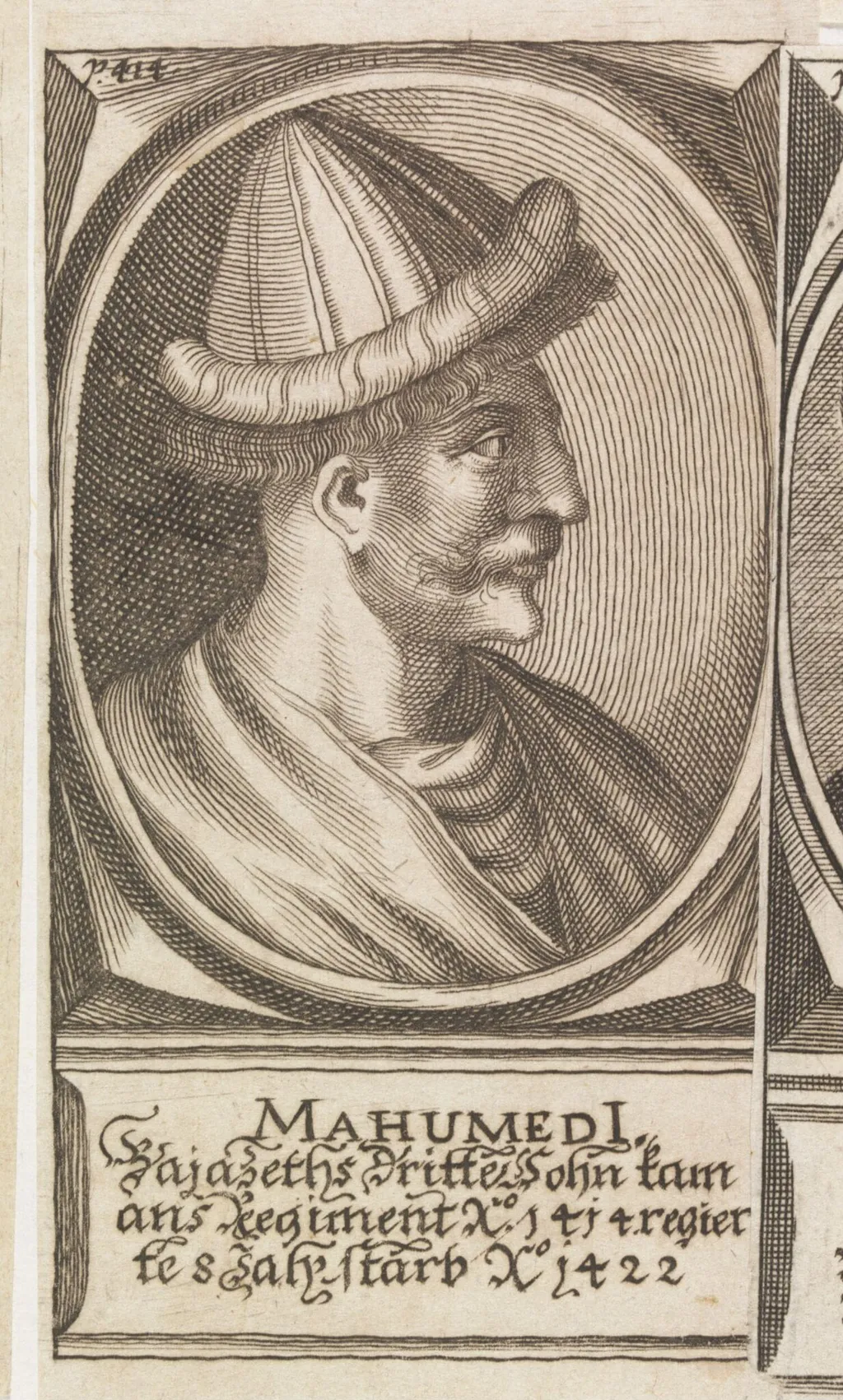
Turkish sultans, sultanas and other historical figures is a print by Dominicus Custos. It dates from 1550 and is held in the collection of the Victoria and Albert Museum.
About this work
" It mentions he was a marshal and gives a year—1622—though the print itself is older.
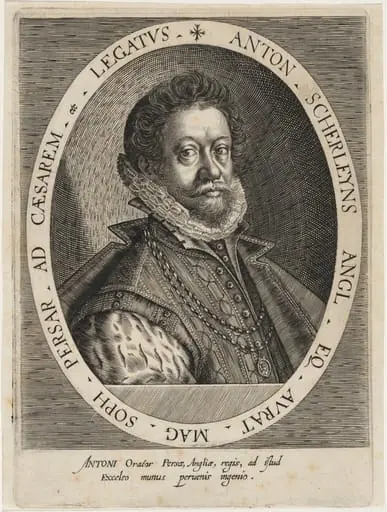
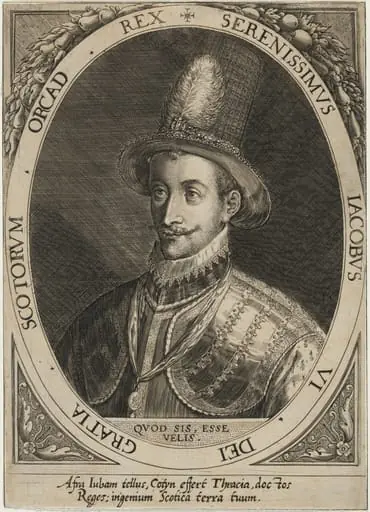
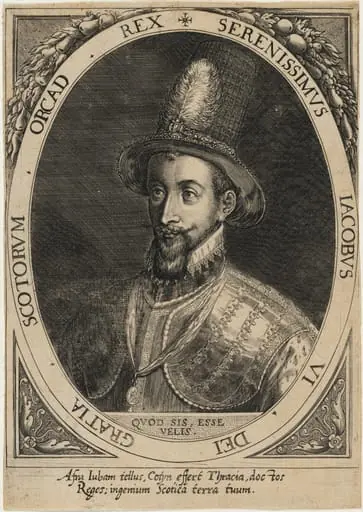
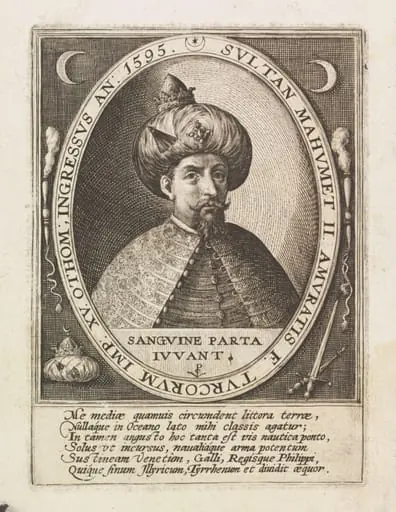
This is a black-and-white portrait of a man with a serious expression. He’s wearing a tall, pointed hat with feathers and a thick beard. The background is simple, with a dark border framing his face.
The text below his image is in old-style writing, naming him "Mahumedi." It mentions he was a marshal and gives a year—1622—though the print itself is older.
Look up Victoria and Albert Museum to see more prints like this.
Overview
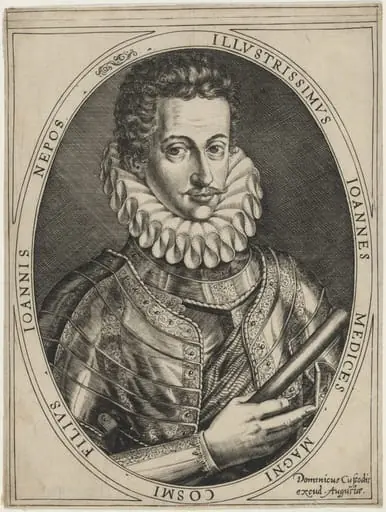
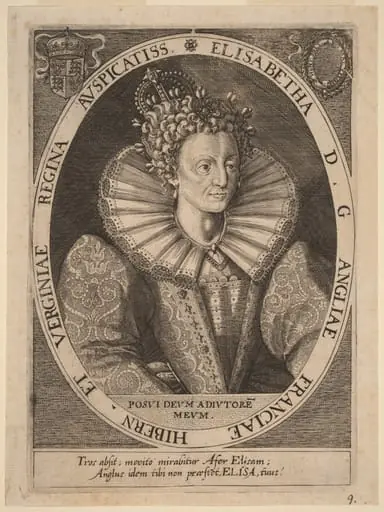
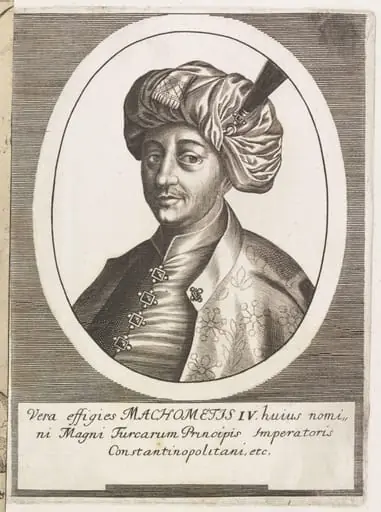
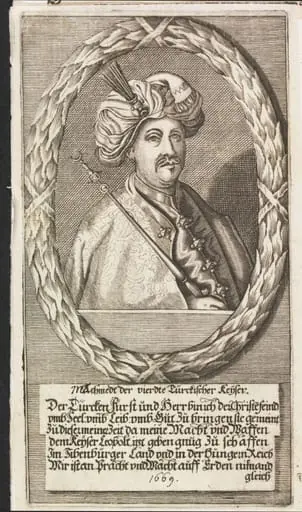
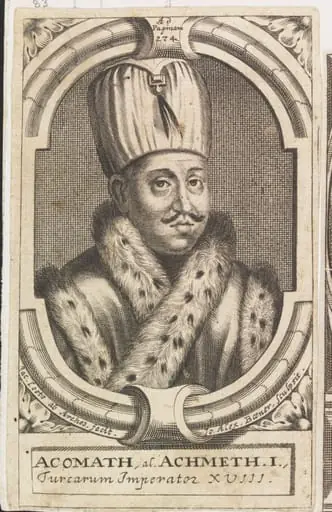
Created around 1550 by Dominicus Custos, a Flemish engraver based in Augsburg, this print presents a series of portraits depicting Ottoman leaders and court figures. Though dated to the mid-16th century, one inscription references 1622, suggesting later additions or reuse. The work belongs to a broader European tradition of documenting foreign rulers through engraved portraiture, blending observation with speculation about the Ottoman court.
Subject & Meaning
The central figure is labeled 'Mahumedi,' likely a European rendering of Mehmed, possibly referring to Mehmed III, who became sultan in 1595. The title identifies him as a marshal, indicating a high military rank. The inclusion of sultanas and other figures suggests an attempt to catalog Ottoman hierarchy, though accuracy is uncertain. These portraits served more as symbolic representations than biographical records, catering to European curiosity about a powerful neighboring empire.
Technique & Style
Custos employed fine-line engraving to render facial features and elaborate headwear with precision. The portrait is framed by a dark border, isolating the figure against a plain background. Text beneath the image is rendered in a gothic script, typical of early modern printed materials. The monochrome palette and linear detail reflect the conventions of Northern European printmaking, prioritizing clarity and legibility over atmospheric depth.
History & Provenance
Dominicus Custos, trained in Antwerp and active in Augsburg, was part of a dynasty of printmakers; his stepsons Wolfgang and Lukas Kilian continued his workshop. The print entered the Victoria and Albert Museum’s collection as part of its extensive holdings in early modern graphic arts. Its survival reflects the enduring interest in Ottoman imagery among European collectors, even as political and cultural perceptions of the empire evolved over time.
Context
In the 16th century, European states viewed the Ottoman Empire with a mix of fear and fascination. Printed portraits like this one circulated among nobility and scholars, shaping perceptions of Ottoman power and courtly ritual. Though often inaccurate, such images filled a void in direct visual knowledge. They were not merely decorative but functioned as tools of political imagination, reinforcing stereotypes while also documenting emerging cross-cultural engagement.
Legacy
Custos’s prints contributed to a genre of European portraiture that sought to visualize foreign rulers through standardized formats. Though later scholars recognized their limitations, these works remain valuable as artifacts of early modern visual culture. The V&A’s preservation of this print allows continued study of how Europe constructed images of the Ottoman world, revealing more about its own anxieties and curiosities than about the subjects depicted.
Artist & collection
Artist
Dominicus Custos (1560–1612) was a Flemish artist, printer and copperplate engraver, who worked in the service of Emperor Rudolph II in Prague.

 Turkish sultans, sultanas and other historical figures
 Turkish sultans, sultanas and other historical figures
 Turkish sultans, sultanas and other historical figures
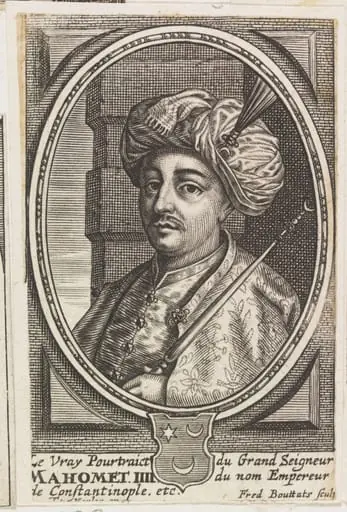 Turkish sultans, sultanas and other historical figures
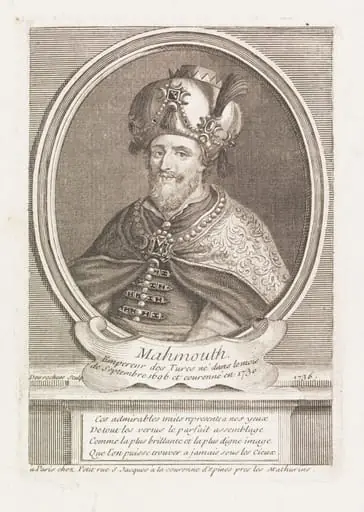 Turkish sultans, sultanas and other historical figures
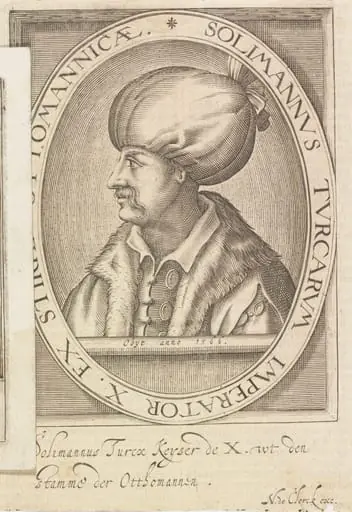 Turkish sultans, sultanas and other historical figures
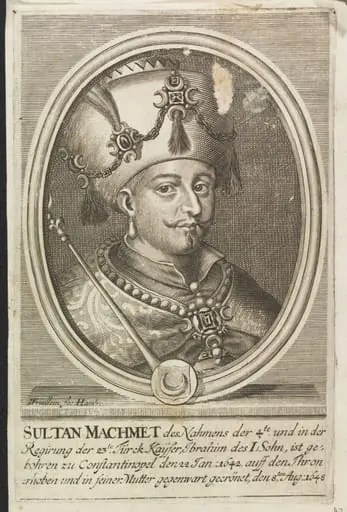 Turkish sultans, sultanas and other historical figures
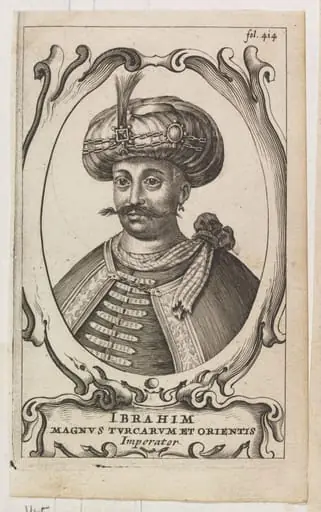 Turkish sultans, sultanas and other historical figures
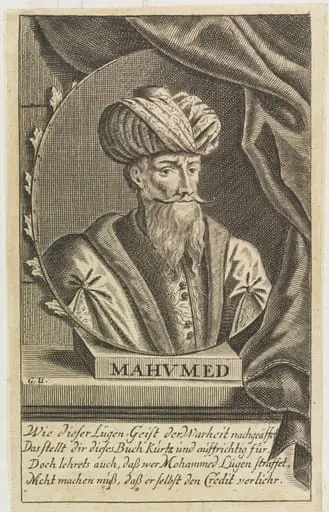 Turkish sultans, sultanas and other historical figures
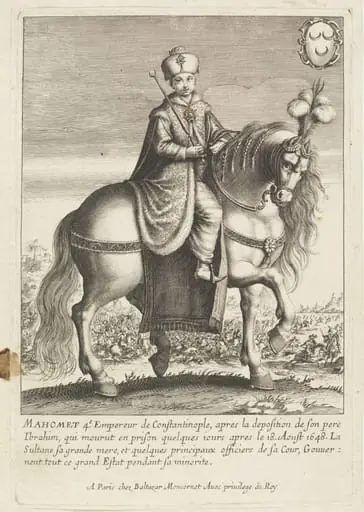 Turkish sultans, sultanas and other historical figures
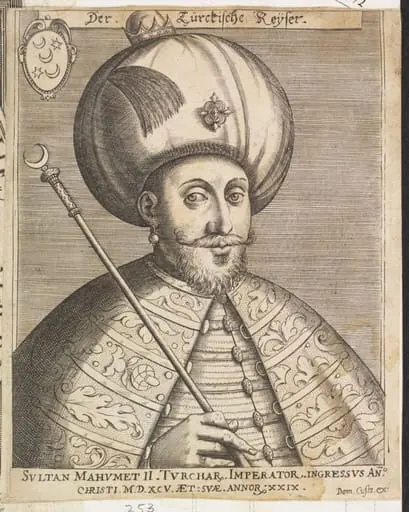 Turkish sultans, sultanas and other historical figures
 Turkish sultans, sultanas and other historical figures