Artwork
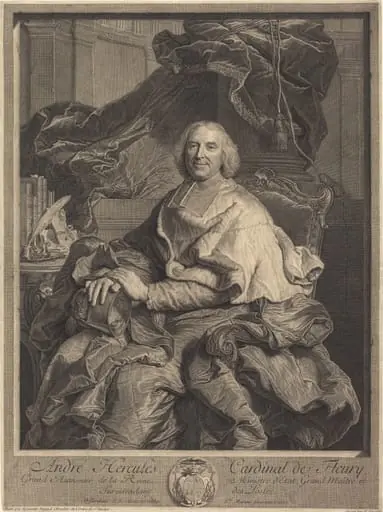
André Hercules, Cardinal de Fleury
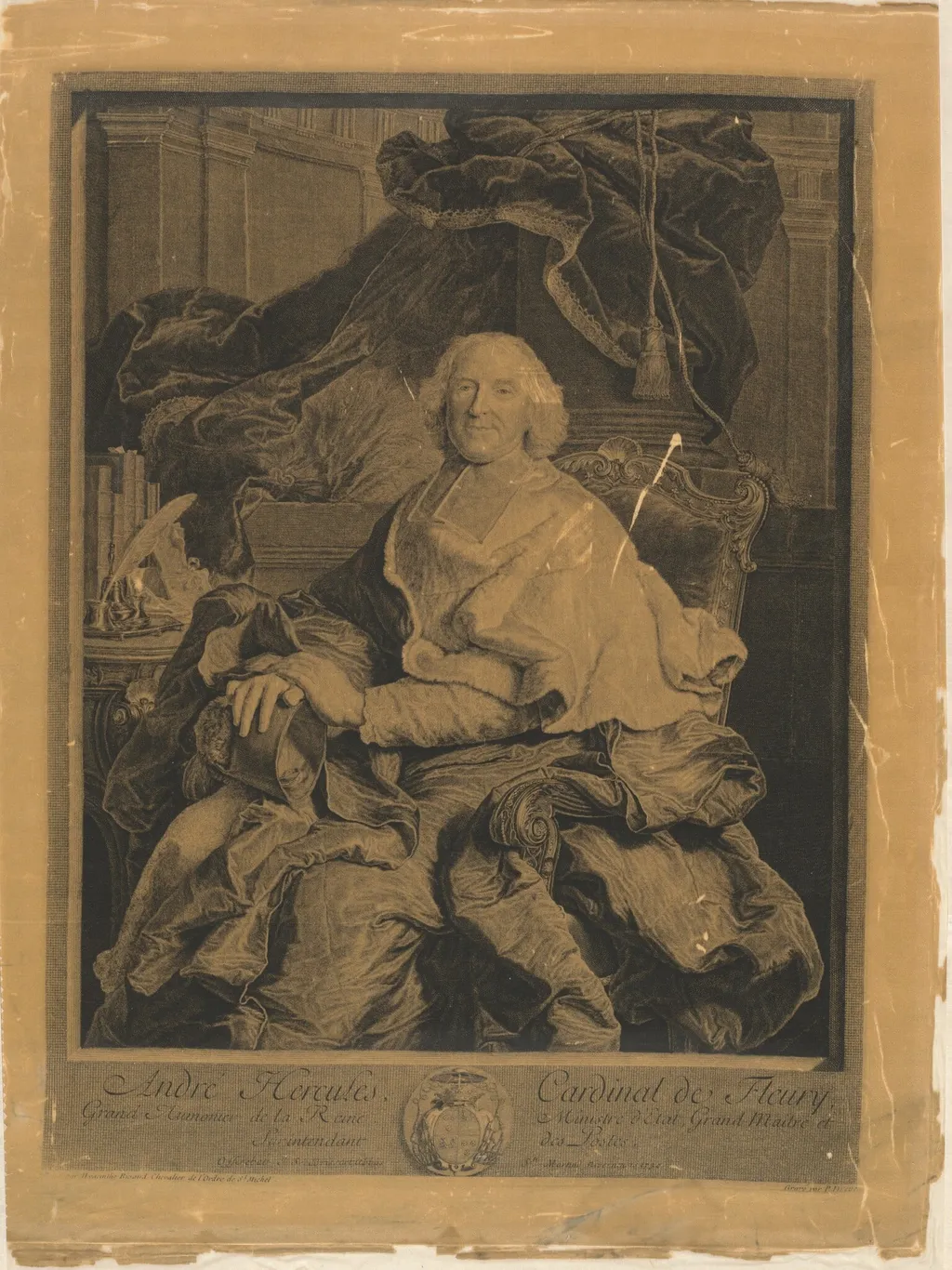
André Hercules, Cardinal de Fleury is an ink print by the Baroque artist Pierre Drevet. It dates from 1730 and is held in the collection of the National Gallery of Art.
About this work
Drevet trained under his father, another engraver, and learned to carve tiny marks that look smooth from far away.
Pierre Drevet’s 1730 engraving shows a man in a bishop’s robe with a calm face and sharp nose. The paper has a golden sheen, rare for prints of this time. The artist spent months scratching fine lines to catch light on the fabric and skin.
Drevet trained under his father, another engraver, and learned to carve tiny marks that look smooth from far away. This print honors a powerful church leader, not a famous saint.
Look up Drevet, Pierre next.
Overview
Pierre Drevet created this engraving on gold silk in 1730, depicting André-Hercule de Fleury, Cardinal and chief minister to Louis XV. The work is unusual for its material—gold silk was rarely used in printmaking, setting it apart from typical paper-based engravings. Drevet, a leading member of a multi-generational family of French engravers, applied meticulous hand-carved lines to render texture and luminosity, reflecting his technical precision and dedication to detail.
Subject & Meaning
The portrait captures André-Hercule de Fleury, a powerful ecclesiastical and political figure, not as a saint or mythological being, but as a real authority in church and state. Drevet presents him with composed dignity—calm expression, sharp features, and rich ecclesiastical robes—emphasizing his influence rather than divine status. The choice of gold silk underscores his elevated position, aligning the image with ceremonial grandeur rather than religious iconography.
Technique & Style
Drevet employed fine, labor-intensive engraving to simulate the sheen of gold silk and the softness of skin and fabric. Each line was carefully incised to catch and reflect light, creating a subtle luminosity that mimics the material’s natural glow. His technique, learned from his father, relied on minute, controlled marks that resolve into smooth surfaces at a distance, demonstrating mastery over texture and tone without color.
History & Provenance
Commissioned during Fleury’s tenure as chief minister, the engraving likely served as a diplomatic or personal gift among elite circles. Its survival in good condition is rare, given the fragility of gold silk as a print medium. The Drevet family’s reputation ensured wide circulation of their works among French nobility and institutions, though few examples on silk remain today.
Context
In early 18th-century France, portraiture of high clergy often blended secular authority with religious symbolism. While mythological themes dominated decorative arts, Drevet’s choice to depict a living cardinal in a luxurious medium signaled a shift toward honoring contemporary power. The work reflects the intersection of ecclesiastical influence and artistic patronage under Louis XV’s reign.
Legacy
Drevet’s engraving on gold silk stands as an exceptional example of technical ambition in printmaking. Though not widely reproduced, it influenced later artists seeking to elevate portraiture through material innovation. The piece remains a rare testament to the Drevet family’s enduring role in French graphic arts and the quiet prestige of non-royal figures in court culture.
Artist & collection
Artist
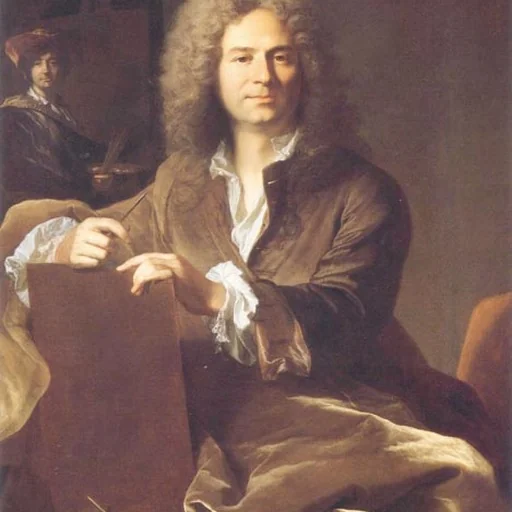
The Drevet Family were leading portrait engravers of France for over a hundred years. Their fame began with Pierre, and was sustained by his son, Pierre-Imbert, and by his nephew, Claude.

 Sericulture (The Process of Making Silk)
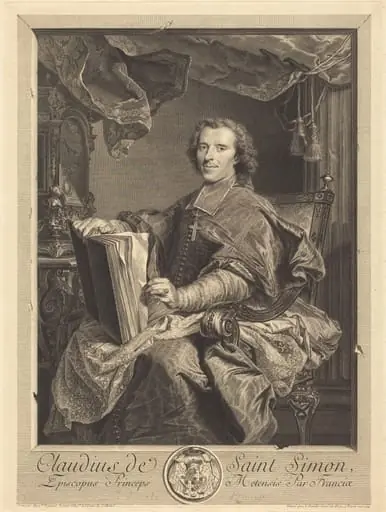 Claudius de Saint-Simon, Prince-Evêque de Metz
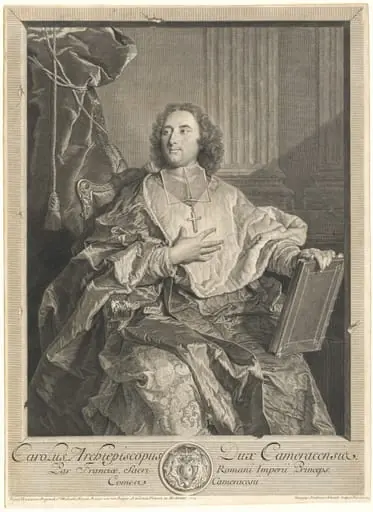 Monseigneur Louis-Charles d'Orléans de Saint-Albin, Archbishop of Cambrai
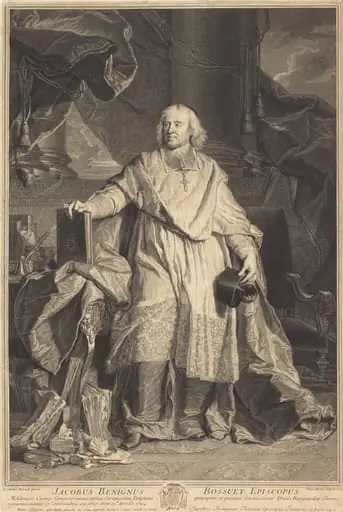 Jacques-Benigne Bossuet
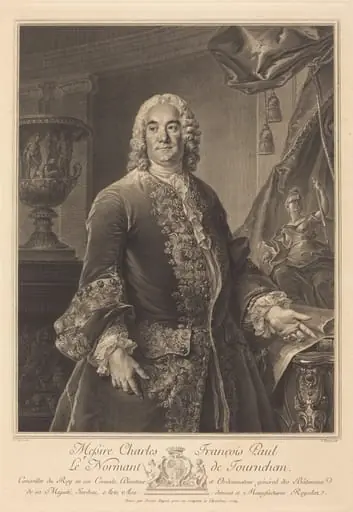 Charles Francois Paul Le Normant de Tournehem
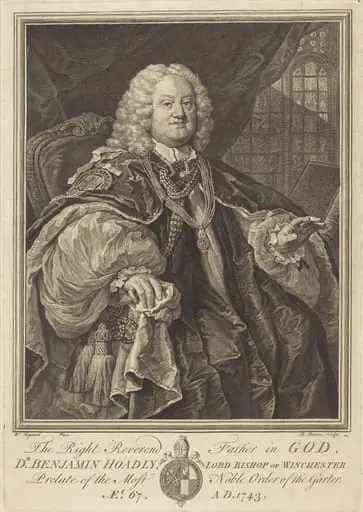 Bishop Hoadly
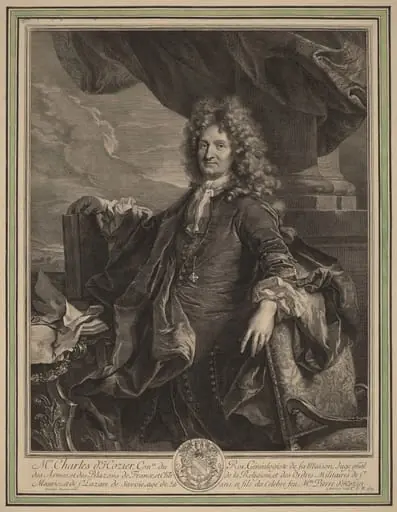 Charles-Rene d'Hozier
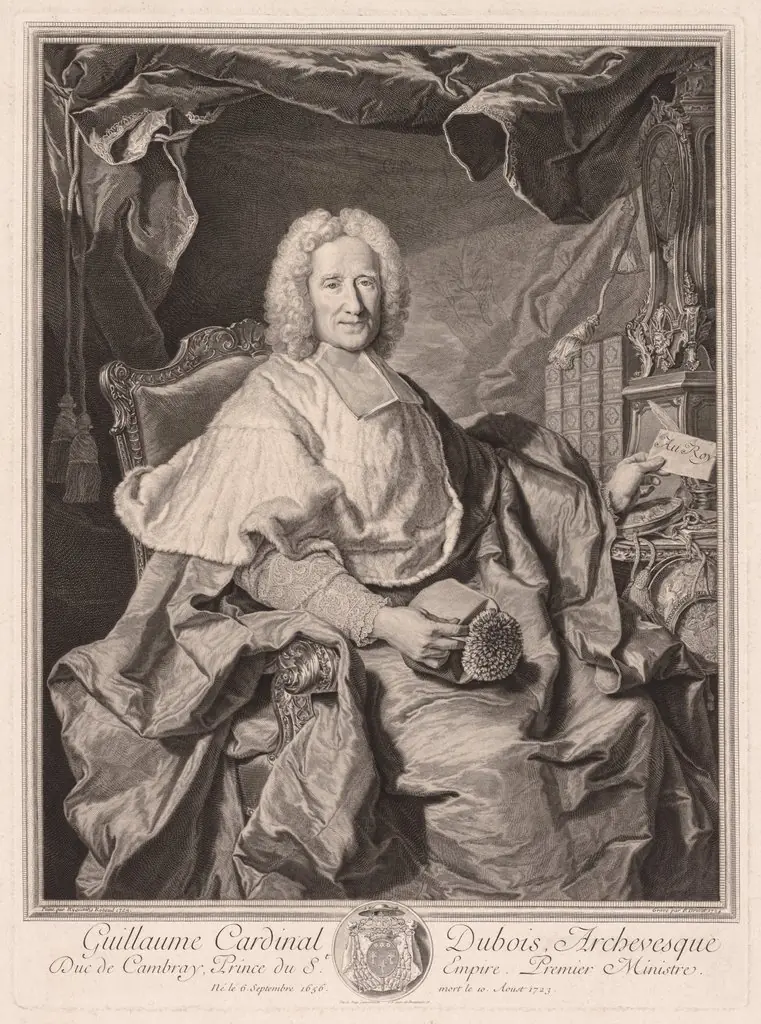
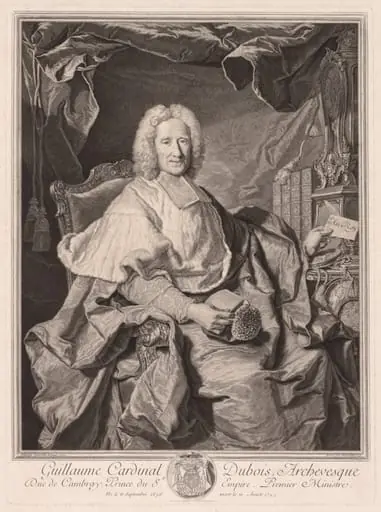 Cardinal Dubois
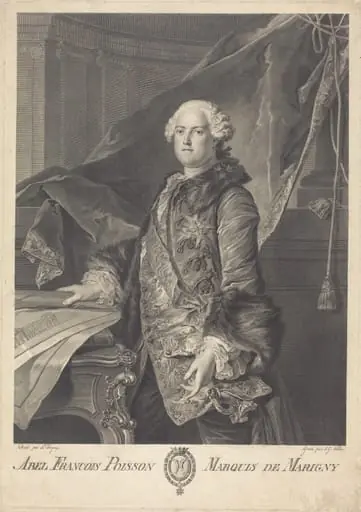 Abel Francois Poisson, Marquis de Marigny
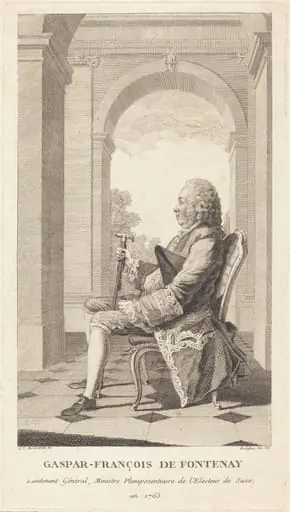 Gaspar-François de Fontenay