Artwork
Frontispiece to Truth Brought to Light by Time
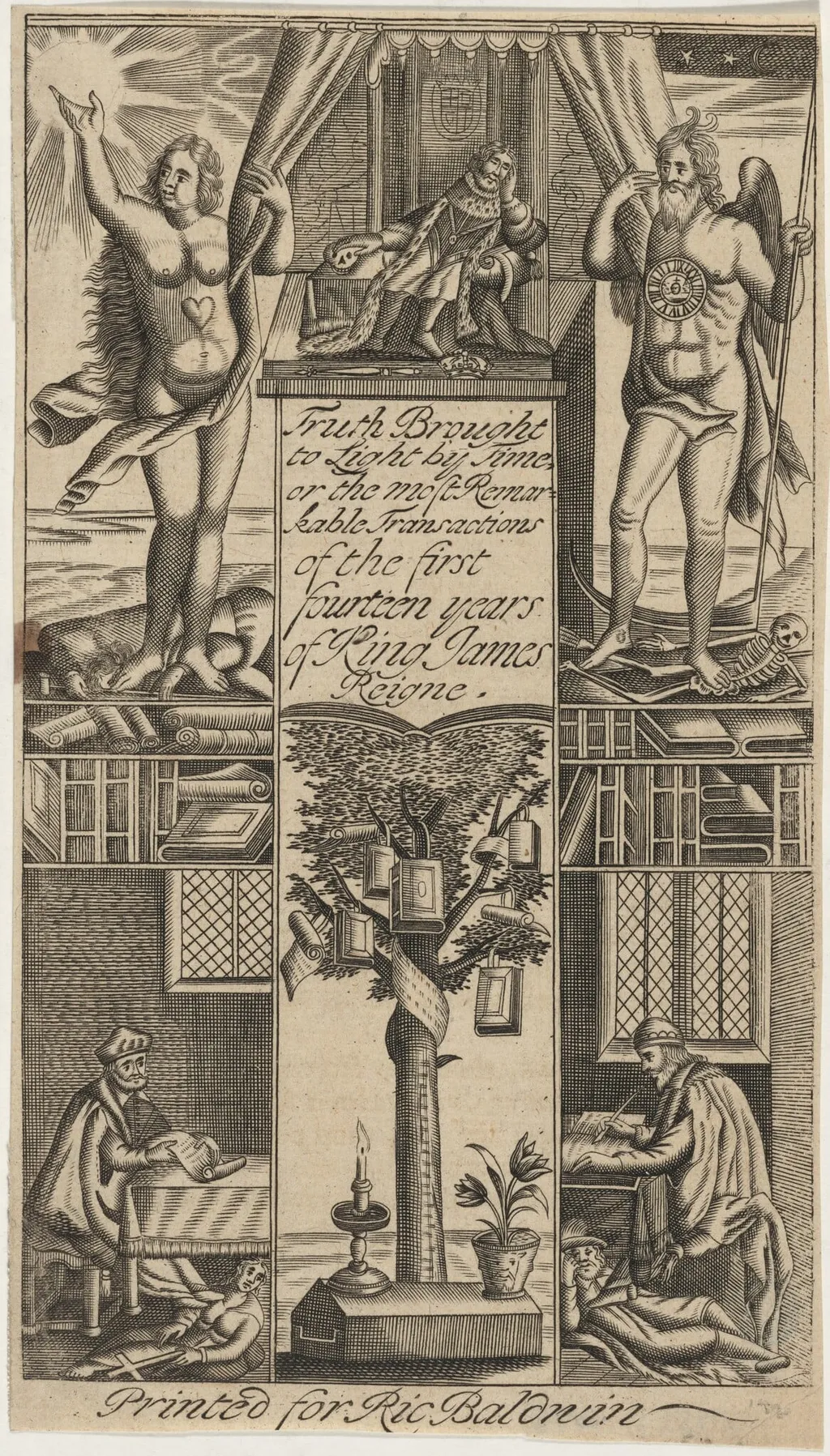
Frontispiece to Truth Brought to Light by Time is an ink print by the Baroque artist John Droeshout. It dates from 1692 and is held in the collection of the National Gallery of Art.
About this work
Overview
The work is arranged in a grid, each section populated with allegorical figures and symbolic objects that together illustrate the gradual emergence of truth.
John Droeshout’s 1692 engraving titled Frontispiece to Truth Brought to Light by Time presents a complex, four‑panel composition. The work is arranged in a grid, each section populated with allegorical figures and symbolic objects that together illustrate the gradual emergence of truth. The central image features a candle‑rooted tree bearing books and a lantern, while surrounding scenes depict various characters engaged in acts of revelation, writing, and contemplation.
Subject & Meaning
The print employs personifications to convey the idea that truth is uncovered through the passage of time. A woman with uplifted arms stands beside a sleeping man and a dog, suggesting awakening; a scroll‑holding woman and an observing man reinforce the theme of disclosure. A winged, bearded figure clutching a radiant sphere represents divine illumination, while a scholar at a desk writes, underscoring the role of study in uncovering hidden facts.
Technique & Style
Executed as an engraving, the image relies on fine line work and cross‑hatching to render intricate details, from the texture of the tree’s bark to the folds of the figures’ garments. Droeshout’s compositional balance—symmetrical placement of scenes around a central motif—reflects Baroque sensibilities, while the allegorical content aligns with the era’s moral and philosophical print traditions.
History & Provenance
Created in 1692, the frontispiece was likely intended for a printed work or pamphlet, serving as an introductory illustration. Though specific ownership records are scarce, the engraving is catalogued among Droeshout’s known prints and appears in several 18th‑century collections of emblematic imagery, indicating its circulation among readers interested in moral and intellectual themes.
Context
The late 17th century saw a proliferation of emblem books and moral prints that combined visual allegory with didactic text. Droeshout’s work fits within this tradition, using symbolic figures to explore epistemological concepts. The emphasis on time as a revealing force mirrors contemporary philosophical debates about the nature of knowledge and the reliability of perception.
Artist & collection

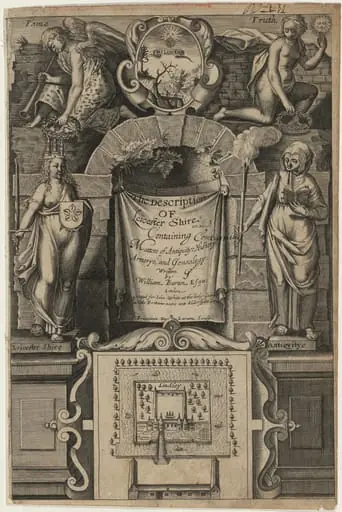 Frontispiece to William Burton, Description of Leicestershire
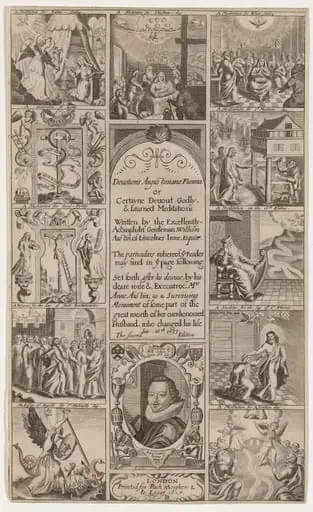 Title Page for Devotionis Augustinianae Flamma, by William Austin
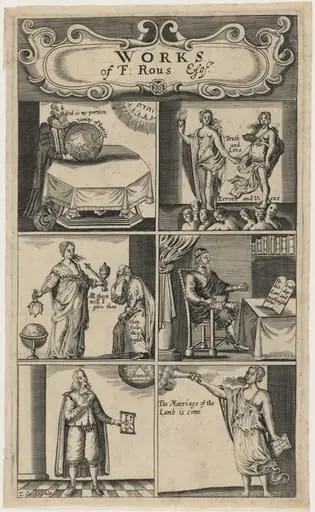 Title Page to F. Rous' Works
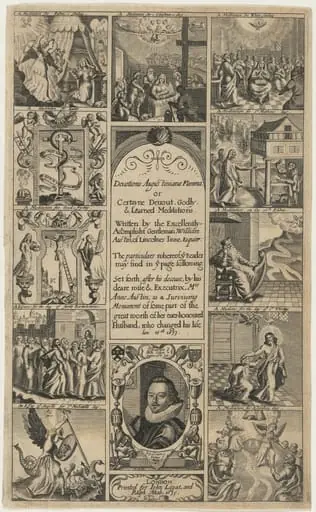 Title Page for Devotionis Augustinianae Flamma, by William Austin
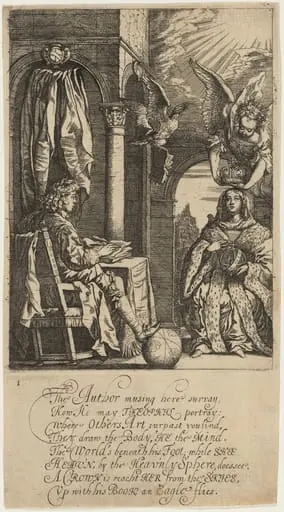 Illustration for Edward Benlowes, Theophila
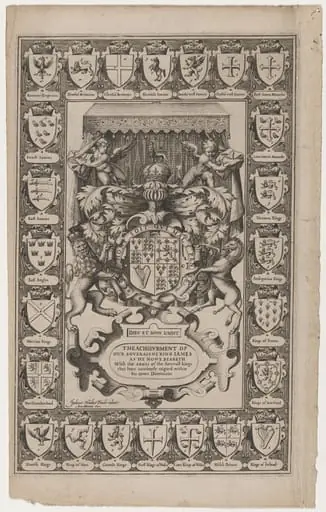 Title Page for the Achievement of our Soveraigne King James
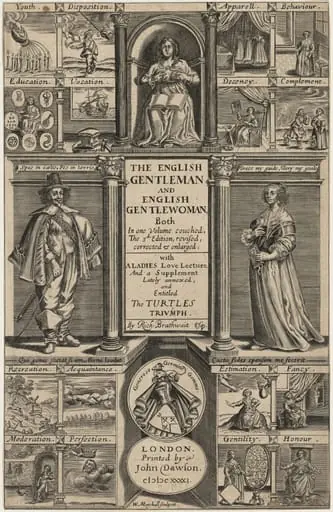 Title page to Richard Brathwait, English Gentleman and English Gentlewoman
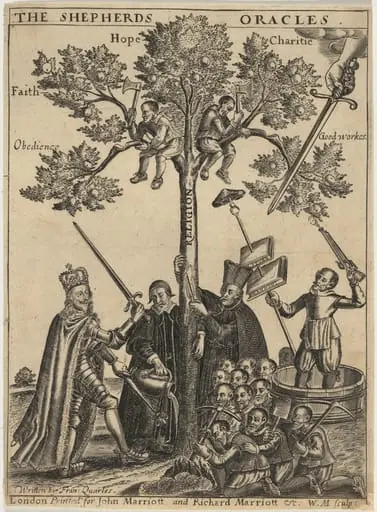 Title Page to Francis Quarles, Shepherds Oracles
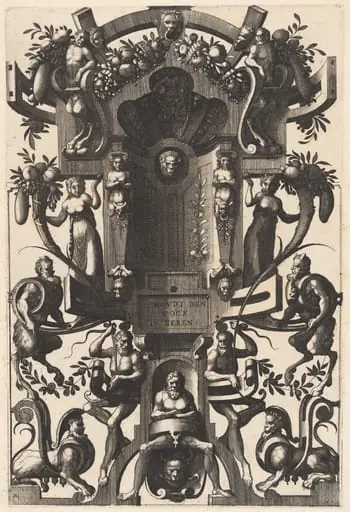 Grotesque with Strapwork in the Form of a Cartouche