Artwork
Richard Elton of Bristol
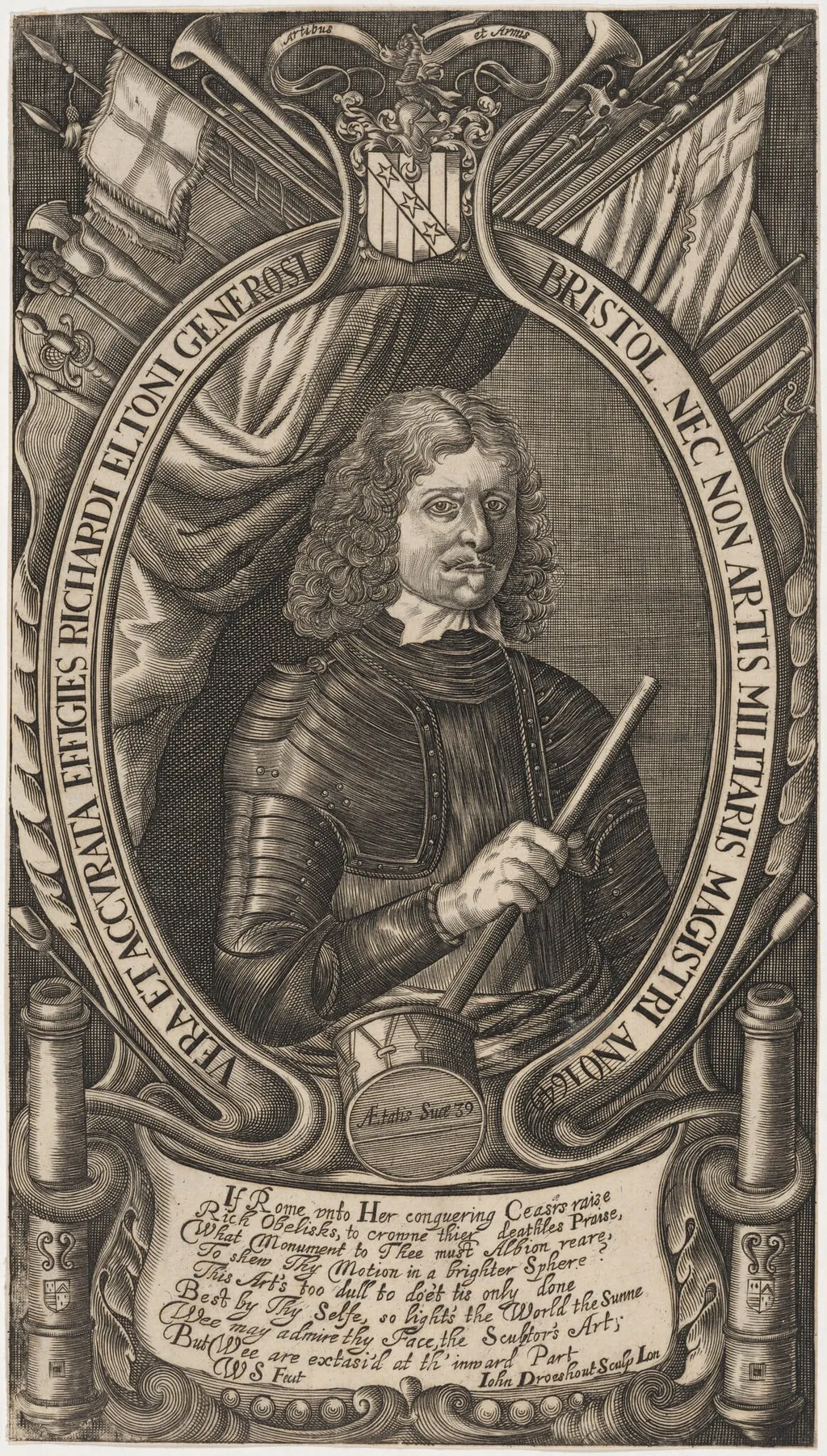
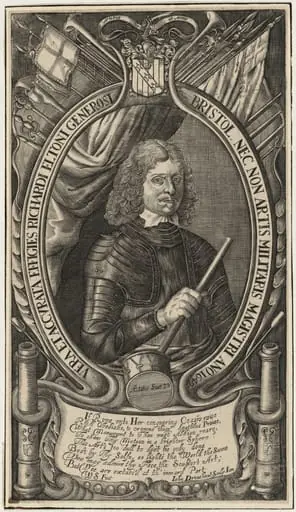
Richard Elton of Bristol is an ink print by the Baroque artist John Droeshout. It dates from 1650 and is held in the collection of the National Gallery of Art.
About this work
Overview
John Droeshout’s 1650 engraving presents a portrait of a formally attired gentleman identified as Richard Elton of Bristol.
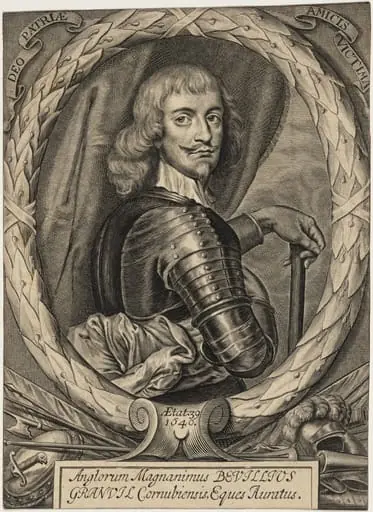
John Droeshout’s 1650 engraving presents a portrait of a formally attired gentleman identified as Richard Elton of Bristol. Rendered in black ink on paper, the image shows the sitter in armor, holding a document in his right hand while his left rests on a modest shield bearing a coat of arms. The composition is framed by elaborate scrollwork bearing laudatory terms such as “Generous” and “Magnanimous.”
Subject & Meaning
The portrait depicts Richard Elton, a figure associated with Bristol, likely of some standing given his martial attire and heraldic shield. The inclusion of a paper suggests a role involving documentation or authority, while the surrounding epithets emphasize virtues traditionally linked to noble conduct. Together, the elements convey a self‑presentation of honor, generosity, and social stature.
Technique & Style
Executed as an engraving, the image was incised into a metal plate with fine, intersecting lines that transfer ink onto paper under pressure. Droeshout’s handling of line work achieves a crisp rendering of the armor’s texture and the intricate ornamental borders. The precision of the hatching and cross‑hatching creates a sense of depth and material quality within the monochrome medium.
History & Provenance
Created in the mid‑seventeenth century, the print forms part of the Droeshout workshop’s output, which catered to a market for portraiture of local elites. While specific ownership records are scarce, the work has survived in several institutional collections, indicating its circulation among collectors of English portrait prints and its value as a documentary image of a Bristolian figure.
Context
The engraving emerges from a period when printed portraiture served both commemorative and promotional functions. In post‑civil‑war England, the display of armor and heraldic devices in prints reinforced notions of loyalty and status. Droeshout’s use of decorative script and moralizing adjectives reflects contemporary conventions of honorific portraiture, aligning the sitter with widely recognized virtues.
Artist & collection