Artwork
Frontispiece to Complaint of the False Prophets, by John de La Marche
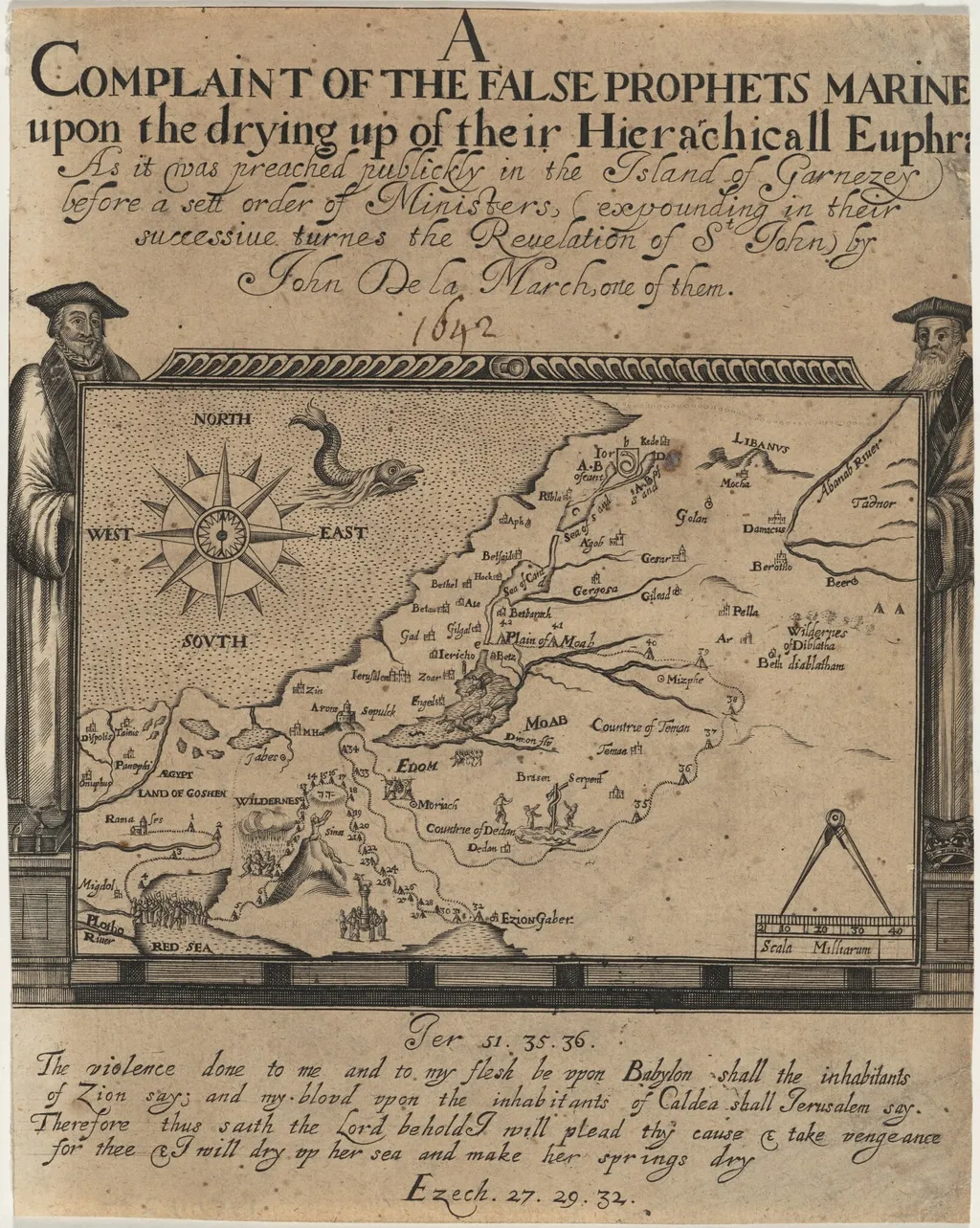
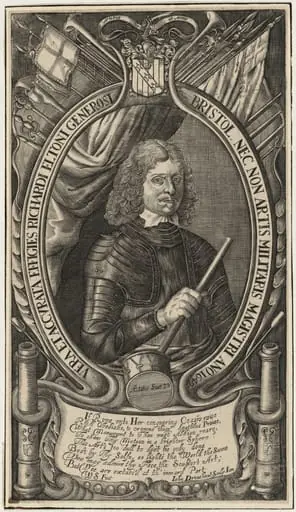
Frontispiece to Complaint of the False Prophets, by John de La Marche is an ink print by the Baroque artist John Droeshout. It dates from 1641 and is held in the collection of the National Gallery of Art.
About this work
Overview
The work is an engraved frontispiece created in 1641 by the Dutch‑English printmaker John Droeshout. It serves as the introductory illustration for John de La Marche’s pamphlet titled *Complaint of the False Prophets Marine*. The plate combines cartographic detail with allegorical elements, framing the text’s moral warning.
Subject & Meaning
At the centre of the engraving lies a miniature map of the Holy Land, marked with major sites such as Jerusalem, the Red Sea and the Dead Sea.
At the centre of the engraving lies a miniature map of the Holy Land, marked with major sites such as Jerusalem, the Red Sea and the Dead Sea. Flanking the map are two figures in period headgear, gazing downward as if evaluating the geography. The surrounding legend and biblical quotations invoke themes of divine retribution and the consequences of false prophecy, reinforcing the pamphlet’s polemical tone.
Technique & Style
Droeshout employed fine line engraving to render intricate topographical features, a compass rose, and a dense network of place names. The small vignette figures and animal motifs are executed with delicate cross‑hatching, demonstrating the printmaker’s skill in balancing textual information with decorative illustration within a limited space.
History & Provenance
The plate was produced to accompany de La Marche’s 1641 publication, a period when printed pamphlets often used elaborate frontispieces to attract readers. Surviving copies are held in several European libraries, indicating the work’s circulation among religious and political audiences of the mid‑seventeenth century.
Context
The engraving reflects a broader seventeenth‑century tradition of combining cartography with moral commentary, a practice common in Protestant polemics that linked biblical geography with contemporary concerns about doctrinal purity. The inclusion of scriptural verses underscores the era’s reliance on biblical authority to legitimize critiques of religious leaders.
Artist & collection

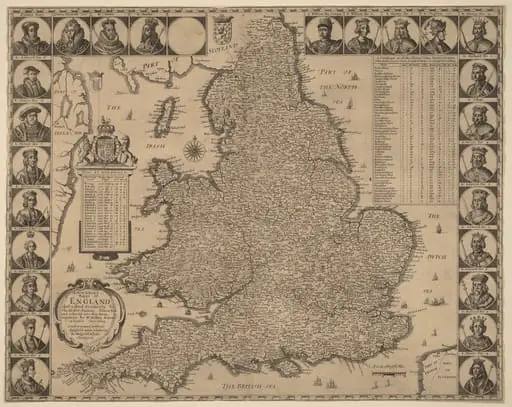 A New and Exact Mappe of England
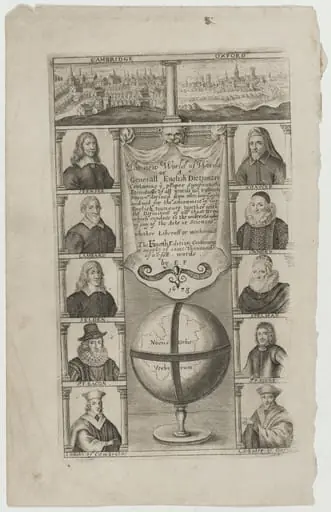 Title Page to The New World of Words or A General English Dictionary
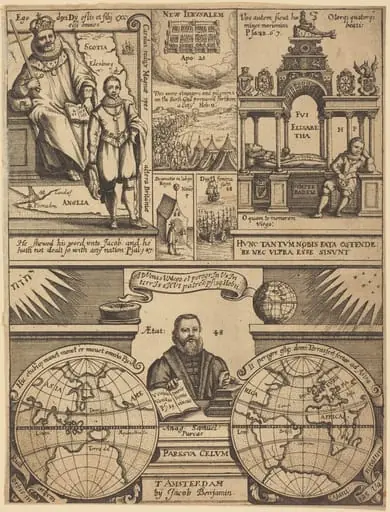 Frontispiece
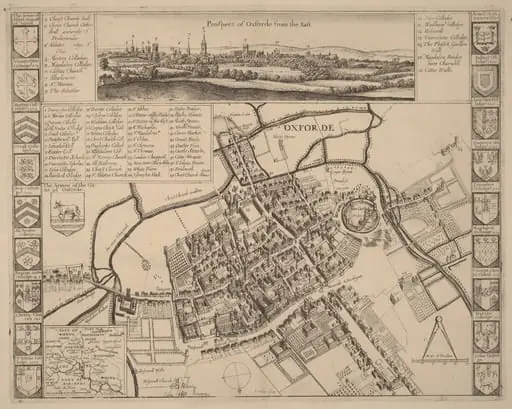 Prospect of Oxford
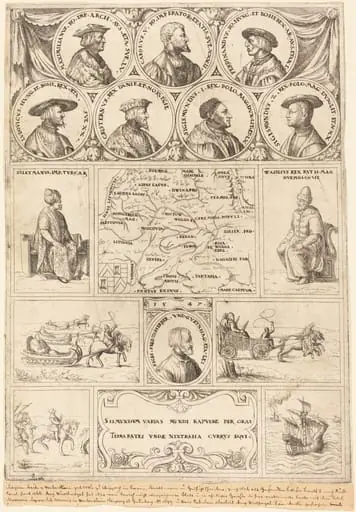 Map of Eastern Europe with portraits of Sigismund von Herberstein, Emperor Charles V, Emperor Maximilian I, Ferdinand of Hungary, Ludwig II of Hungary, Sigismund I of Poland, Sigismund II of Poland, Christian II of Denmark, Suleiman the Magnificent and Vasili III, Grand Prince of Moscow, and vignettes showing four journeys made by Herberstein
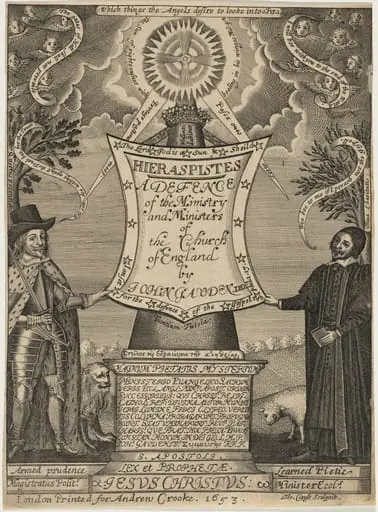 Title Page to John Gauden's Hieraspistes
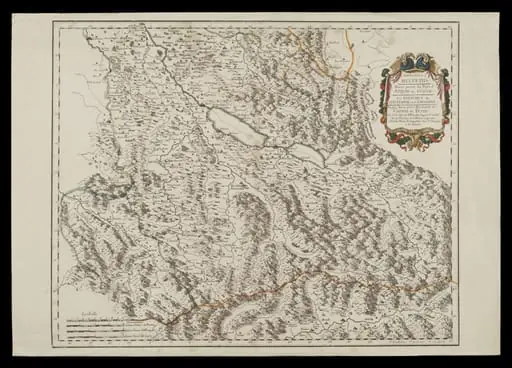 H Beard Print Collection
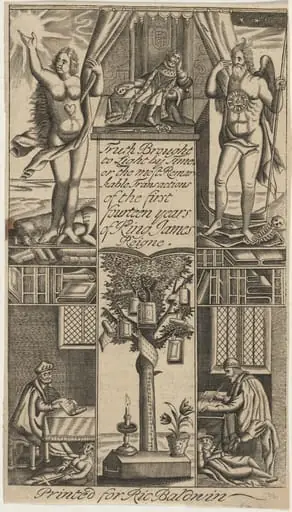
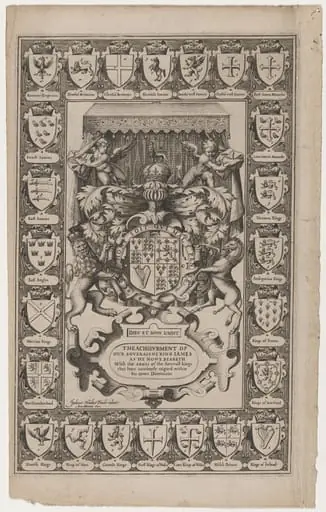 Title Page for the Achievement of our Soveraigne King James
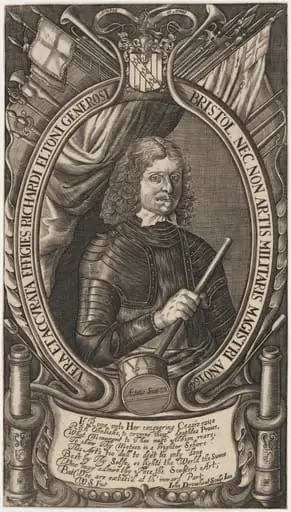
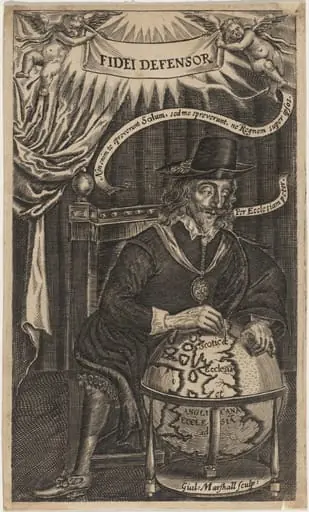 Charles I
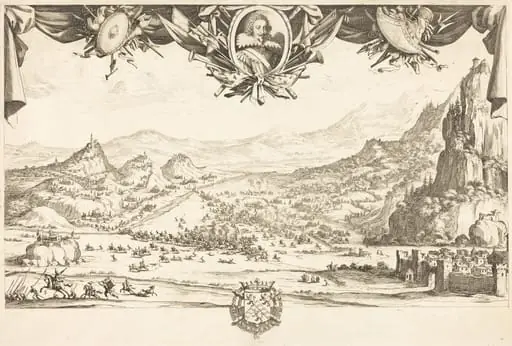 The Combat of Avigliana
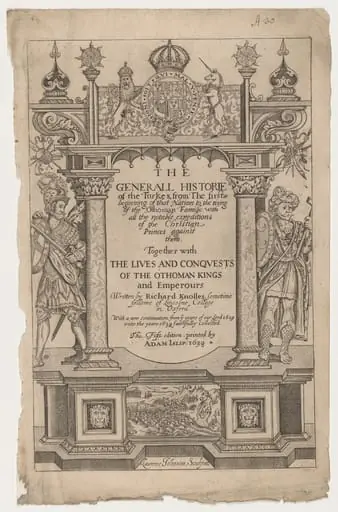 Title Page for R. Knolles Generall Historie of the Turkes
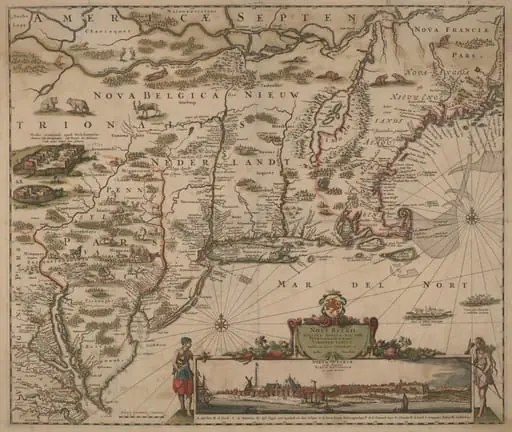 Novi Belgii Novaeque Angliae nec non Pennsylvaniae et partis Virginiae tabula multis in locis emendata