Artwork
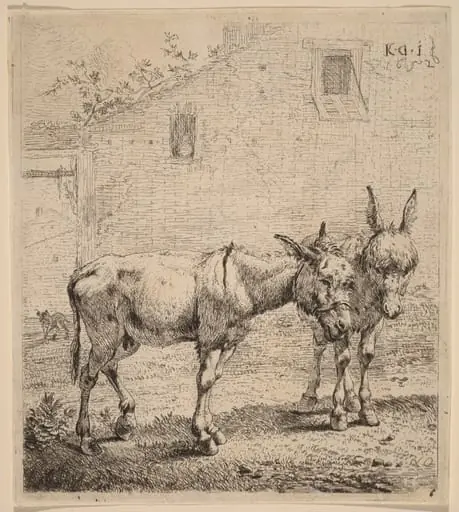
Two Mules
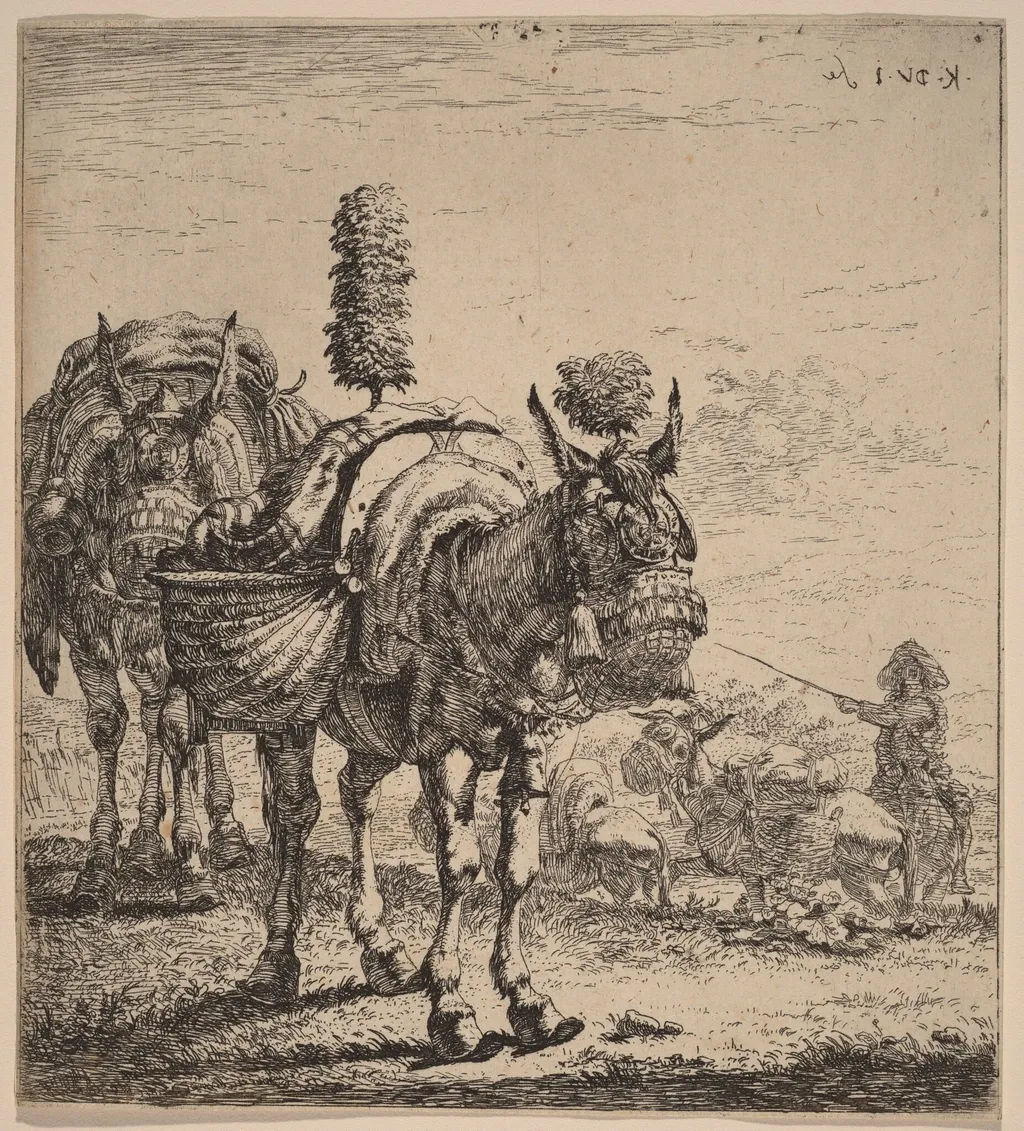
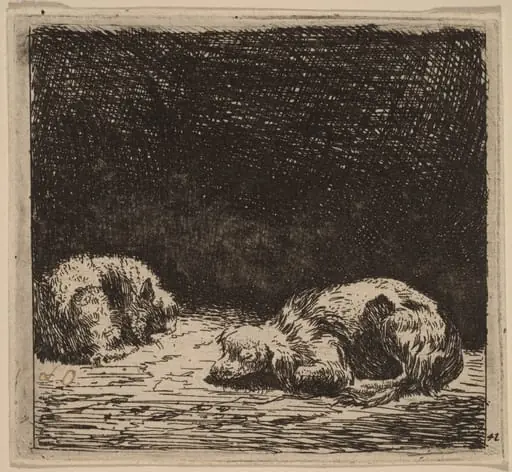
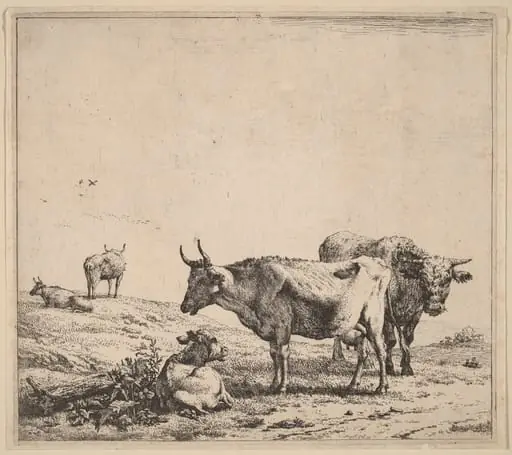
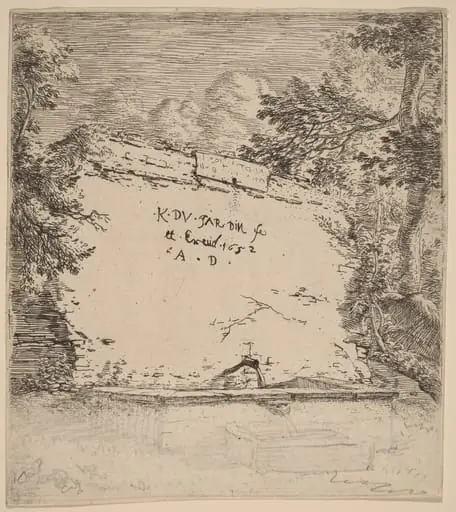
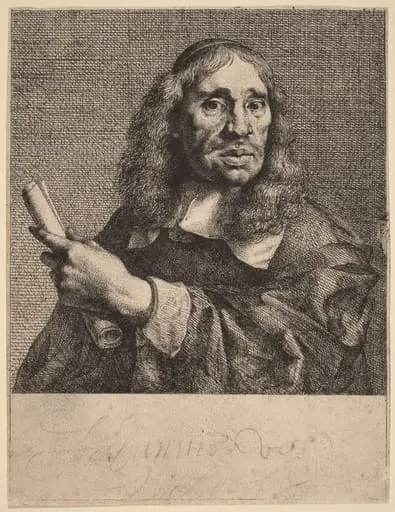
Two Mules is an ink print by the Baroque artist Karel Dujardin. It dates from 1650 and is held in the collection of the National Gallery of Art.
About this work
Overview
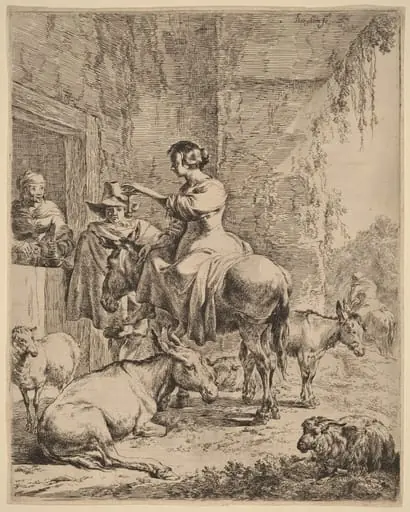
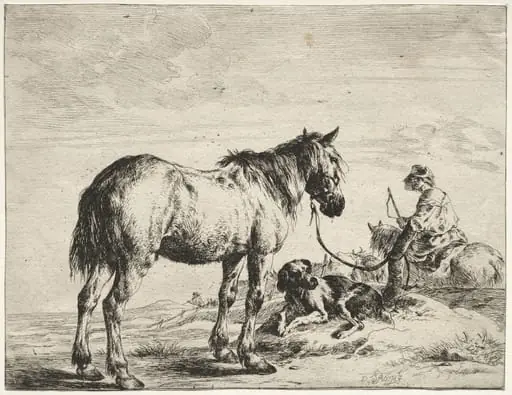
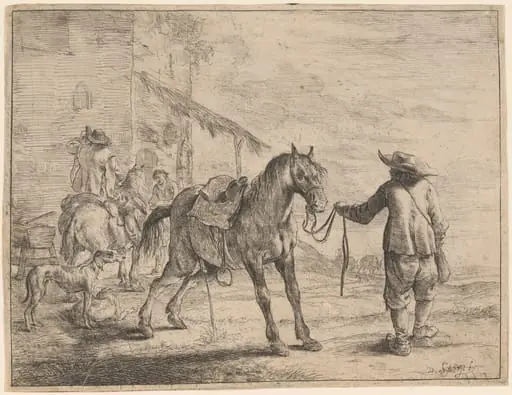
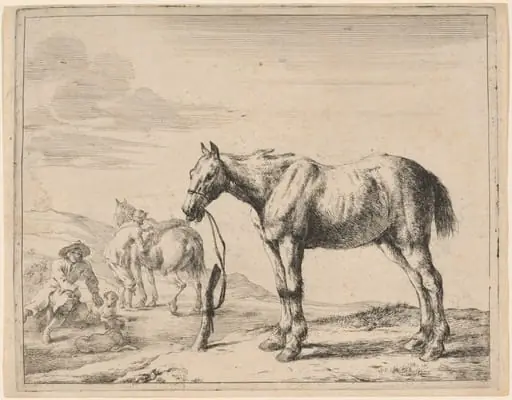
Two Mules is a 1650 etching on laid paper by Karel Dujardin, depicting a scene of two mules pulling a cart with passengers along a rugged path.
Subject & Meaning
The etching portrays a moment of everyday life, focusing on the exertion of the mules as they navigate a rough trail, accompanied by a lone figure on foot. The emphasis on the animals' tense muscles and the humble setting suggests a realistic, possibly sympathetic, portrayal of labor.
Technique & Style
Dujardin employed quick, scratchy etching lines to convey movement and texture, notably in the mules' fur and the uneven terrain. The textured paper surface is a byproduct of the etching process, which involves acid-etched metal plates.
History & Provenance
Created in 1650, the work's provenance is not detailed here, but its creation date situates it within Dujardin's active period as an artist.
Context
As an etching, Two Mules reflects the 17th-century European practice of using etching for landscape and genre scenes, allowing for detailed, expressive prints.
Legacy
While specific influence or notable exhibitions of Two Mules are not provided, the piece contributes to Dujardin's oeuvre, reflecting his attention to detail and everyday life themes in 17th-century Dutch art.
Artist & collection