Artwork
Man Assisted by Faith, Hope and Charity
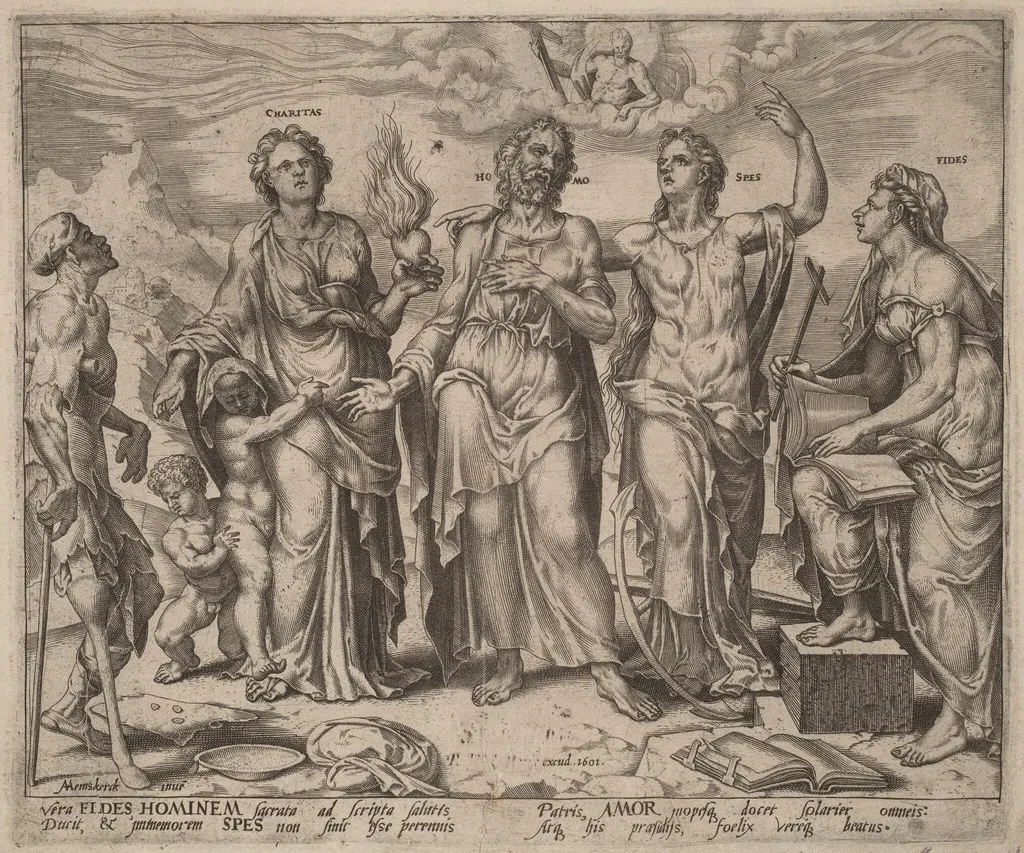
Man Assisted by Faith, Hope and Charity is an ink print by the Renaissance artist Dutch 16th Century. It dates from 1562 and is held in the collection of the National Gallery of Art. This black-and-white engraving depicts five allegorical figures grouped around a central male figure holding a torch.
About this work
Overview
The scene is grounded by an inscribed poem at the base, suggesting a moral or spiritual narrative tied to human guidance.
This black-and-white engraving depicts five allegorical figures grouped around a central male figure holding a torch. The composition is tightly arranged, with each figure labeled to represent a virtue. Fine, precise lines create subtle gradations of light and shadow, lending volume to the forms. The scene is grounded by an inscribed poem at the base, suggesting a moral or spiritual narrative tied to human guidance.
Subject & Meaning
The central man, unmarked by name, appears to be the beneficiary of four virtues: Fides (Faith), Spes (Hope), Charitas (Charity), and Tides (likely a variant or error for Tempus, Time). The torch symbolizes enlightenment or divine guidance, while the child held by Charity and the book held by Faith reinforce moral and spiritual foundations. The grouping implies that human endurance depends on these guiding principles.
Technique & Style
The artist employed fine, controlled engraving lines to model form and texture, avoiding broad washes or tone. Cross-hatching and delicate parallel strokes define drapery, musculature, and facial features with precision. The absence of color focuses attention on linear clarity and the interplay of light and shadow, characteristic of Northern Renaissance printmaking traditions.
History & Provenance
Though the artist’s identity is unconfirmed, the style and Latin inscriptions align with early 16th-century Northern European prints. The inclusion of Tides—possibly a mislabeling of Tempus—suggests a transitional or regional interpretation of classical virtues. No definitive provenance is recorded, but similar works circulated among humanist collectors in the Low Countries and Germany.
Context
Created during a period when moral allegory was widely used in religious and humanist art, the engraving reflects the enduring influence of medieval virtue traditions adapted to Renaissance humanism. The emphasis on Faith, Hope, and Charity echoes Christian theology, while the inclusion of Time hints at the transient nature of earthly life and the enduring power of virtue.
Legacy
The print exemplifies how engraving served as a vehicle for disseminating moral and philosophical ideas across Europe. Its precise technique influenced later generations of printmakers, and its thematic structure—virtues aiding a mortal—remained a recurring motif in devotional and educational imagery well into the 17th century.
Artist & collection

Artist
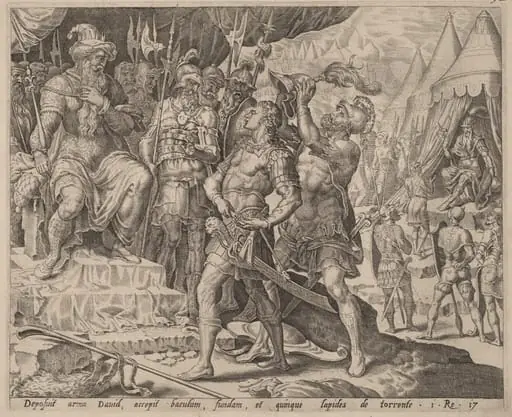
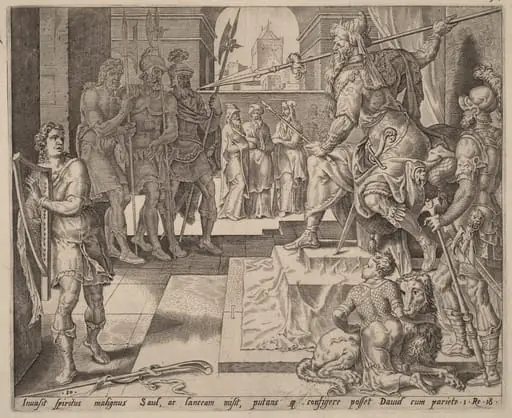
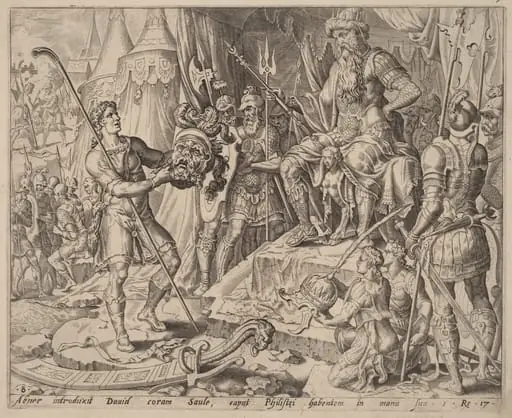
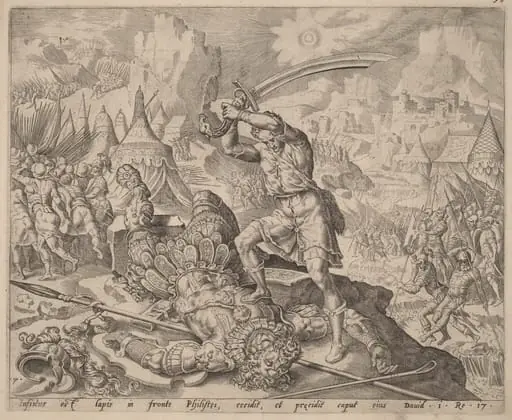
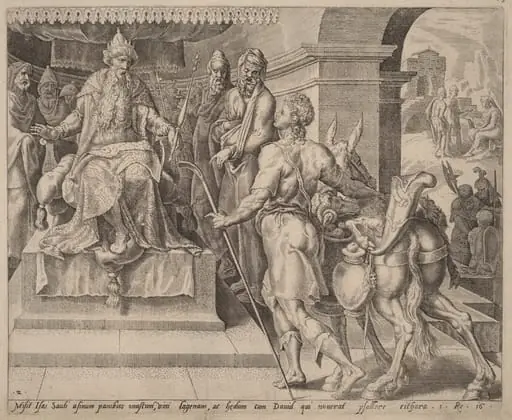
This Dutch artist made engravings in the 1550s that retell the biblical story of David and Saul.

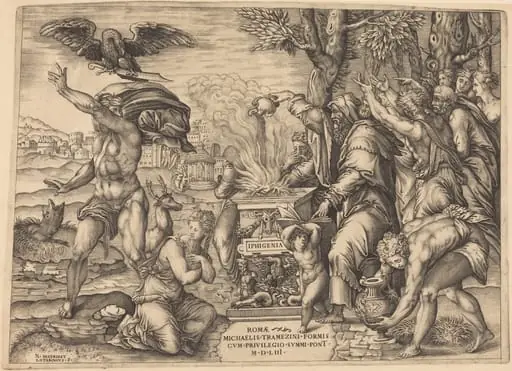 The Sacrifice of Iphigenia
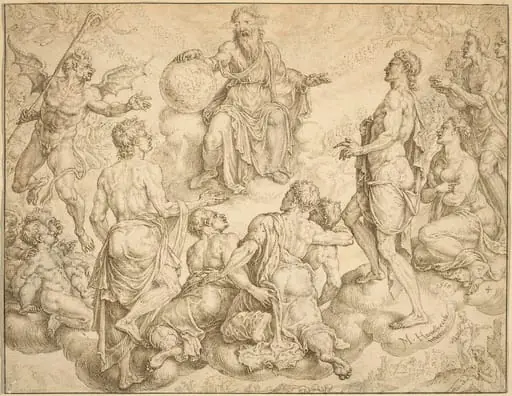 Satan Challenges God to Remove his Protection from Job
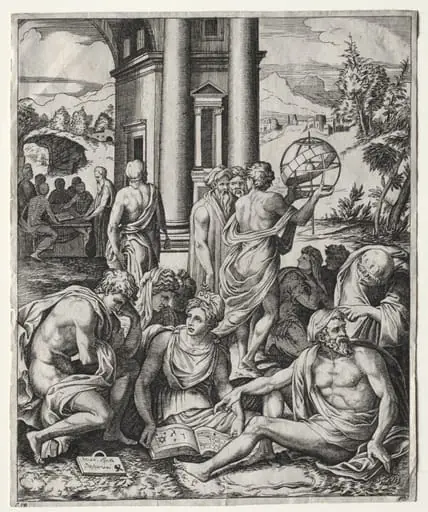 An Assembly of Scholars
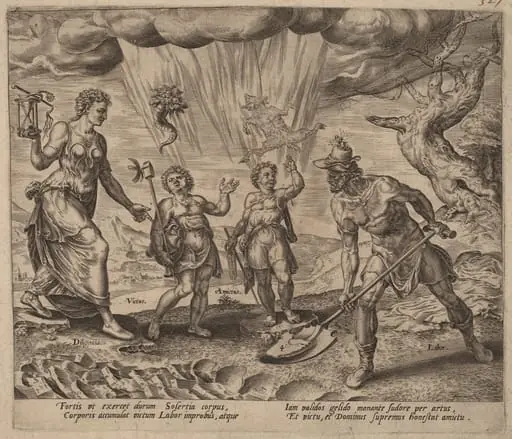 The Lord Endowing the Diligent Worker with Food and Clothing
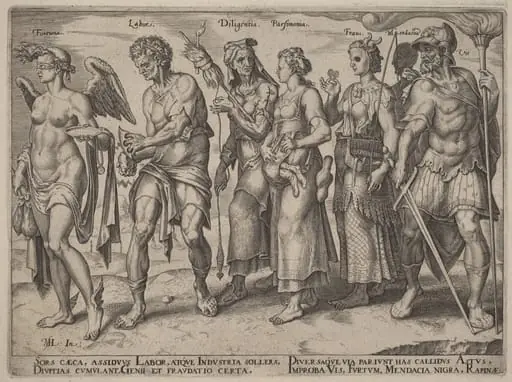 Honest and Dishonest Ways of Becoming Rich
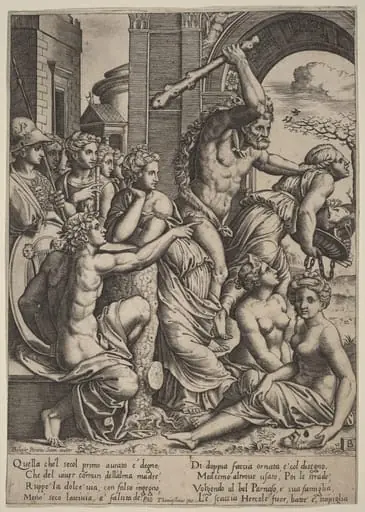 Envy Driven from the Temple of the Muses
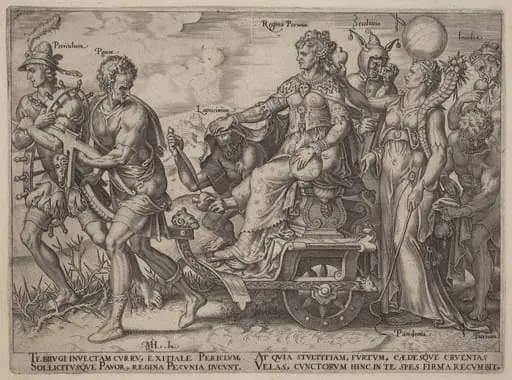 Dangers and Vices Accompanying Wealth
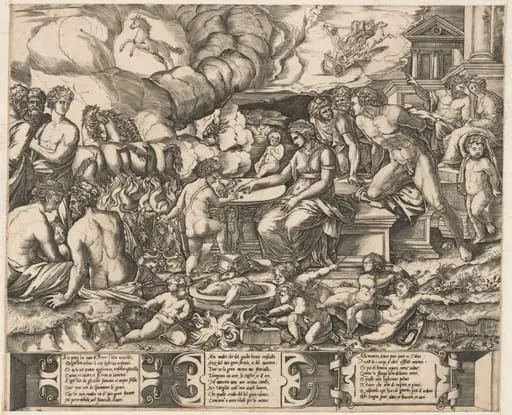 Allegory of Love
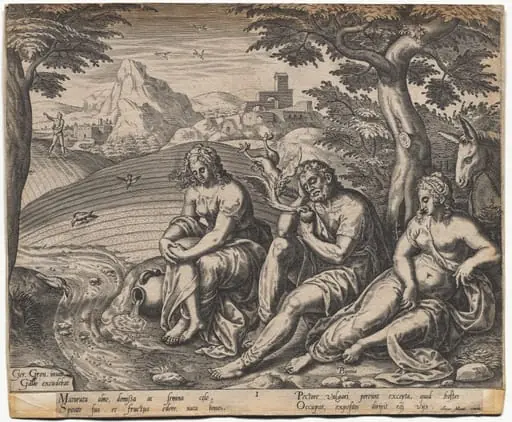 The Parable of the Sower and the Seed: The Seed Falling by the Way Side (after Gerard Van Groeningen, active Antwerp 1563-1573)
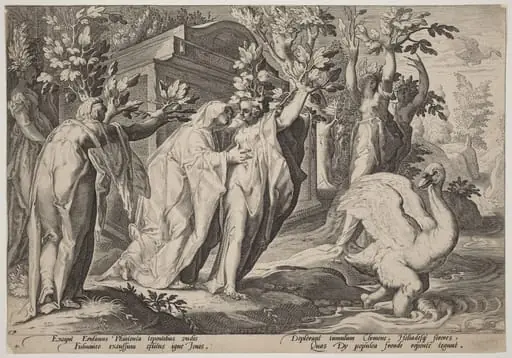 Phaeton's Sisters Changed into Poplars, and Cygnus into a Swan
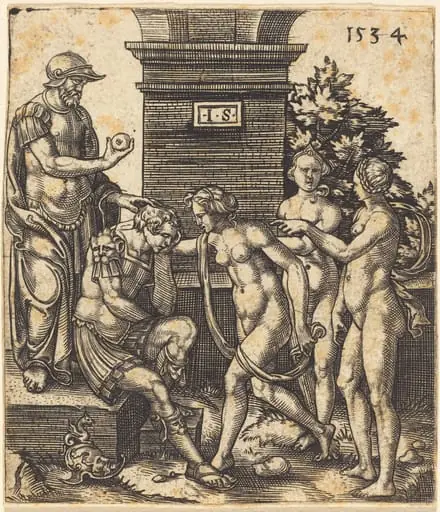 Judgment of Paris
 Apollo and Marsyas