Artwork
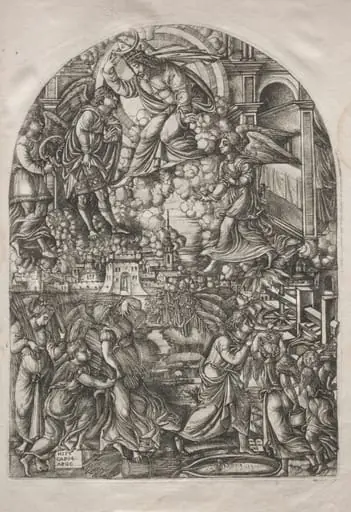
The Apocalypse: The Angel Sounding the Sixth Trumpet
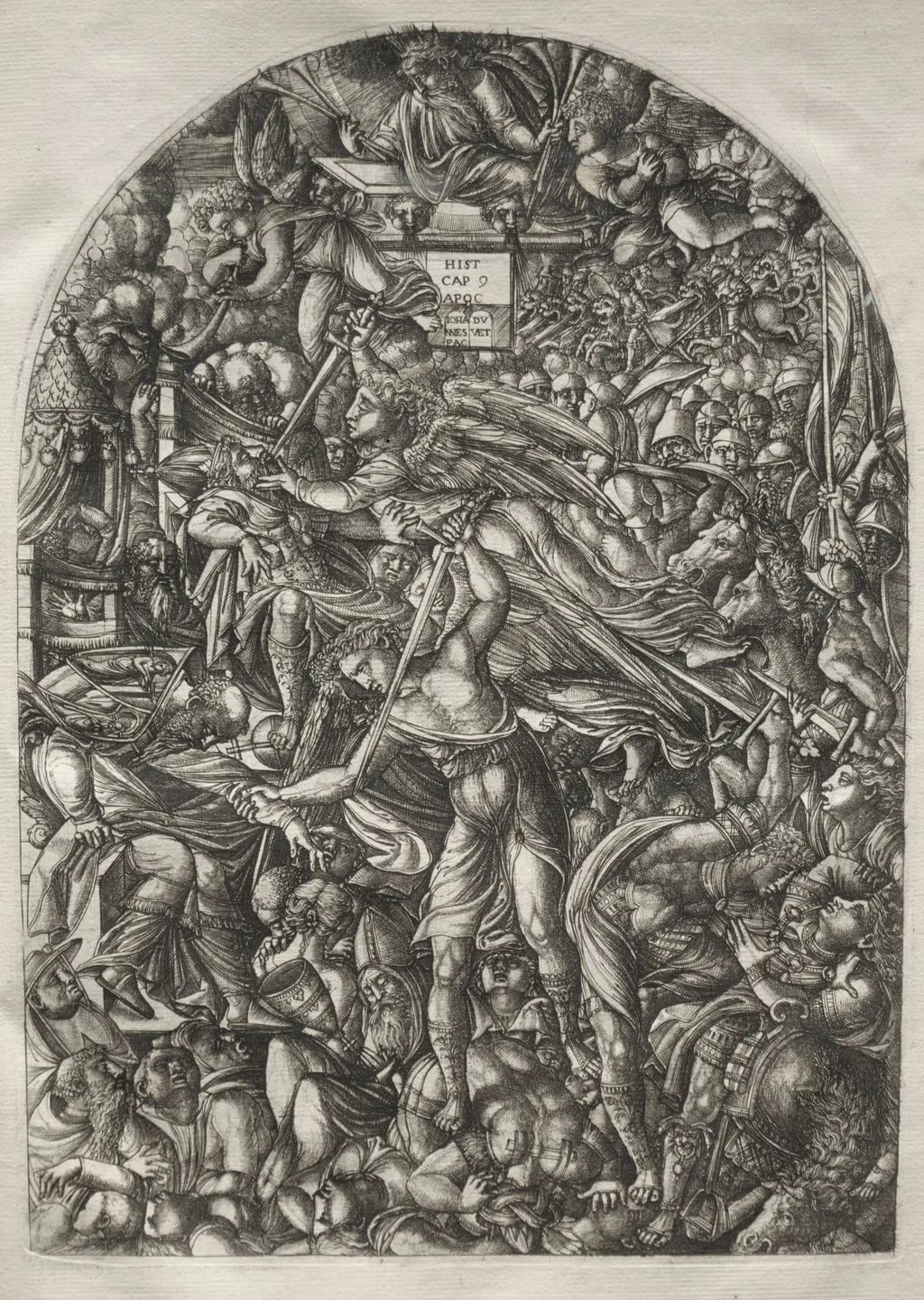
The Apocalypse: The Angel Sounding the Sixth Trumpet is a print by the Renaissance artist Jean Duvet. It dates from 1551 and is held in the collection of the Cleveland Museum of Art.
About this work
Overview
This engraving, 'The Apocalypse: The Angel Sounding the Sixth Trumpet', is one of 23 works in a rare, complete bound volume illustrating the Apocalypse from the Revelation of Saint John. Only seven such complete sets are known to exist.
Subject & Meaning
Depicting a pivotal moment from the Book of Revelation, the engraving shows an angel sounding the sixth trumpet, surrounded by a multitude of people and animals, conveying the biblical narrative's dramatic and prophetic themes.
Technique & Style
Characterized by densely crowded compositions and ornamental surface patterns, the work exemplifies Jean Duvet's unique style, which blends Italian High Renaissance influences (evident in the solidly modeled figures) with a distinctly artificial, spatially unconventional approach.
History & Provenance
Created over several years, this series represents the pinnacle of Duvet's artistic output. The museum's complete volume is one of only seven known, highlighting its rarity and significance.
Context
Though based in provincial Langres, Duvet's work was influenced by Italian art, accessed through circulated prints, notably those of Marcantonio Raimondi, reflecting the cross-European artistic exchanges of the 16th century.
Legacy
As one of the first major French printmakers and a highly original 16th-century artist, Duvet's innovative style and this Apocalypse series have left a lasting impact on the history of printmaking.
Artist & collection

Artist
Jean Duvet (1485 – after 1562) was a French Renaissance goldsmith and engraver, now best known for his engravings.

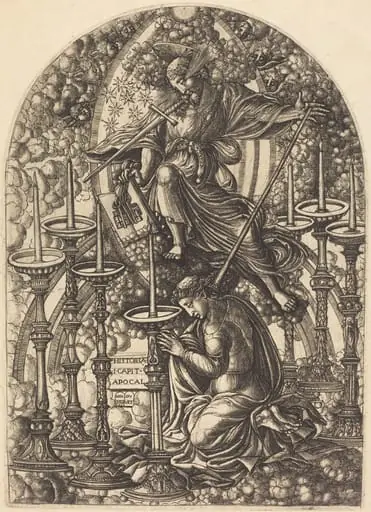
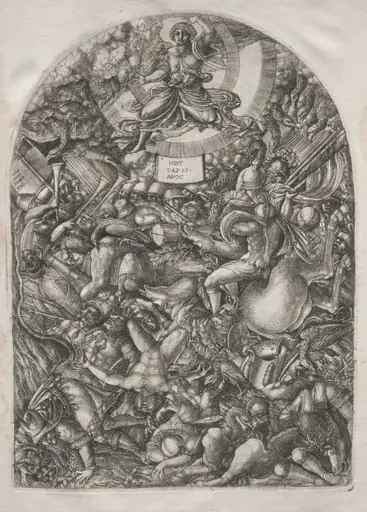 The Apocalypse: The Angel in the Sun Calling the Birds of Prey
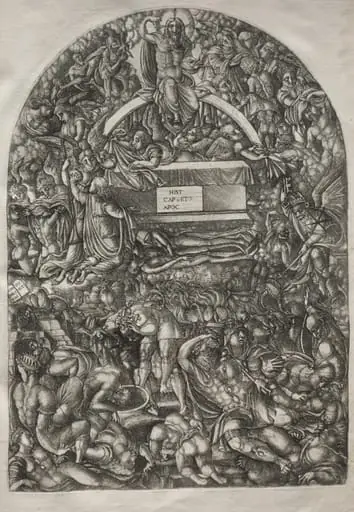 The Apocalypse: A Star Falls and Makes Hell to Open
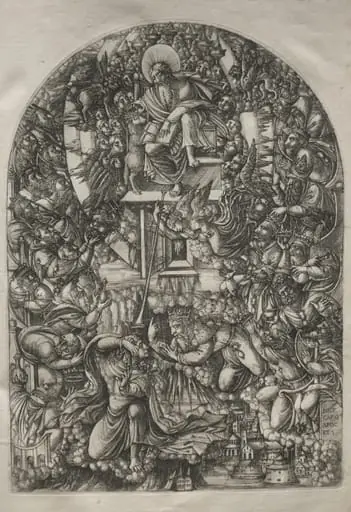 The Apocalypse: St. John Summoned to Heaven
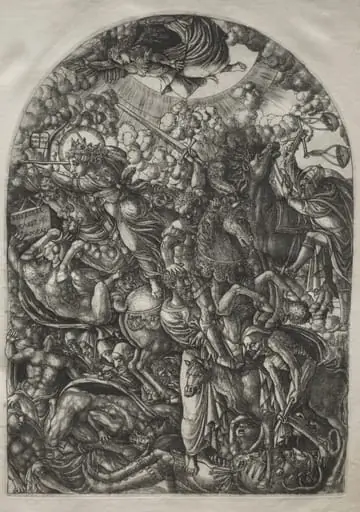 The Apocalypse: St. John Sees the Four Riders
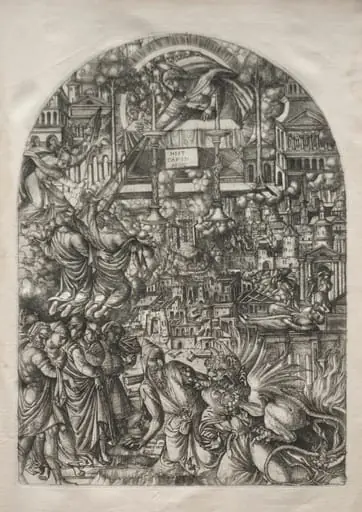 The Apocalypse: The Measurement of the Temple
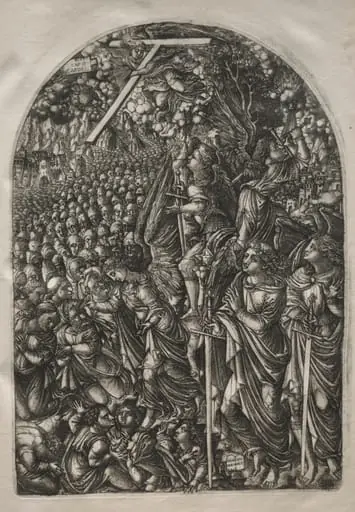 The Apocalypse: Four Angels Holding Back the Winds
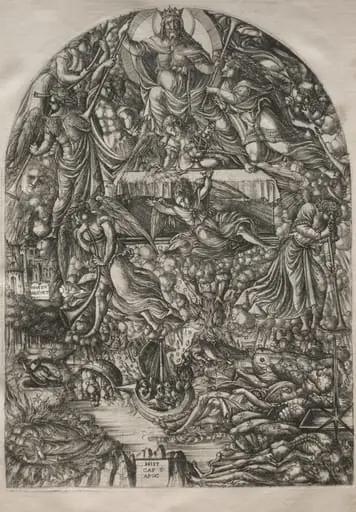 The Apocalypse: The Opening of the Seventh Seal
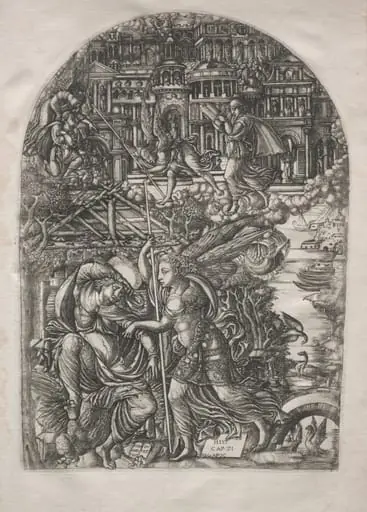 The Apocalypse: The Angel Shows St. John the New Jerusalem
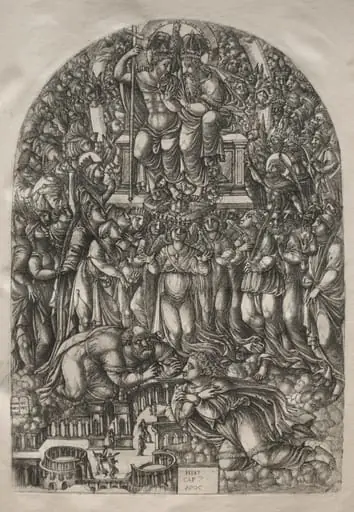 The Apocalypse: An Innumerable Multitude Which Stand before the Throne
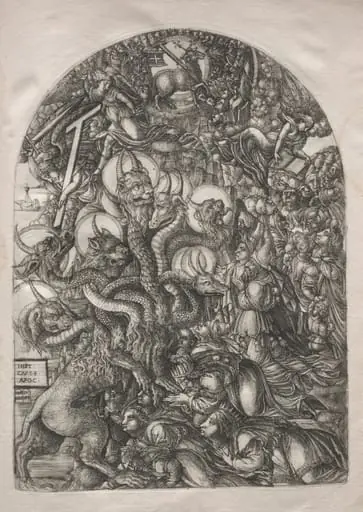 The Apocalypse: The Beast with Seven Heads and Ten Horns
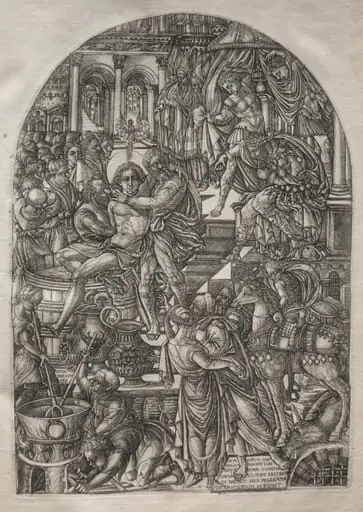 The Apocalypse: The Martyrdom of St. John the Evangelist
 The Apocalypse: The Winepress of the Wrath of God