Artwork
Tower of Winds
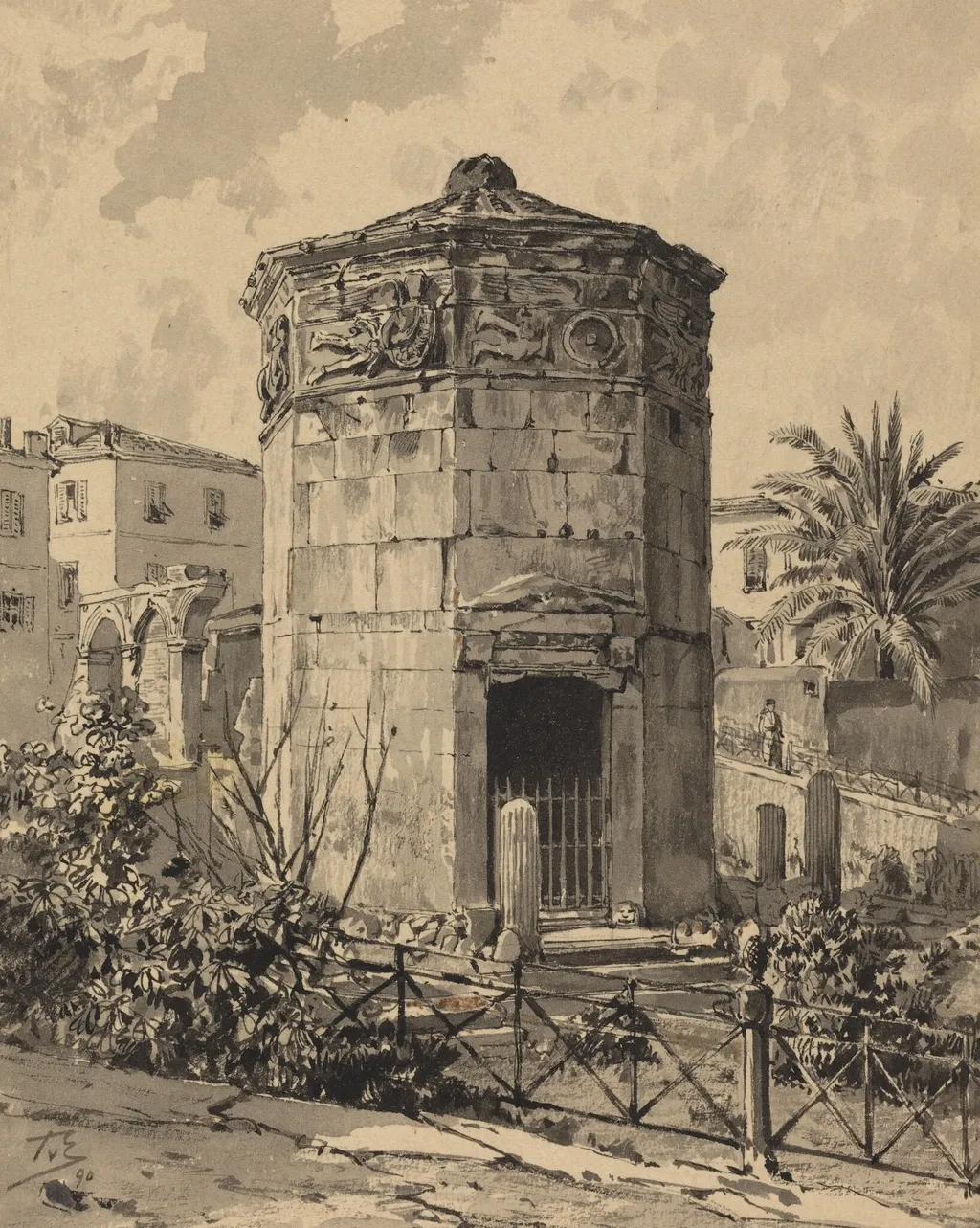
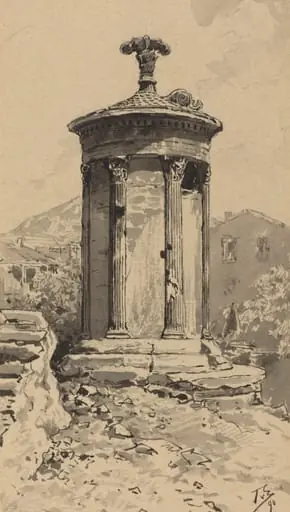
Tower of Winds is an ink drawing by the Impressionist artist Themistocles von Eckenbrecher. It dates from 1890 and is held in the collection of the National Gallery of Art.
About this work
Overview
Created in 1890, *Tower of Winds* is a drawing by German artist Karl Paul Themistokles von Eckenbrecher. Executed with pen, black ink, watercolor, graphite and black chalk, the work records a solitary stone tower set within a modest garden, its weathered masonry and sloping roof rendered in delicate line and wash.
Subject & Meaning
The composition centers on an aged stone tower, its carved lintel and metal‑gated doorway suggesting long‑standing use. A low fence, scattered vegetation and a palm tree to the right frame the structure, evoking a quiet, perhaps Mediterranean, locale where the passage of time is evident in the tower’s worn surfaces.
Technique & Style
Eckenbrecher combines precise pen work with fluid watercolor washes, while graphite and black chalk provide subtle tonal modeling. Soft, graduated shading gives the stone a three‑dimensional presence, and the restrained palette underscores the Romantic interest in atmosphere and the nuanced play of light on architecture.
History & Provenance
The artist, known for marine and coastal scenes in the late Romantic tradition, produced this drawing during a period when he frequently explored solitary structures within broader landscapes. The piece reflects his broader oeuvre, which emphasized mood and natural illumination over narrative detail.
Context
*Tower of Winds* aligns with the 19th‑century Romantic fascination with picturesque ruins and solitary edifices, echoing contemporary interests in the sublime qualities of weathered architecture and the quiet drama of isolated settings.
Artist & collection

Artist
Karl Paul Themistokles von Eckenbrecher (17 November 1842, Athens – 4 December 1921, Goslar) was a German landscape and marine painter, in the late Romantic style.

 Monument of Lysicrates
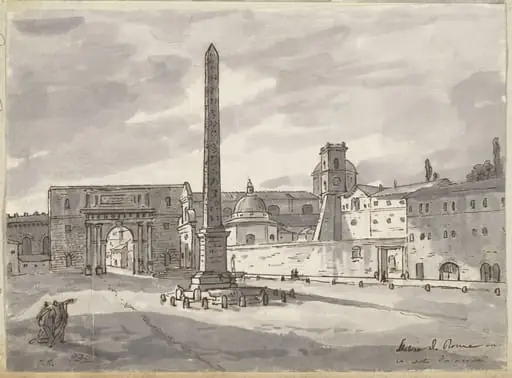 The Piazza del Popolo
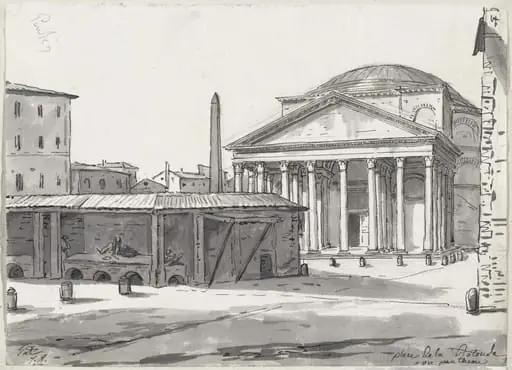 The Pantheon Seen from the Piazza
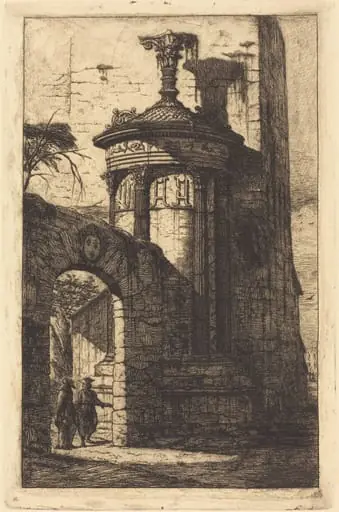 Entrée du Couvent des Capucins français à Athenes (Entrance to the French Capuchin Convent at Athens)
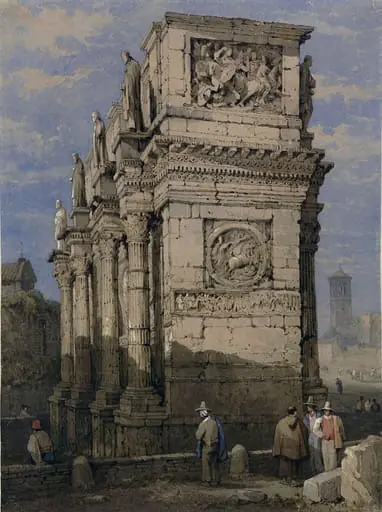 Arch of Constantine, Rome
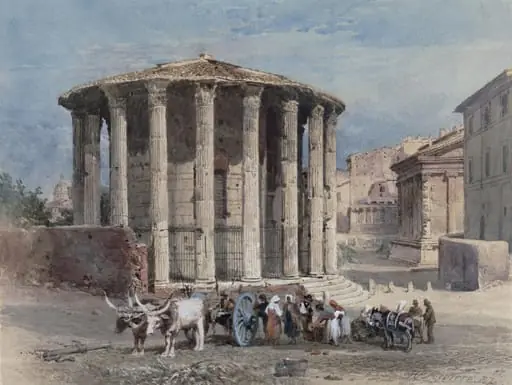 Small Round Temple
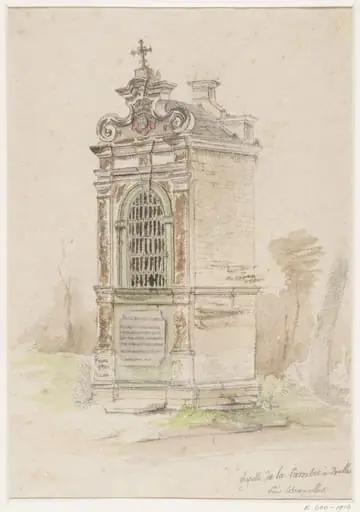 Chapelle de la Cambre à Ixelles, près Bruxelles
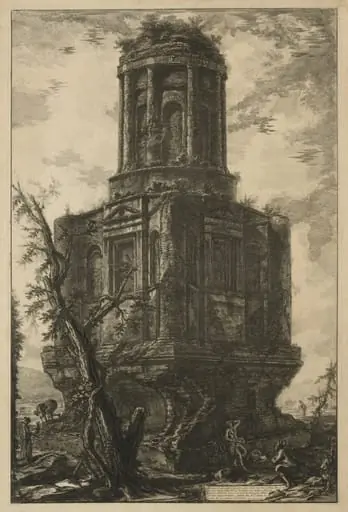 Views of Rome: The Tomb, called La Connocchia
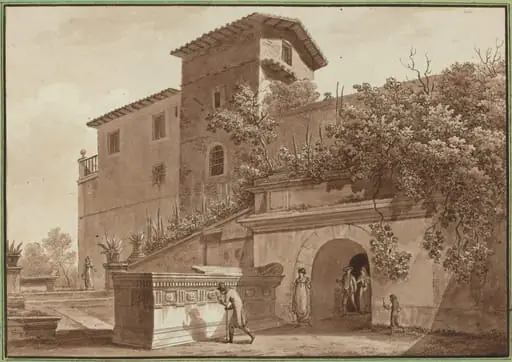 Tomb of Scipios
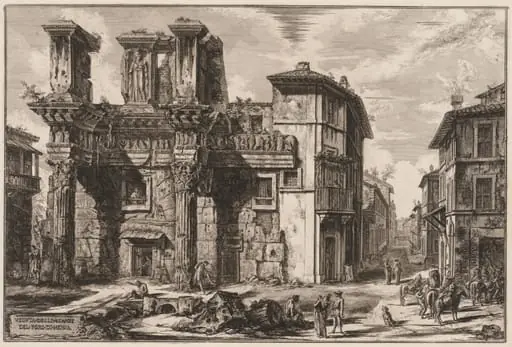 Views of Rome: Forum of Nerva