Artwork
Illustrated Excursion in Italy (vol. II): Ancient Walls, Monte Circello
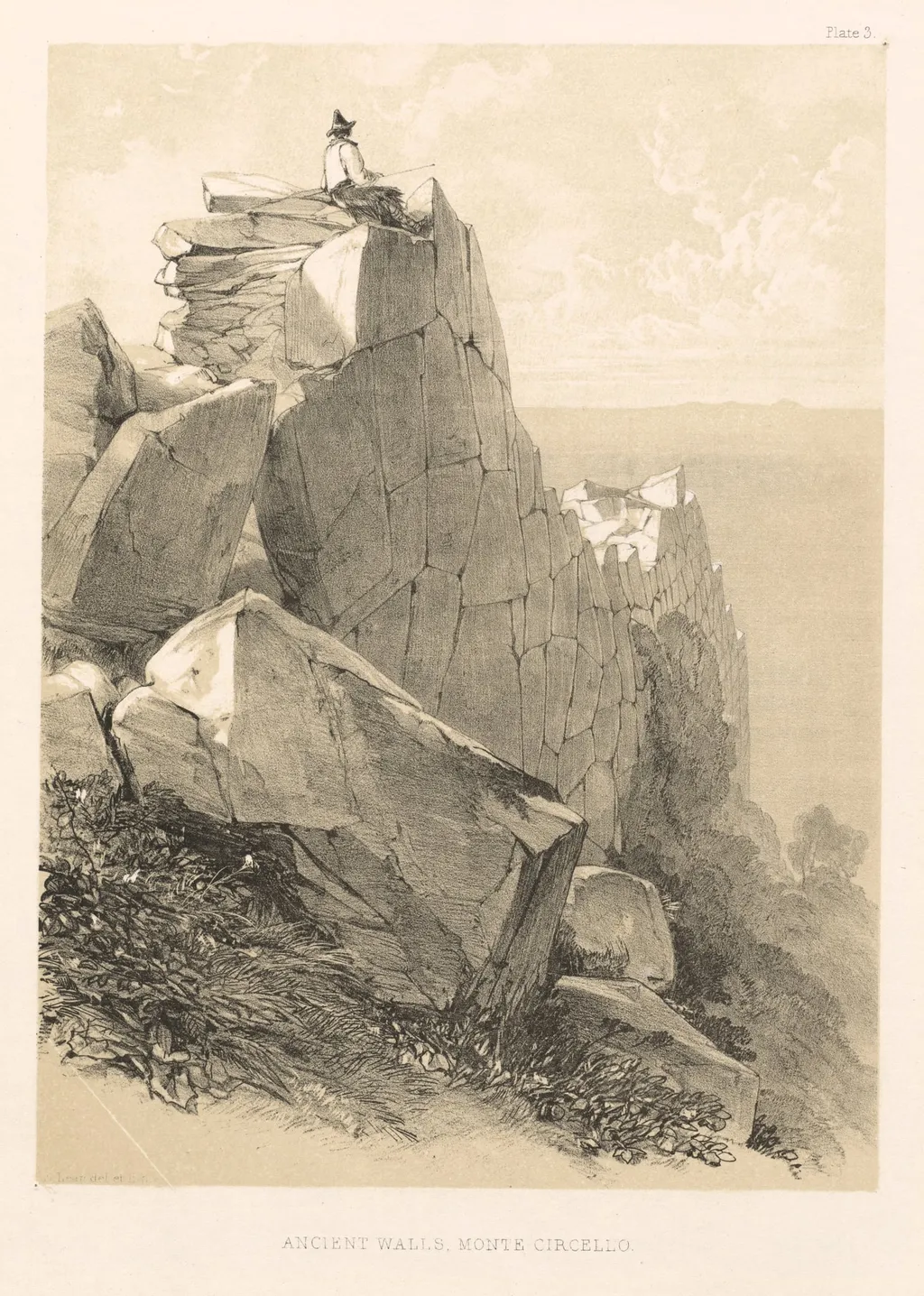
Illustrated Excursion in Italy (vol. II): Ancient Walls, Monte Circello is a print by the Romanticist artist Edward Lear. It dates from 1846 and is held in the collection of the Cleveland Museum of Art. Illustrated Excursion in Italy (vol.
About this work
The artist focused on rough textures—every crack and shadow in the stone looks real.
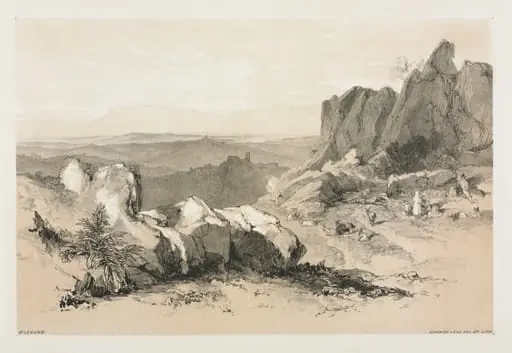
This drawing shows a lone person sitting on top of a tall, jagged rock formation. Below, smaller boulders and patches of grass cover the ground. The sky is faint, blending into the distant hills.
The artist focused on rough textures—every crack and shadow in the stone looks real. This was made in 1846 as part of a travel book about Italy.
Check out Edward Lear for more quirky, detailed landscapes.
Overview
Illustrated Excursion in Italy (vol. II): Ancient Walls, Monte Circello is a print by Edward Lear, created in 1846, showcasing his detailed draughtsmanship skills through a landscape depiction.
Subject & Meaning
The print features a solitary figure atop a rugged, jagged rock formation, set amidst smaller boulders, grassy patches, and a subtly rendered distant landscape, emphasizing the interaction between human presence and natural, weathered environments.
Technique & Style
Lear's attention to rough textures is evident in the meticulously detailed cracks and shadows on the stones, characteristic of his practice of refining field sketches into polished compositions for publication.
History & Provenance
Produced during Lear's European travels, this work was intended for a travel book on Italy, reflecting his role as a documentarian of European landscapes and architecture through art.
Context
Part of a broader body of work from Lear's excursions across Europe, this piece sits within his dual career as an artist and writer, known also for literary nonsense and limericks.
Artist & collection
Artist
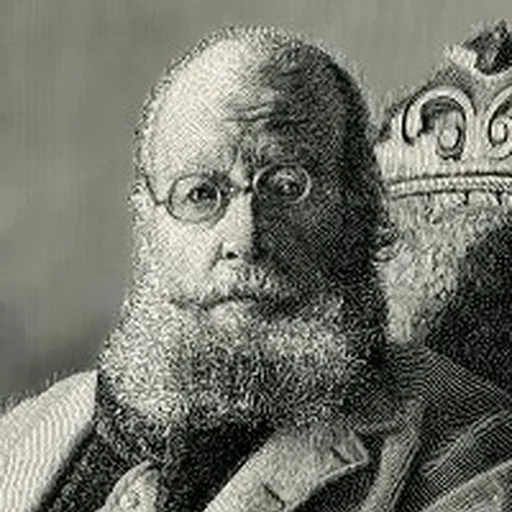
Edward Lear (12 May 1812 – 29 January 1888) was an English artist, illustrator, musician, author and poet, who is known mostly for his literary nonsense in poetry and prose and especially his limericks, a form he popularised but which term…

 Olevano
 The Logan Rock
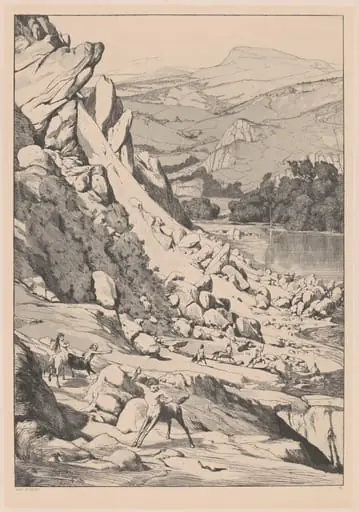 Landslide (Bergsturz)
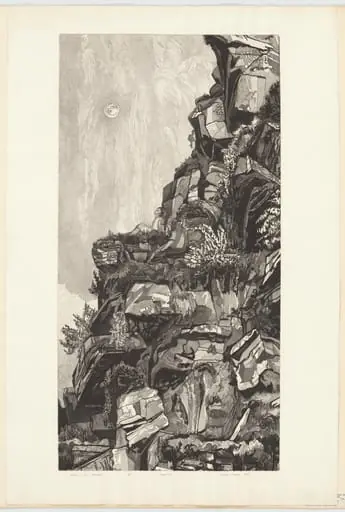 Untitled
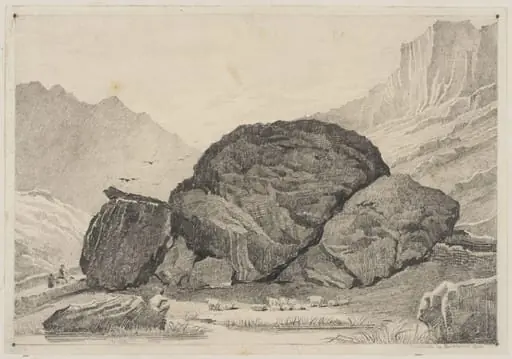 Cromlech, Pass of Llanberis
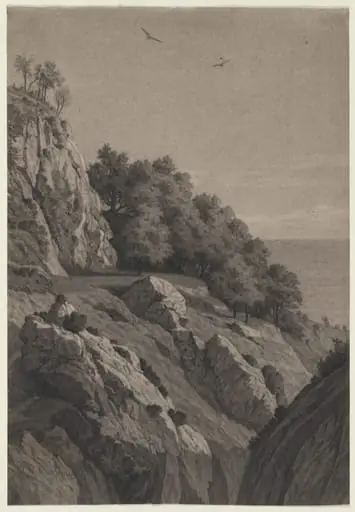 Rocky Cliff on a Coast
 Rock Cliffs above a Stream
 Mountain of the Holy Cross, Colorado
 Landslide (Opus IV, 6)
 Moonlit Night (Mondnacht): pl. 4
 Intermezzo: Moonlit Night (Opus IV, 5)
 Gebil Hor. Mount Hor, from the Cliffs Encircling Petra