Artwork
Portfolio I, Plate 37: Out of the Darkness-Navaho
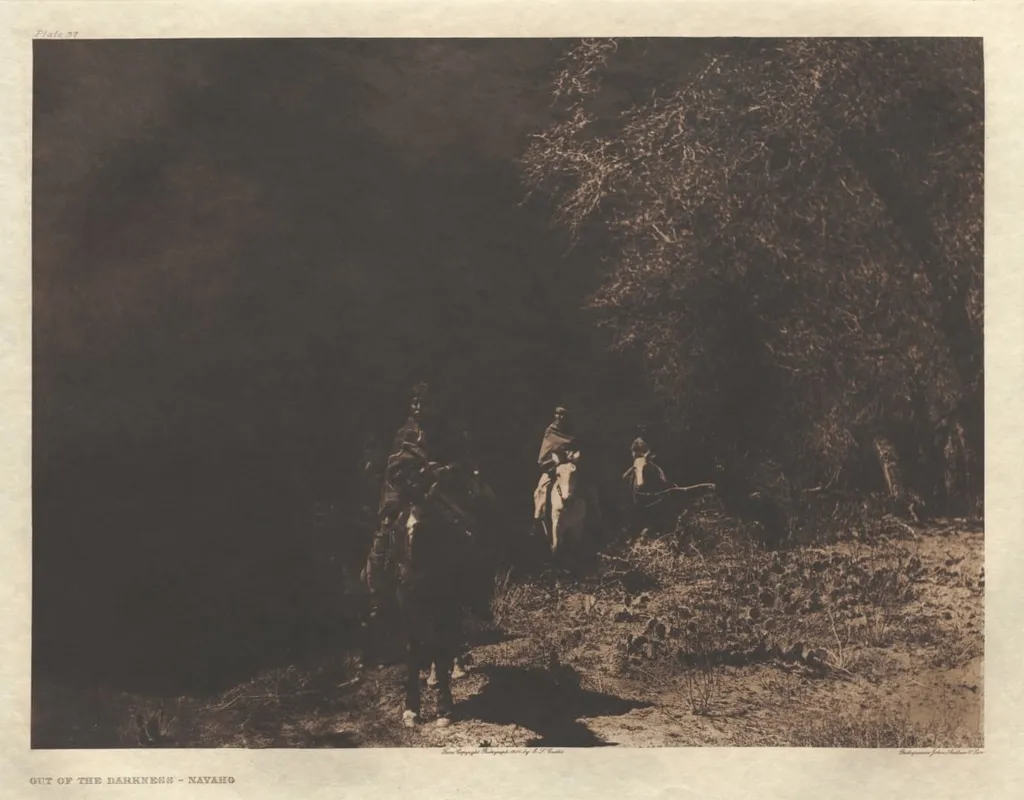
Portfolio I, Plate 37: Out of the Darkness-Navaho is a work on paper by Edward S. Curtis. It dates from 1904 and is held in the collection of the Cleveland Museum of Art. Plate 37 from Edward S.
About this work
Overview
Curtis’s Portfolio I, titled Out of the Darkness—Navaho, is a photographic print made in 1904.
Plate 37 from Edward S. Curtis’s Portfolio I, titled Out of the Darkness—Navaho, is a photographic print made in 1904. It is part of a larger project documenting Indigenous peoples of North America. The image is held in the collection of The Cleveland Museum of Art and exemplifies Curtis’s early 20th-century approach to ethnographic photography, blending documentary intent with aesthetic composition.
Subject & Meaning
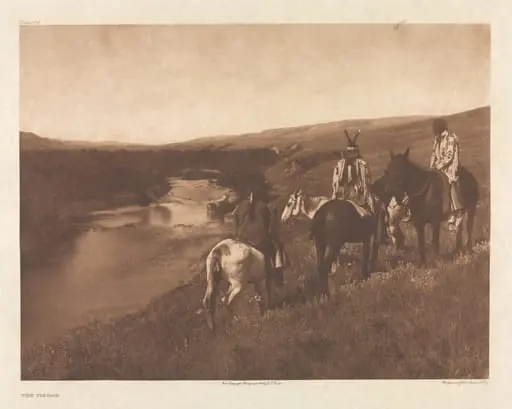
The photograph depicts three Navajo individuals on horseback, positioned within a dense forest. Their traditional attire and the quiet, contemplative posture suggest a moment of transit or ritual movement. The figures face away from the viewer, emphasizing anonymity and the landscape’s dominance. The scene resists romanticization, instead conveying a sense of quiet presence within a natural environment.
Technique & Style
Curtis employed a low-light setting and directional illumination from the right to sculpt form through chiaroscuro. The sepia toning enhances the atmospheric depth, while the contrast between shadowed trees and the illuminated figures draws focus to their silhouettes. The dirt path and scattered vegetation in the foreground anchor the composition, reinforcing the photograph’s immersive, almost painterly quality.
History & Provenance
Created during Curtis’s extensive fieldwork for The North American Indian, this image was produced as part of a limited portfolio series. It was later acquired by The Cleveland Museum of Art, where it remains as a key example of early ethnographic photography. The work reflects Curtis’s method of staging scenes to align with his vision of Indigenous life, often removing modern elements to evoke an idealized past.
Context
In the early 1900s, Curtis’s project emerged amid growing anthropological interest in Native cultures, but also during a period of forced assimilation and displacement. His images, while visually compelling, were shaped by contemporary notions of cultural preservation and nostalgia. This photograph reflects both a desire to document and a tendency to frame Indigenous life as vanishing, a narrative common in the era.
Legacy
Curtis’s photographs, including this one, continue to be studied for their technical artistry and complex cultural implications. While praised for their aesthetic rigor, they are also critically examined for their role in shaping enduring stereotypes. The image endures as a historical artifact that invites reflection on representation, authorship, and the ethics of visual documentation.
Artist & collection

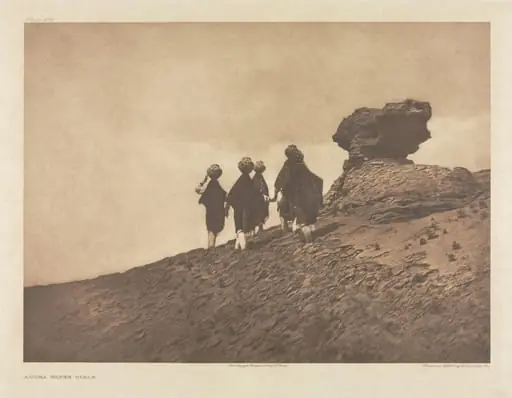 Portfolio XVI, Plate 573: Acoma Water Girls
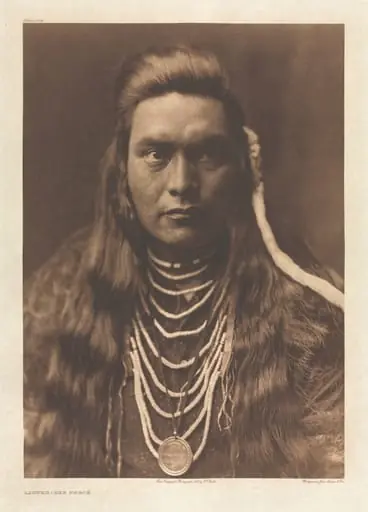 Portfolio VIII, Plate 264: Lawyer - Nez Percé
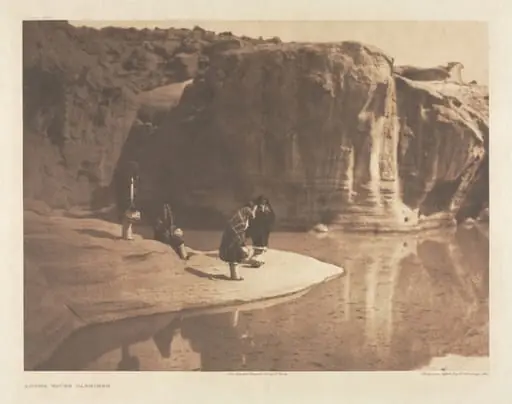 Portfolio XVI, Plate 568: Acoma Water Carriers
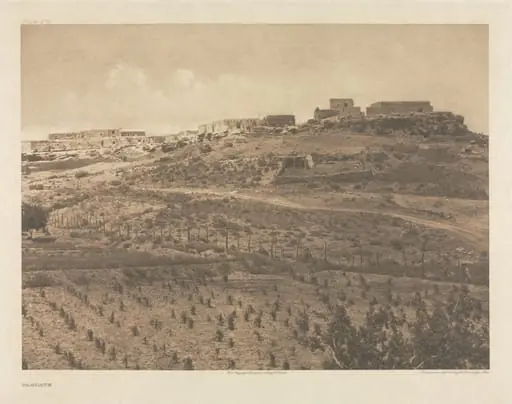 Portfolio XVI, Plate 574: Paguate
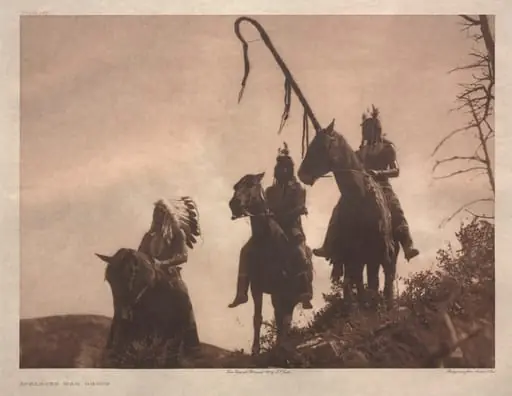 Portfolio IV, Plate 147: Apsaroke War Group
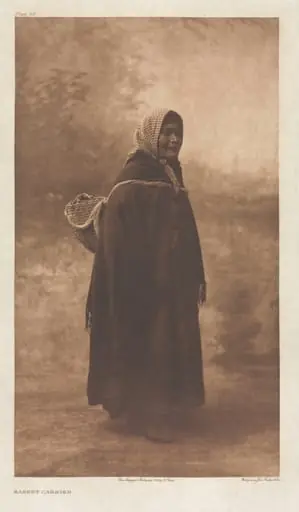 Portfolio IX, Plate 311: Basket Carrier
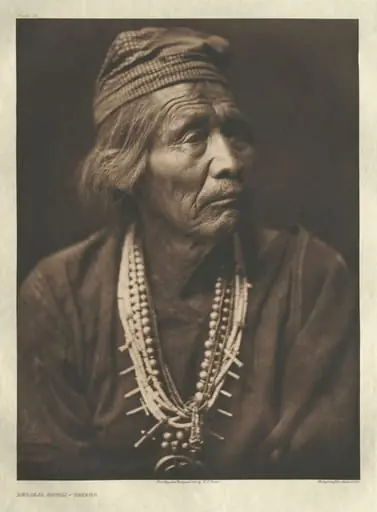 Portfolio I, Plate 31: Nesjája Hatáli-Navaho
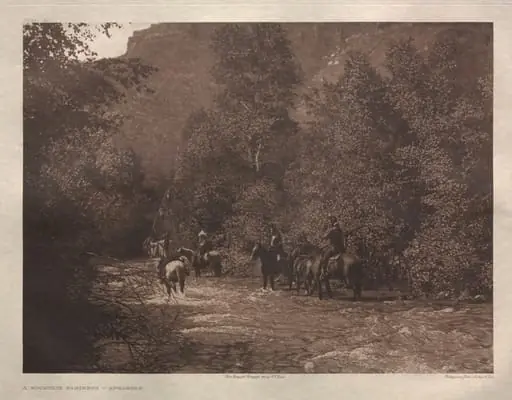 Portfolio IV, Plate 140: A Mountain Fastness--Apsaroke
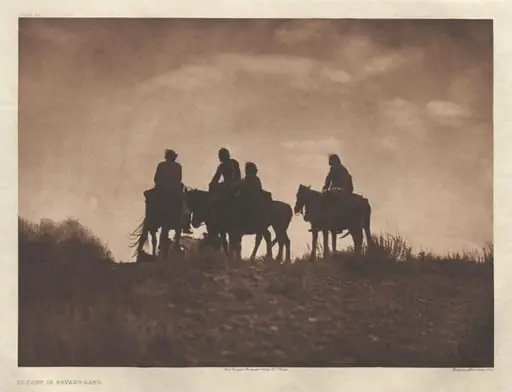 Portfolio I, Plate 38: Sunset in Navaho-Land
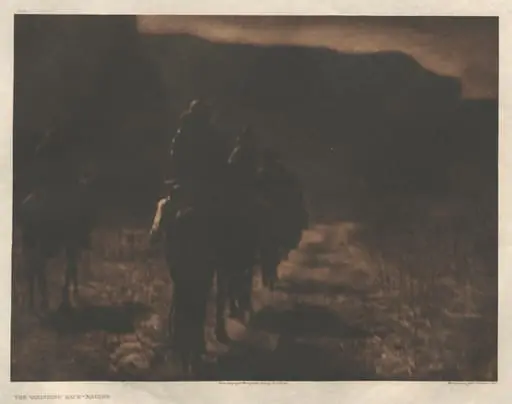 Portfolio I, Plate 1: The Vanishing Race-Navajo
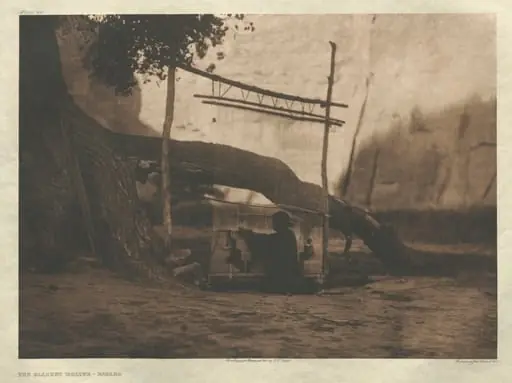 Portfolio I, Plate 34: The Blanket Weaver-Navaho
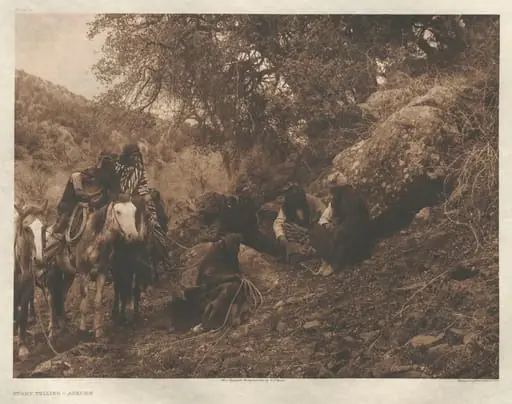 Portfolio I, Plate 11: Story Telling-Apache
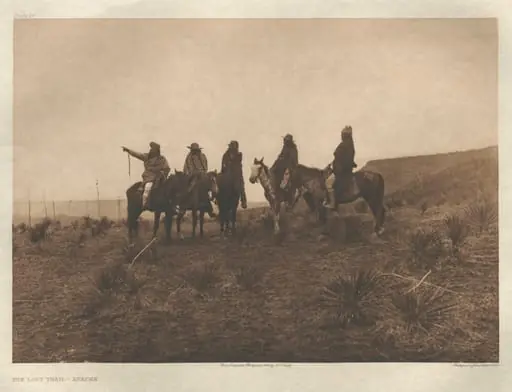 Portfolio I, Plate 19: The Lost Trail-Apache
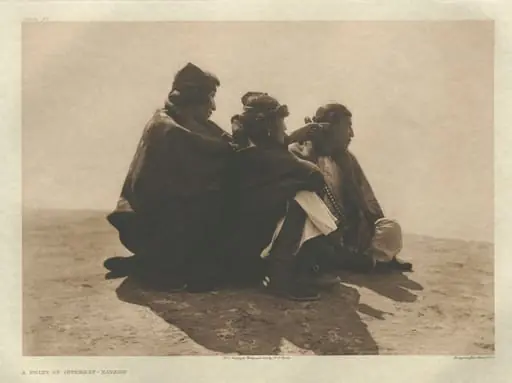 Portfolio I, Plate 36: A Point of Interest-Navaho
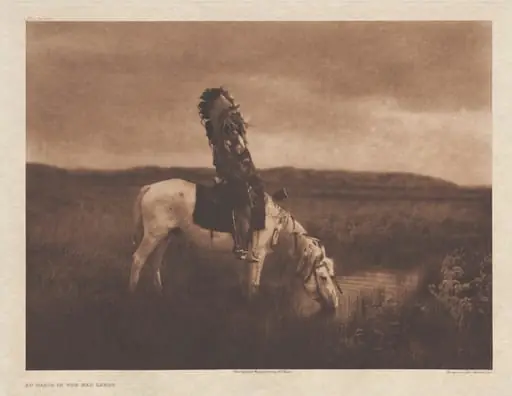 Portfolio III, Plate 80: An Oasis on the Bad Lands
 Portfolio VI, Plates 184- 219