Artwork
Portfolio I, Plate 6: Sígesh-Apache
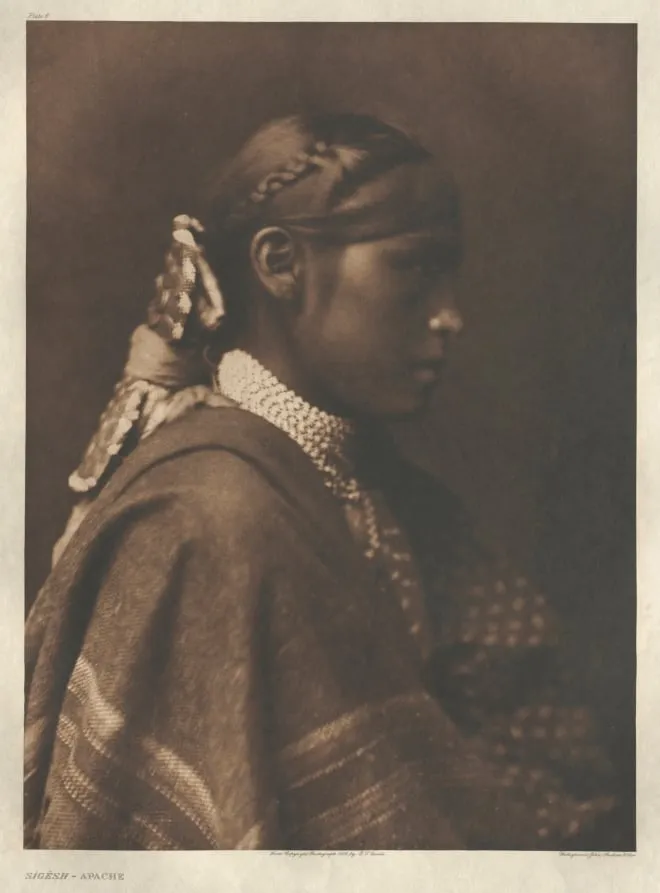
Portfolio I, Plate 6: Sígesh-Apache is a work on paper by Edward S. Curtis. It dates from 1903 and is held in the collection of the Cleveland Museum of Art. Edward S.
About this work
It is part of a portfolio of photographs that Curtis took of Native American tribes.
This image shows a woman in a dark, blurred background. She is wearing a dark shawl with a patterned border and a white necklace. Her dark hair is pulled back, and she has a headband with a pattern.
The woman's face is blurred, but her dark eyes are visible. She is looking to the right, and her expression is serious. The image is in sepia tones, which gives it a warm, nostalgic feel.
The image is a portrait of a woman from the Apache tribe, taken by Edward S. Curtis in 1903. It is part of a portfolio of photographs that Curtis took of Native American tribes. The image is held at The Cleveland Museum of Art. If you want to learn more about the artist who took this photo, look up Edward S. Curtis.
Overview
Edward S. Curtis’s photograph titled “Sígesh‑Apache,” taken in 1903, is part of his extensive series documenting Native American peoples. The portrait is preserved in the collection of the Cleveland Museum of Art and appears as plate six in the first volume of his published portfolios.
Subject & Meaning
The image presents an Apache woman framed against a dark, indistinct backdrop. She wears a dark shawl edged with a decorative pattern, a white necklace, and a patterned headband, her hair pulled back. Her gaze is directed to the right, conveying a solemn demeanor that invites contemplation of individual identity within a broader cultural record.
Technique & Style
Captured in sepia tones, the photograph employs soft focus that renders the background and the subject’s facial features slightly blurred, emphasizing texture and tonal contrast. The use of chiaroscuro and the muted palette contributes to a nostalgic atmosphere characteristic of early twentieth‑century ethnographic photography.
History & Provenance
Created during Curtis’s fieldwork among the Apache in the early 1900s, the print later entered the holdings of the Cleveland Museum of Art. It remains a representative example of Curtis’s systematic effort to compile visual documentation of Indigenous peoples for his multi‑volume publication.
Context
The portrait belongs to a larger project in which Curtis sought to record the customs, attire, and individuals of Native American tribes at a time when their traditional ways were rapidly changing. The image reflects both the photographer’s aesthetic choices and the ethnographic interests of the period.
Artist & collection

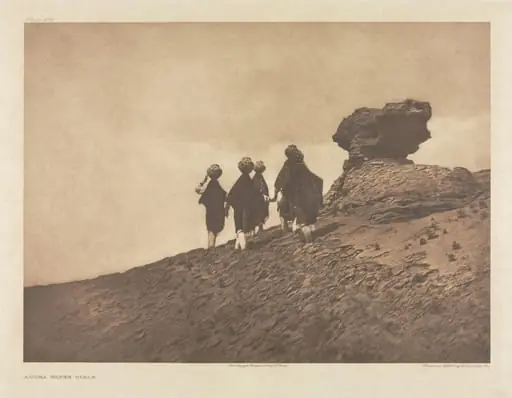 Portfolio XVI, Plate 573: Acoma Water Girls
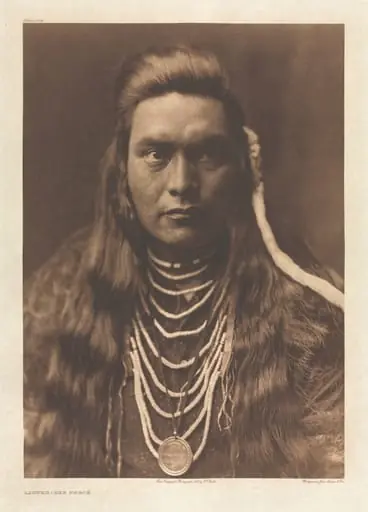 Portfolio VIII, Plate 264: Lawyer - Nez Percé
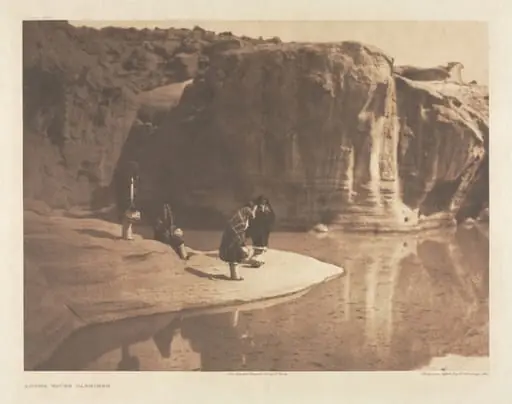 Portfolio XVI, Plate 568: Acoma Water Carriers
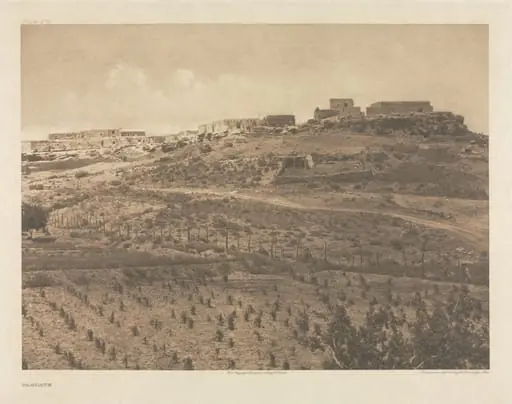 Portfolio XVI, Plate 574: Paguate
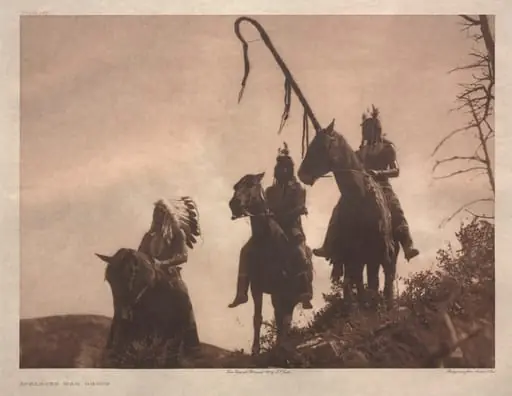 Portfolio IV, Plate 147: Apsaroke War Group
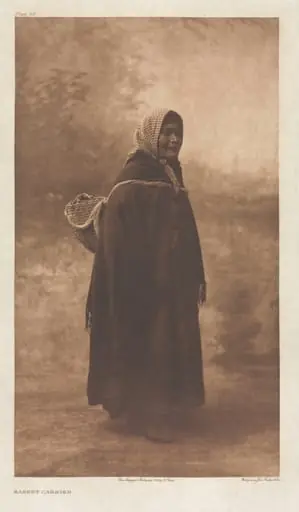 Portfolio IX, Plate 311: Basket Carrier
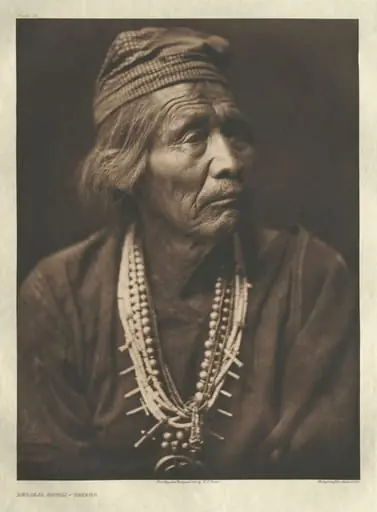 Portfolio I, Plate 31: Nesjája Hatáli-Navaho
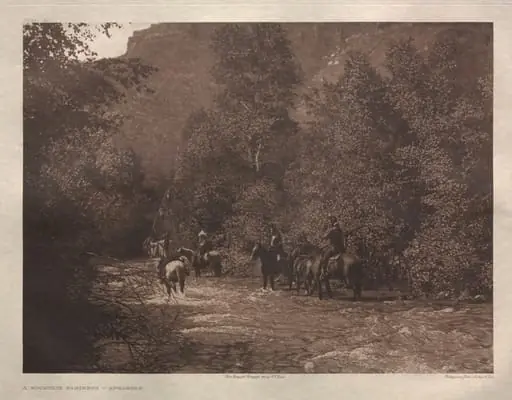 Portfolio IV, Plate 140: A Mountain Fastness--Apsaroke
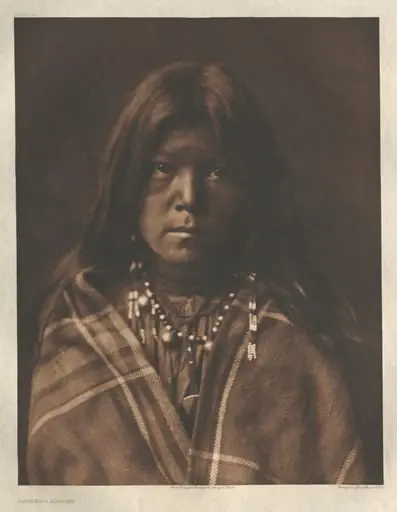 Portfolio I, Plate 18: Chideh-Apache
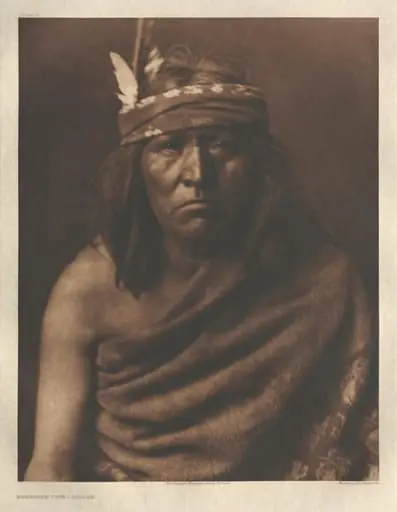 Portfolio I, Plate 12: Renegade Type-Apache
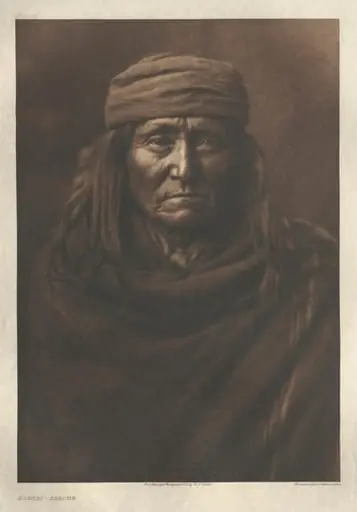 Portfolio I, Plate 16: Eskadi-Apache
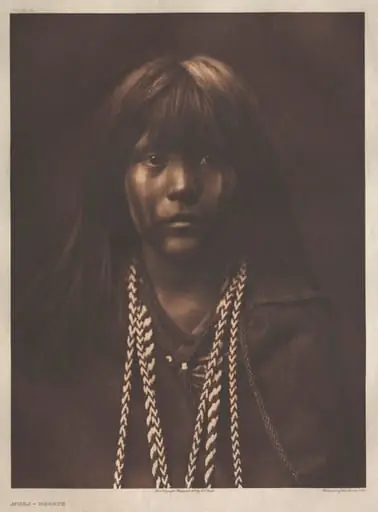 Portfolio II, Plate 61: Mósa-Mohave
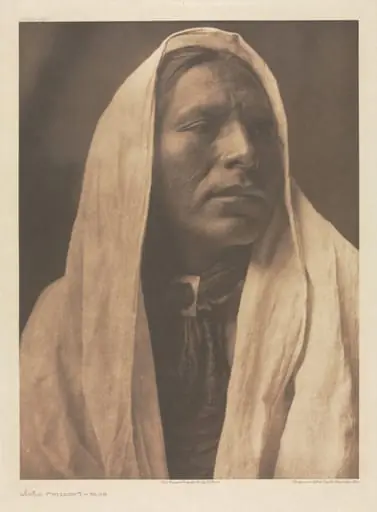 Portfolio XVI, Plate 545: Iahla ("Willow") - Taos
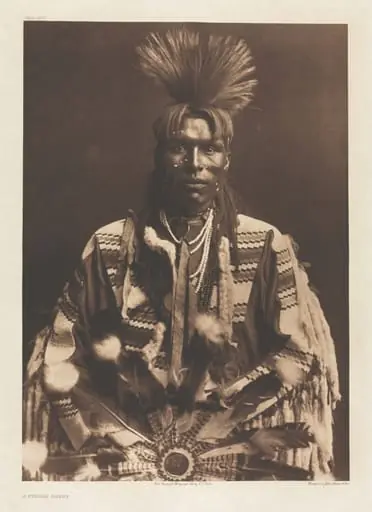 Portfolio VI, Plate 208: A Piegan Dandy
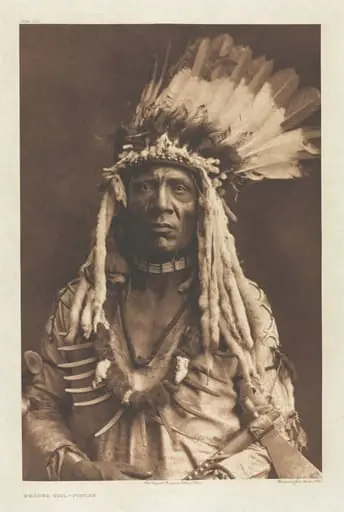 Portfolio VI, Plate 203: Weasel Tail - Piegan
 Portfolio III, Plates 76-110, 119, 136
 Portfolio VI, Plate 202: Middle Calf - Piegan