Artwork
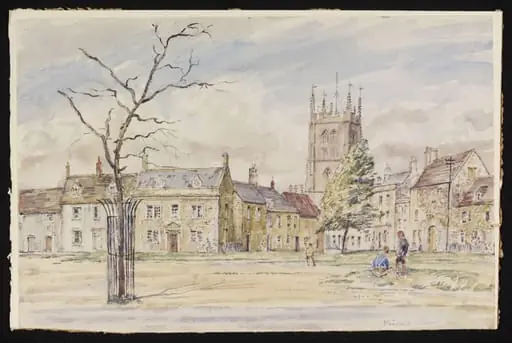
Market Cross, Malmesbury
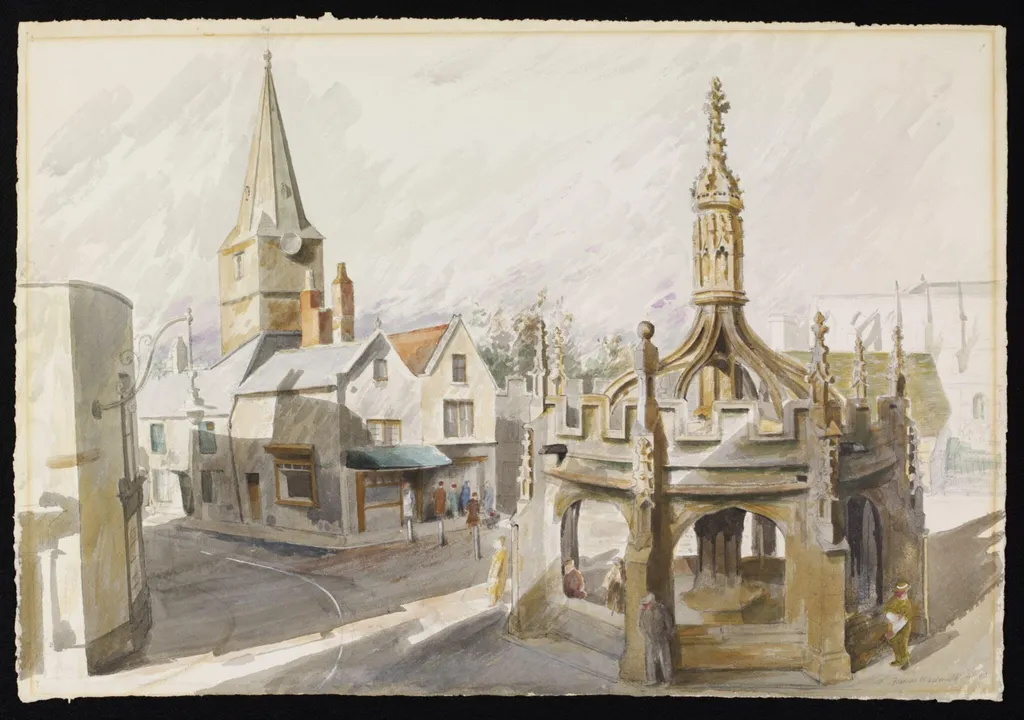
Market Cross, Malmesbury is a watercolor work on paper by Frances Macdonald. It is held in the collection of the Victoria and Albert Museum.
About this work
Overview
The work captures the market cross in Malmesbury, a structure emblematic of civic history.
Frances Macdonald created this watercolour in 1941 as part of the Recording Britain project, a government-supported effort to document the nation’s architectural heritage during wartime. The work captures the market cross in Malmesbury, a structure emblematic of civic history. Executed in subdued tones, the piece reflects the project’s aim to preserve visual records of places perceived as vulnerable to destruction or change during the conflict.
Subject & Meaning
The market cross stands as the focal point, its stone form and pointed roof suggesting medieval origins. Surrounded by modest buildings and a distant church steeple, the scene evokes continuity amid disruption. The composition emphasizes endurance—ordinary yet historically layered structures that anchored community life. In wartime, such images carried quiet resonance, affirming cultural roots when the future felt uncertain.
Technique & Style
Macdonald employed a restrained watercolour technique, using thin washes to build subtle gradations of grey, brown, and muted ochre. The brushwork is precise but unobtrusive, allowing the architecture to speak without embellishment. Light is rendered softly, casting gentle shadows that define form without drama. The absence of vivid colour reinforces the work’s documentary intent, prioritizing clarity over emotional intensity.
History & Provenance
The painting was produced under the auspices of the Pilgrim Trust and curated by Sir Kenneth Clark as part of the Recording Britain initiative. It entered the Victoria and Albert Museum’s collection alongside hundreds of similar works, preserved as a visual archive of Britain’s built environment during the Second World War. Its survival reflects the project’s success in safeguarding regional heritage through artistic record.
Context
Created during a time of aerial bombardment and social upheaval, the work responds to fears of cultural loss. The Recording Britain project sought to counteract the erasure of historic sites by commissioning artists to record them before they vanished. Malmesbury’s market cross, though not in immediate danger, symbolized the broader imperative to preserve the quiet, enduring landmarks of English towns.
Legacy
This watercolour remains part of a significant archive that reshaped how Britain viewed its vernacular architecture. Macdonald’s contribution, like others in the series, helped shift public perception toward valuing everyday historic structures. Today, the work serves as both a historical document and a testament to the role of art in sustaining collective memory during crisis.
Artist & collection
Artist
Frances Macdonald MacNair (24 August 1873 – 12 December 1921) was a Scottish artist whose design work was a prominent feature of the Modern Style (British Art Nouveau style) during the 1890s.

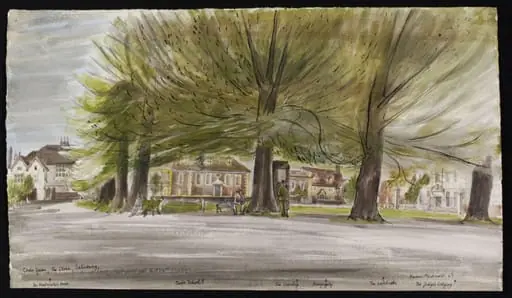
 The Green and Church, Calne
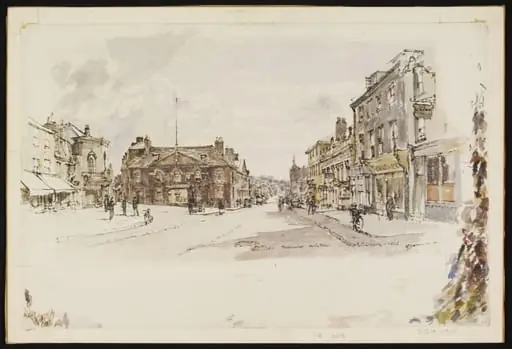 High Street and Rutland Arms, Newmarket
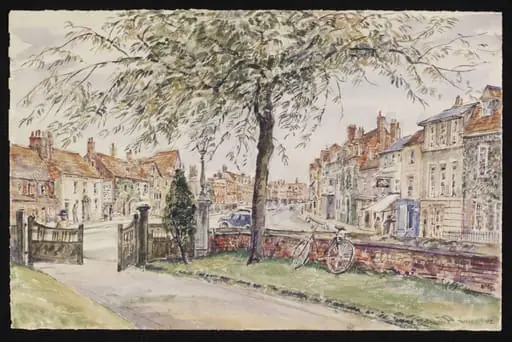 The High Street, Marlborough, from St.Peter's Churchyard
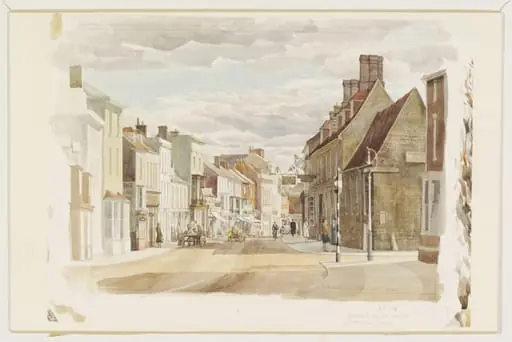 Towcester High Street from the Pomfret Arms Corner, Northamptonshire
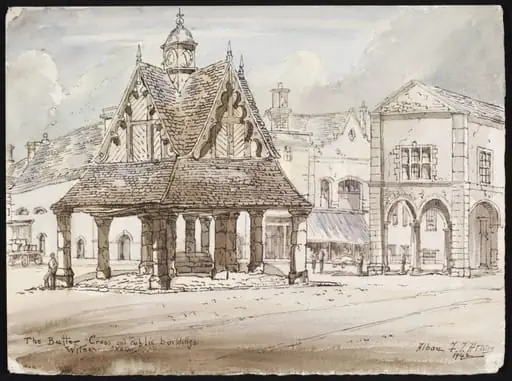 The Butter Cross and Public Buildings, Witney
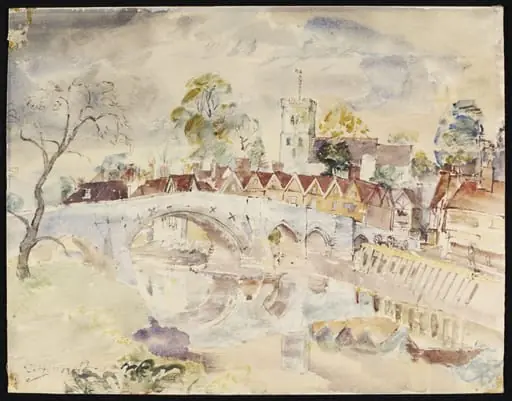 Aylesford Bridge
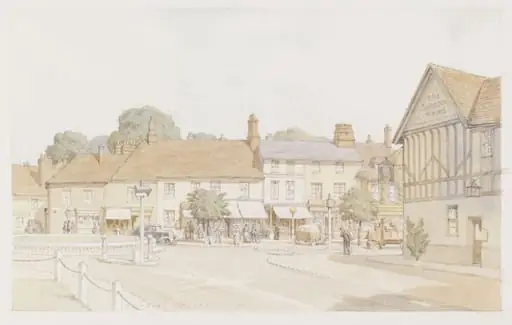 Beaconsfield
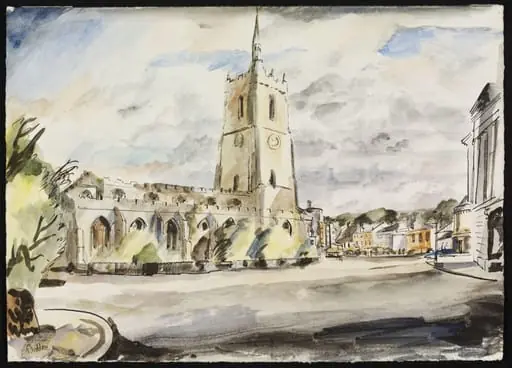 St. Peter's Church and Market Hill, Sudbury
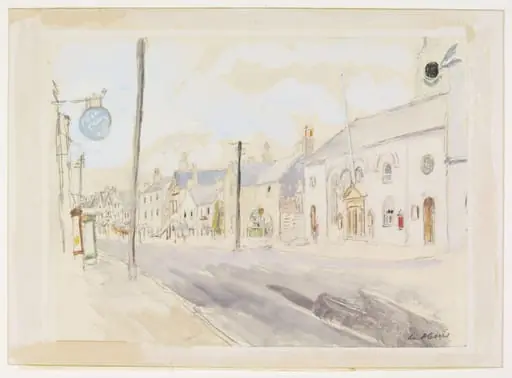 Cowbridge, Glamorganshire
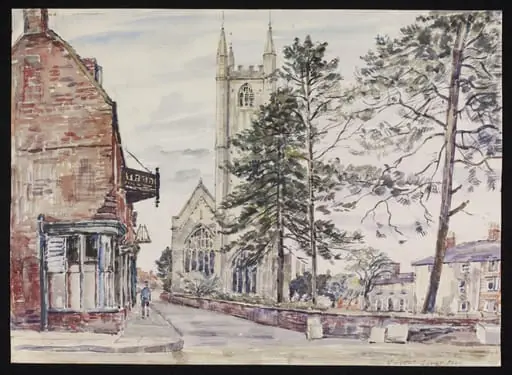 St. Peter's, Marlborough
 Market Cross, Chichester
 The Wool Hall, Lavenham