Artwork
The Veil of Cupids
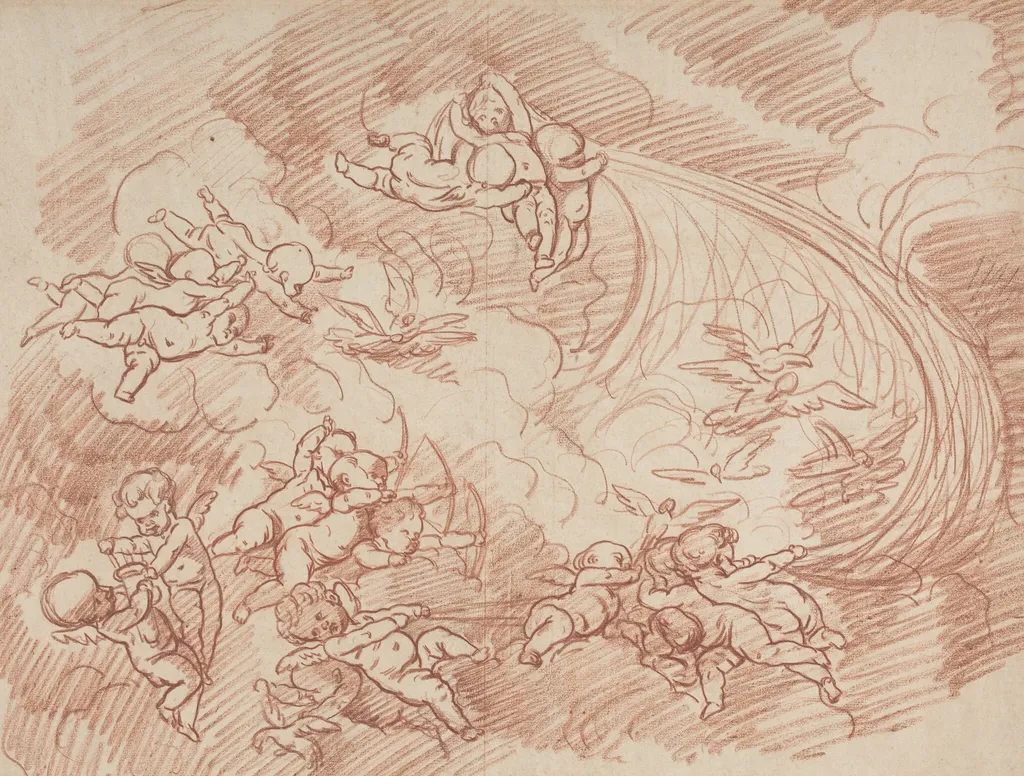
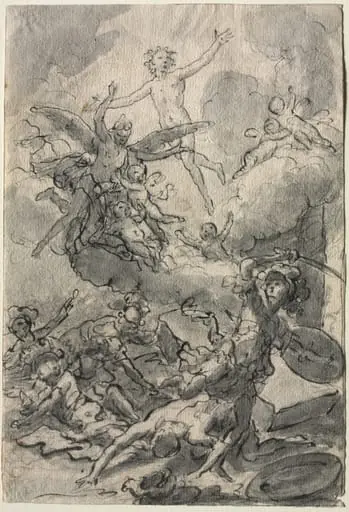
The Veil of Cupids is a chalk drawing by the Baroque artist French 18th Century. It dates from 1701 and is held in the collection of the National Gallery of Art. This drawing, executed in red-brown chalk, captures a dynamic tangle of winged putti in motion.
About this work
Overview
The composition lacks defined spatial cues—no horizon, no ground—instead relying on fluid lines to suggest swirling energy.
This drawing, executed in red-brown chalk, captures a dynamic tangle of winged putti in motion. The composition lacks defined spatial cues—no horizon, no ground—instead relying on fluid lines to suggest swirling energy. The artist employed only dry medium, avoiding paint or ink, to maintain a sense of spontaneity and lightness. The figures appear suspended in an abstract field of strokes, emphasizing movement over detail.
Subject & Meaning
The figures are putti, traditional symbols of love and desire in Renaissance and Baroque iconography. Their entangled limbs and airborne poses suggest a moment of playful chaos, possibly representing the capricious nature of love. No narrative context is given; the focus is on the rhythmic interplay of forms rather than storytelling, aligning with a more abstract, emotional interpretation of mythological themes.
Technique & Style
The artist used loose, rapid strokes of chalk to define the putti’s forms, allowing the paper’s texture to show through in places. Contours are suggestive rather than precise, with limbs emerging and dissolving into the background. The absence of shading or modeling reinforces the sketchlike quality, prioritizing gesture and flow over anatomical accuracy. This approach reflects a spontaneous, almost improvisational method.
History & Provenance
The drawing’s origin is not documented in public records, and its early ownership remains unknown. It is attributed to a Baroque-era hand based on stylistic parallels with contemporaneous studies of putti. No inscription, watermark, or collector’s mark has been identified, limiting precise dating or provenance. It is currently held in a private collection, with no public exhibition history recorded.
Context
This work aligns with Baroque artistic practices that favored expressive movement and emotional intensity over classical restraint. Artists of the period often produced chalk studies of putti as preparatory sketches for larger compositions in painting or sculpture. The absence of a defined setting reflects a focus on form and motion, typical of studies intended to explore dynamic groupings before final execution.
Legacy
Though not widely reproduced or studied, the drawing exemplifies a common yet underappreciated facet of Baroque draftsmanship: the use of chalk to capture fleeting, energetic compositions. Its informal quality offers insight into how artists worked through ideas in private, prioritizing rhythm and gesture over polished finish. It stands as a quiet testament to the creative process behind grander Baroque works.
Own this work as a print
Artist & collection

Artist
This artist worked in late 18th-century France, making portrait paintings and etched prints.

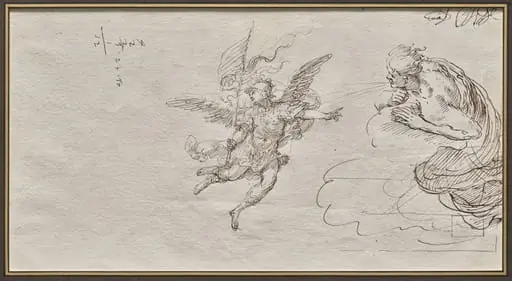 Studies of an Archangel and a Wind God (verso)
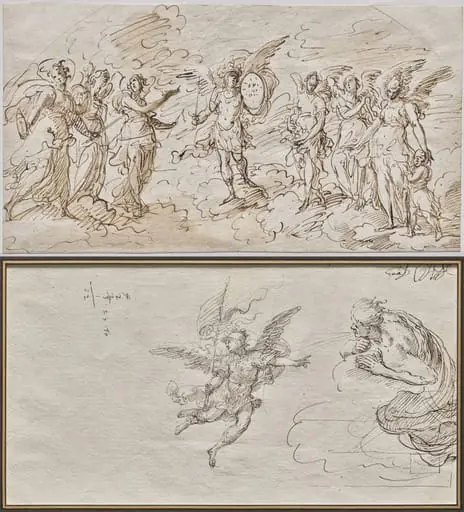 The Seven Archangels (recto); Studies of an Archangel and a Wind God (verso)
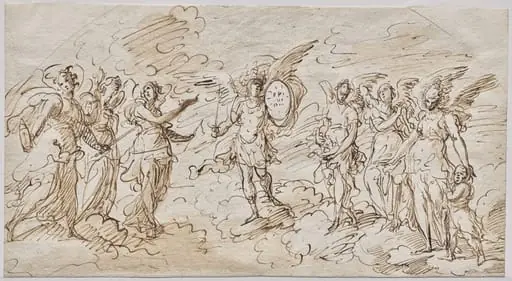 The Seven Archangels (recto)
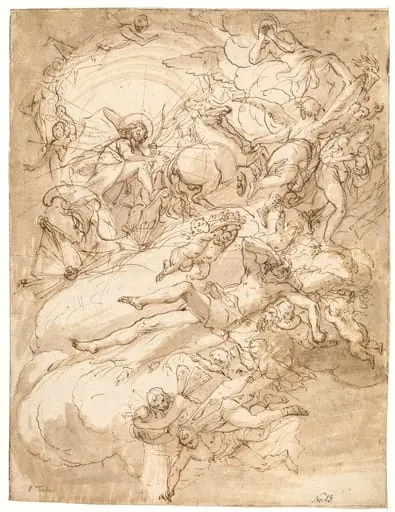 Apollo in his chariot, design for a ceiling painting
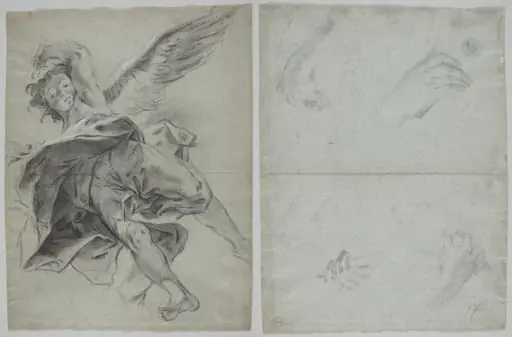 A Flying Angel (recto); Studies of Hands Playing Instruments (verso)
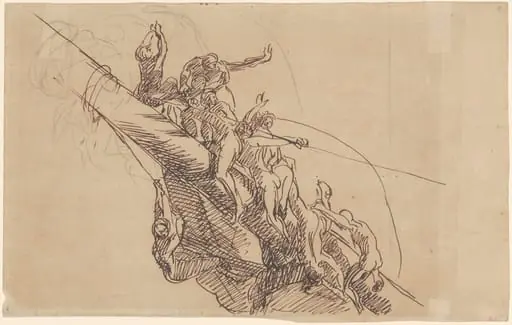 Study for "The Defeat of the Floating Batteries at Gibraltar"
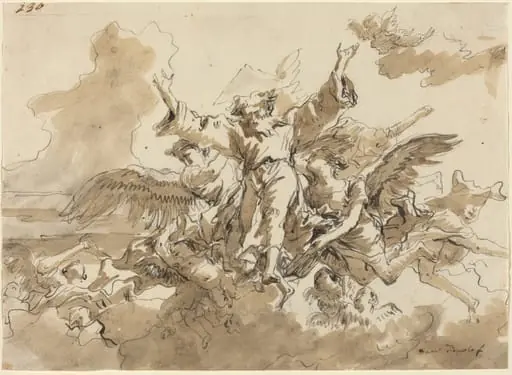 Creation of the Universe
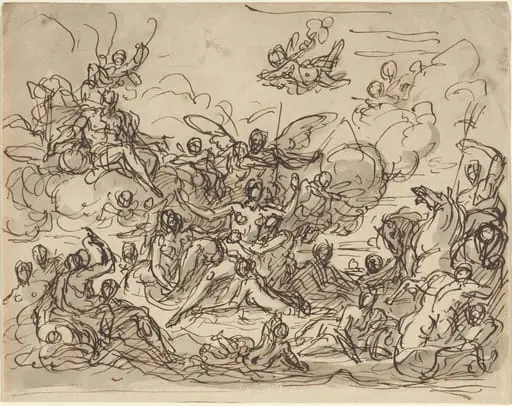 Birth of Venus
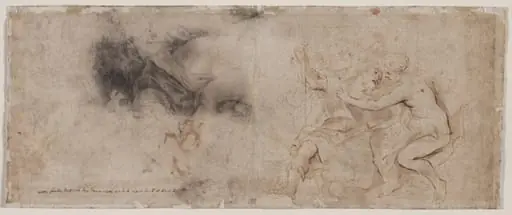 Venus Disarming Mars, Drapery Study (verso)
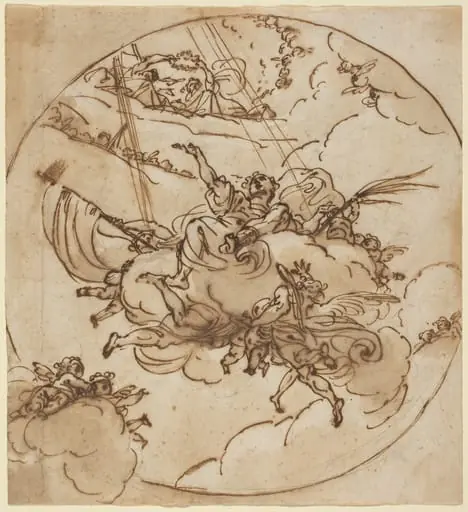 The Apotheosis of San Vitale
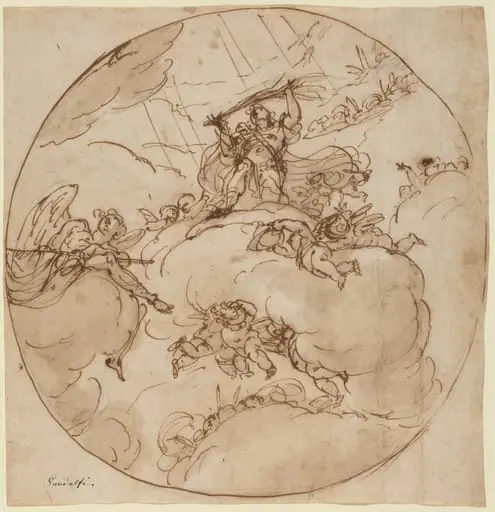 The Apotheosis of San Vitale
 The Resurrection