Artwork
Page from "Canticum Canticorum": 2nd Edition
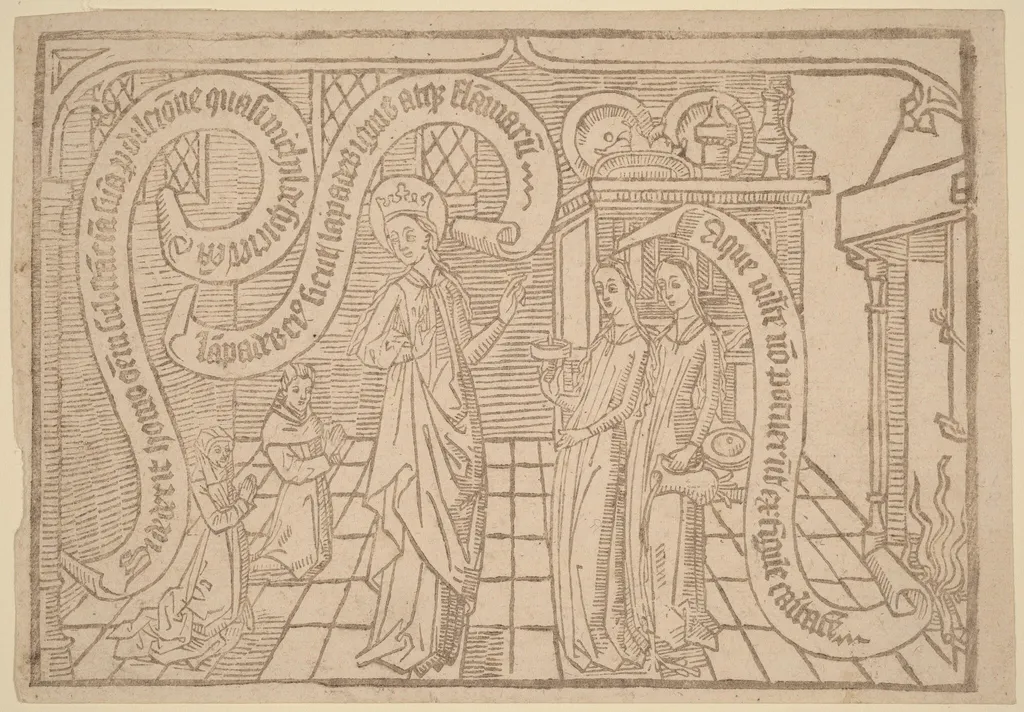
Page from "Canticum Canticorum": 2nd Edition is an ink print by the Renaissance artist Netherlandish 15th Century. It dates from 1465 and is held in the collection of the National Gallery of Art. The object is a single leaf from the second edition of the medieval compilation known as *Canticum Canticorum*.
About this work
Overview
The object is a single leaf from the second edition of the medieval compilation known as *Canticum Canticorum*. Executed as a woodcut on laid paper, the page functions both as a textual source and as a decorative illustration, typical of block‑book production in the late Middle Ages.
Subject & Meaning
The printed surface combines lyrical excerpts from the Song of Songs with elaborate ornamental borders. The intertwining foliage and geometric motifs frame the verses, reflecting the period’s tendency to merge devotional content with visual embellishment to enhance the reader’s contemplative experience.
Technique & Style
Carved into a wooden block, the design was inked and pressed onto a sheet of laid paper, a process that allowed for fine linear detail despite the limitations of early print technology. The minute incisions demonstrate the printer’s skill in achieving precise, repeatable images across multiple copies.
History & Provenance
Produced for the second edition of the work, the page likely originated in a Germanic printing centre in the late 15th century, when block books were transitioning to movable‑type production. Its survival suggests it was part of a limited run, preserved in a private collection before entering the museum’s holdings.
Artist & collection

Artist
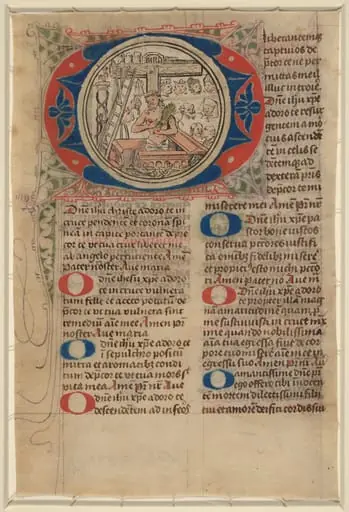
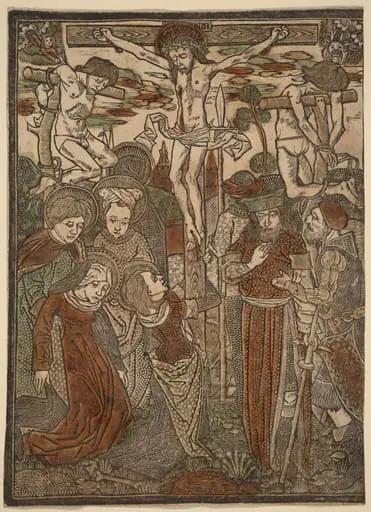
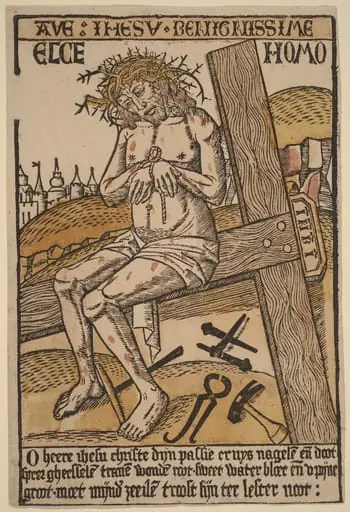
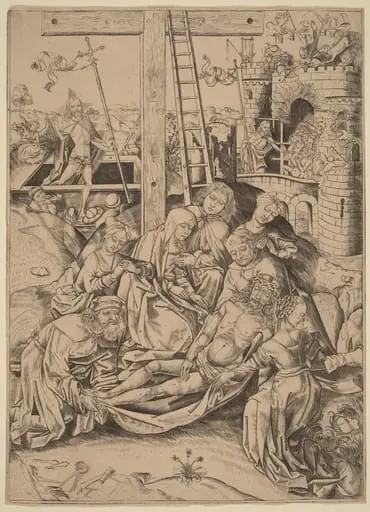
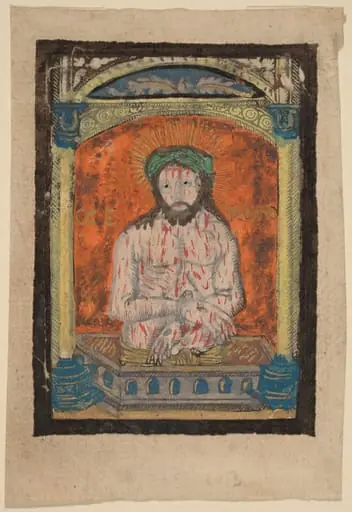
These prints show Christ’s suffering in bold, hand-colored images from 15th-century Northern Europe.

![Hope, Reaching for Heaven, Stands among Sad and Happy Men, Joys, and Fear [fol. 19 recto], by French early 16th Century](https://artifactworldgallery.com/img/french-early-16th-century--hope-reaching-for-heaven-stands-among-sad-and-happy-men-joys--be22f2c7f44a28d1-w320.webp) Hope, Reaching for Heaven, Stands among Sad and Happy Men, Joys, and Fear [fol. 19 recto]
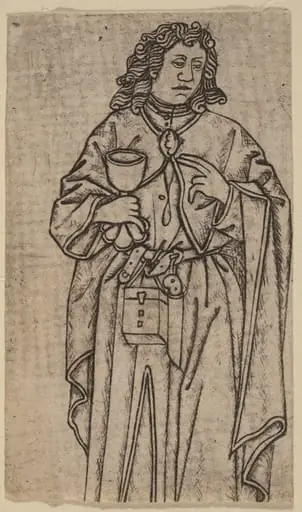
Hope, Reaching for Heaven, Stands among Sad and Happy Men, Joys, and Fear [fol. 19 recto]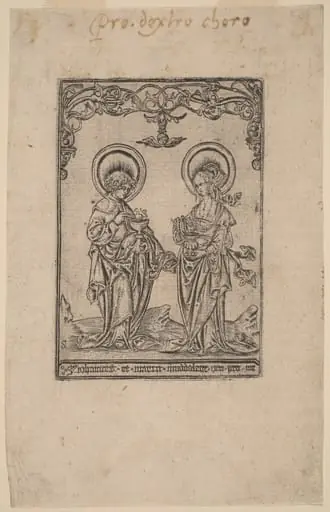 Saint Mary Magdalene and Saint John the Evangelist
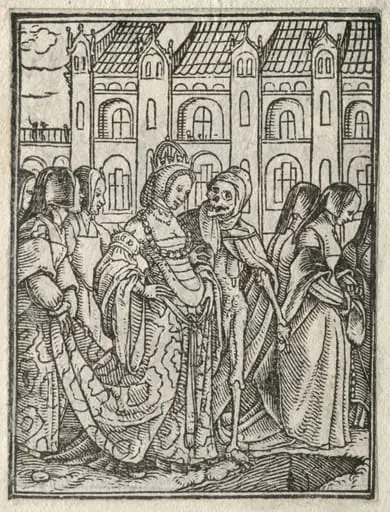 The Dance of Death: The Cardinal; The Empress
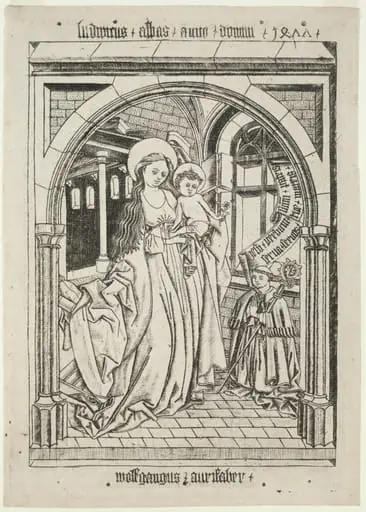 Virgin and Child, Abbot Ludwig Kneeling
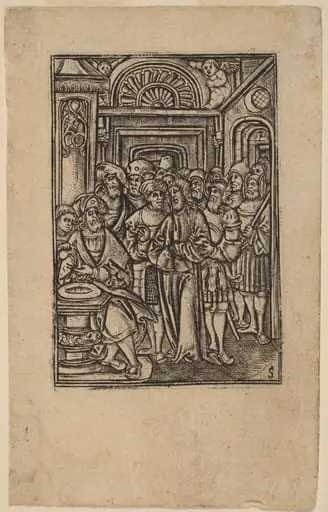 Pilate Washing His Hands
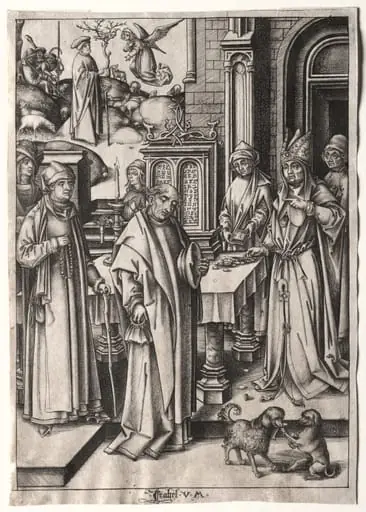 Life of the Virgin: High Priest Rejecting the Offering of Joachim
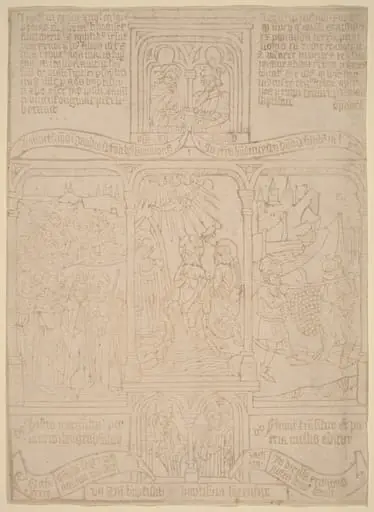 The Baptism of Christ; Pharoah Passing through the Red Sea; Joshua and Caleb
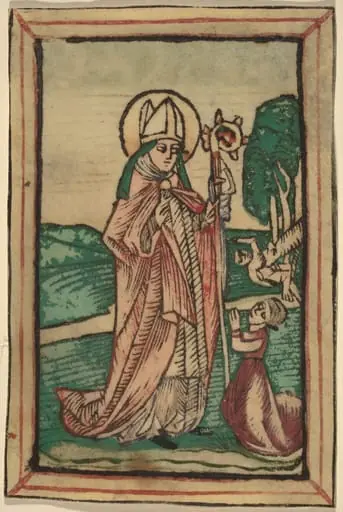
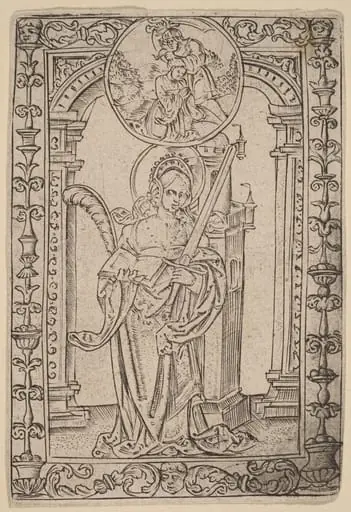 Saint Barbara
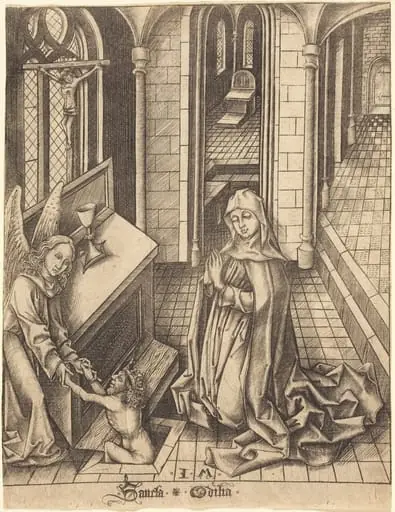 Saint Ottilia
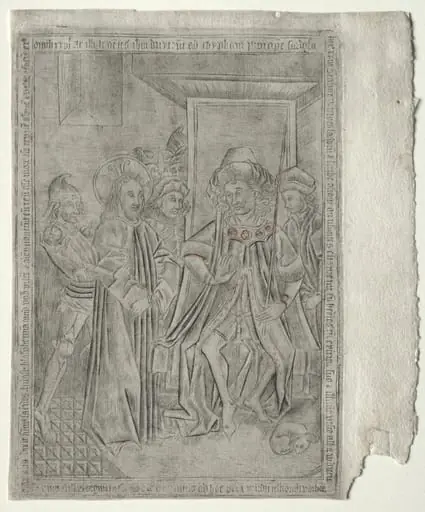 The Passion: Christ before Caiaphas
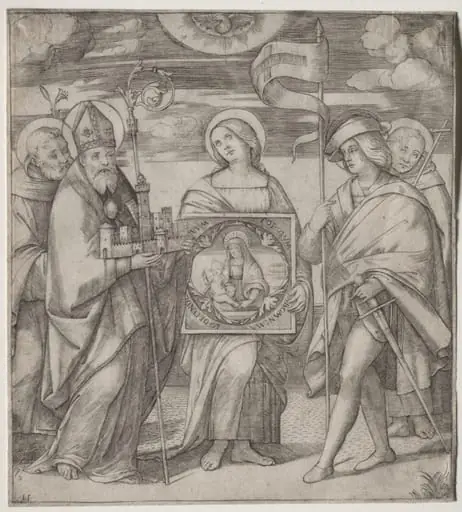 Patron Saints of Bologna
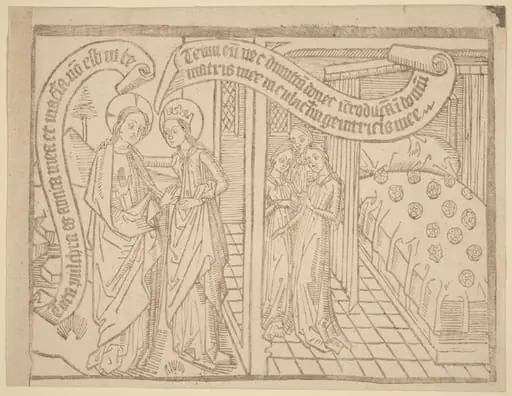 Page from "Canticum Canticorum": 2nd Edition