Artwork
The Fitzwilliam Museum, Cambridge
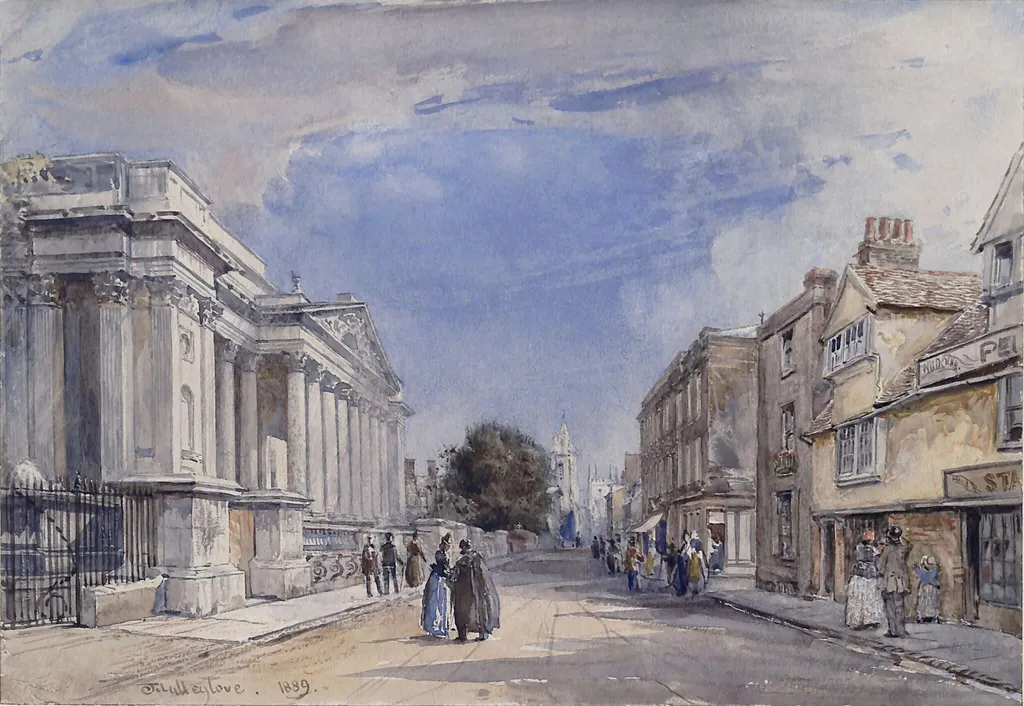
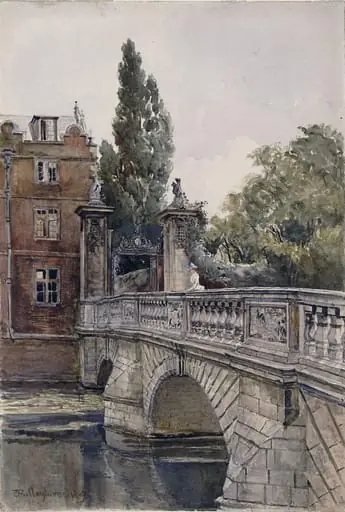
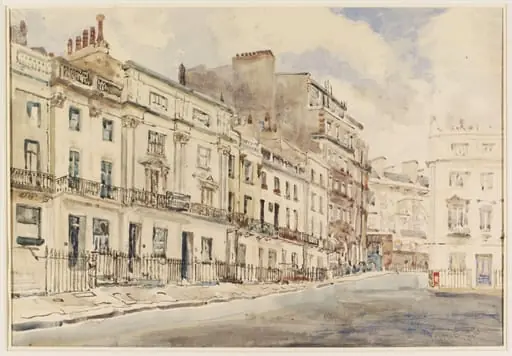
The Fitzwilliam Museum, Cambridge is a watercolor work on paper by the Impressionist artist John Fulleylove. It dates from 1889 and is held in the collection of the Victoria and Albert Museum.
About this work
Overview
The composition balances architectural structure with subtle human activity, reflecting late-Victorian interest in everyday scenes.
Painted in 1889 by John Fulleylove, this watercolour depicts a quiet urban street in England. Executed in transparent washes, the work captures a moment of ordinary life with restrained detail and gentle tonality. It resides in the Victoria and Albert Museum, not the Fitzwilliam, despite common misattribution. The composition balances architectural structure with subtle human activity, reflecting late-Victorian interest in everyday scenes.
Subject & Meaning
The scene presents a modest street lined with two distinct building types: a formal structure with columns and iron fencing, and a row of smaller shops with hanging signs. Figures in period attire move or pause along the sidewalk, suggesting routine urban life. No dramatic event occurs; the painting’s quietude emphasizes the dignity of ordinary moments, aligning with Realist traditions that valued unembellished observation over narrative spectacle.
Technique & Style
Fulleylove employed loose, fluid watercolour techniques, allowing the paper’s whiteness to suggest light and air. Soft washes define building facades and sky, while minimal brushwork outlines figures and signs without overdetailing. The palette is restrained—pale blues, greys, and earth tones—enhancing the sense of calm. This approach reflects the influence of British watercolour traditions, where transparency and spontaneity conveyed atmosphere over precision.
History & Provenance
Created in 1889, the work entered the Victoria and Albert Museum’s collection shortly after its completion. It was not originally part of the Fitzwilliam’s holdings, though confusion sometimes arises due to similar Victorian-era watercolours in both institutions. The painting remained in private hands briefly before being acquired by the V&A, where it has been consistently catalogued as part of their 19th-century British art collection.
Context
In the late 19th century, British artists increasingly turned to urban and domestic subjects, moving away from grand historical or romantic themes. Fulleylove’s work aligns with this shift, echoing contemporaries like Samuel Palmer and the Royal Watercolour Society’s emphasis on observational accuracy. The painting reflects a broader cultural interest in documenting the changing face of English towns amid industrialization and urban growth.
Legacy
Though not widely exhibited today, the painting exemplifies the quiet elegance of Victorian watercolour practice. It contributes to the historical record of how everyday environments were visually documented before photography became dominant. Its preservation in the V&A underscores its role as a representative work of its time, valued for its technical restraint and honest depiction of ordinary life.
Artist & collection

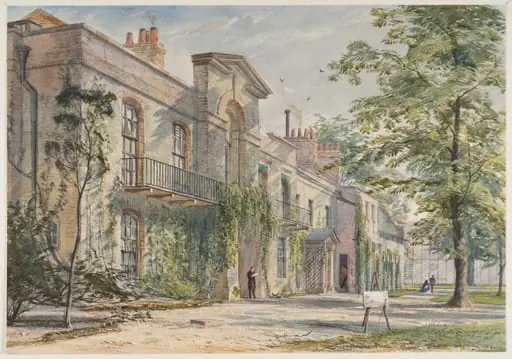 Brompton Park House
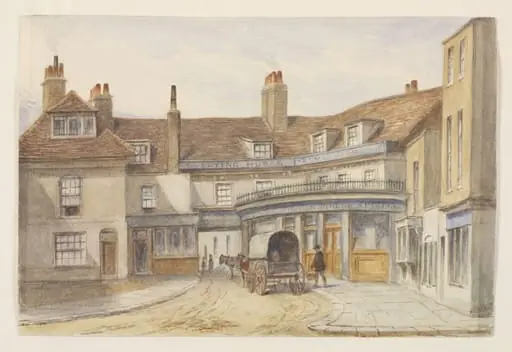 The Flying Horse, Hackney
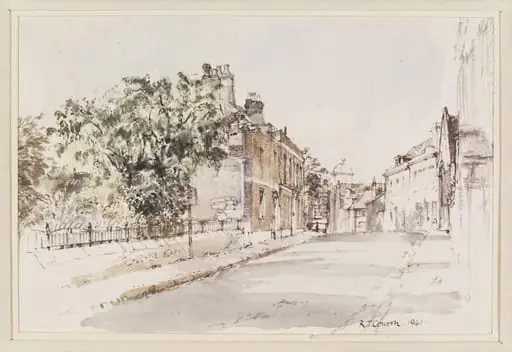 St. Thomas Street, Winchester
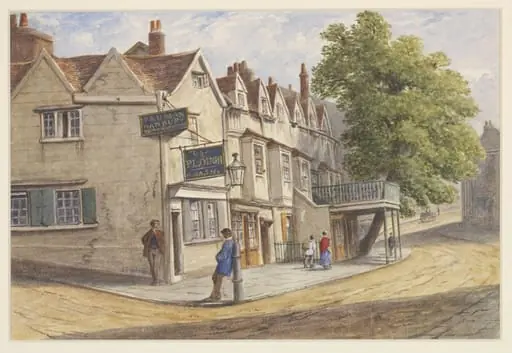 The Plough Inn, Homerton
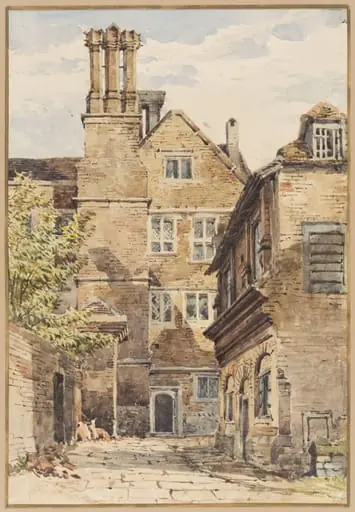 Houses and Yard
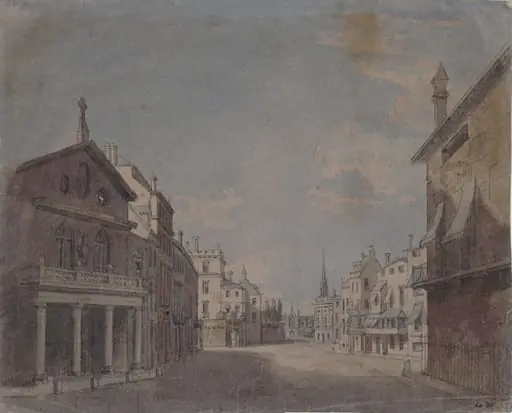 Street Scene
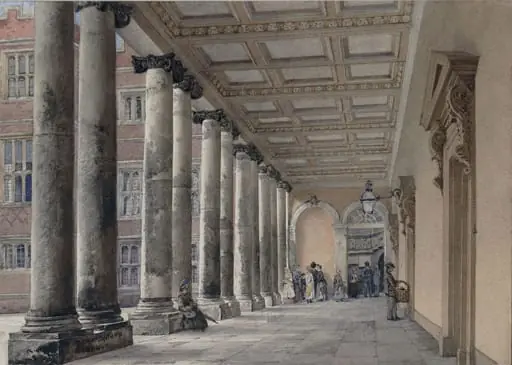 Colonnade in the Clock Court of Hampton Court Palace
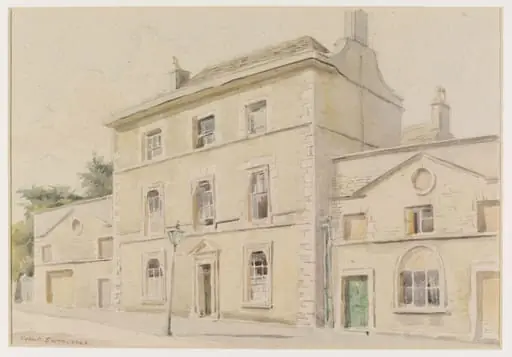 Georgian House, Cecily Hill, Cirencester
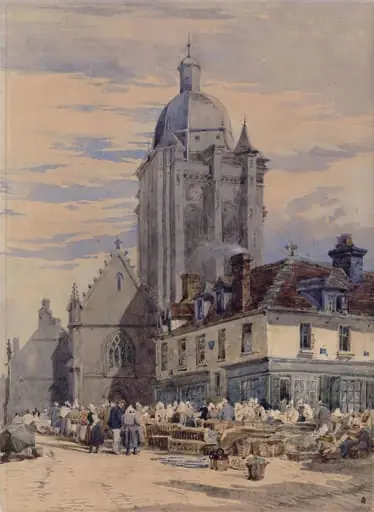 Street View, Mortagne, Normandy
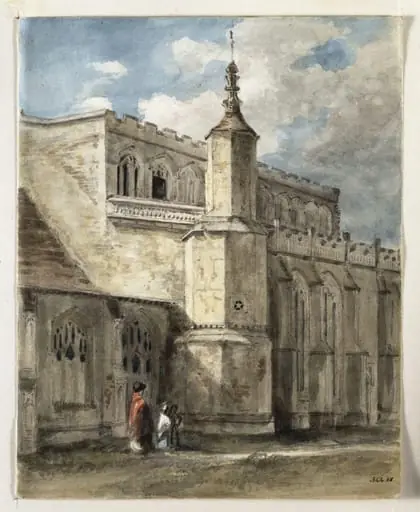 Part of the exterior of East Bergholt Church: the north side
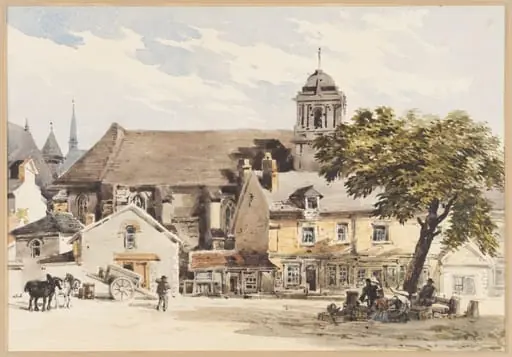 The Post House, Amboise
 Victoria Square S.W.1.