Artwork
St John's Bridge, Cambridge
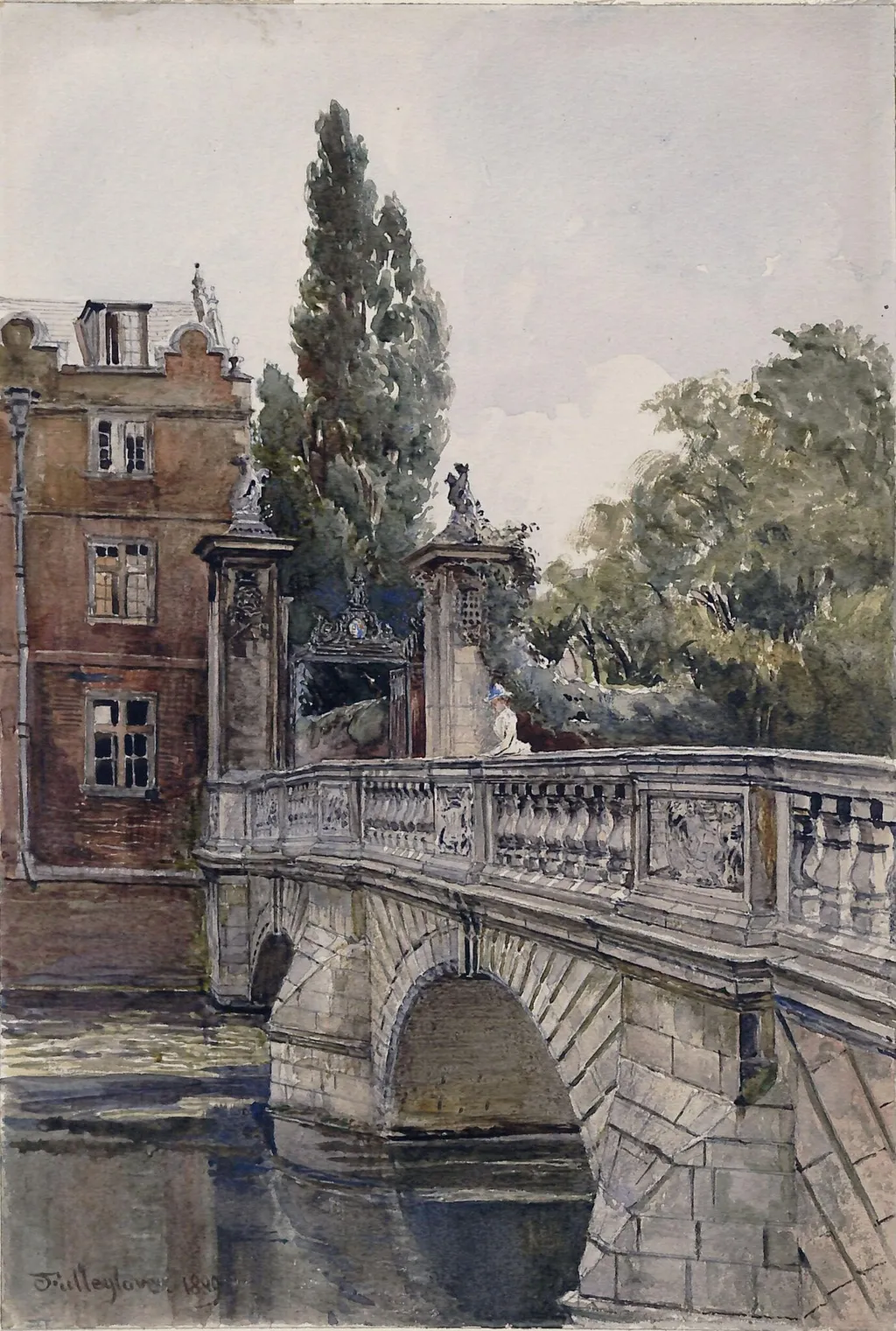
St John's Bridge, Cambridge is a watercolor work on paper by the Impressionist artist John Fulleylove. It dates from 1889 and is held in the collection of the Victoria and Albert Museum. Painted in 1889, this watercolour depicts St John's Bridge in Cambridge, signed and dated by the artist.
About this work
Overview
The scene captures a quiet moment along the River Cam, rendered with delicate washes and loose brushwork.
Painted in 1889, this watercolour depicts St John's Bridge in Cambridge, signed and dated by the artist. The scene captures a quiet moment along the River Cam, rendered with delicate washes and loose brushwork. The composition centers on the bridge’s three stone arches, framed by trees and a distant brick structure, all rendered in a restrained palette of greens, browns, and soft blues. The technique emphasizes atmosphere over detail, suggesting movement through fluid pigment application.
Subject & Meaning
The painting portrays an unassuming urban landscape, focusing on the bridge as both structure and threshold. A solitary woman, seated on the railing in a light dress, introduces a human presence without narrative. Her stillness contrasts with the gently rippling water and rustling foliage, evoking a sense of private contemplation. The scene reflects everyday life in late Victorian Cambridge, valuing quiet observation over dramatic event.
Technique & Style
The artist employed transparent watercolour washes to build subtle tonal layers, allowing the paper’s white to suggest light. Brushstrokes are swift and economical, defining forms through suggestion rather than precision. Colors blend softly at their edges, creating a sense of atmospheric haze. The technique prioritizes luminosity and spontaneity, aligning with broader trends in British watercolour practice of the period, though without overt stylistic allegiance to Impressionism.
History & Provenance
The work was completed in 1889 and bears the artist’s signature, indicating it was intended as a finished piece. No documented exhibition history or early ownership records are known. Its survival suggests it remained in private hands, possibly within the artist’s circle or among local Cambridge collectors. The painting’s condition reflects careful preservation, with no signs of significant fading or damage.
Context
In late 19th-century Cambridge, watercolour was a respected medium for recording architectural and natural scenes, particularly among academics and local artists. St John’s Bridge, connecting the college grounds to the town, was a familiar landmark. This painting reflects a broader cultural interest in capturing the quiet beauty of university towns, where tradition and daily life intertwined under soft English light.
Legacy
Though not widely exhibited or reproduced, the painting stands as a representative example of British watercolour practice at the turn of the century. It preserves a specific moment in Cambridge’s urban landscape, offering insight into how ordinary places were observed and valued. Its restrained aesthetic continues to resonate with viewers drawn to understated, contemplative art.
Artist & collection


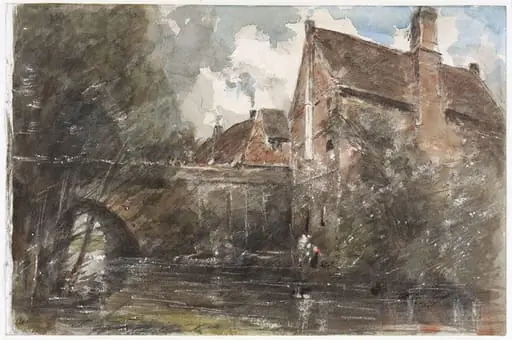 Old Houses at Harnham Bridge, Salisbury
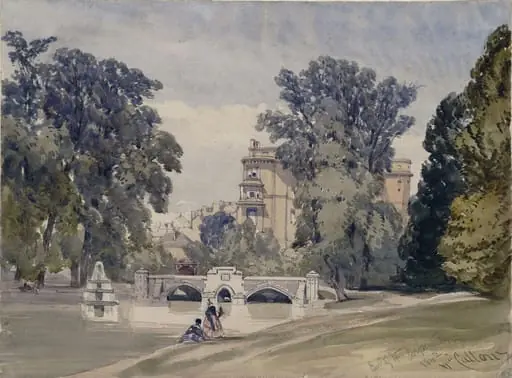 West end of the Serpentine, Kensington Gardens
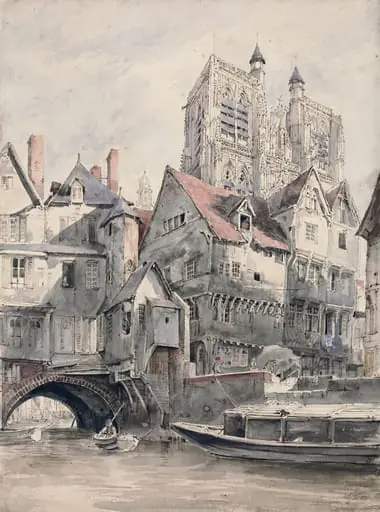 Abbeville, with the Bridge and Towers of St. Wulfran
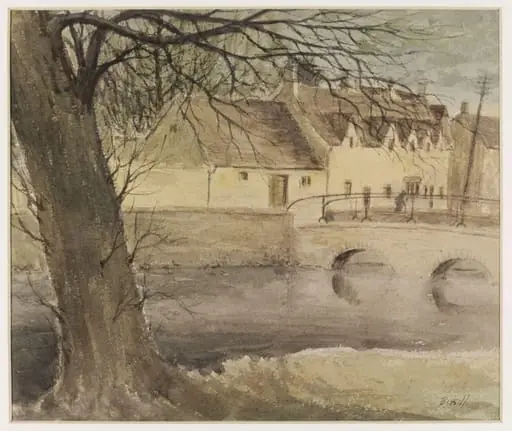 The River Coln at Bibury
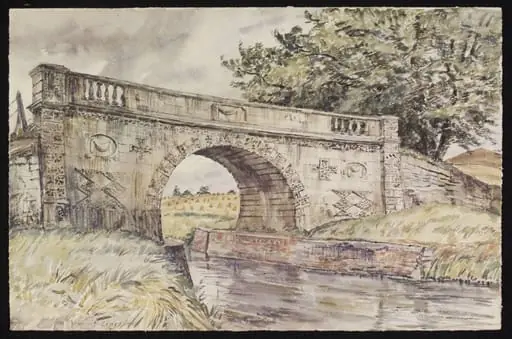 Lady Bridge over the Kennett and Avon Canal, Wilcot
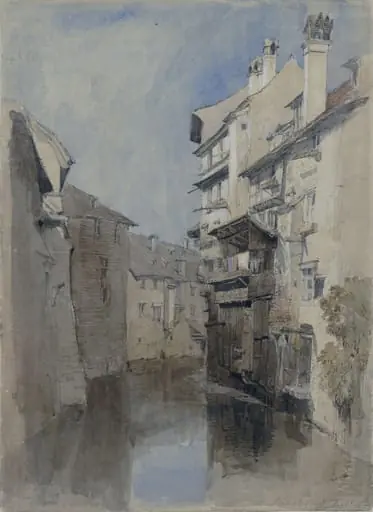 Strasbourg
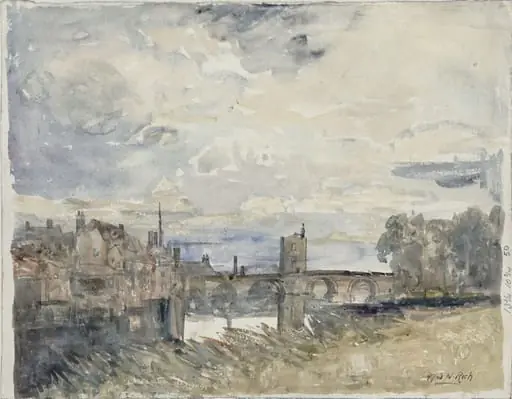 The Bridge, St. Ives, Huntingdonshire
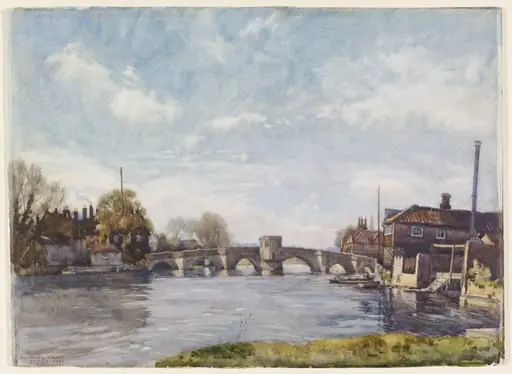 The Bridge and Chantrey Chapel, St.Ives
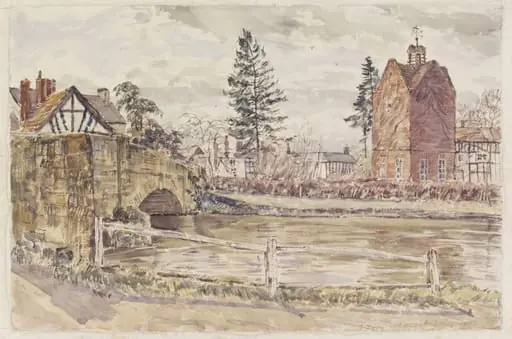 Bridge and Pigeon House, Eardisland
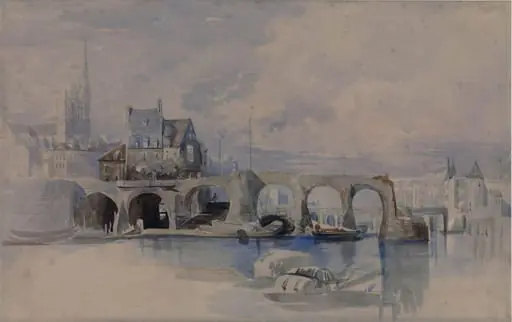 Avignon, the Ruined Bridge
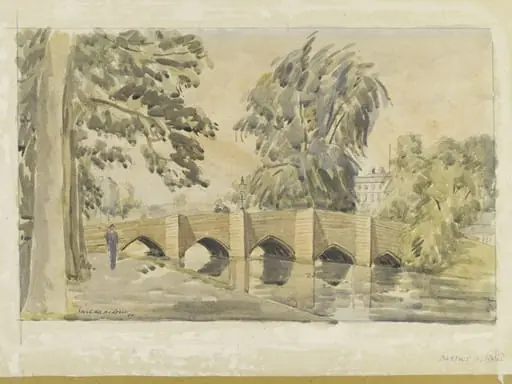 Bridge, Bakewell
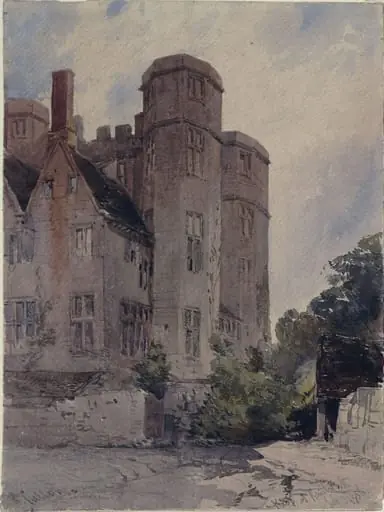 The Keep at Kenilworth