Artwork
And They were All Filled with the Holy Ghost
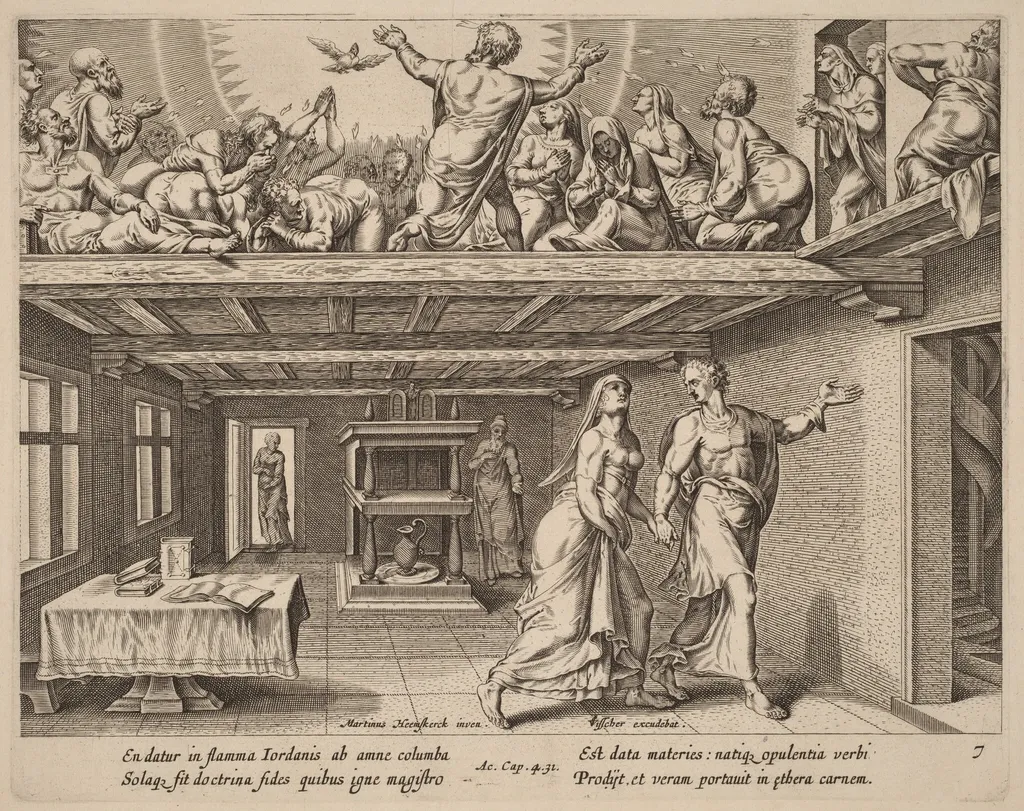
And They were All Filled with the Holy Ghost is an ink print by the Renaissance artist Philip Galle. It dates from 1574 and is held in the collection of the National Gallery of Art.
About this work
Overview
Philip Galle’s 1574 engraving, *And They were All Filled with the Holy Ghost*, is a reproductive print made in the Netherlands during the late Renaissance.
Philip Galle’s 1574 engraving, *And They were All Filled with the Holy Ghost*, is a reproductive print made in the Netherlands during the late Renaissance. As a prolific publisher and engraver, Galle specialized in translating painted compositions into detailed printed formats for wider circulation. This work follows his standard practice of adapting existing religious imagery, serving both devotional and educational purposes in a period when printed images were key to disseminating biblical narratives.
Subject & Meaning
The scene illustrates Acts 2:4, depicting the descent of the Holy Spirit upon the apostles at Pentecost. Above, figures gather around a table as one man raises his arms toward descending rays of divine light, symbolizing spiritual inspiration. Below, two women move leftward, possibly representing the broader community of believers or early Christian women present at the event. The composition merges narrative clarity with symbolic hierarchy, reinforcing the theological significance of the moment through spatial arrangement.
Technique & Style
Galle employed fine, precise cross-hatching to model form and create tonal depth, characteristic of Northern Renaissance engraving. The intricate linework defines drapery, facial expressions, and architectural details with meticulous care. Light is suggested through controlled contrasts rather than overt shading, lending the scene a quiet solemnity. The flat, elevated perspective and crowded grouping reflect conventions of religious printmaking, prioritizing legibility and symbolic clarity over naturalistic space.
History & Provenance
Created in Antwerp, the engraving was part of Galle’s broader output for a market of collectors and clergy seeking accessible religious imagery. It likely circulated in devotional albums or as standalone prints across Protestant and Catholic regions. Though no early ownership records are widely documented, its survival in multiple museum collections suggests consistent demand. Galle’s workshop often produced multiple states, but this version remains consistent with the first printing.
Context
In the late 16th century, the Netherlands was a hub for print production amid religious upheaval. Engravings like this one served as visual theology for audiences with limited access to original paintings. Galle’s adaptations of works by artists such as Raphael or Titian helped standardize biblical imagery. This print reflects the era’s blend of humanist scholarship and devotional practice, where art functioned as both instruction and spiritual aid.
Legacy
Galle’s engraving contributed to the visual lexicon of Pentecost in Northern Europe, influencing later religious prints and illustrations. While not original in composition, its technical precision ensured its longevity in collections. It stands as an example of how reproductive prints shaped religious understanding before widespread literacy, preserving iconographic traditions through the disciplined craft of engraving.
Artist & collection
Artist
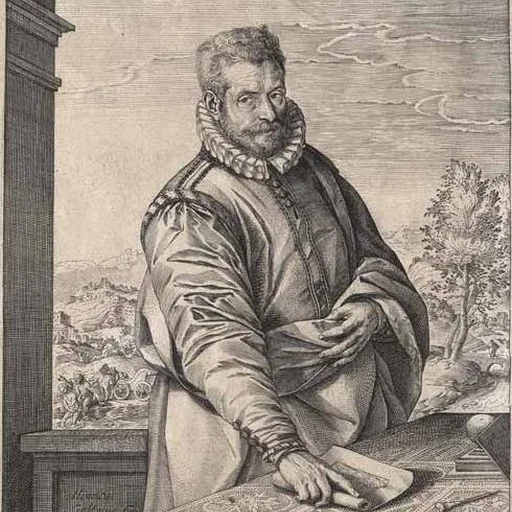
Philip (or Philips) Galle (1537 – March 1612) was a Dutch publisher, best known for publishing old master prints, which he also produced as designer and engraver. He is especially known for his reproductive engravings of paintings.

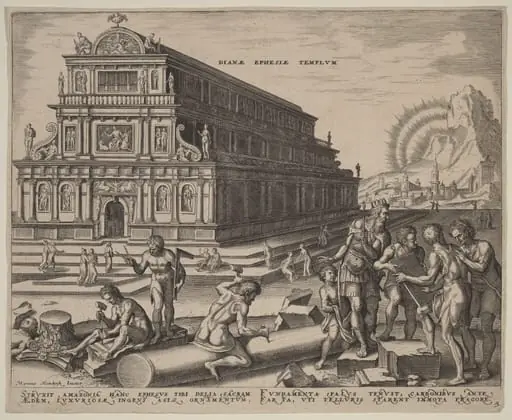 Dianae Ephesiae Templum (The Temple of Diana at Ephesus)
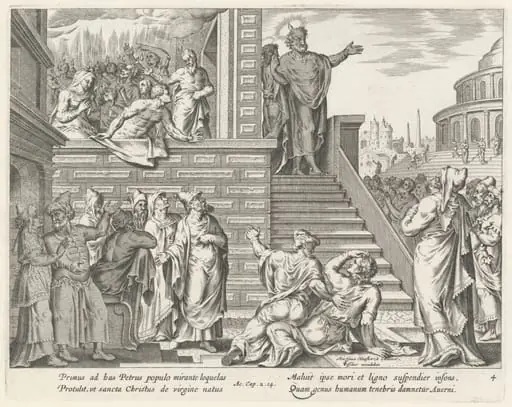 Saint Peter Speaks to the People about Christ
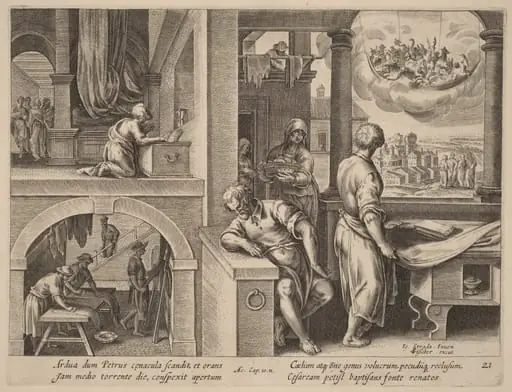 The Vision of Saint Peter
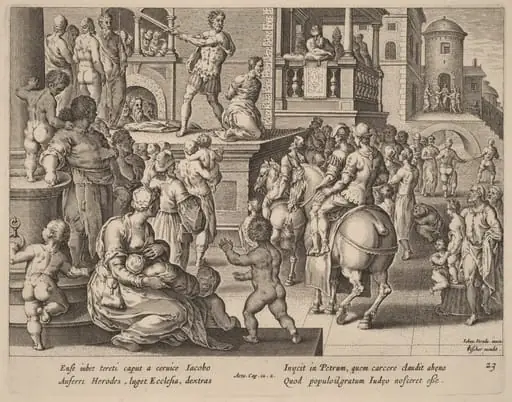 Beheading of Saint James
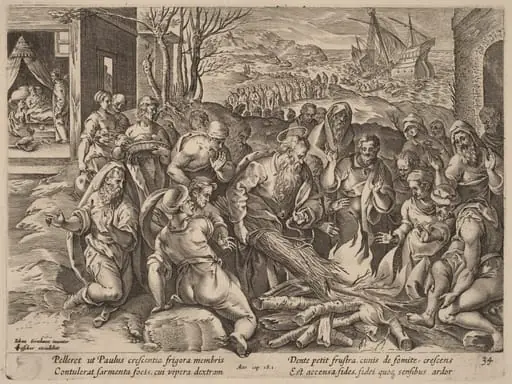 Saint Paul Shipwrecked on the Island of Melita
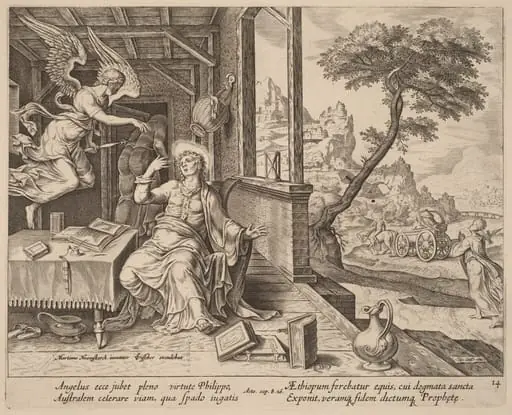 The Angel Orders Saint Philip to Accompany the Ethiopian Eunuch
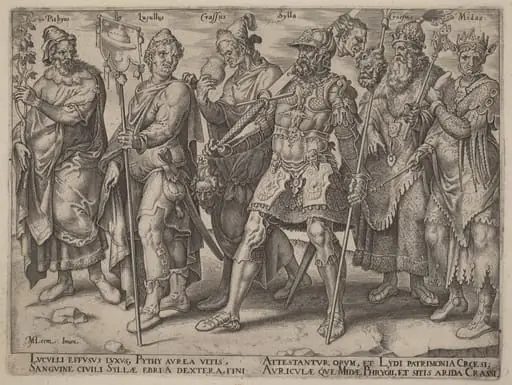 Notorious Examples of Wealth from Antiquity
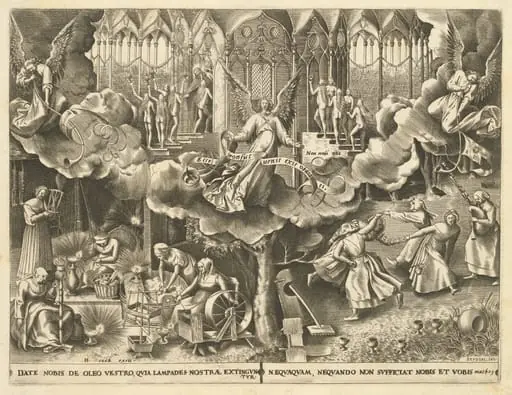 The Parable of the Wise and Foolish Virgins
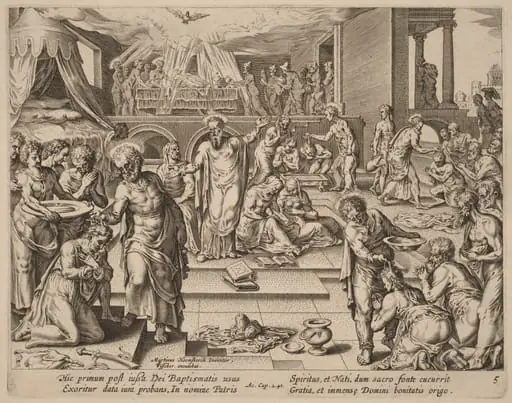 Many are Baptized
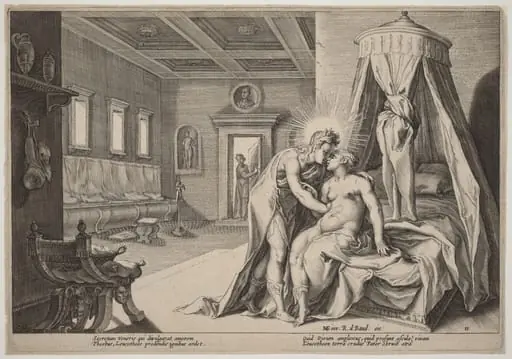 Apollo Abusing Leucothoe
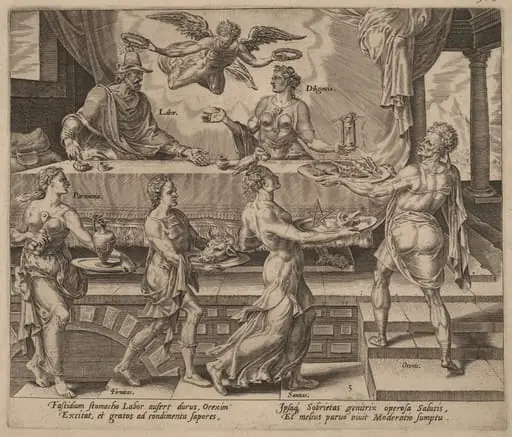 Labor and Diligence Enjoying their Simple Meal
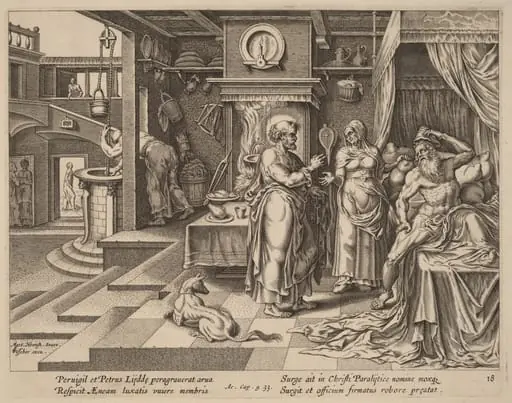 The Healing of Eneas by Saint Peter
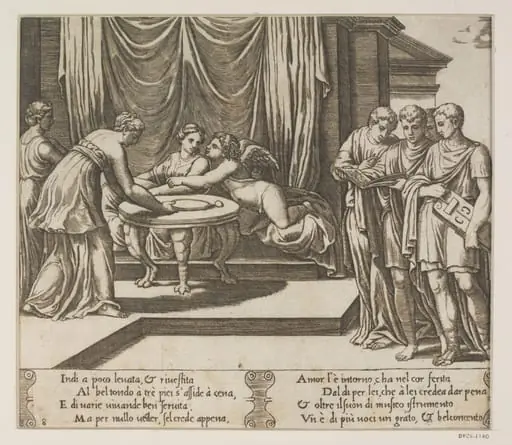 Illustrations to Apuleius
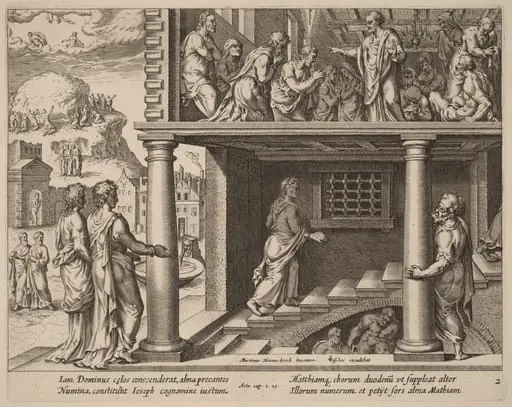 The Choosing of Saint Matthias
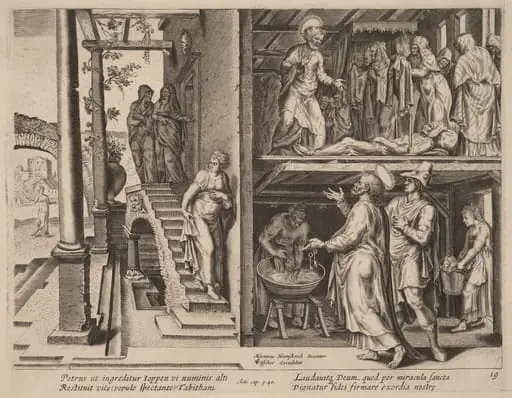 The Raising of Tabitha
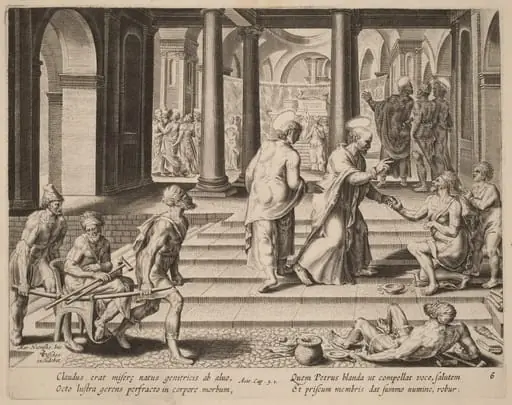 Saints Peter and John Heal a Cripple at the Gate of the Temple
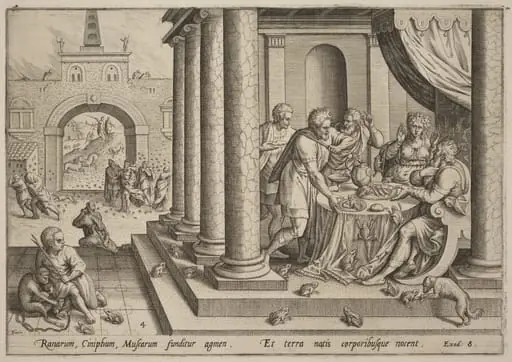 The Invasion of the Frogs
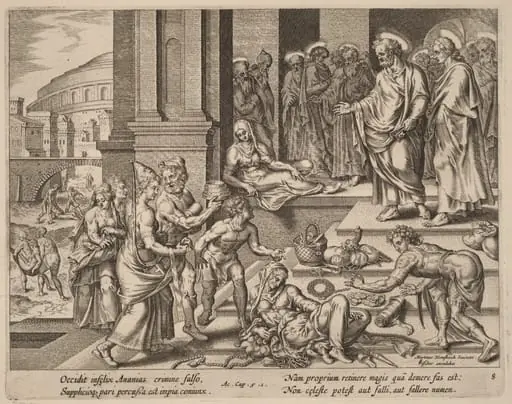 The Deaths of Ananias and Sapphira