Artwork
Distillatio (Distillation)
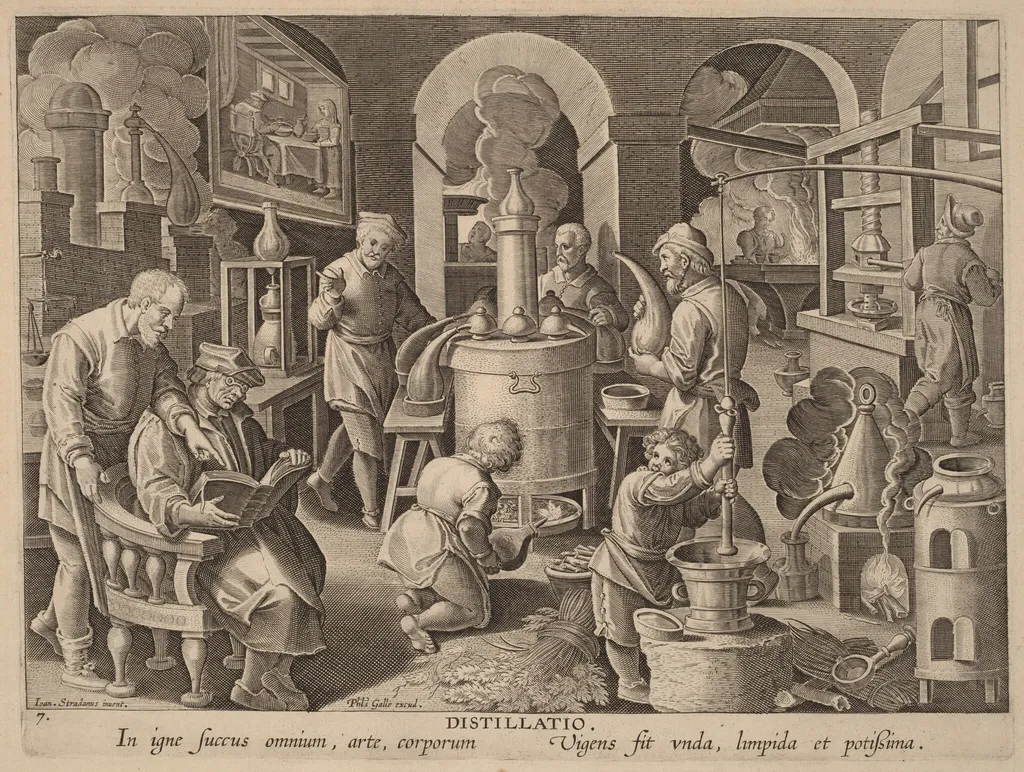
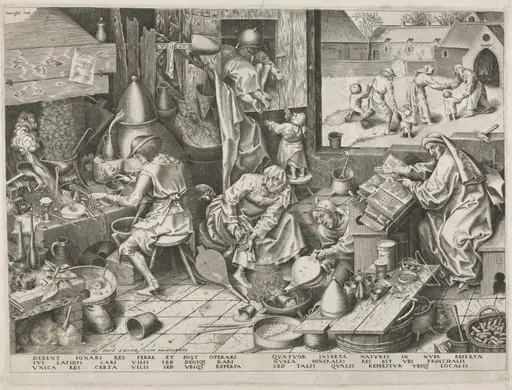
Distillatio (Distillation) is an ink print by the Renaissance artist Philip Galle. It dates from 1592 and is held in the collection of the National Gallery of Art.
About this work
Overview
This piece stands as both a technical achievement and a visual narrative of early scientific practice, rendered with precision through the engraving process.
Philip Galle’s engraving *Distillatio*, dated around 1592, is a detailed print on laid paper depicting an alchemical laboratory. As a Dutch publisher and engraver, Galle specialized in reproductive works and original designs, often translating artistic visions into printed form. This piece stands as both a technical achievement and a visual narrative of early scientific practice, rendered with precision through the engraving process.
Subject & Meaning
The scene portrays a bustling alchemical workshop, where figures engage in the manipulation of substances using glass vessels, stills, and measuring tools. The title *Distillatio* suggests a process of purification, not merely physical but symbolic—transforming base matter into higher forms. The presence of a child at work and a figure consulting a text implies the transmission of knowledge across generations and the fusion of empirical practice with scholarly tradition.
Technique & Style
Galle employed fine-line engraving to render intricate details: the curvature of glassware, the texture of shelves laden with jars, and the subtle expressions of the figures. The composition is densely packed yet orderly, guiding the viewer’s eye through the room’s activity. The use of hatching and cross-hatching creates depth and volume, characteristic of Northern Renaissance printmaking, where clarity and precision were paramount.
History & Provenance
Created during Galle’s active years in Haarlem, the print likely circulated among scholars, artisans, and collectors interested in natural philosophy. Though no specific early ownership records are documented, its survival in multiple institutional collections suggests it was widely reproduced and valued for its educational and aesthetic qualities. Galle’s workshop was a hub for disseminating such imagery across Europe.
Context
In late 16th-century Europe, alchemy occupied a liminal space between proto-science and metaphysical inquiry. This engraving reflects a cultural moment when laboratory practices were being visually codified, often blending empirical observation with symbolic meaning. Galle’s depiction aligns with broader trends in illustrated texts on natural philosophy, where visual accuracy lent credibility to esoteric subjects.
Legacy
Though alchemy later fell out of scientific favor, *Distillatio* endures as a historical document of early modern material culture. Its meticulous detail offers insight into the tools, rituals, and spatial organization of pre-modern laboratories. The print remains a reference for historians studying the visual language of science before its institutional separation from mystical traditions.
Artist & collection
Artist
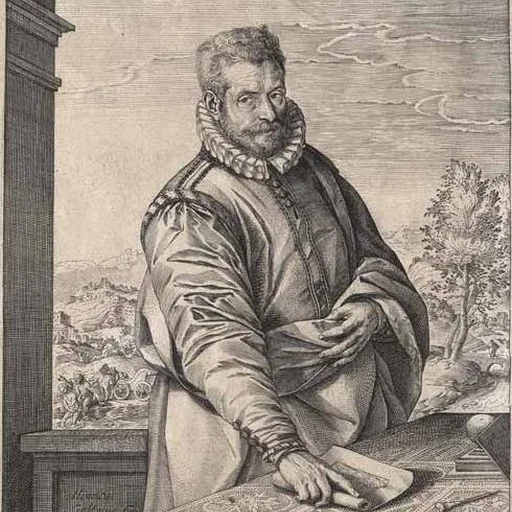
Philip (or Philips) Galle (1537 – March 1612) was a Dutch publisher, best known for publishing old master prints, which he also produced as designer and engraver. He is especially known for his reproductive engravings of paintings.

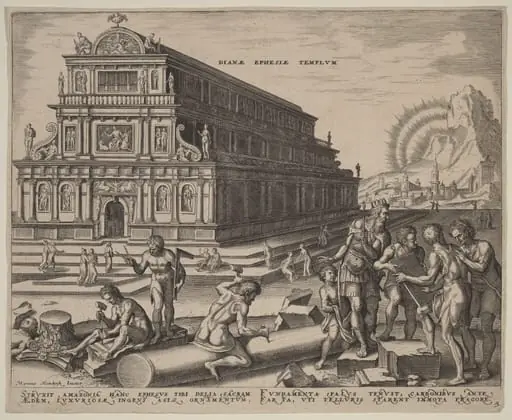 Dianae Ephesiae Templum (The Temple of Diana at Ephesus)
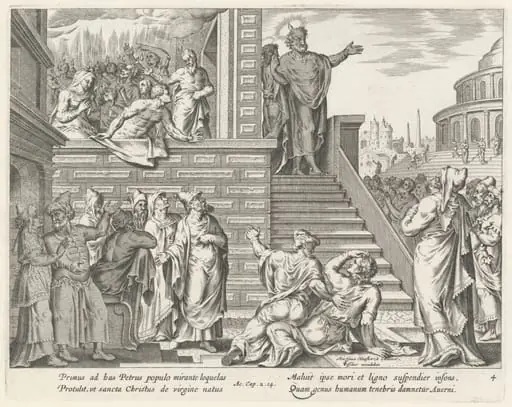 Saint Peter Speaks to the People about Christ
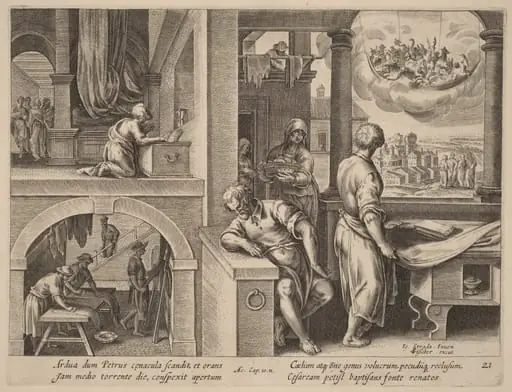 The Vision of Saint Peter
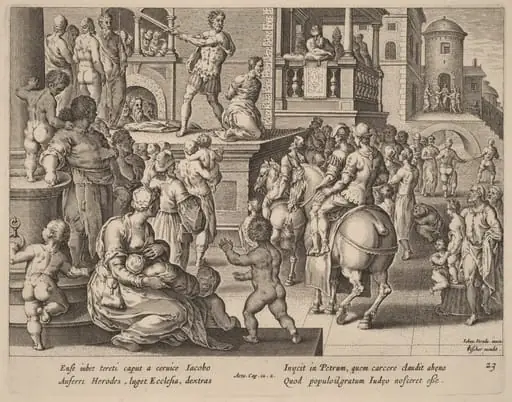 Beheading of Saint James
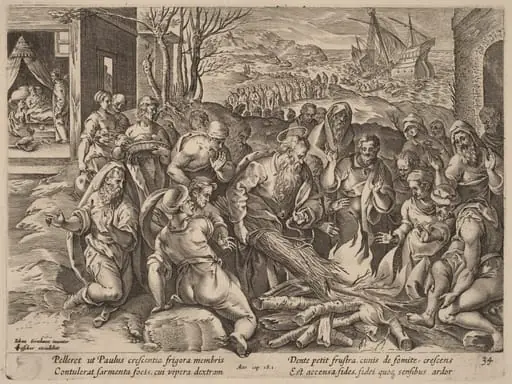 Saint Paul Shipwrecked on the Island of Melita
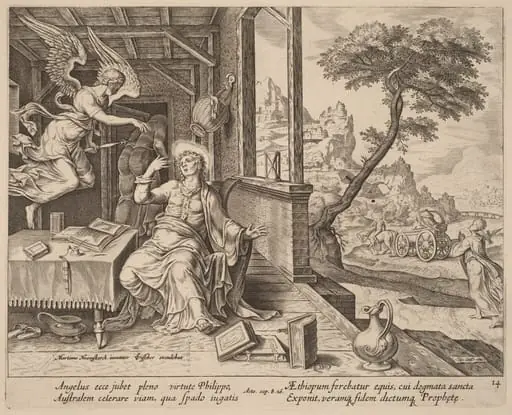 The Angel Orders Saint Philip to Accompany the Ethiopian Eunuch
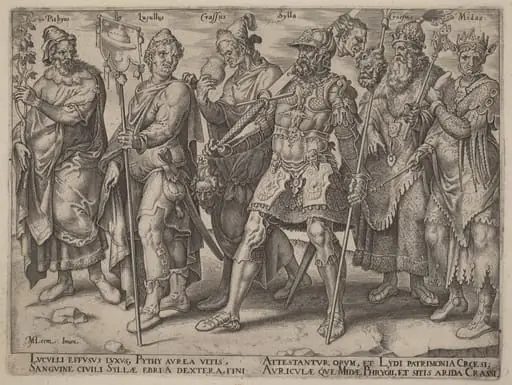 Notorious Examples of Wealth from Antiquity
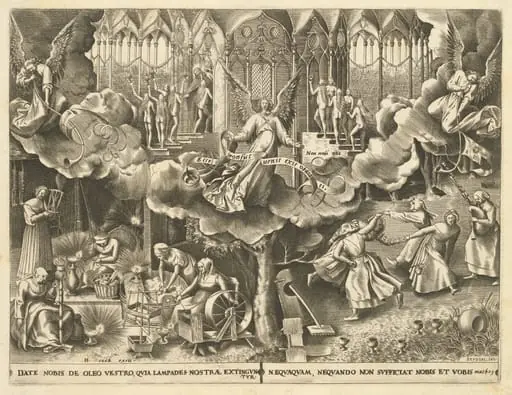 The Parable of the Wise and Foolish Virgins