Artwork
The Angel Commands Cornelius to Fetch Saint Peter
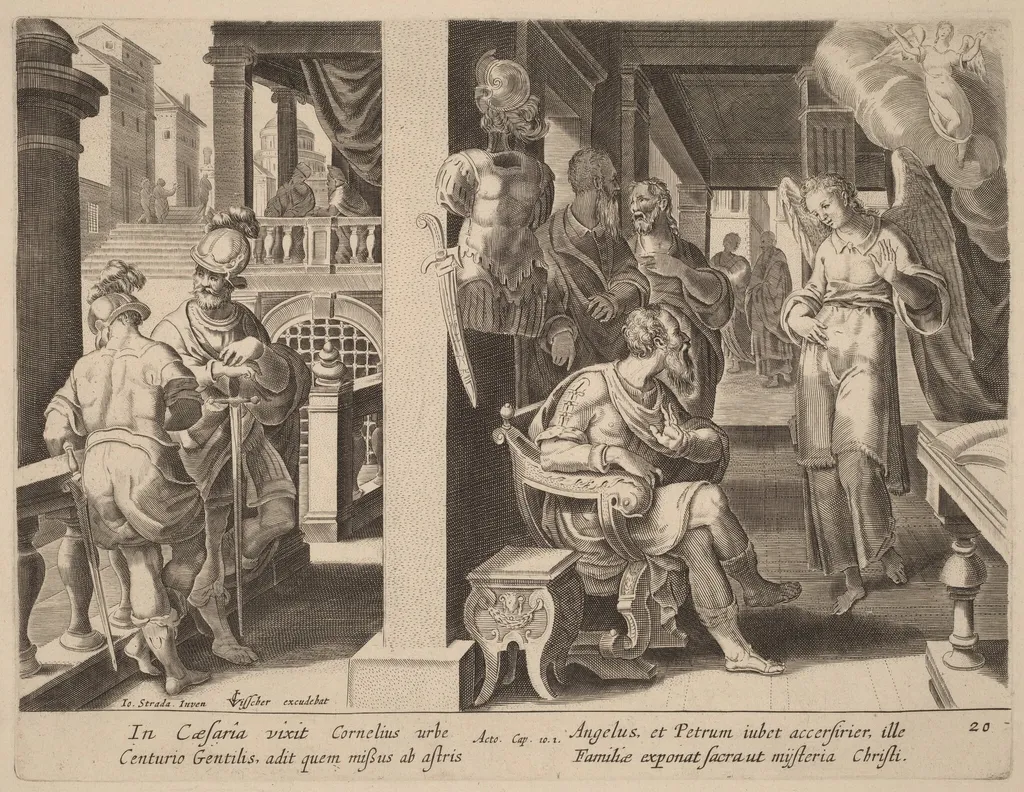
The Angel Commands Cornelius to Fetch Saint Peter is an ink print by the Renaissance artist Philip Galle. It dates from 1574 and is held in the collection of the National Gallery of Art.
About this work
Overview
Galle, known for his role as a publisher and engraver, specialized in translating painted compositions into detailed printed images for wider circulation.
Philip Galle’s 1574 engraving illustrates a moment from the Acts of the Apostles, in which an angel instructs Cornelius, a Roman centurion, to seek out Saint Peter. Created in the Netherlands, the work is a reproductive print, meaning it was made from an earlier design, likely by another artist. Galle, known for his role as a publisher and engraver, specialized in translating painted compositions into detailed printed images for wider circulation.
Subject & Meaning
The scene captures the divine directive that bridges Jewish and Gentile communities in early Christianity. An angel, wings outstretched and robe flowing, gestures toward a closed door where Peter awaits. Cornelius, though not fully visible, is implied as the recipient of the vision. A sleeping Roman guard underscores the secrecy and sacredness of the moment, emphasizing divine intervention over human authority.
Technique & Style
The image is rendered in fine, precise lines carved into a copper plate, characteristic of Northern Renaissance engraving. Delicate hatching models the folds of garments and the texture of stone walls, while the contrast between light and shadow enhances spatial depth. The composition is tightly framed, focusing attention on the angel’s gesture and the threshold between the divine and the earthly.
History & Provenance
Produced during Galle’s active years in Haarlem, the print was part of a broader effort to distribute religious imagery through print. Galle’s workshop reproduced works by established painters for an educated, devotional audience. This engraving likely circulated among private collectors and religious institutions, contributing to the visual literacy of Protestant and Catholic viewers alike.
Context
In the late 16th century, printmaking became a vital medium for religious instruction amid the Reformation’s upheavals. While Catholic regions favored devotional imagery, Protestant areas encouraged personal engagement with scripture. Galle’s prints, though often based on Catholic subjects, found audiences across confessional lines, serving as tools for contemplation and education.
Legacy
Galle’s engravings, including this one, helped standardize biblical narratives in visual form across Europe. Though overshadowed by later artists, his technical precision and prolific output preserved and transmitted Renaissance compositions for generations. The work remains a documented example of how print culture shaped religious perception in the early modern period.
Artist & collection
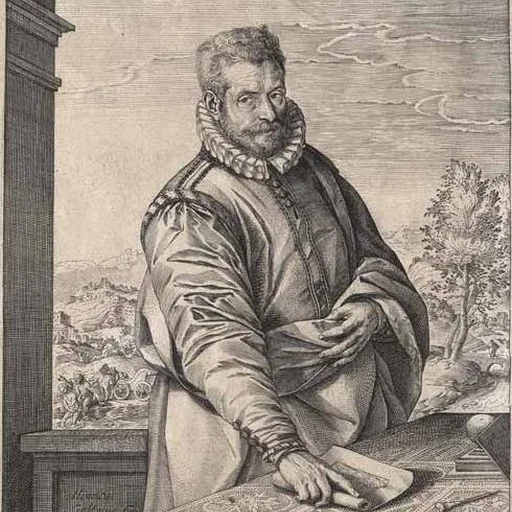
Artist
Philip (or Philips) Galle (1537 – March 1612) was a Dutch publisher, best known for publishing old master prints, which he also produced as designer and engraver. He is especially known for his reproductive engravings of paintings.

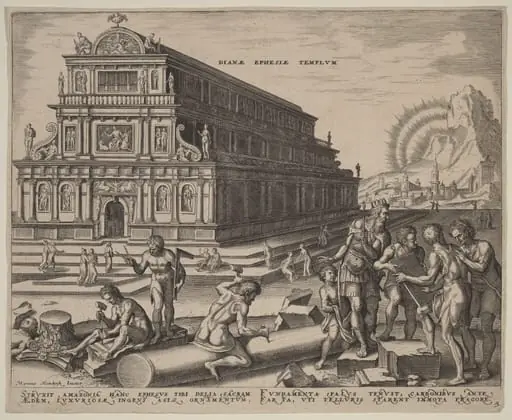 Dianae Ephesiae Templum (The Temple of Diana at Ephesus)
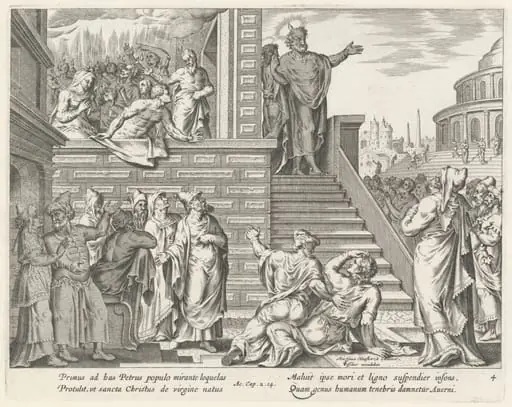 Saint Peter Speaks to the People about Christ
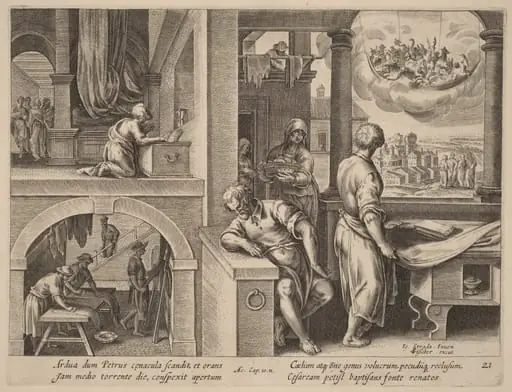 The Vision of Saint Peter
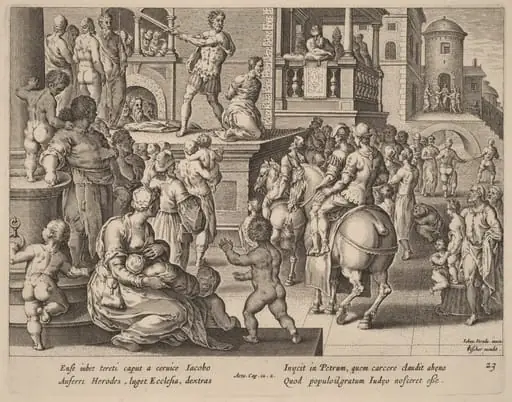 Beheading of Saint James
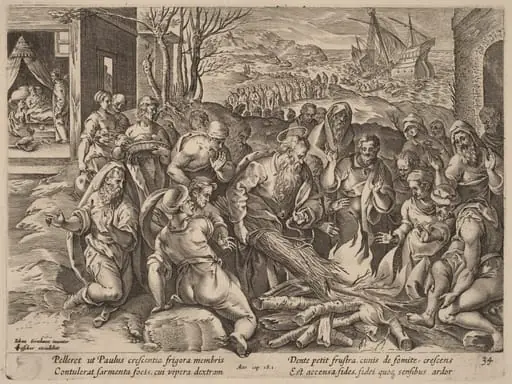 Saint Paul Shipwrecked on the Island of Melita
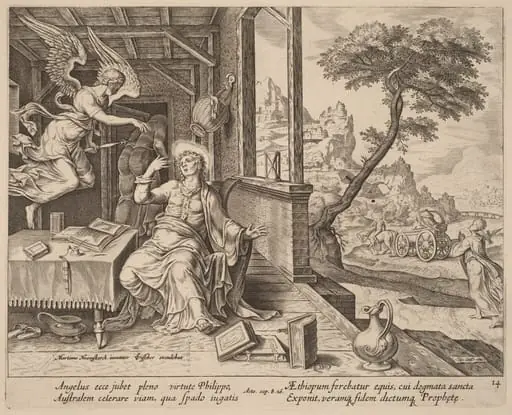 The Angel Orders Saint Philip to Accompany the Ethiopian Eunuch
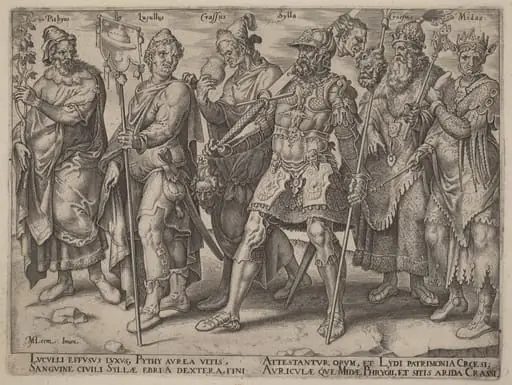 Notorious Examples of Wealth from Antiquity
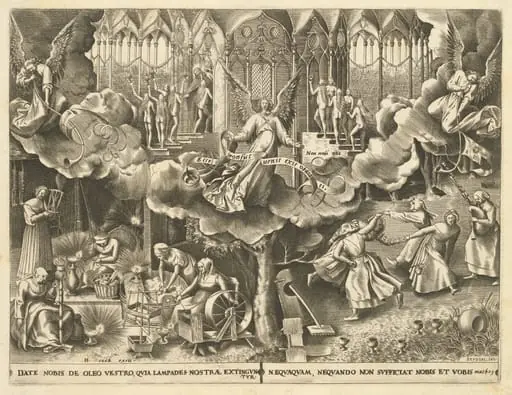 The Parable of the Wise and Foolish Virgins
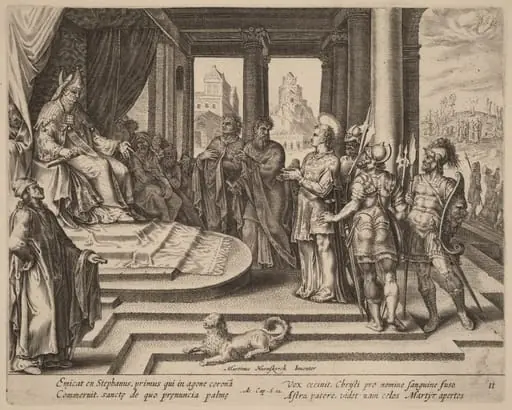 Saint Stephen before the Council
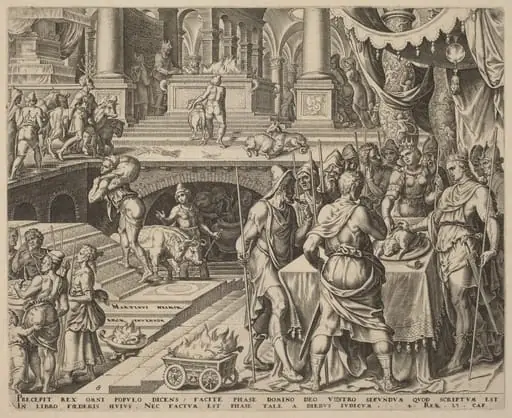 Josiah Celebrating Passover
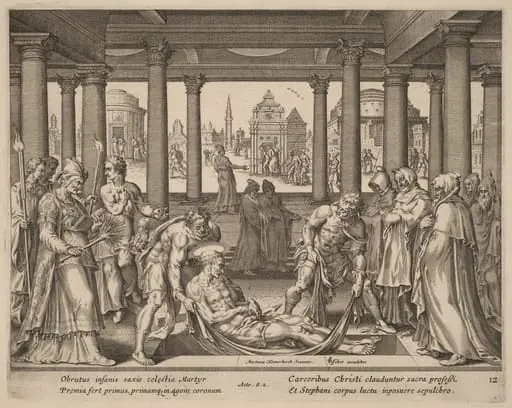 Devout Men Carrying Saint Stephen to His Burial
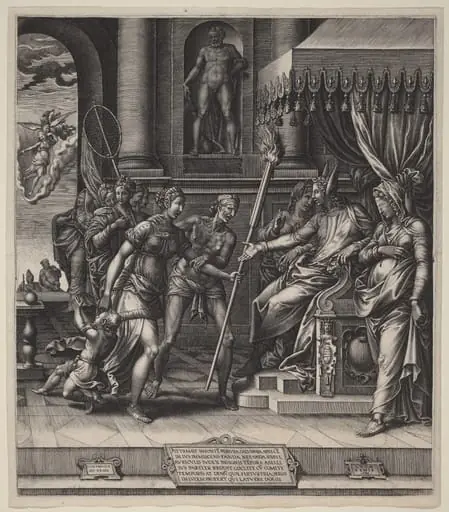 The Calumny of Apelles
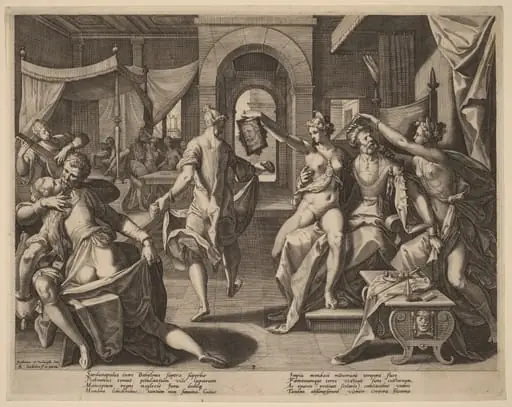 Sardanapalus among the Concubines
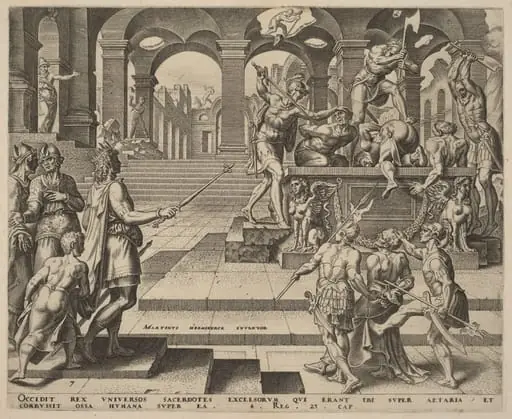 The Slaughter of the Priests of Samaria
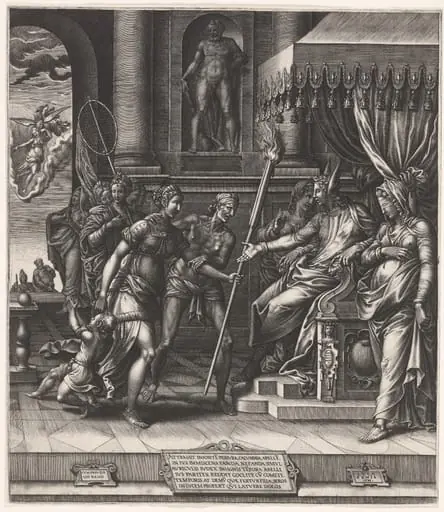 The Calumny of Apelles
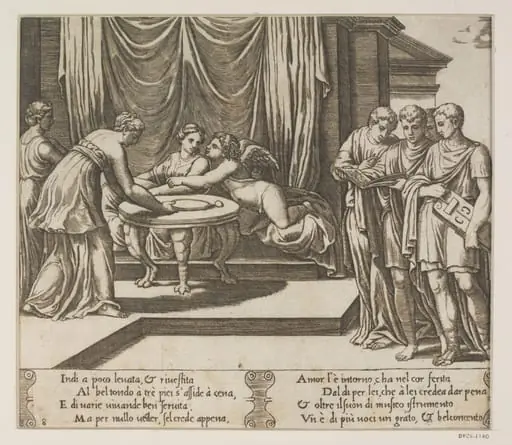 Illustrations to Apuleius
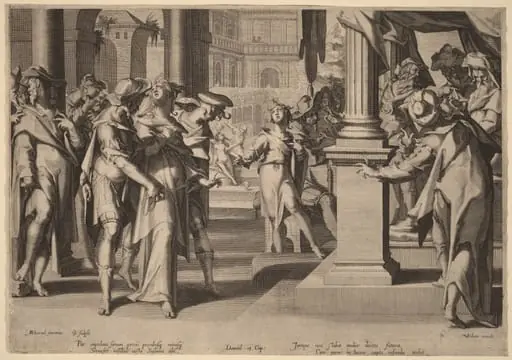 Suzannah before Daniel
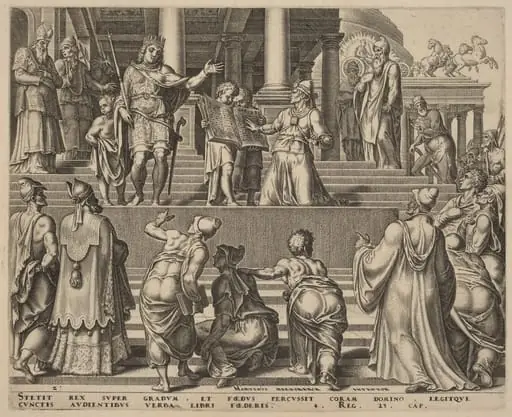 The Book of the Law Read before the People
 Saint Paul before Festus and Agrippa
 Cornelius Worshipping Saint Peter