Artwork
Pharos (The Lighthouse at Alexandria)
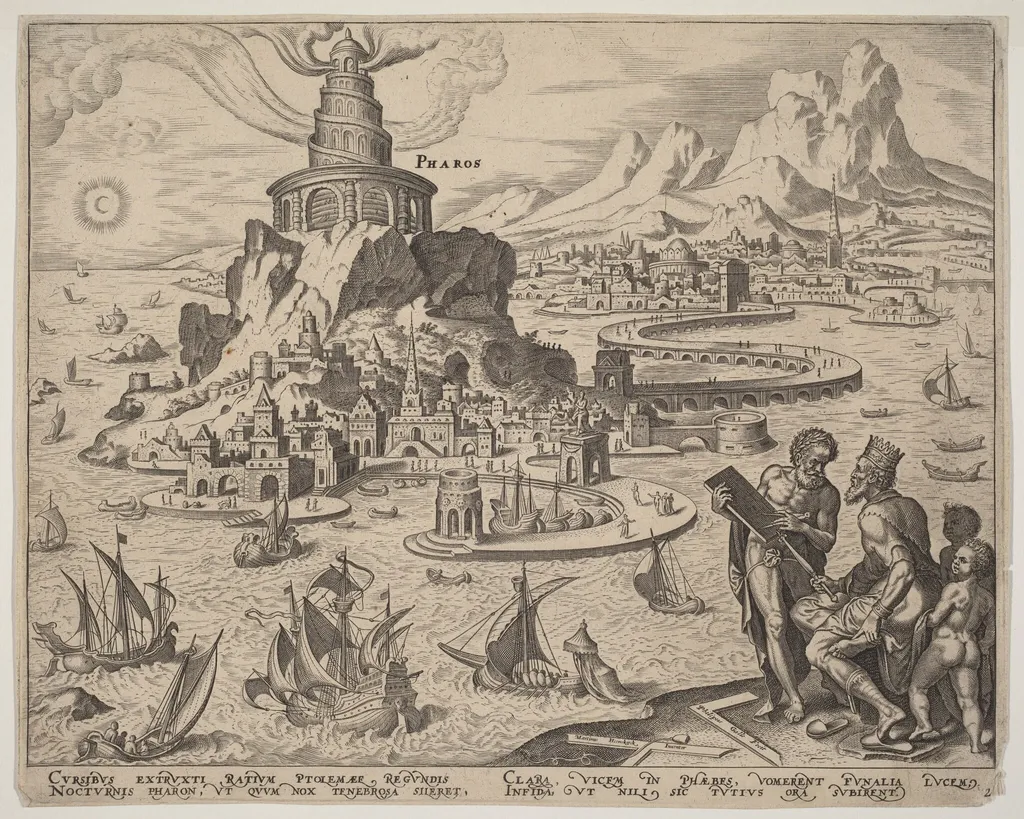
Pharos (The Lighthouse at Alexandria) is an ink print by the Renaissance artist Philip Galle. It dates from 1572 and is held in the collection of the National Gallery of Art.
About this work
Overview
The scene is densely populated with ships, buildings, and figures, reflecting a Renaissance fascination with classical antiquity and its material legacy.
Philip Galle’s 1572 engraving depicts the ancient Lighthouse of Alexandria, known as Pharos, as a monumental structure rising from a rocky promontory. Rendered in fine linear detail on laid paper, the work is a reproductive print, part of Galle’s broader practice of translating architectural and historical subjects into printed form. The scene is densely populated with ships, buildings, and figures, reflecting a Renaissance fascination with classical antiquity and its material legacy.
Subject & Meaning
The engraving centers on the Pharos lighthouse, one of the Seven Wonders of the Ancient World, now reduced to ruins in contemporary memory. Surrounding it, a bustling harbor and walled city evoke Alexandria’s historical prominence. Three figures in the foreground, engaged with a large volume, suggest scholarly contemplation—perhaps mapping the city’s past or studying its architecture. Their presence frames the lighthouse not merely as a structure, but as an object of intellectual reverence.
Technique & Style
Galle employed fine, controlled lines typical of Northern Renaissance engraving to model form and depth. Cross-hatching and delicate tonal gradations define the lighthouse’s stone surfaces, the folds of clothing, and the texture of water and sky. The composition layers distant architecture with foreground detail, creating spatial complexity. The precision of the lines reflects Galle’s training as a draftsman and his commitment to clarity, even when depicting imagined or reconstructed scenes.
History & Provenance
Created in Antwerp during the height of Galle’s publishing career, the engraving was part of a series documenting ancient wonders. Though the original Pharos had collapsed centuries earlier, Galle relied on textual accounts and earlier illustrations to reconstruct its form. The print circulated widely among scholars and collectors, contributing to the Renaissance revival of interest in classical monuments. Its survival in multiple institutional collections attests to its enduring scholarly value.
Context
In the late 16th century, European artists and publishers sought to preserve and disseminate knowledge of the ancient world through printed images. Galle’s work aligned with humanist efforts to recover lost histories, often blending fact with conjecture. The inclusion of scholars studying a map reflects contemporary academic practices, where antiquity was interpreted through texts and visual reconstruction rather than direct observation.
Legacy
Galle’s engraving became a reference point for later depictions of the Pharos, influencing how the lighthouse was visualized in books and maps for centuries. While not a documentary record, it shaped perceptions of ancient Alexandria’s grandeur. Its technical precision and compositional clarity ensured its place in print collections, where it continues to serve as an example of how Renaissance artists mediated historical memory through the medium of engraving.
Artist & collection
Artist
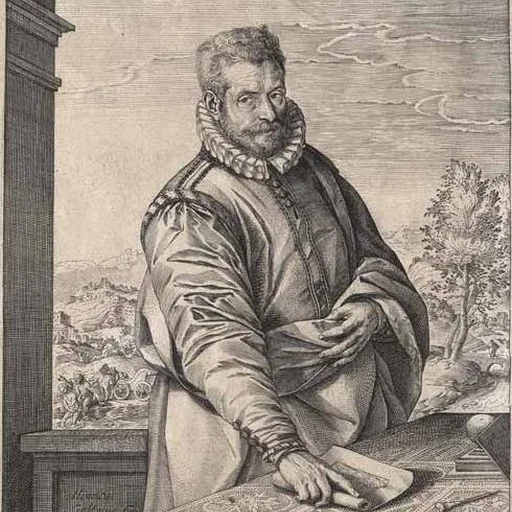
Philip (or Philips) Galle (1537 – March 1612) was a Dutch publisher, best known for publishing old master prints, which he also produced as designer and engraver. He is especially known for his reproductive engravings of paintings.

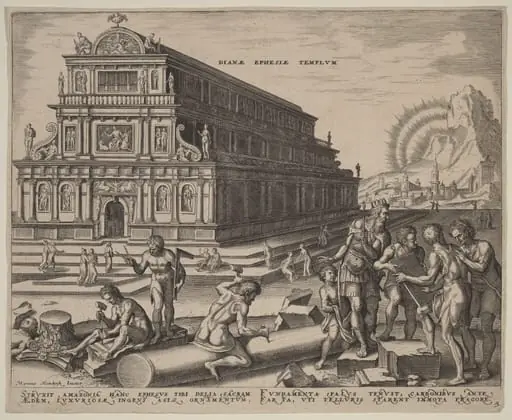 Dianae Ephesiae Templum (The Temple of Diana at Ephesus)
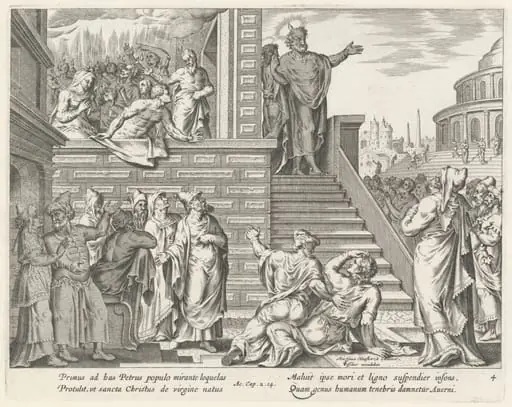 Saint Peter Speaks to the People about Christ
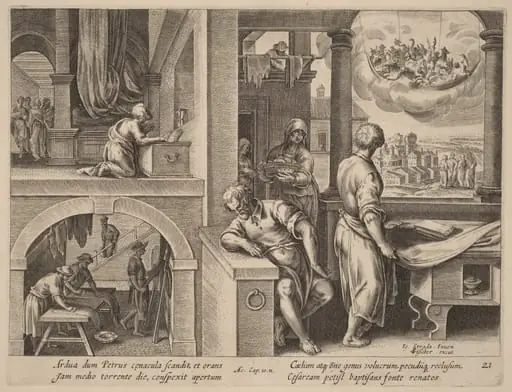 The Vision of Saint Peter
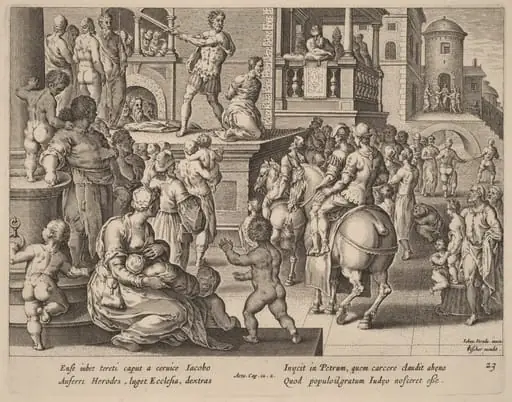 Beheading of Saint James
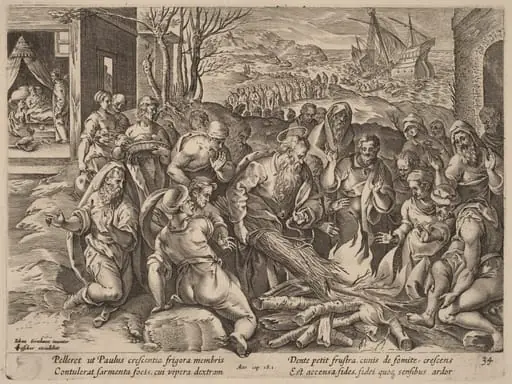 Saint Paul Shipwrecked on the Island of Melita
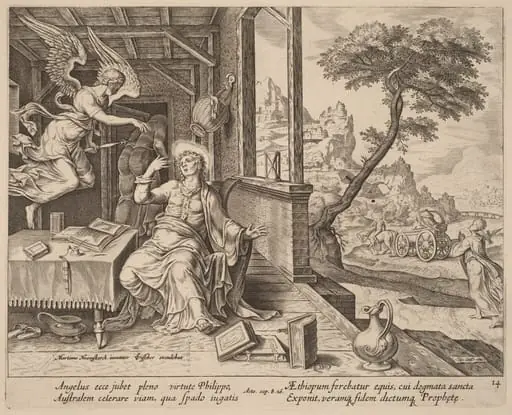 The Angel Orders Saint Philip to Accompany the Ethiopian Eunuch
 Notorious Examples of Wealth from Antiquity
 The Parable of the Wise and Foolish Virgins
 Jesus Calling the Apostles Among the Fishermen
 Landscape with Two Trees
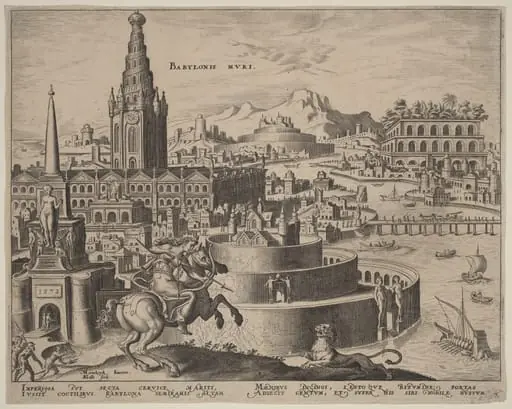 Babylonis Muri (The Walls of Babylon)
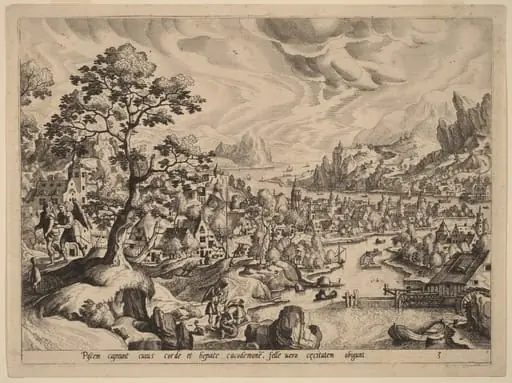 Tobias Catching the Fish in the River Tigris
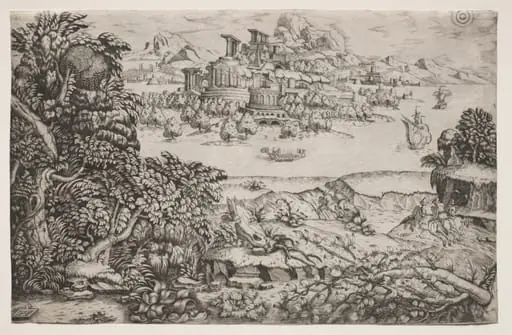 Landscape with a Temple above a Lake
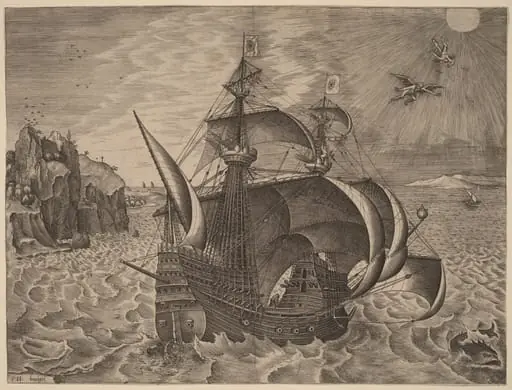 Armed Three-Master with Daedalus and Icarus in the Sky
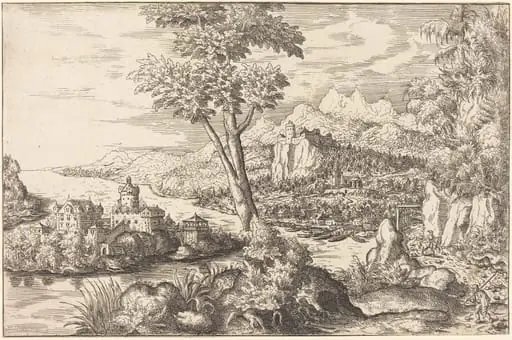 Landscape with Three Men
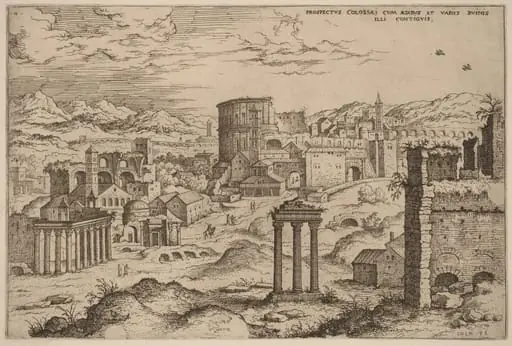 View of the Forum
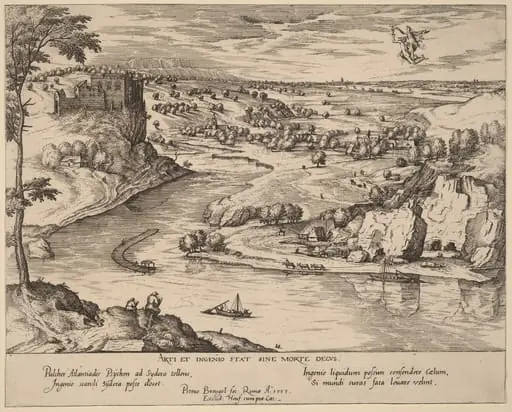 River Landscape with Mercury and Psyche
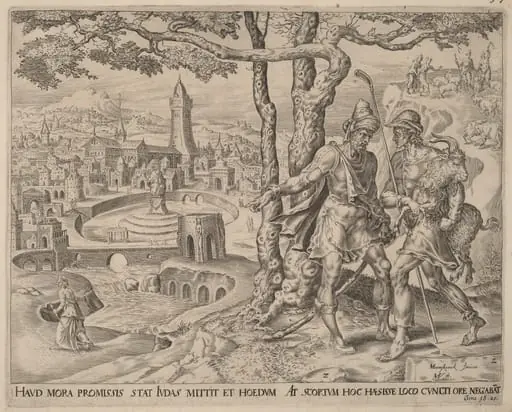 Hirah the Adullamite with the Kid
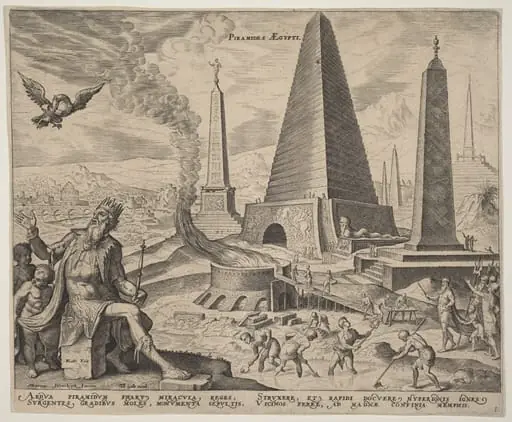 Piramides Aegypti (The Pyramids of Egypt)
![View of Venice [lower center block], by Jacopo de' Barbari](https://artifactworldgallery.com/img/jacopo-de-barbari--view-of-venice-lower-center-block--909bde027368571e-w320.webp) View of Venice [lower center block]
View of Venice [lower center block]