Artwork
Babylonis Muri (The Walls of Babylon)
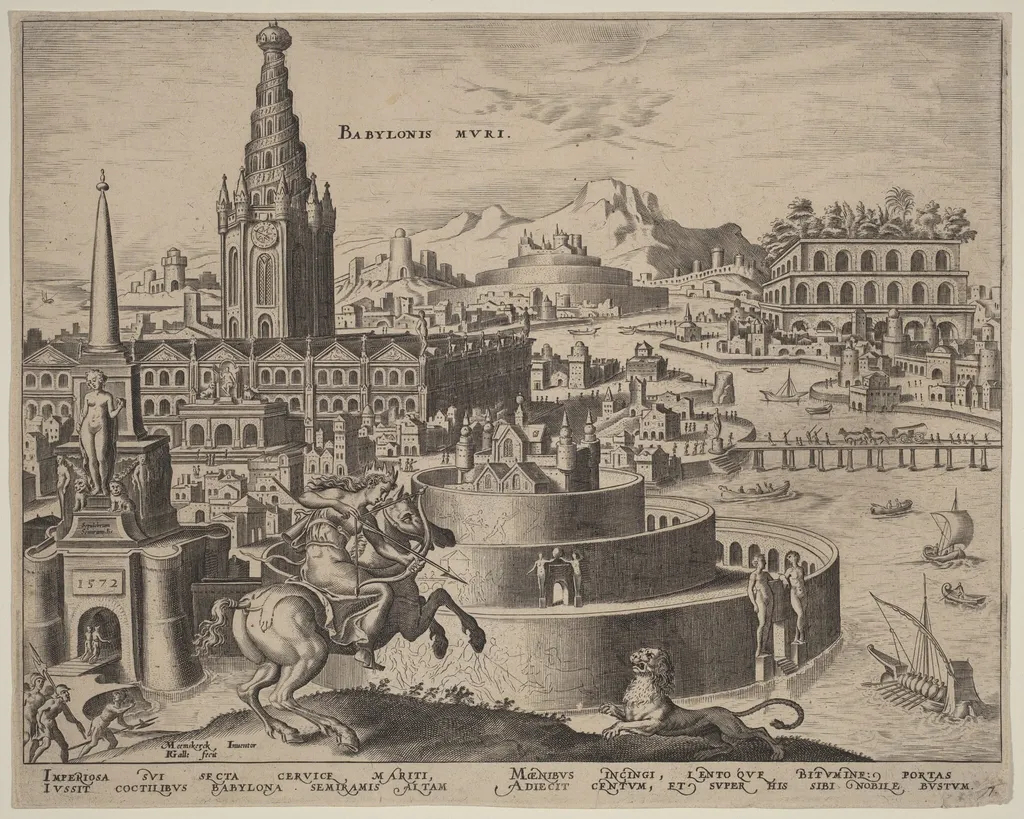
Babylonis Muri (The Walls of Babylon) is an ink print by the Renaissance artist Philip Galle. It dates from 1572 and is held in the collection of the National Gallery of Art.
About this work
Overview
The engraving 'Babylonis Muri (The Walls of Babylon)' is a print on laid paper created by Philip Galle in 1572. It is a representation of the ancient city of Babylon's fortifications.
Subject & Meaning
The work depicts a densely populated city with numerous towers, temples, and winding streets, surrounded by a large circular wall with a gate through which people and animals are passing. Statues are positioned around the periphery, and ships are shown on a river.
Technique & Style
Galle employed engraving techniques to achieve a detailed and layered image, incorporating small figures and other elements to create a sense of depth.
History & Provenance
Philip Galle, a Dutch engraver and publisher active from 1558 to 1612, produced this work in the Netherlands during the late sixteenth century. Galle was known for both reproducing the works of earlier artists and creating his own designs.
Artist & collection
Artist
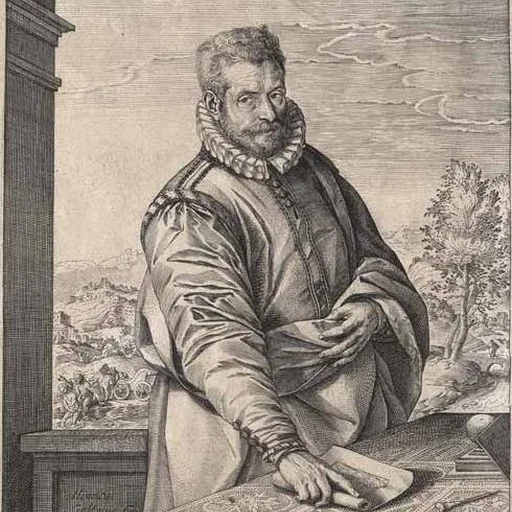
Philip (or Philips) Galle (1537 – March 1612) was a Dutch publisher, best known for publishing old master prints, which he also produced as designer and engraver. He is especially known for his reproductive engravings of paintings.

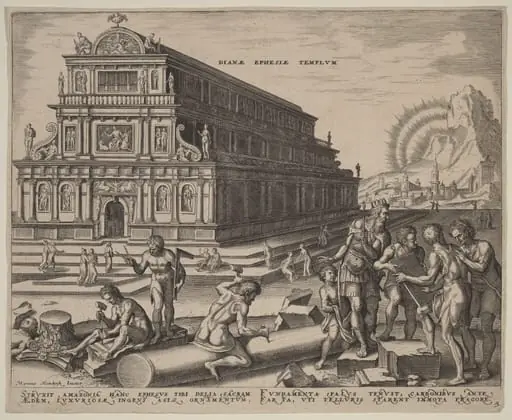 Dianae Ephesiae Templum (The Temple of Diana at Ephesus)
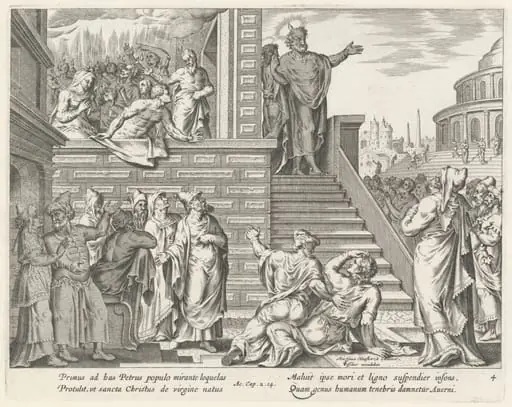 Saint Peter Speaks to the People about Christ
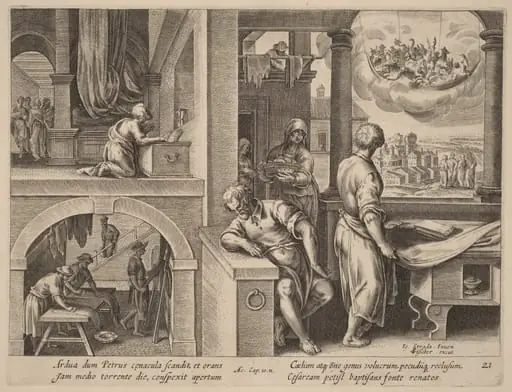 The Vision of Saint Peter
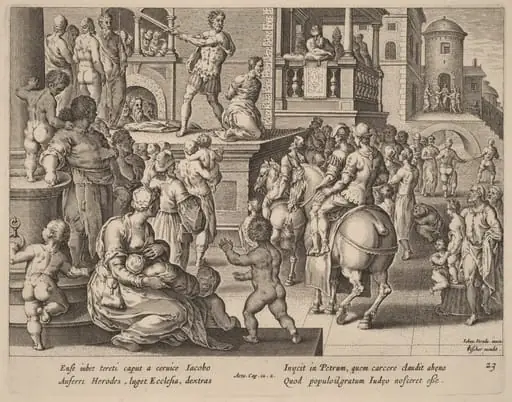 Beheading of Saint James
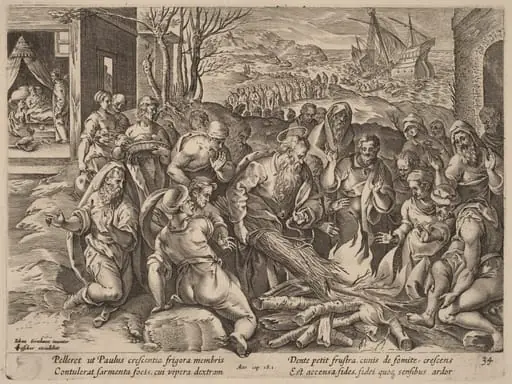 Saint Paul Shipwrecked on the Island of Melita
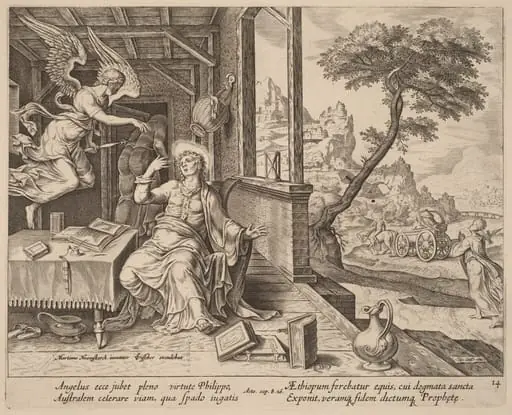 The Angel Orders Saint Philip to Accompany the Ethiopian Eunuch
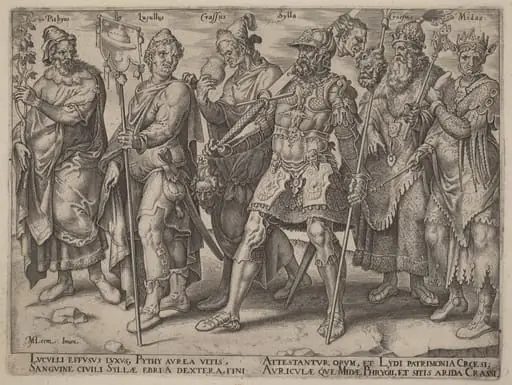 Notorious Examples of Wealth from Antiquity
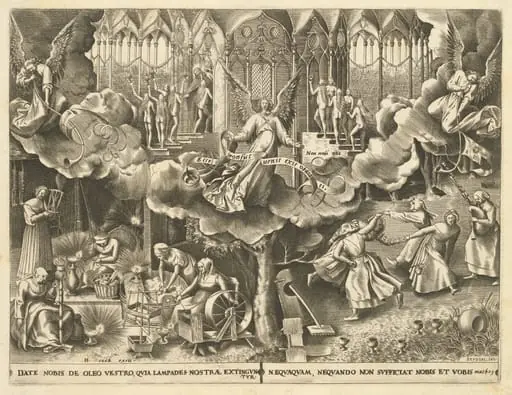 The Parable of the Wise and Foolish Virgins
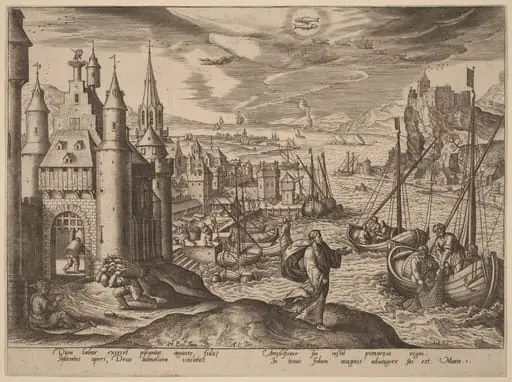 Jesus Calling the Apostles Among the Fishermen
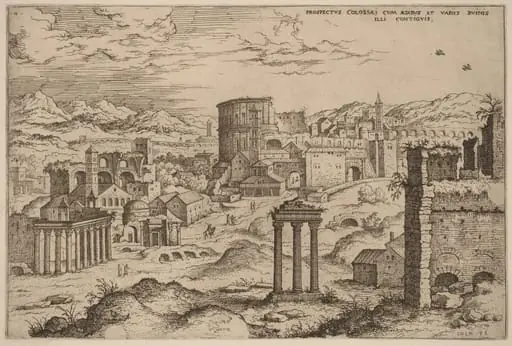 View of the Forum
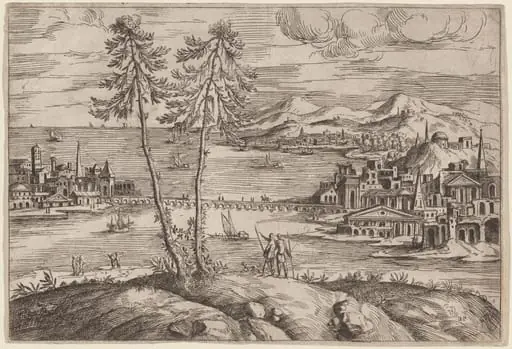 Landscape with Two Trees
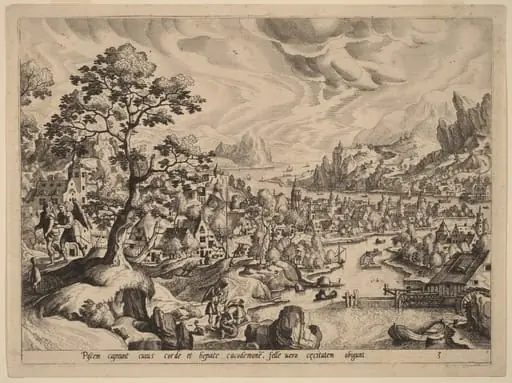 Tobias Catching the Fish in the River Tigris
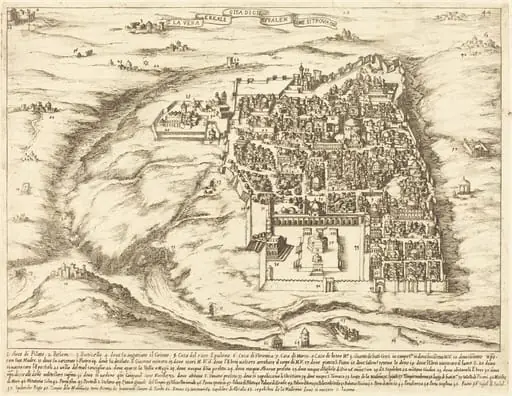 Aerial View of the City of Jerusalem
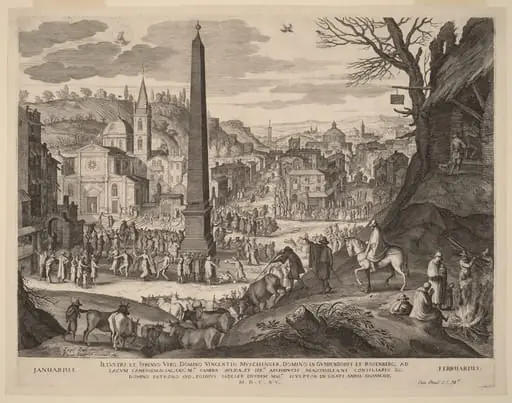 January and February
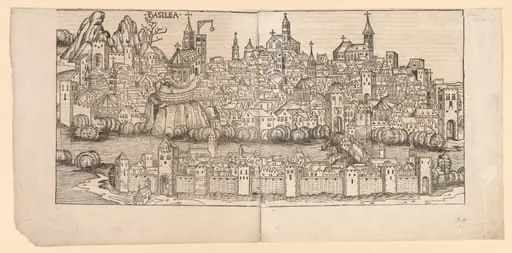 Nuremberg Chronicle: Topographical View of Basle, Switzerland
![Foro Romano from "Prospectus Locurum Urbis Romae Insign[ium]", by Lievin Cruyl](https://artifactworldgallery.com/img/lievin-cruyl--foro-romano-from-prospectus-locurum-urbis-romae-insign-ium--30ee5e2aeedd53b6-w320.webp) Foro Romano from "Prospectus Locurum Urbis Romae Insign[ium]"
Foro Romano from "Prospectus Locurum Urbis Romae Insign[ium]"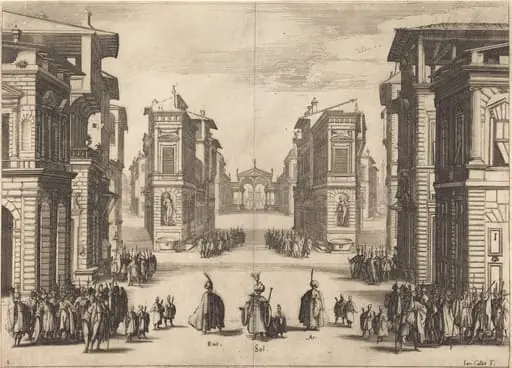 Il Solimano, Act I
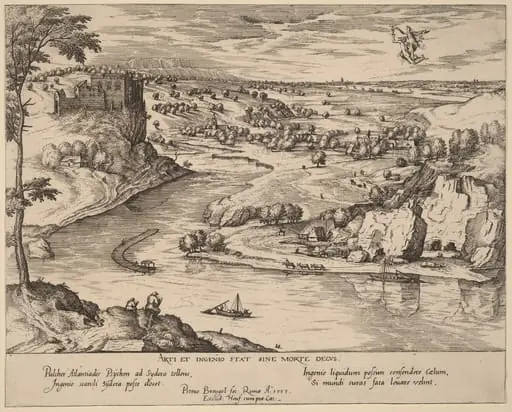 River Landscape with Mercury and Psyche
![St. Angelo from "Prospectus Locurum Urbis Romae Insign[ium], by Lievin Cruyl](https://artifactworldgallery.com/img/lievin-cruyl--st-angelo-from-prospectus-locurum-urbis-romae-insign-ium--b52698c9c51ea586-w320.webp) St. Angelo from "Prospectus Locurum Urbis Romae Insign[ium]
St. Angelo from "Prospectus Locurum Urbis Romae Insign[ium]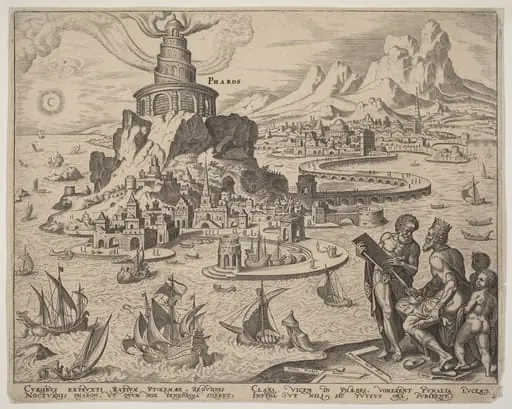 Pharos (The Lighthouse at Alexandria)