Artwork
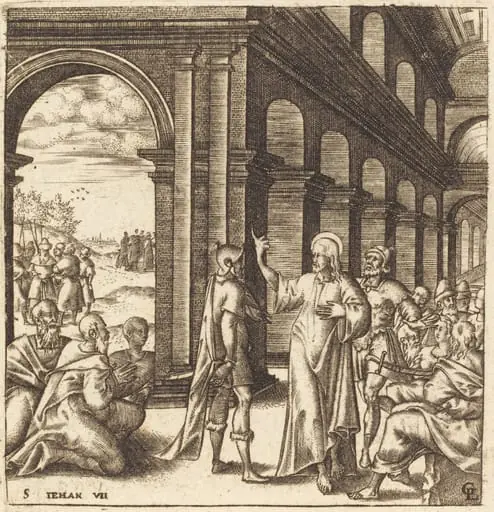
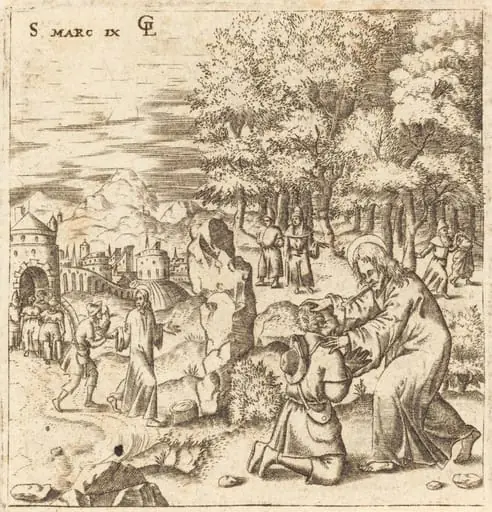
Christ Healing a Deaf Man
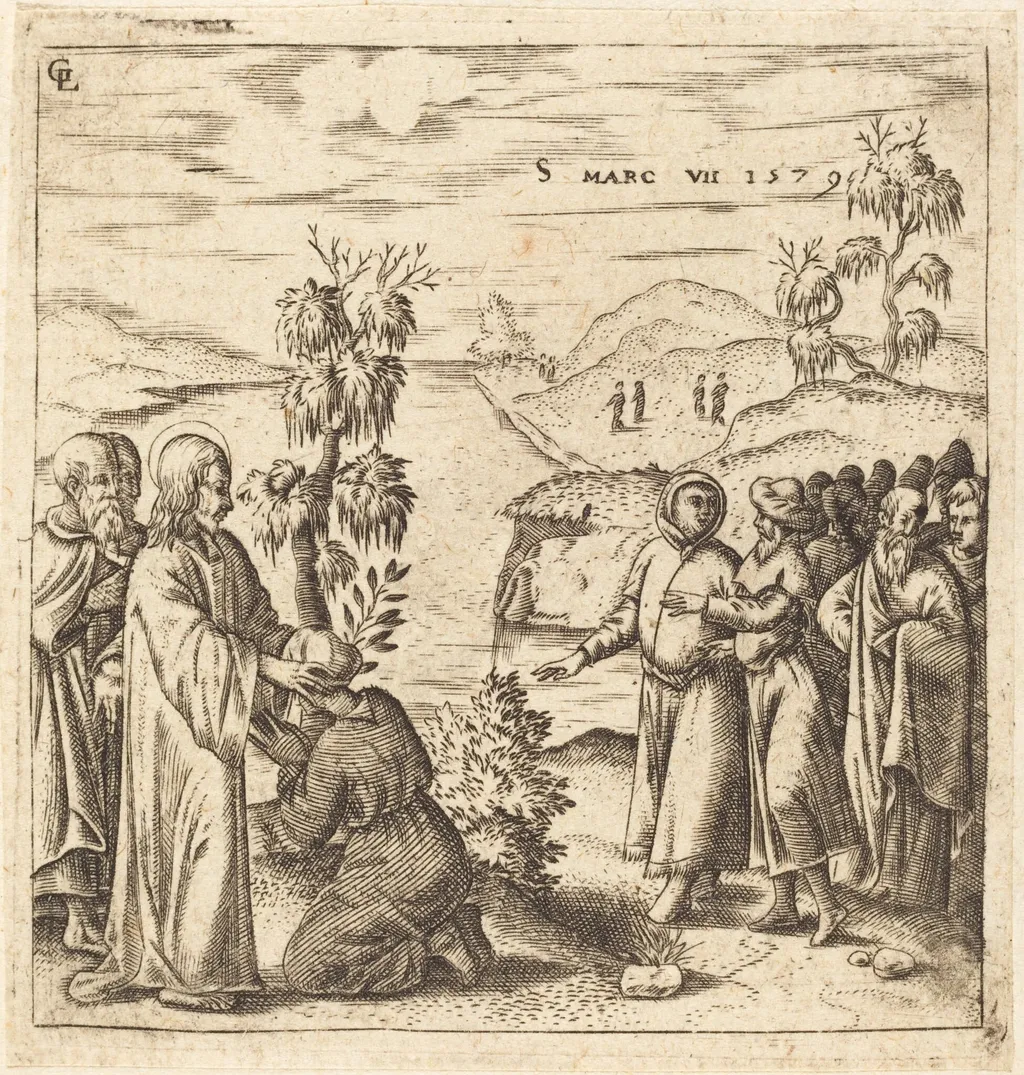
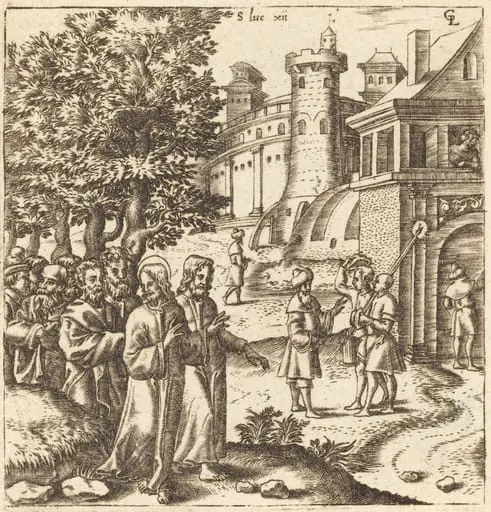
Christ Healing a Deaf Man is an ink print by the Renaissance artist Léonard Gaultier. It dates from 1579 and is held in the collection of the National Gallery of Art.
About this work
Overview
Executed in the medium of engraving, it reflects Gaultier’s focus on religious imagery and his technical precision.
Created in 1579 by French engraver Léonard Gaultier, this print depicts a biblical moment of healing. Executed in the medium of engraving, it reflects Gaultier’s focus on religious imagery and his technical precision. Working in Paris during the late Renaissance, he produced prints largely from his own compositions, distinguishing himself among contemporaries who often reproduced others’ paintings.
Subject & Meaning
The scene illustrates Christ restoring hearing to a man, a miracle recorded in the Gospel of Mark. Christ, identified by his hooded robe, gently touches the man’s ear while holding his hand, a gesture of intimate intervention. Surrounding figures observe in quiet attention, emphasizing the solemnity of the act. The setting, with sparse vegetation and rocky terrain, suggests a rural landscape near Galilee, grounding the divine moment in a tangible world.
Technique & Style
Gaultier employed fine, controlled engraving lines to model form and texture. Cross-hatching creates subtle gradations of light and shadow, particularly in the folds of garments and the texture of foliage. The figures appear rigidly composed, with little naturalistic movement, reflecting the formal aesthetic common among Northern European printmakers of the period. The background’s palm trees and bushes are rendered with delicate, repetitive strokes to suggest depth without clutter.
History & Provenance
The engraving emerged during a period of flourishing print culture in Paris, where religious imagery remained in demand despite religious upheavals. Gaultier’s works circulated widely among collectors and clergy. While specific early ownership records are scarce, the print’s survival in multiple institutional collections suggests it was reproduced and preserved as part of devotional or educational print series.
Context
Gaultier worked amid a network of engravers influenced by the Wierix and van de Passe families, known for their meticulous line work and religious themes. His output aligned with Counter-Reformation efforts to use visual art for spiritual instruction. Unlike Italian painters, Northern artists like him often prioritized clarity and detail over dramatic emotion, making their prints accessible tools for private devotion and teaching.
Legacy
Gaultier’s prints, including this one, contributed to the dissemination of biblical narratives in early modern Europe. Though less celebrated than his contemporaries, his technical discipline and consistent output helped sustain the tradition of engraved religious imagery. His works remain studied for their role in bridging artistic craftsmanship with religious communication during a time of profound cultural change.
Artist & collection
Artist
Léonard Gaultier, or, as he sometimes signed himself, Galter, a French engraver, was born at Mainz about 1561, and died in Paris in 1641.