Artwork
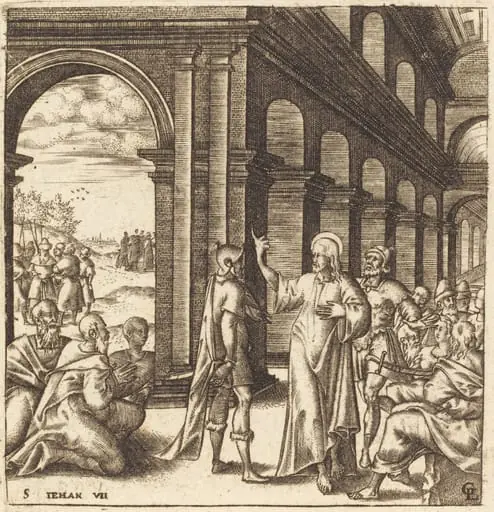
Christ and the Centurion
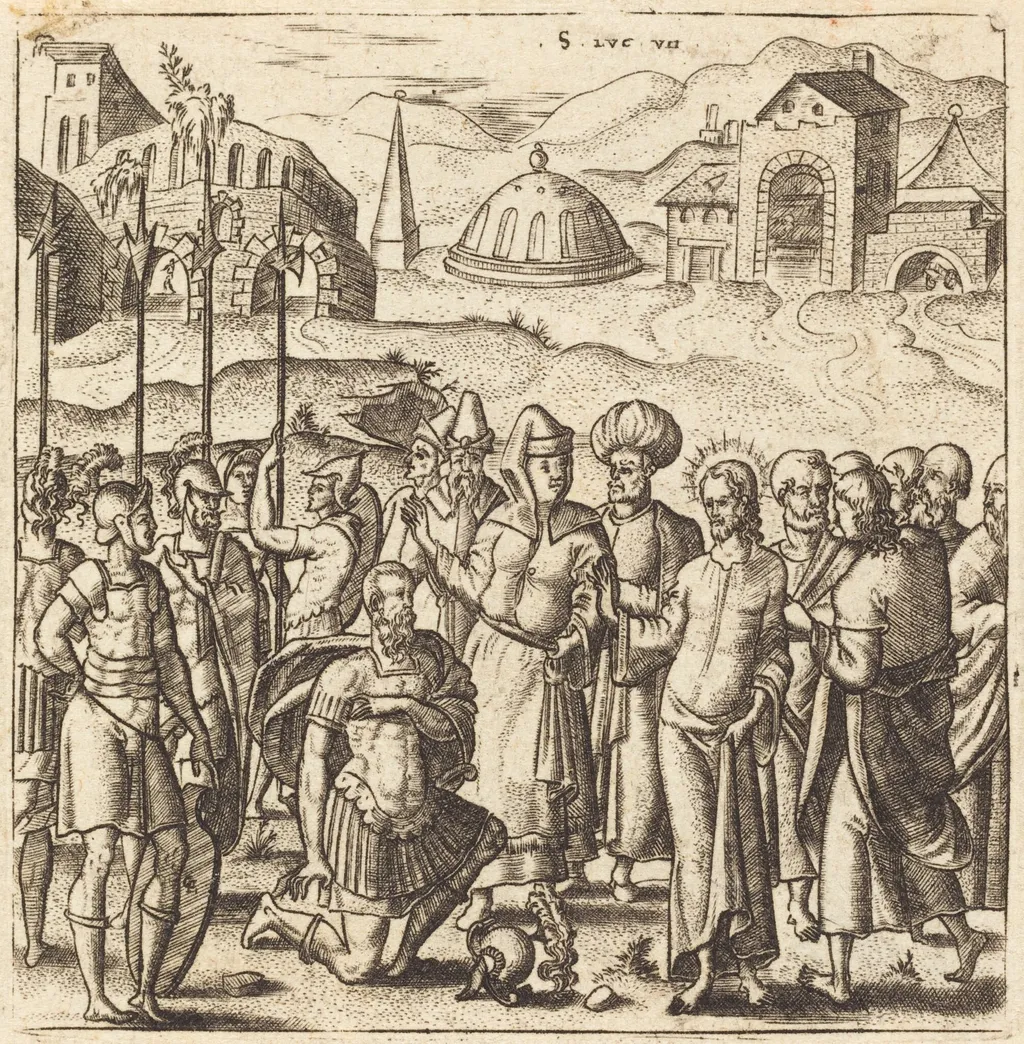
Christ and the Centurion is an ink print by the Renaissance artist Léonard Gaultier. It dates from 1578 and is held in the collection of the National Gallery of Art.
About this work
Overview
Christ and the Centurion is an engraving executed circa 1578 by Léonard Gaultier, a French printmaker who worked in Paris during the late sixteenth and early seventeenth centuries. The work portrays a biblical encounter between Jesus and a Roman centurion, rendered in the stark monochrome of line and hatching typical of the period’s intaglio prints.
Subject & Meaning
The composition captures the moment when the centurion, kneeling before the crucified Christ, looks up with a blend of sorrow and reverence. By focusing on the emotional exchange, the image underscores themes of penitence and the universal reach of Christian compassion across social and cultural boundaries.
Technique & Style
Gaultier employed a burin to incise fine, controlled lines that give the figures a rigid, formal quality. The engraving’s dense cross‑hatching creates tonal depth, while the relatively sparse background—suggested hills and structures—keeps attention on the central figures. The style reflects the influence of the Wierix brothers and Crispyn van de Passe, whose work emphasized precise linearity.
History & Provenance
Born around 1561 in Mainz, Gaultier settled in Paris where he produced a substantial body of work, including portraits and narrative scenes, often designed and cut by his own hand. He continued to work until his death in 1641; the provenance of this particular print traces through several private collections before entering a museum holding of early modern prints.
Context
The engraving belongs to the late Renaissance period of printmaking, a time when religious subjects were widely disseminated through affordable prints. Such images served devotional purposes and reinforced Counter‑Reformation ideals by making biblical narratives accessible to a broader audience.
Legacy
Gaultier’s meticulous approach contributed to the development of French engraving in the early seventeenth century, influencing subsequent generations of printmakers who adopted his precise line work and compositional clarity in religious and secular subjects alike.
Artist & collection
Artist
Léonard Gaultier, or, as he sometimes signed himself, Galter, a French engraver, was born at Mainz about 1561, and died in Paris in 1641.

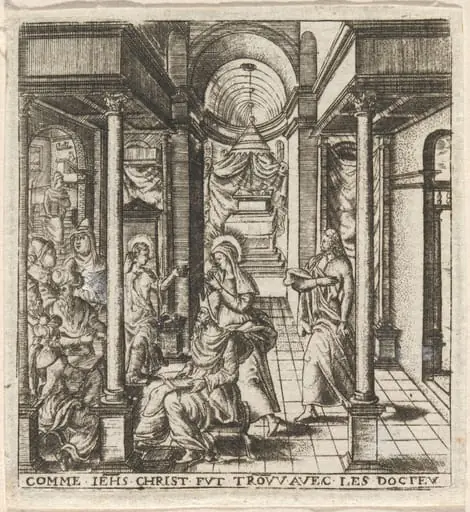
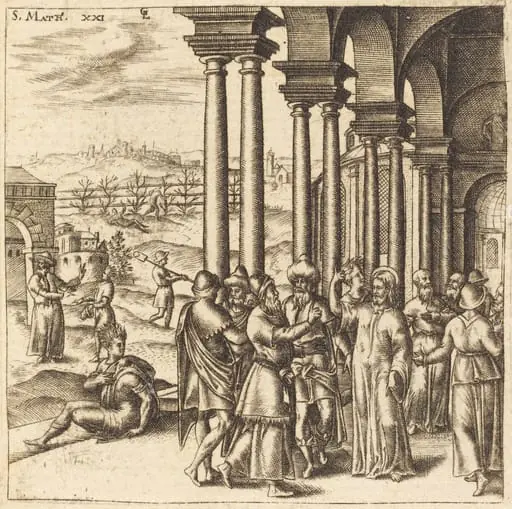 Christ in the Temple
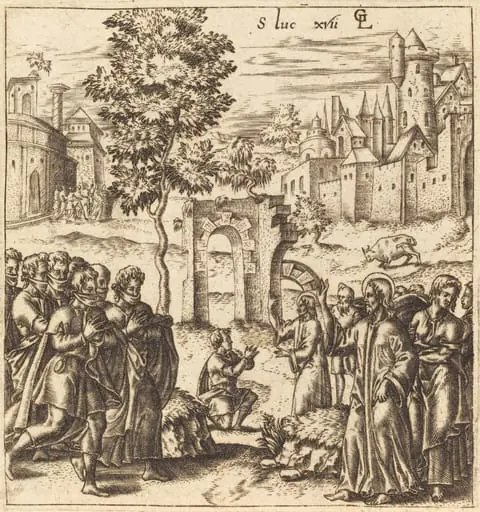 The Ten Lepers are Cleansed
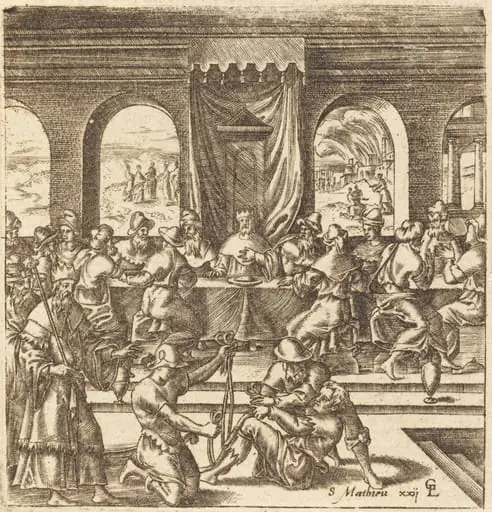 The Parable of the Marriage Feast
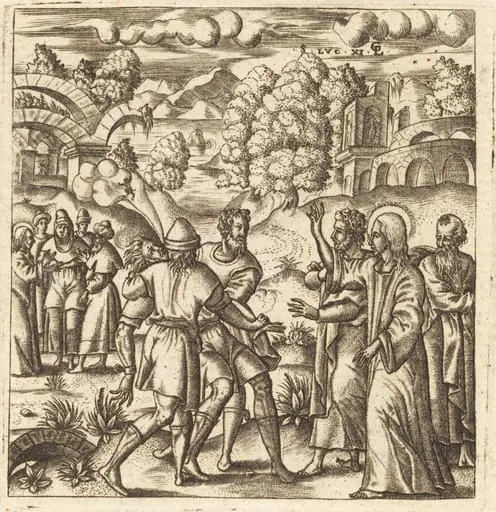 Christ Heals a Dumb Man
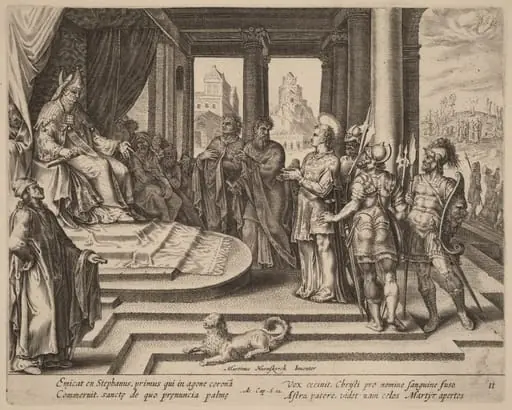 Saint Stephen before the Council
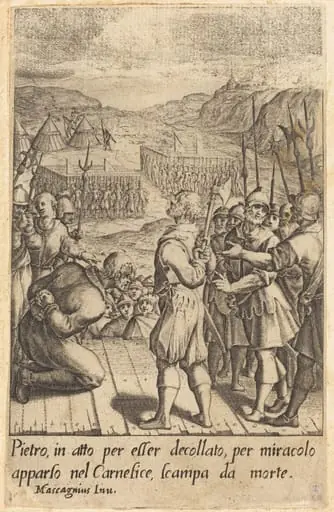 The Hangman
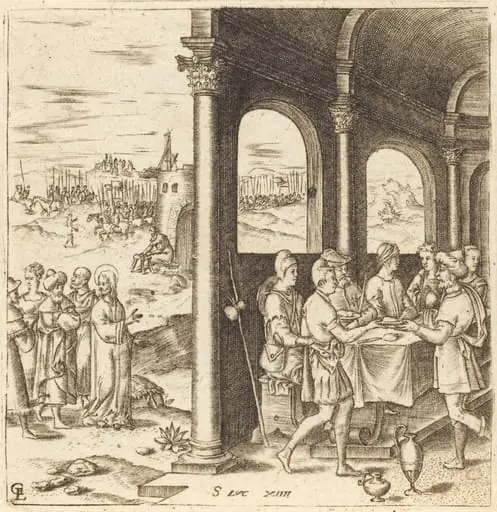 Christ Journeying to the House of a Pharisee
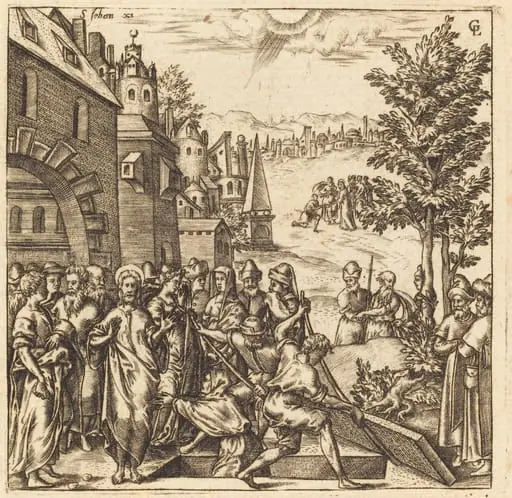 The Raising of Lazarus
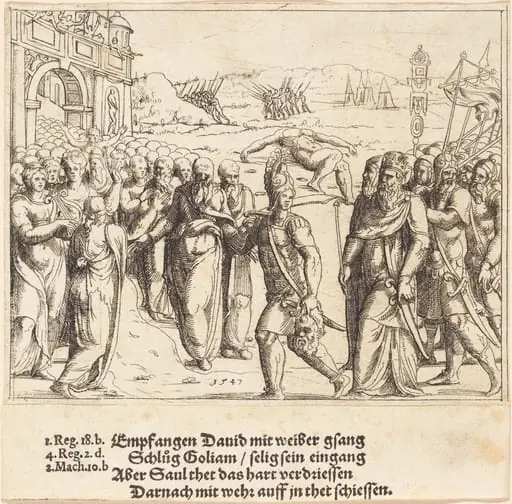 David is Welcomed after Killing Goliath, and Saul's Jealousy
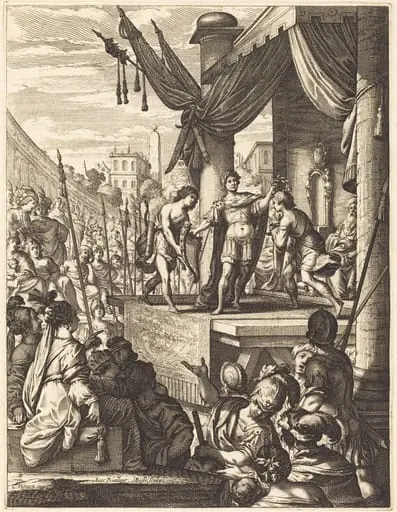 Illustration to Jean Desmarets' "L'Ariane"
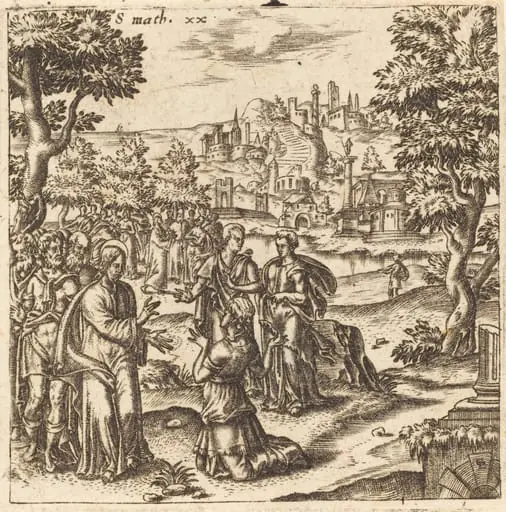 The Children of Zébédée