Artwork
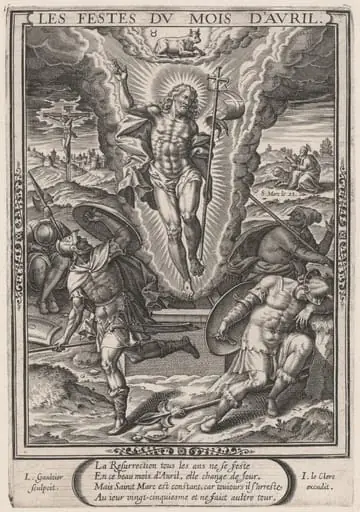
Les Festes du mois de Mai (May: The Ascension)
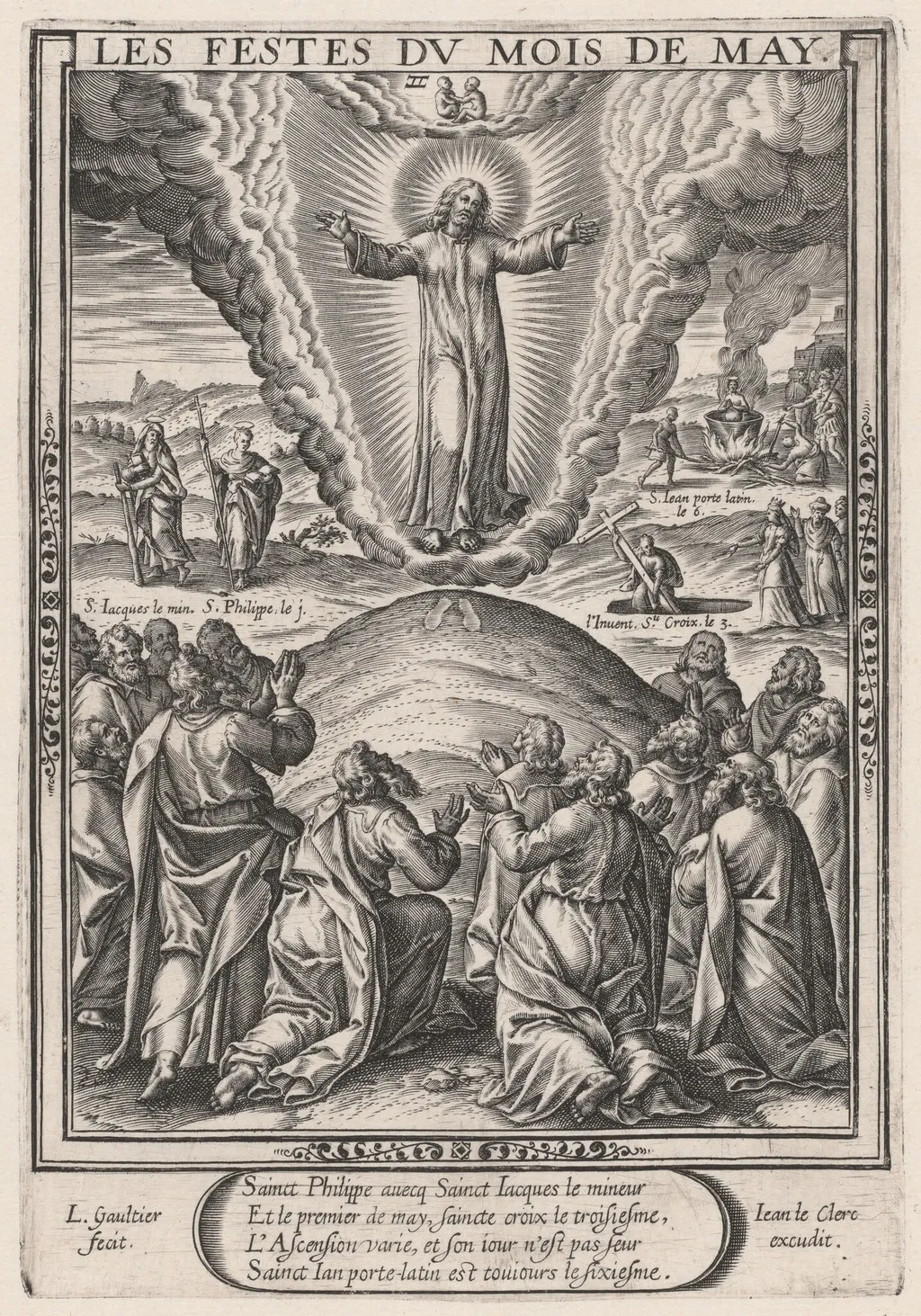
Les Festes du mois de Mai (May: The Ascension) is an ink print by the Baroque artist Léonard Gaultier. It dates from 1603 and is held in the collection of the National Gallery of Art.
About this work
Overview
The work was produced through intaglio printing, using a copper plate incised with fine lines, then inked and pressed onto paper to yield multiple impressions.
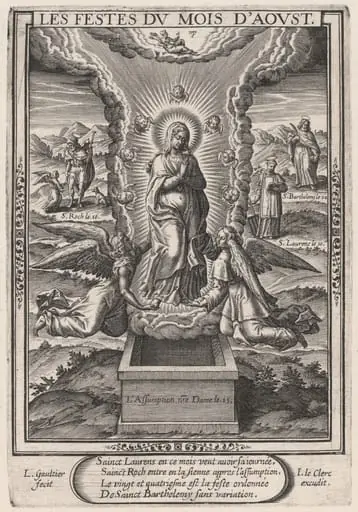
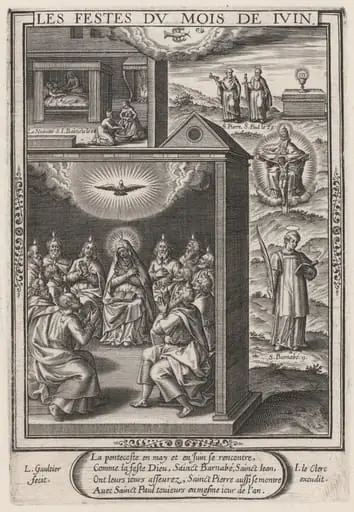
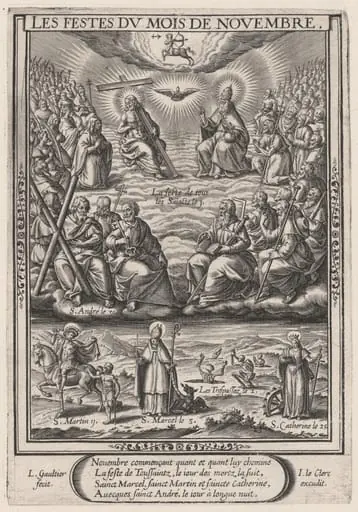
Les Festes du mois de Mai (May: The Ascension) is a small engraving by Léonard Gaultier, created on laid paper and measuring 19.1 by 13.1 centimeters. It belongs to a series illustrating the months of the year, with May representing the Ascension of Christ. The work was produced through intaglio printing, using a copper plate incised with fine lines, then inked and pressed onto paper to yield multiple impressions.
Subject & Meaning
The scene portrays Christ ascending into a luminous cloud, his body tilted upward as if drawn by divine force. Below, the twelve apostles stand in quiet reverence, their gazes fixed on the heavens. The composition reflects the theological moment of Christ’s departure from Earth, emphasizing spiritual transition rather than earthly spectacle. The absence of elaborate architecture or landscape focuses attention on the figures and their emotional stillness.
Technique & Style
Gaultier employed meticulous cross-hatching to model form and suggest volume, particularly in the folds of the apostles’ robes and the swirling clouds. The fine, controlled lines create contrast between the radiant ascent above and the grounded figures below. The small scale demands close viewing, yet the precision of the engraving conveys depth and movement, demonstrating the artist’s command of line as a tool for both narrative and atmosphere.
History & Provenance
The print was made in early 17th-century France, during a period when religious imagery was widely disseminated through prints. Gaultier, known for reproductive engravings, likely based this image on a painted composition, adapting it for wider circulation. The National Gallery of Art in Washington holds one of the known impressions, preserving its original condition and paper quality.
Context
Engravings like this served devotional and educational purposes, allowing lay audiences to engage with biblical narratives outside church settings. The month-themed series aligned with liturgical calendars, reinforcing seasonal religious observances. Gaultier’s work reflects the broader trend of printmakers translating monumental religious scenes into intimate, portable formats for private contemplation.
Legacy
Though not widely exhibited today, Gaultier’s engraving exemplifies the technical refinement of French printmaking in the early Baroque era. Its quiet intensity and restrained composition distinguish it from more theatrical depictions of the Ascension. As a surviving example of devotional print culture, it offers insight into how religious imagery was reproduced and consumed in early modern Europe.
Artist & collection
Artist
Léonard Gaultier, or, as he sometimes signed himself, Galter, a French engraver, was born at Mainz about 1561, and died in Paris in 1641.