Artwork
The Parables of the Lost Sheep, the Woman with Pieces of Silver and the Prodigal Son
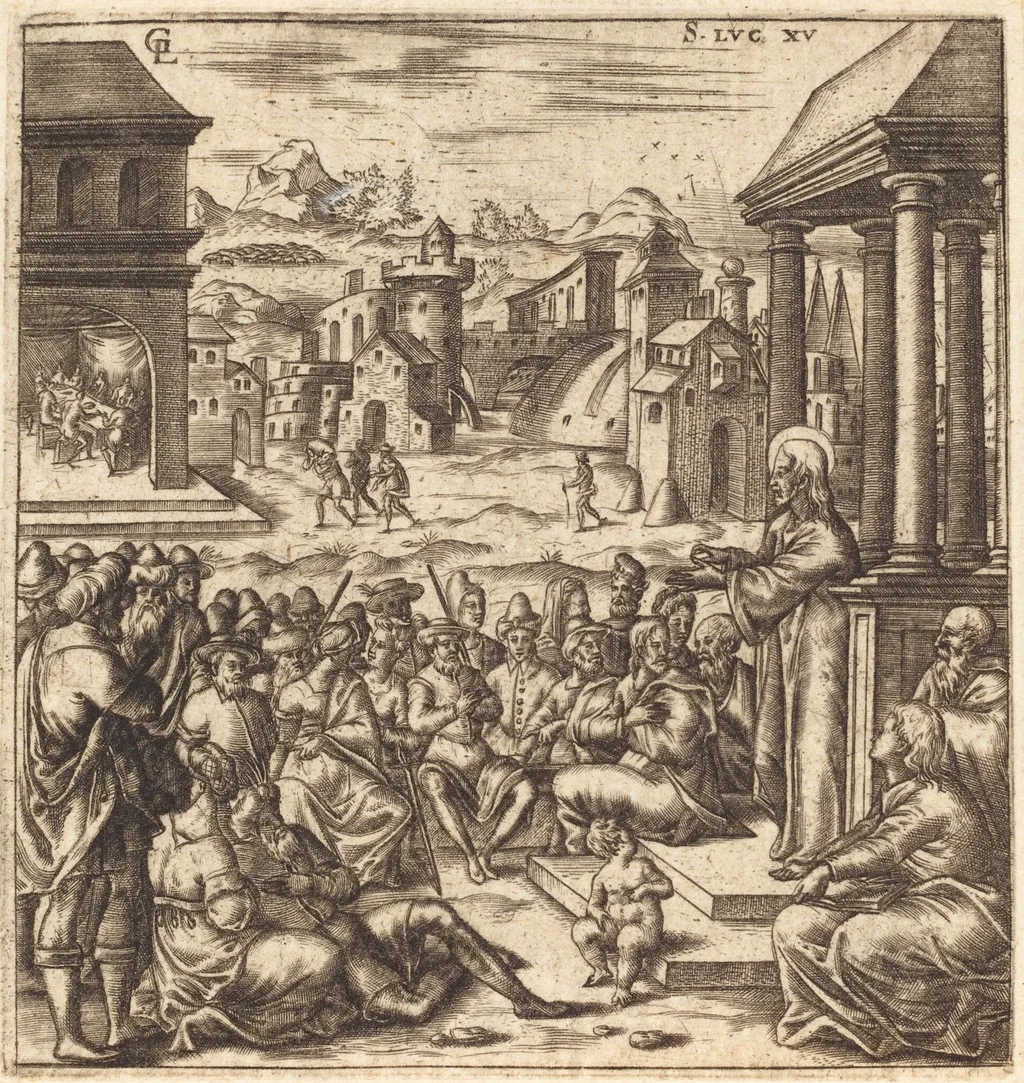
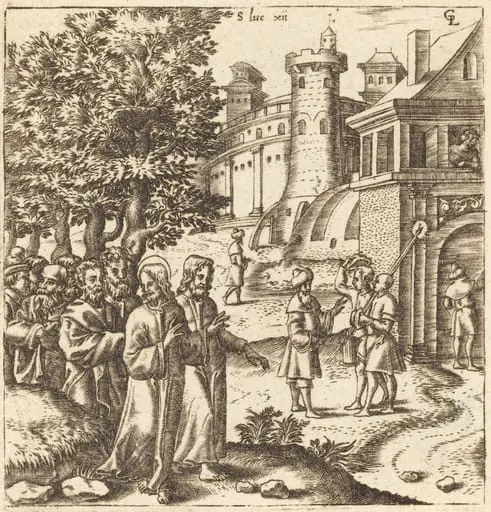
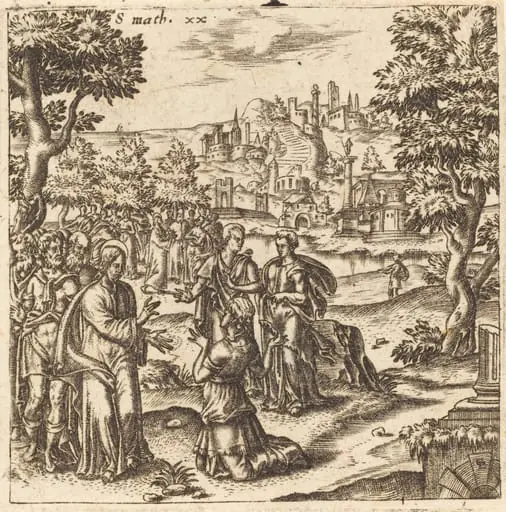
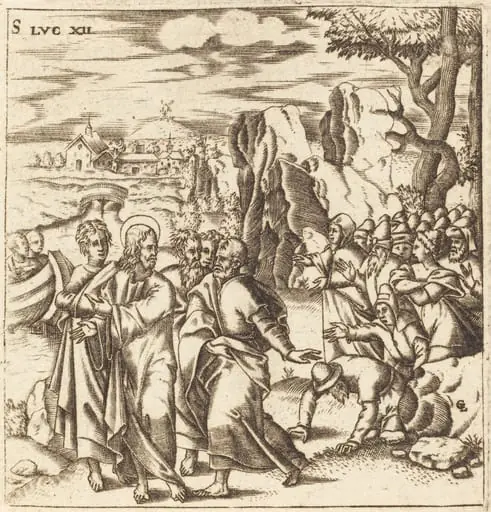
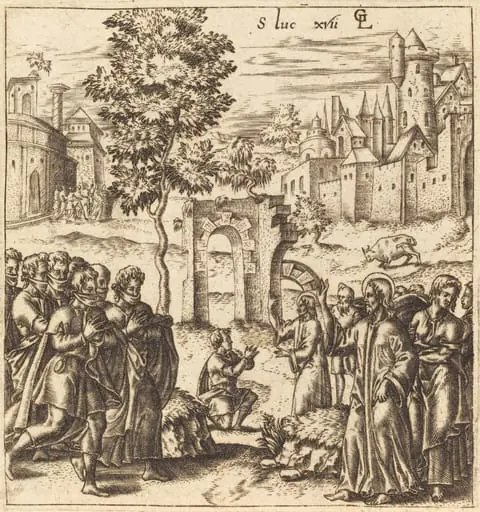
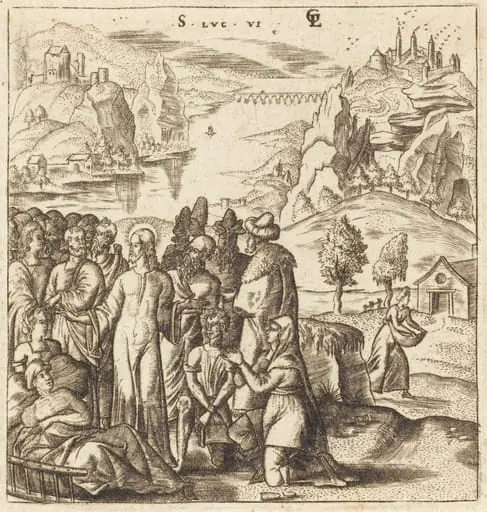
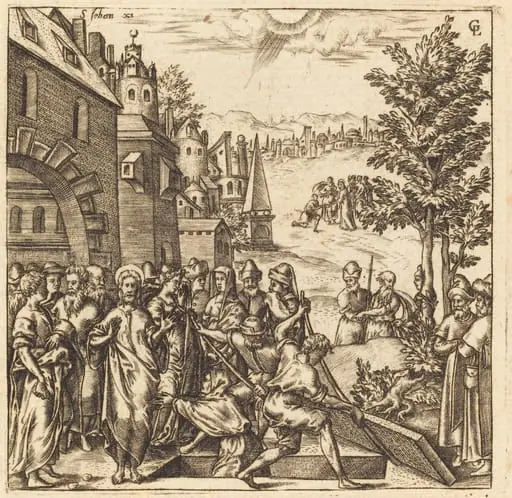
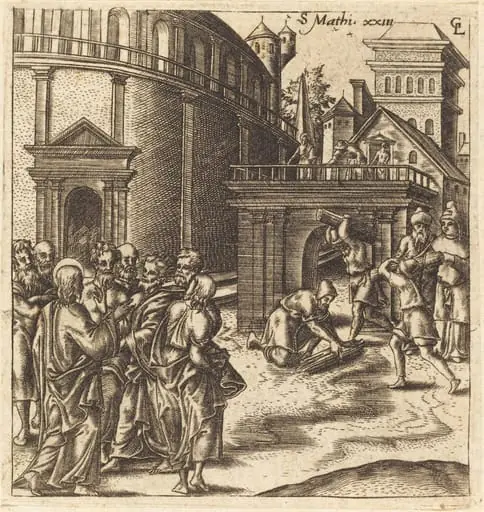
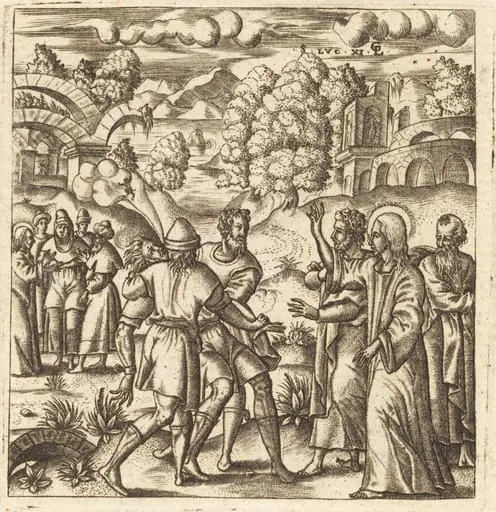
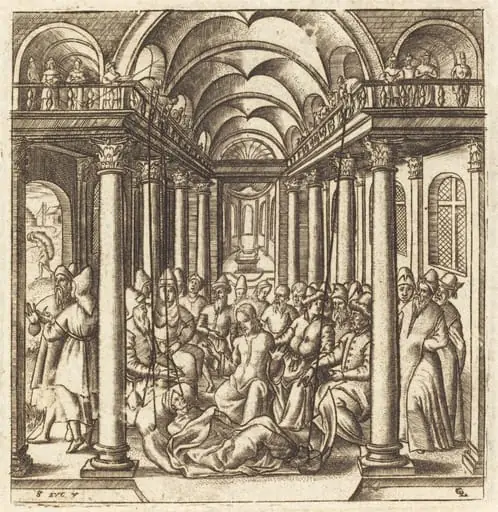
The Parables of the Lost Sheep, the Woman with Pieces of Silver and the Prodigal Son is an ink print by the Renaissance artist Léonard Gaultier. It dates from 1578 and is held in the collection of the National Gallery of Art.
About this work
Overview
The Parables of the Lost Sheep, the Woman with Pieces of Silver and the Prodigal Son is an engraving created by Léonard Gaultier around 1578. It showcases Gaultier's skill as a French engraver active in Paris during the late 16th and early 17th centuries.
Subject & Meaning
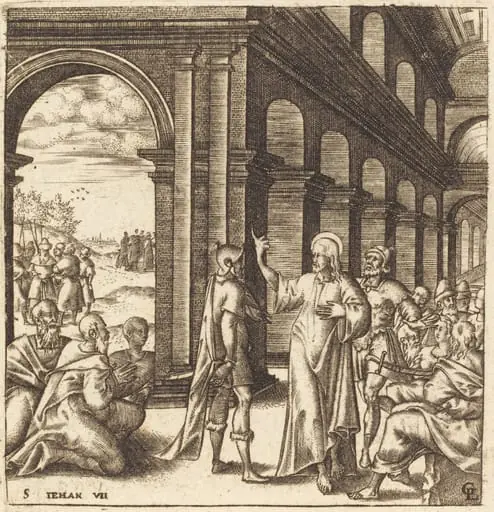
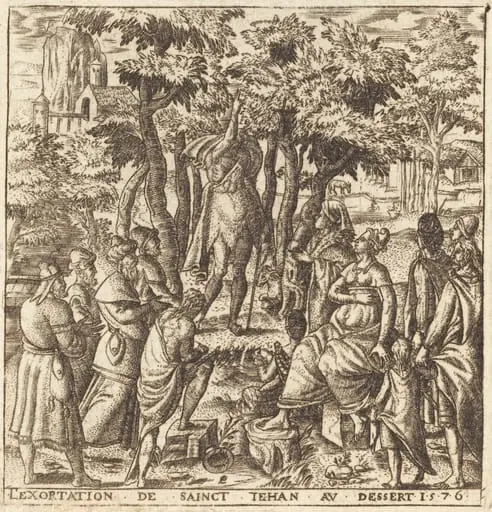
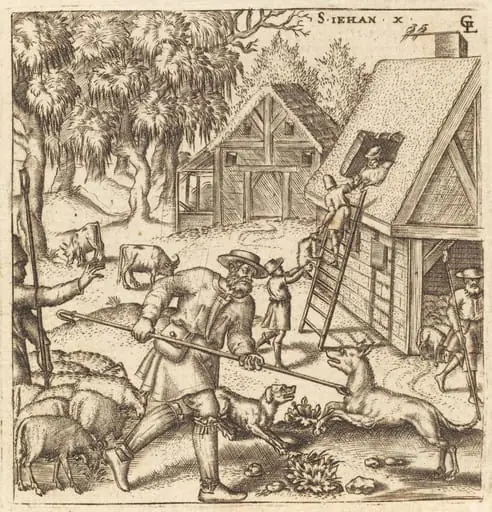
The engraving depicts a scene from three biblical parables, with a robed figure addressing a crowd on a raised platform against a cityscape backdrop. The composition brings together multiple narratives in a single, detailed image.
Technique & Style
Gaultier's work is characterized by precise, formal engraving techniques, utilizing the graver to create intricate lines and textures. Cross-hatching adds depth and dimension to the image, exemplifying the detailed style of Renaissance printmaking.
History & Provenance
Born in Mainz around 1561, Gaultier worked in Paris until his death in 1641, producing prints after his own designs. This engraving reflects his laborious technique and adherence to traditional engraving methods.
Artist & collection
Artist
Léonard Gaultier, or, as he sometimes signed himself, Galter, a French engraver, was born at Mainz about 1561, and died in Paris in 1641.