Artwork
Job Learns of His Misfortunes
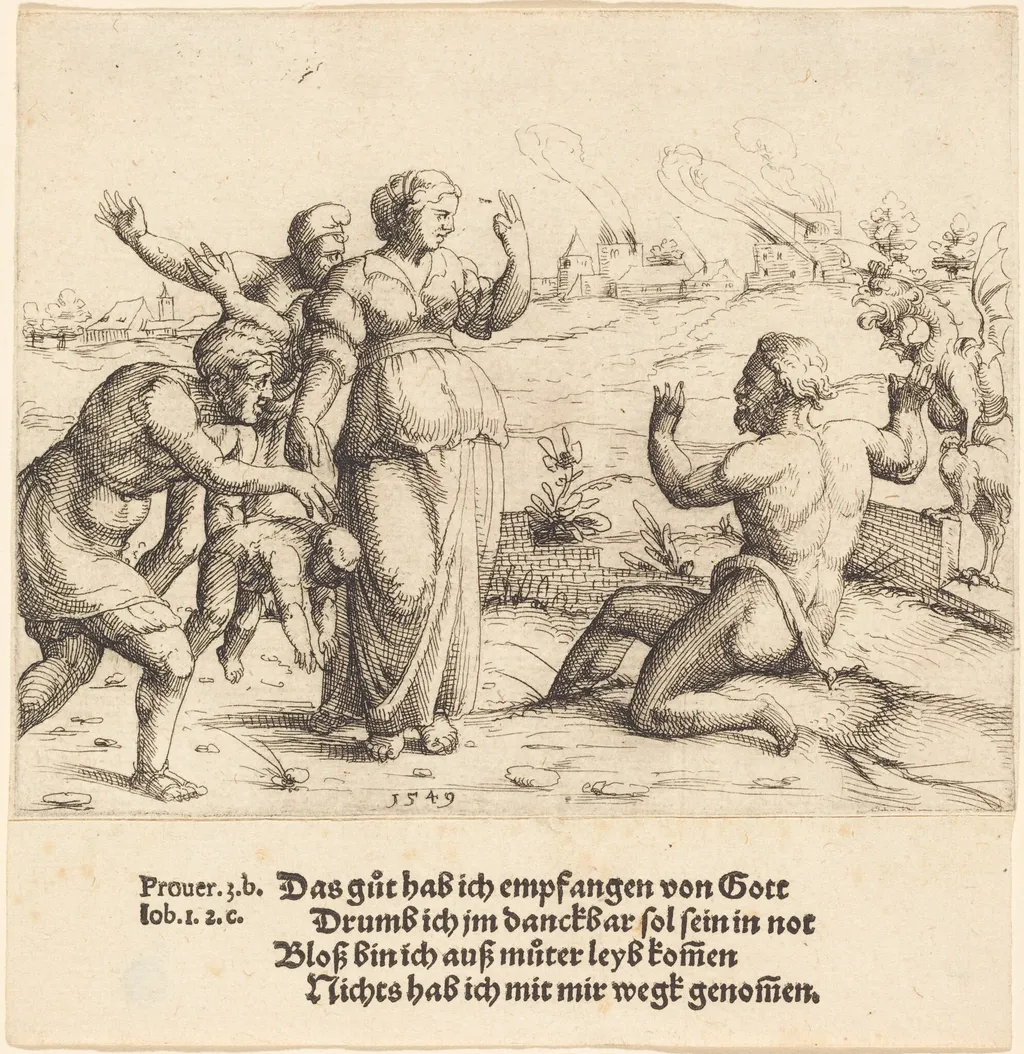
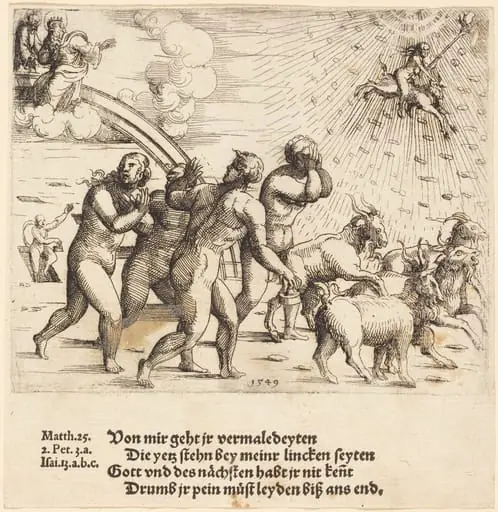
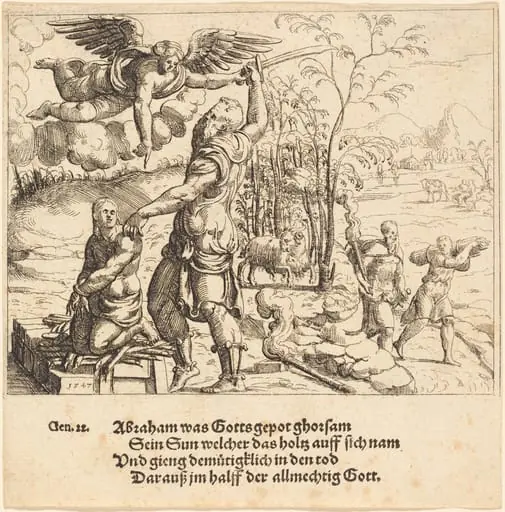
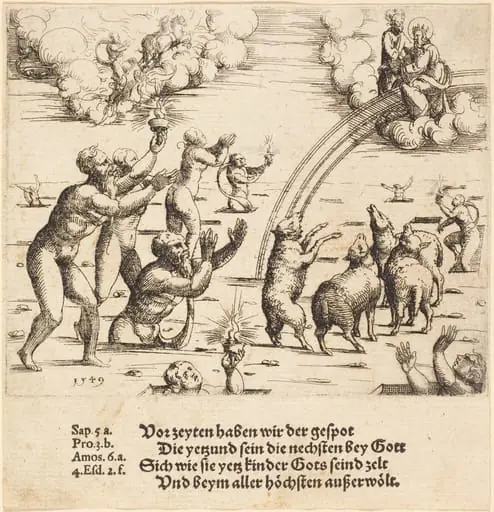
Job Learns of His Misfortunes is an ink print by the Renaissance artist Augustin Hirschvogel. It dates from 1549 and is held in the collection of the National Gallery of Art.
About this work
Overview
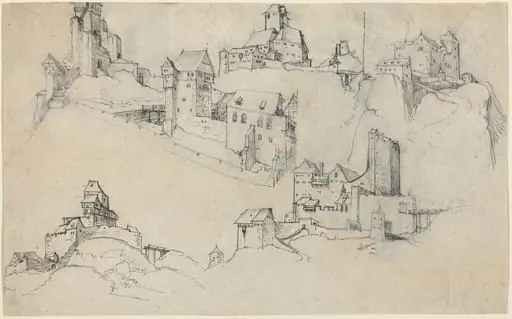
Though trained as a mathematician and cartographer, he gained recognition for his delicate etchings that blended topographical precision with narrative scenes.
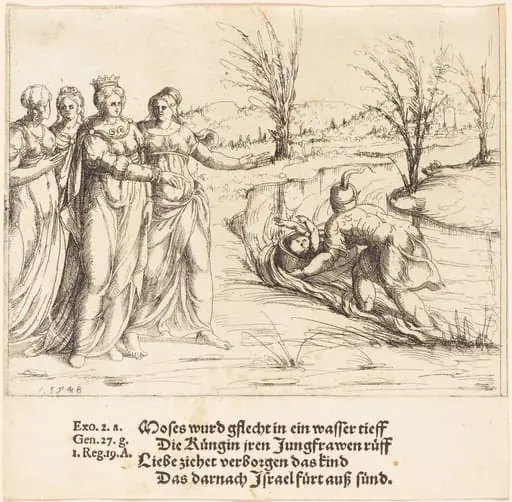
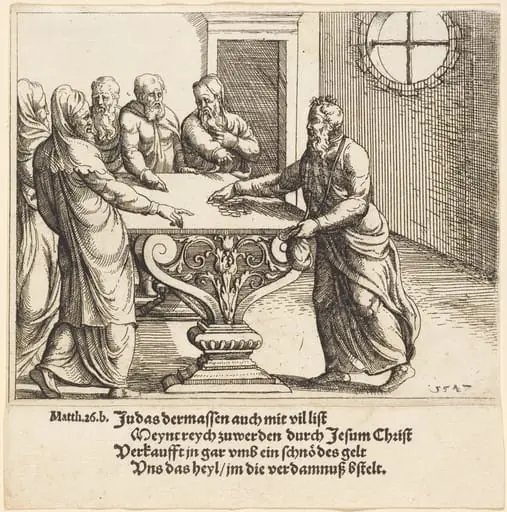
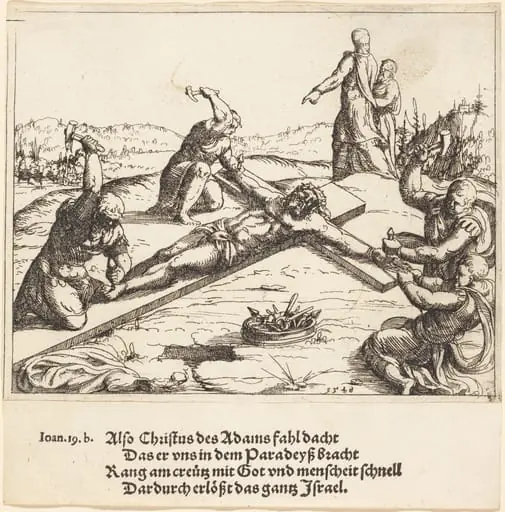
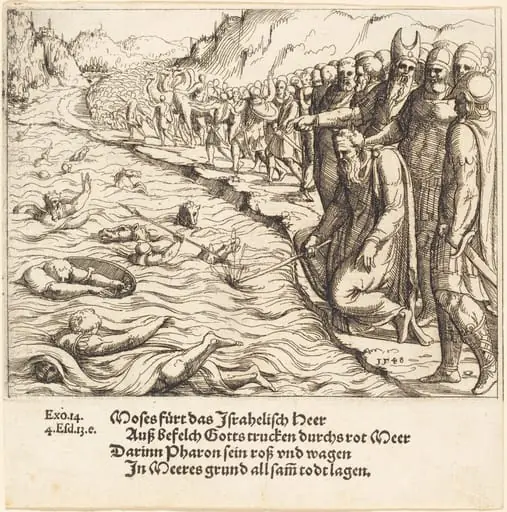
Augustin Hirschvogel, a German artist active in the mid-16th century, produced this etching in 1549 as part of a series of small landscape prints. Though trained as a mathematician and cartographer, he gained recognition for his delicate etchings that blended topographical precision with narrative scenes. This work belongs to his final group of prints, made between 1545 and 1549, and reflects his engagement with biblical themes through intimate, detailed compositions.
Subject & Meaning
The scene illustrates Job’s moment of receiving news of his losses, as described in the Book of Job. A woman in the foreground, likely a messenger, raises her arms in distress, while two men kneel beside her—one cradling a child, symbolizing the death of his offspring. The quiet village in the background, with smoke curling from chimneys, contrasts the human tragedy with the indifferent continuity of daily life, reinforcing the theme of divine abandonment.
Technique & Style
Hirschvogel employed fine, controlled etching lines to build texture and spatial depth. His use of cross-hatching and delicate tonal gradations creates a sense of atmospheric perspective, particularly in the distant village. The figures are rendered with restrained detail, allowing the emotional weight of the moment to emerge through posture and composition rather than expressive faces. This approach aligns with the Danube School’s preference for lyrical, observational realism over dramatic intensity.
History & Provenance
The etching was created during the final years of Hirschvogel’s career, shortly before his death in 1553. It circulated among collectors in southern Germany and Austria, where his prints were valued for their technical refinement. No definitive early ownership records survive, but the work is documented in 19th-century European print catalogues, and examples remain in public collections, including the Albertina in Vienna and the British Museum.
Context
Hirschvogel worked within the Danube School, a loose network of artists in Bavaria and Austria who emphasized landscape as both setting and emotional carrier. Unlike Italian Renaissance narratives, these artists often minimized human drama in favor of naturalistic environments. His etchings, including this one, reflect a regional shift toward introspective storytelling, where biblical events unfold against meticulously observed rural settings, blending piety with local topography.
Legacy
Though Hirschvogel’s reputation faded after the 16th century, his etchings are now recognized for their quiet innovation in Northern printmaking. His integration of cartographic precision with narrative emotion influenced later generations of landscape printmakers. 'Job Learns of His Misfortunes' remains a key example of how religious themes were reimagined through the lens of everyday observation, bridging devotional art and early modern realism.
Artist & collection
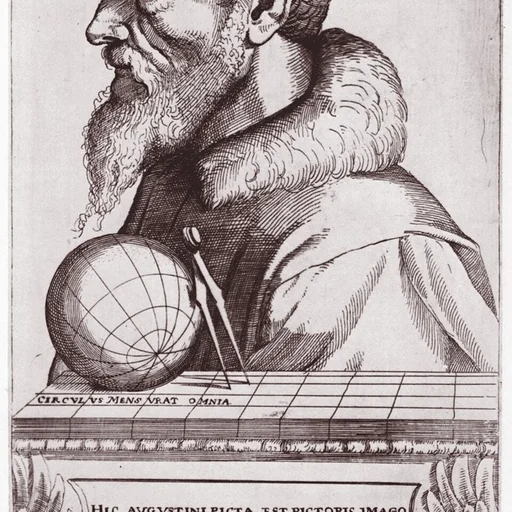
Artist
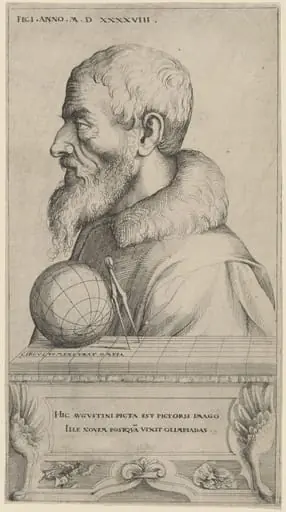
Augustin Hirschvogel (1503 – February 1553) was a German artist, mathematician, and cartographer known primarily for his etchings.