Artwork
Friedrich Count of Schaumberg - Bishop of Salzburg
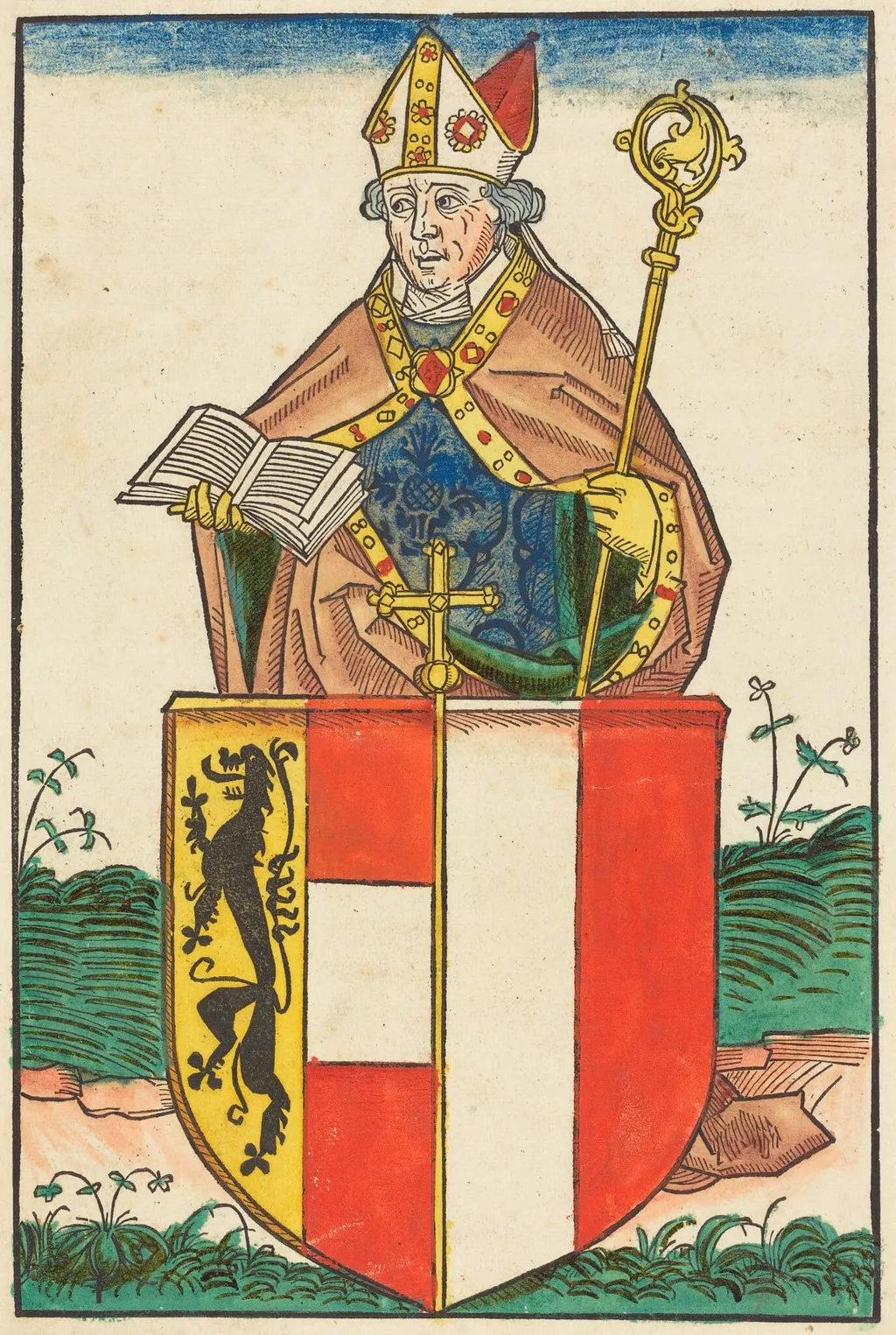
Friedrich Count of Schaumberg - Bishop of Salzburg is an ink print by the Renaissance artist German 15th Century. It dates from 1490 and is held in the collection of the National Gallery of Art. The work depicts Friedrich, Count of Schaumberg, serving as Bishop of Salzburg, rendered in a hand‑colored woodcut.
About this work
Overview
The work depicts Friedrich, Count of Schaumberg, serving as Bishop of Salzburg, rendered in a hand‑colored woodcut. He is shown in vivid attire, clutching a gilded crozier and an open book, his mitre topped with a red plume edged in gold. A heraldic shield bearing a black lion on a gold field and red‑white stripes forms the backdrop.
Subject & Meaning
The image presents the ecclesiastical authority of the bishop, emphasizing his spiritual leadership through the staff and scriptural text. The inclusion of his personal coat of arms links his noble lineage to his clerical role, underscoring the intertwining of secular power and church office in the late medieval period.
Technique & Style
Executed as a woodcut, the artist incised the design into a wooden block, printed it, and then applied hand‑applied color. This method, prevalent in the 15th century, allowed for reproducible images with bold outlines and flat areas of pigment, characteristic of early printmaking before the rise of engraving.
History & Provenance
The print originates from the 1400s, a time when hand‑colored woodcuts were commonly used for portraiture and devotional images. While specific details of its commission or ownership are not recorded, such works typically circulated among clerical and noble circles, serving both commemorative and propagandistic purposes.
Context
During the late medieval era, bishops often held both religious and secular responsibilities, reflected in the dual symbolism of liturgical objects and heraldic devices. The visual language of the woodcut aligns with contemporary practices of reinforcing hierarchical status through richly colored, emblematic portraiture.
Artist & collection

Artist
This 15th-century German artist carved vivid religious scenes into metal and wood, then hand-painted them in bright, symbolic colors.

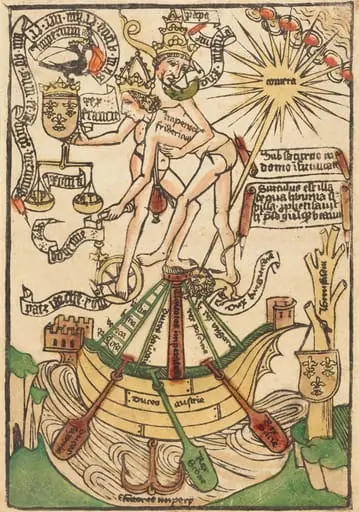 Allegory of the Meeting of Pope Paul II and Emperor Frederick III
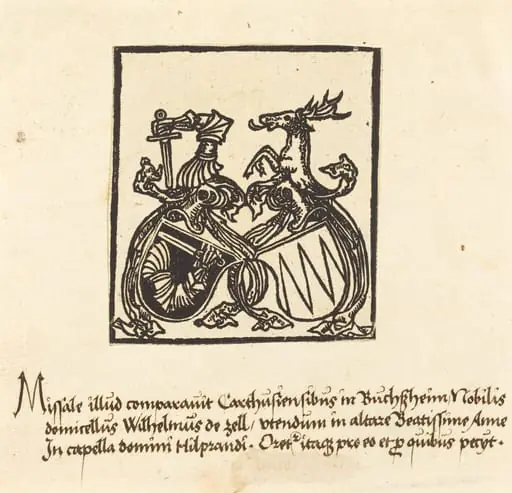 Bookplate of Wilhelm von Zell
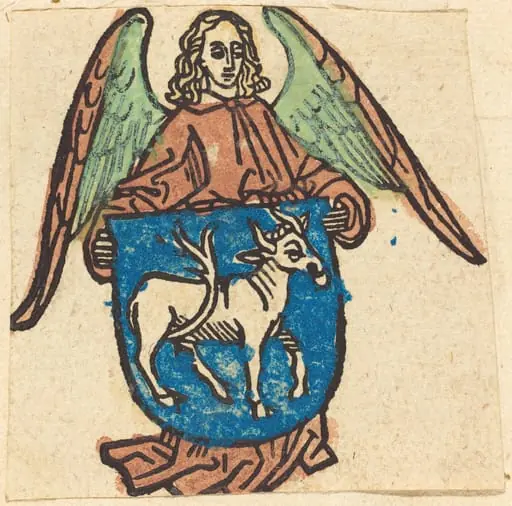 Bookplate of Hilprand Brandenburg of Bibrach
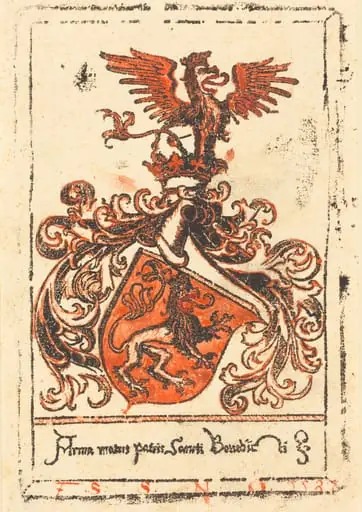 Bookplate of the Abbey of Ottobeuren
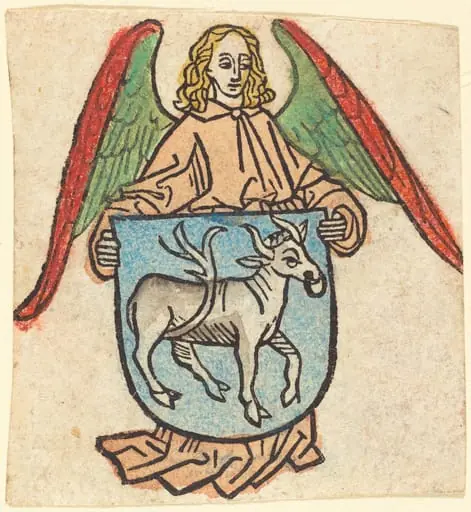 Bookplate of Hilprand Brandenburg of Bibrach
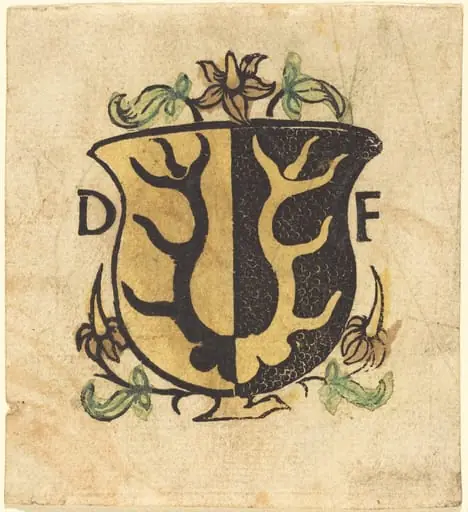 Bookplate of Dominicus Frauenfelder
![Studies for Six Figures (sheet from a model book) [recto], by German 15th Century](https://artifactworldgallery.com/img/german-15th-century--studies-for-six-figures-sheet-from-a-model-book-recto--4837429e0755bc3f-w320.webp) Studies for Six Figures (sheet from a model book) [recto]
Studies for Six Figures (sheet from a model book) [recto]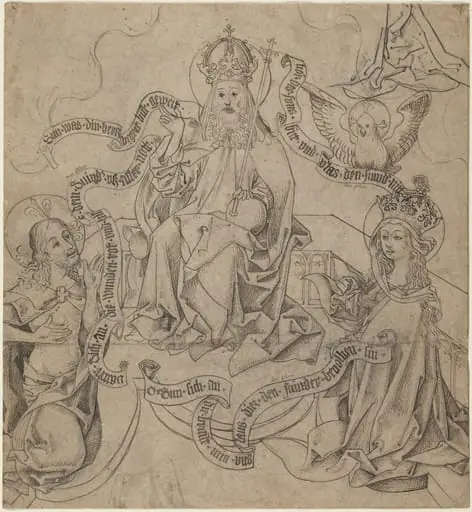 Christ and Mary Interceding with God the Father
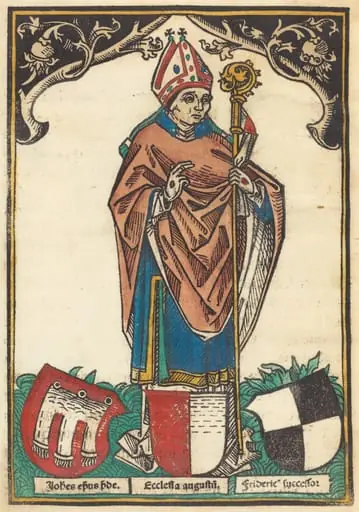 Bishop of Augsburg with Three Coats of Arms
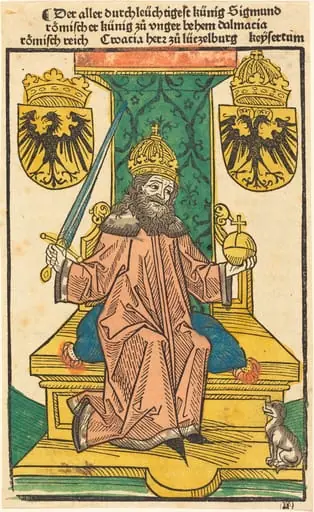 Kaiser Sigmund
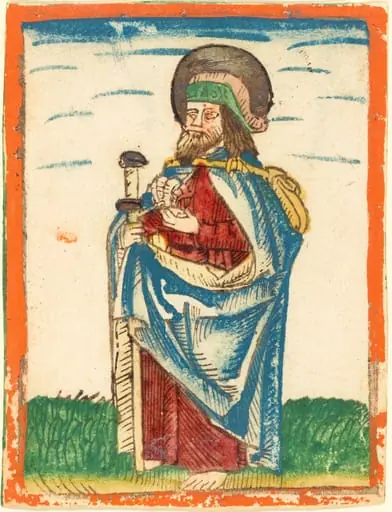 Saint James the Greater
![John Frederic the Magnanimous, in Electoral Robes [right], by German 16th Century](https://artifactworldgallery.com/img/german-16th-century--john-frederic-the-magnanimous-in-electoral-robes-right--eb7137bb5d2f9f23-w320.webp) John Frederic the Magnanimous, in Electoral Robes [right]
John Frederic the Magnanimous, in Electoral Robes [right]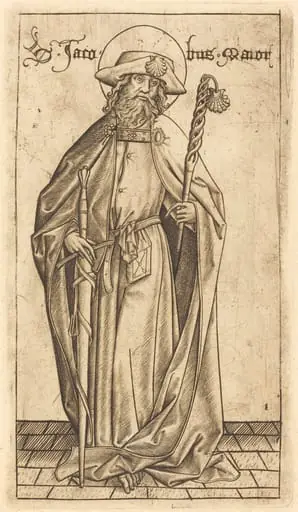 Saint James the Great
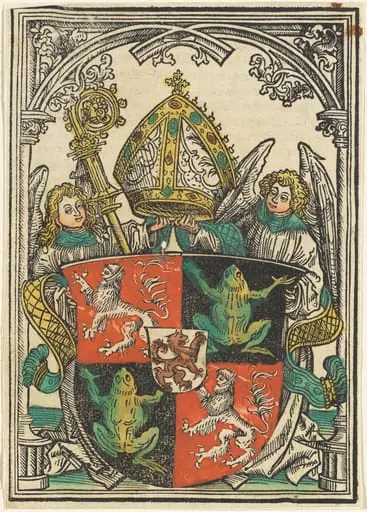 The Coat of Arms of Wigeleus von Fröschel, Bishop of Passau
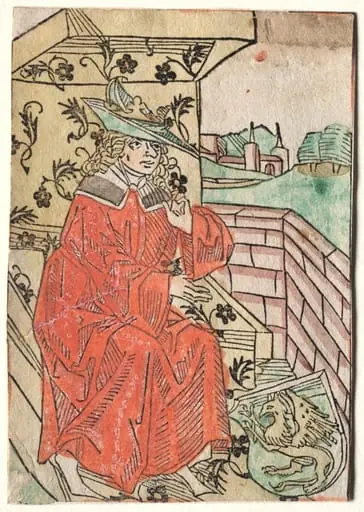 Hartlib's Alexander: Alexander Seated on Throne
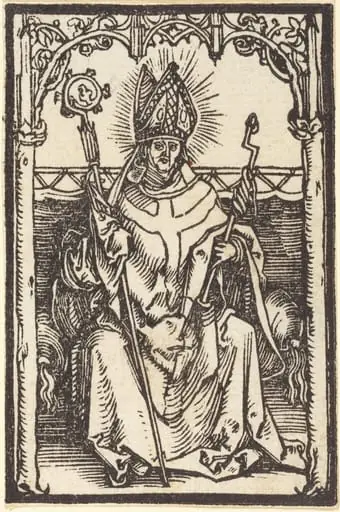 Saint Erasmus
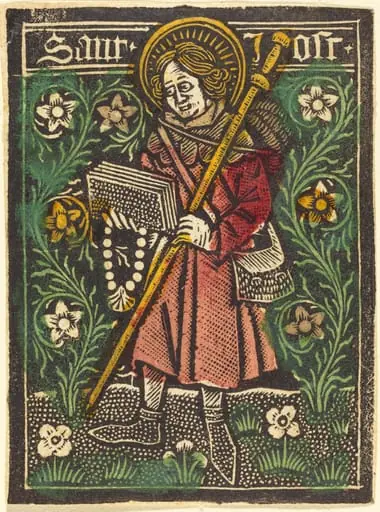 Saint Jost
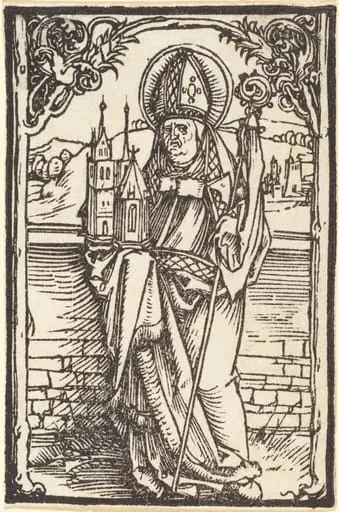 Saint Wolfgang
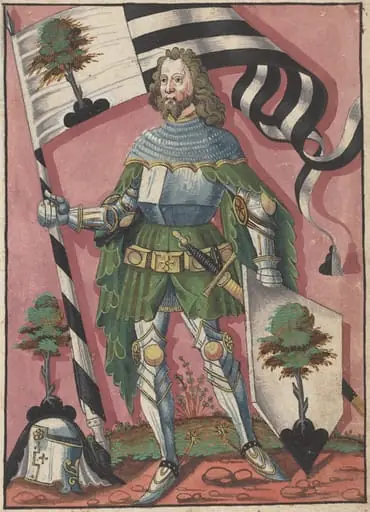 Standard Bearer
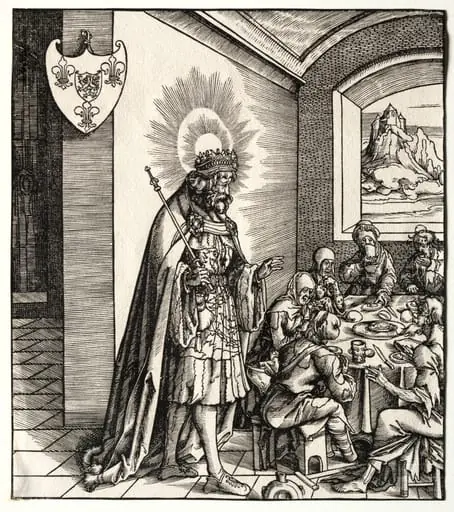 Saints Connected with the House of Habsburg: A General Account of the Ancestry of Emperor Maximilian I